
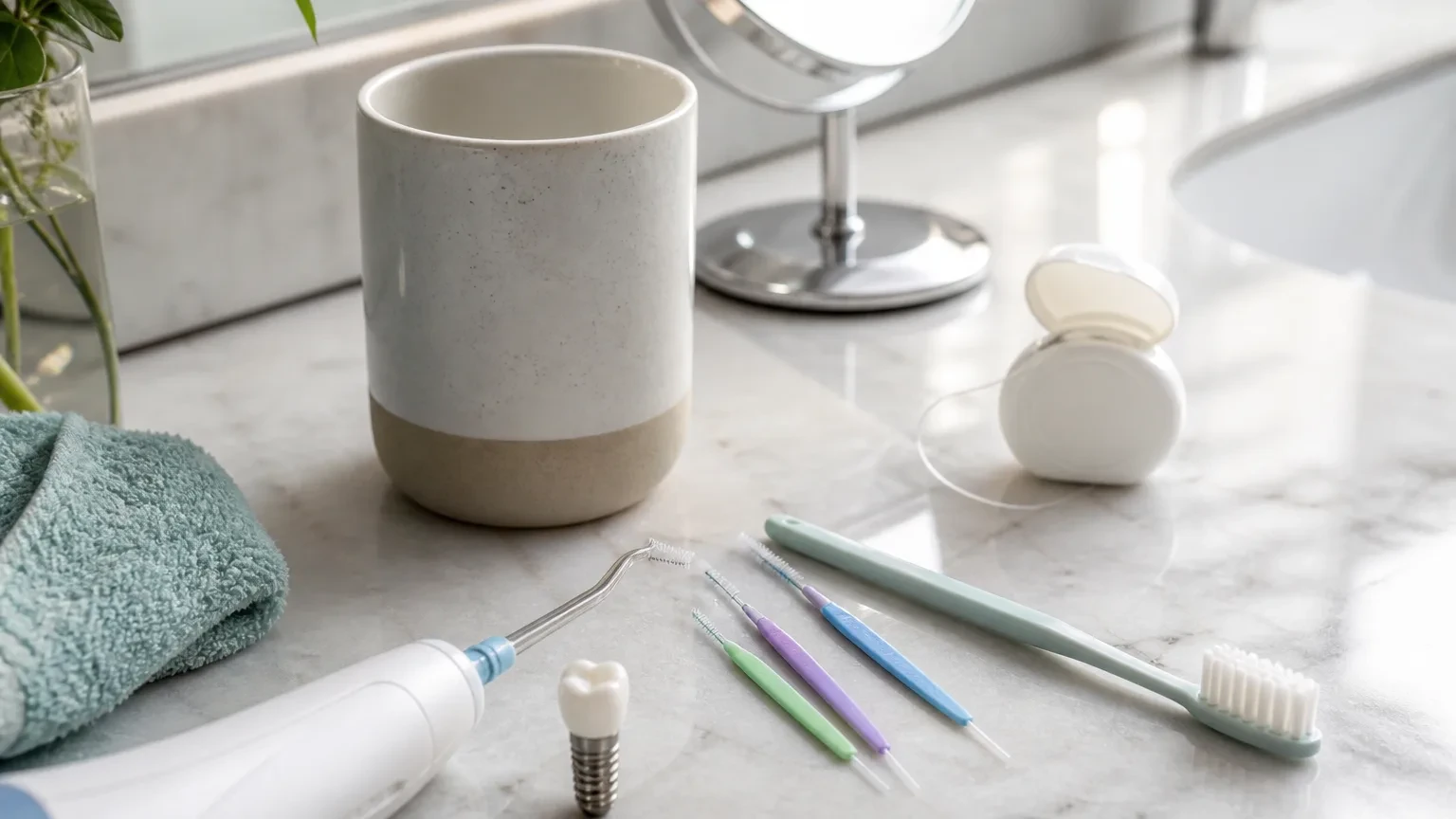
How Do You Care For Dental Implants?
Care for dental implants with soft brushing, daily interdental cleaning, smart product choices, and regular professional visits that protect the gum seal.

Reviewed by Dr. Sean Myran, DMDDoctor of Dental Medicine, University of Pennsylvania
Caring for dental implants means keeping the gum collar free of plaque every day and seeing a dental professional on a schedule tailored to your risk. Brush twice daily with a soft brush, clean between and around the implant with floss designed for implants, tiny interdental brushes, or a water flosser as recommended, and avoid harsh scrubbing that shreds tissue. Implants cannot get cavities the way natural teeth do, but the supporting bone can still be lost to inflammation—so the hygiene bar stays high.
A Daily Routine That Fits Real Life
- Morning: Brush all surfaces of the crown or prosthesis; angle bristles toward the gum line without sawing.
- Interdental clean: Use the exact tool your hygienist sized for you—threaders, soft picks, or a water flosser aimed at the collar, not full blast into the tissue.
- Night: Repeat brushing; add any prescribed rinse if you have one. Wear a night guard if you grind.
- Prosthesis extras: Full-arch patients often need extra time to clean underneath—ask for a demonstration, not only a handout.
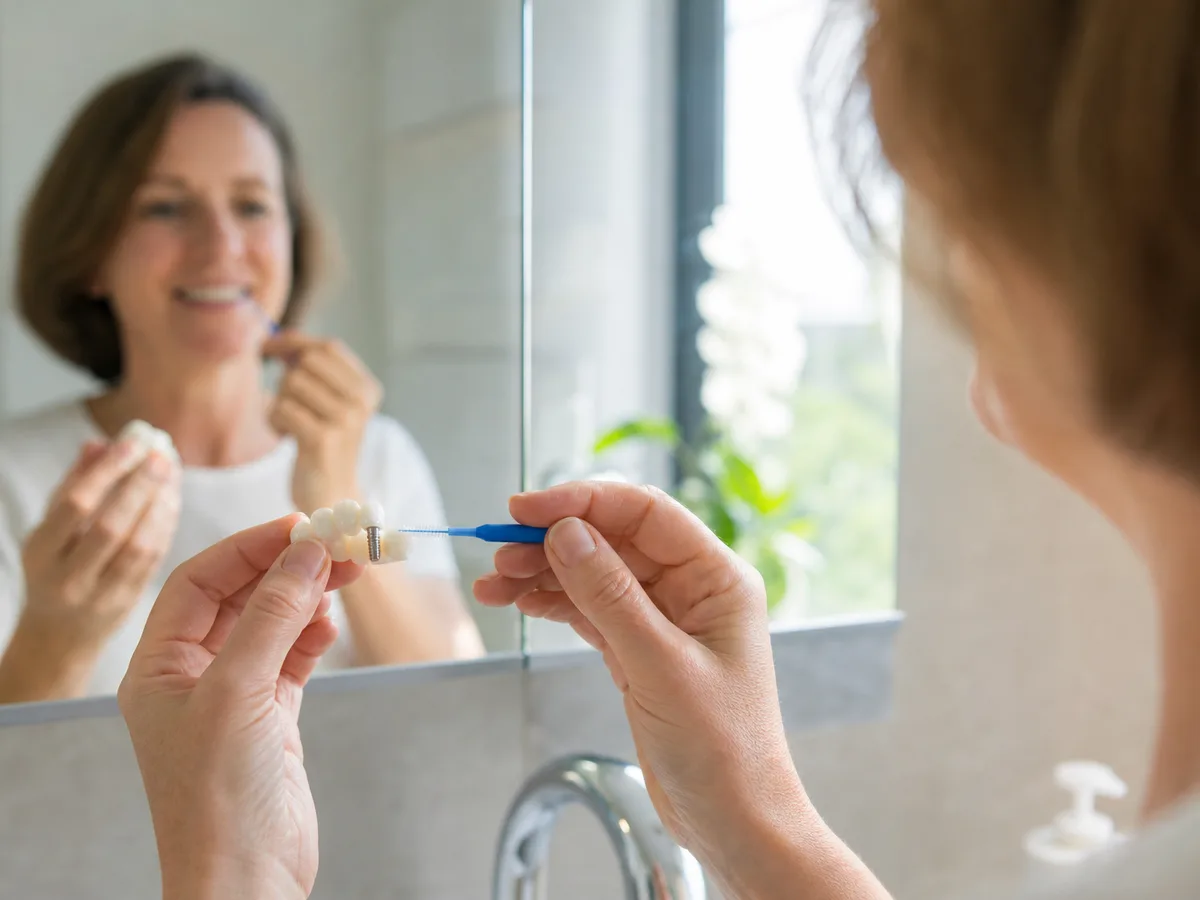
Tools matter more than brand slogans
A soft manual or electric brush is enough for most people; medium or hard bristles are counterproductive. Toothpaste can be a standard fluoride paste—skip abrasive charcoal fads that roughen crowns. Interdental brushes must fit without force. If you see grayness on the brush, you may be scraping titanium or the abutment—ask for a smaller size. Mayo Clinic’s implant pages stress long-term follow-up; daily mechanical cleaning is how you earn those calm checkup radiographs (Mayo Clinic — dental implant surgery).
Professional Maintenance Is Part Of Home Care
Hygienists use implant-safe instruments and may recommend three- or four-month intervals if you have a history of gum disease. Radiographs periodically check bone levels you cannot see in the mirror. Bring up bleeding, tenderness, or bad taste early—those details change the visit from “polish” to “problem-solving.”
If symptoms worry you, cross-check What Are Signs Of Dental Implant Failure? Smokers need stricter discipline—see Can Smokers Get Dental Implants? Longevity expectations pair with this routine in How Long Do Dental Implants Last?
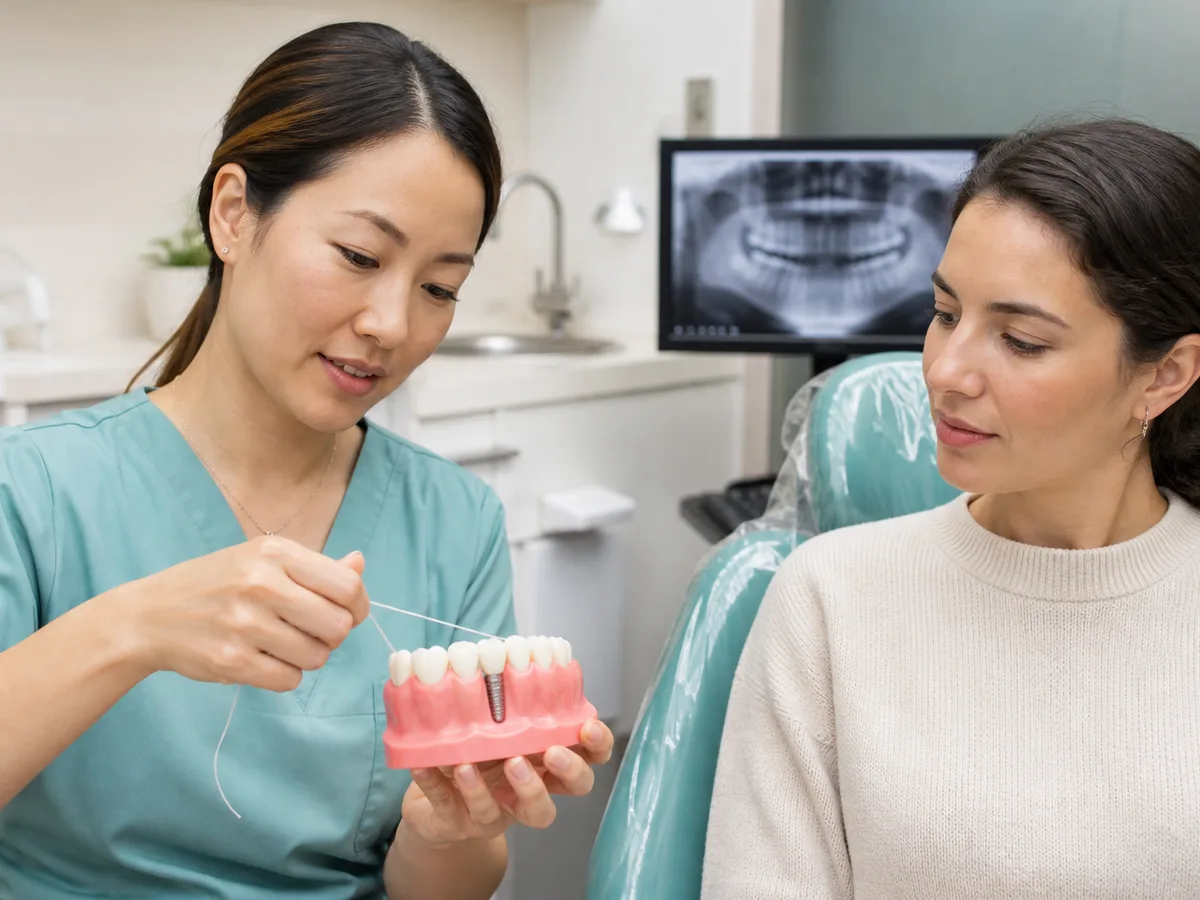
Ask for a teach-back before you leave
Have your hygienist watch you clean once a year. Techniques drift. Full-arch patients especially benefit from a hands-on review of angulation under the prosthesis. If your current office never mentions implant-specific tools, it may be time to find a dentist whose hygiene team treats implants as a distinct maintenance pathway—not identical to natural enamel everywhere.
Product Choices Without The Hype Aisle
Look for soft bristles, low-abrasive paste, and interdental aids sized by a professional. Antimicrobial rinses can help short-term after surgery or during a gum flare when prescribed; chronic alcohol-heavy rinses are not a substitute for mechanical cleaning. Implant toothpaste marketing rarely beats technique. Spend money on a water flosser you will use, or on night-guard replacement when yours is chewed flat.
Travel kits fail when they omit the interdental brush you actually need. Pack the odd-sized brush, not only a hotel toothbrush. If you wear a full-arch prosthesis, pack the specific cleaner your dentist approved rather than soaking it in random denture tablets that may not suit the materials.
Family members sometimes help by sharing tips from natural-tooth habits that are too aggressive for implant collars. Invite them to a hygiene visit if they assist with your care. Shared technique prevents well-meant damage.
Habits That Quietly Undo Good Brushing
Chewing ice, opening packages with your teeth, ignoring a night guard, and skipping cleanings after “how good everything feels” are common ways solid implants get into trouble. Care is boring on purpose. Boring is how implants stay boring for decades.
Related articles
Keep exploring related topics from Dental Country.
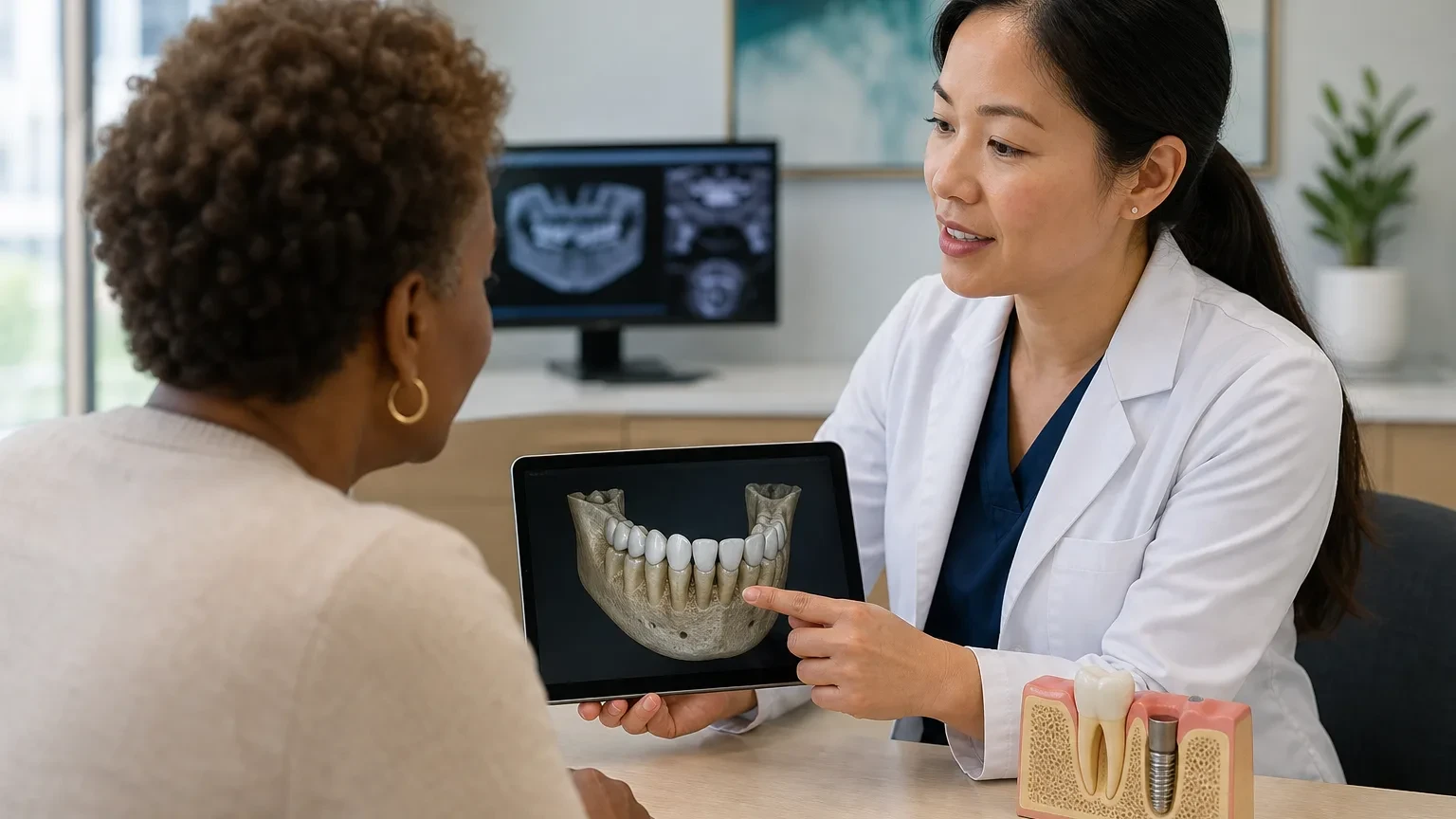
Am I A Candidate For Dental Implants?
Implant candidacy hinges on bone, gums, and overall health—not age alone. Here’s how dentists decide, and what that means before you commit.
Read article
How Long Do Dental Implants Last?
The implant post can last decades; crowns and hygiene decide how long the whole restoration feels “done.” Here’s what actually drives longevity.
Read article
Do Dental Implants Hurt?
Most people feel pressure during placement, not sharp pain—then a few days of soreness. Walk through what comfort usually feels like before, during, and after.
Read article
How Much Do Dental Implants Cost?
Implant pricing is a package, not a single sticker. Break down what you are buying—and the questions that keep quotes comparable.
Read article