
What Is All-On-4?
All-on-4 uses as few as four implants to support a fixed full-arch bridge. Learn how the workflow runs, who it fits, and what same-day teeth really mean.

Reviewed by Dr. Sean Myran, DMDDoctor of Dental Medicine, University of Pennsylvania
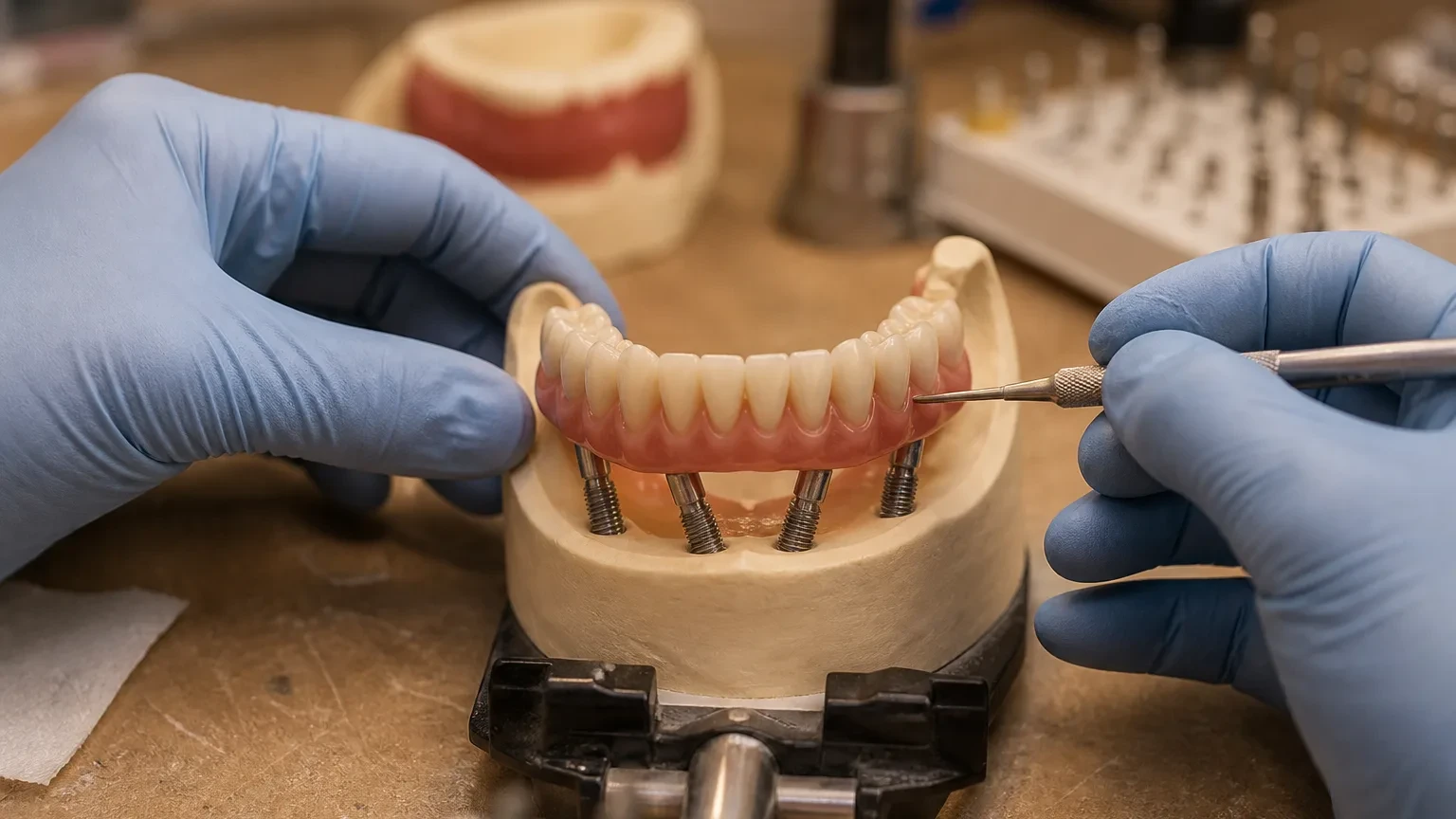
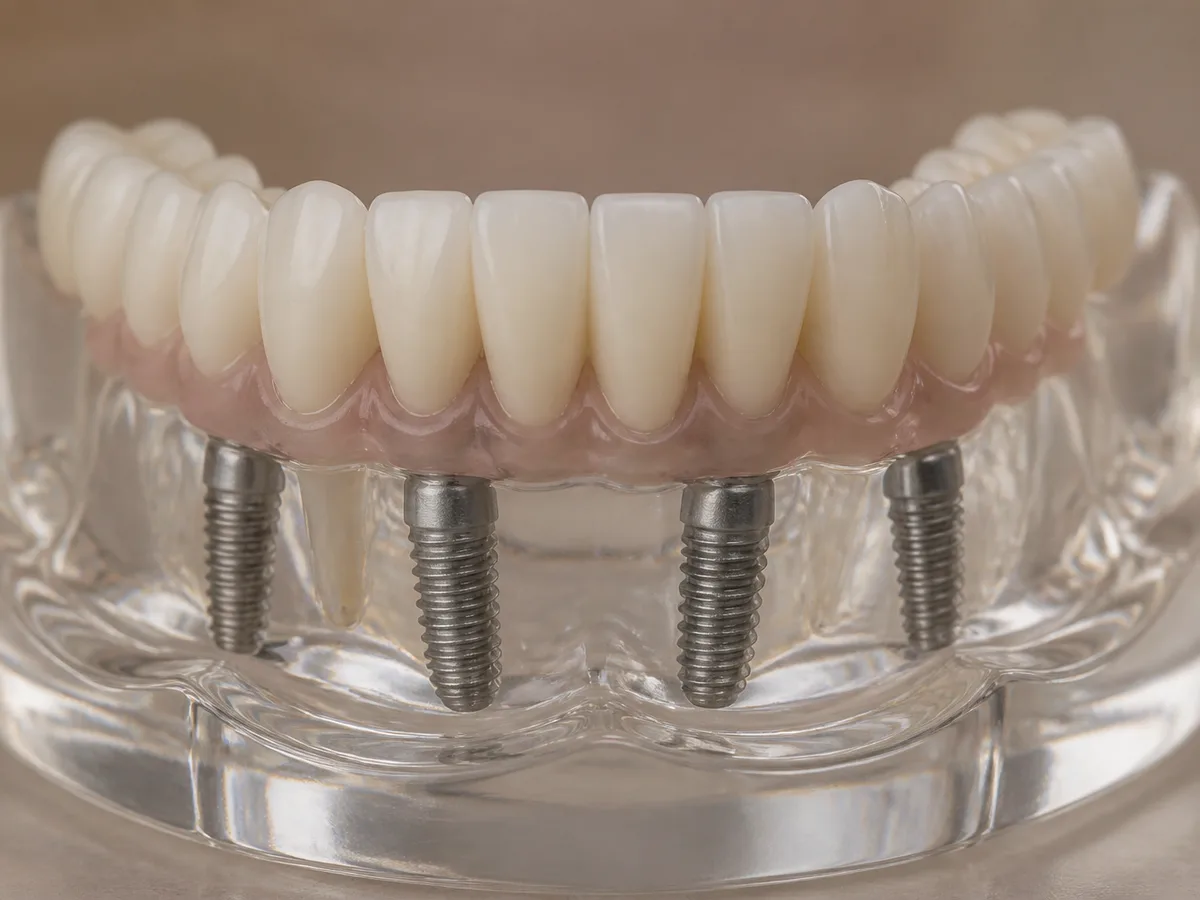
All-on-4 is a full-arch implant concept that uses as few as four strategically angled implants to support a fixed bridge of replacement teeth for an upper or lower arch. The approach can often avoid large bone grafts by tilting posterior implants into denser available bone. Many patients receive a temporary fixed prosthesis the same day as implant placement, then a stronger final prosthesis after healing. It is a specific treatment pattern—not a brand you chew with—and results depend heavily on planning and maintenance.
How The Workflow Usually Runs
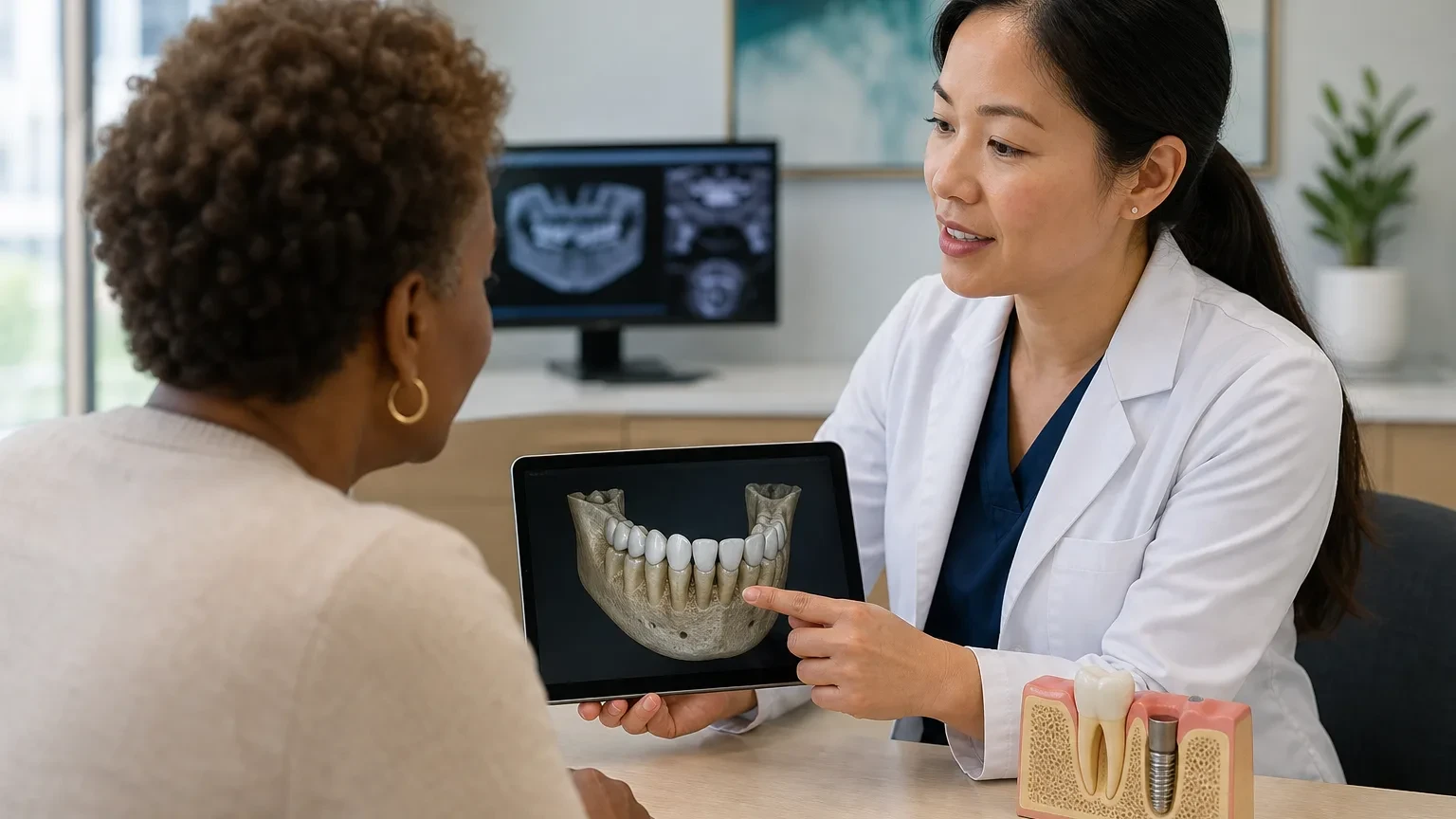
- Records, photographs, bite analysis, and 3D imaging
- Extraction of failing teeth when needed
- Placement of (typically) four implants with guided or freehand technique
- Attachment of a temporary fixed arch you can smile and eat softly with
- Healing period with soft-diet rules and hygiene coaching
- Final prosthesis in a more durable material once tissues and bone stabilize
Angled implants are the engineering trick
By angling the back implants, surgeons can often engage denser bone and span a full arch without placing an implant under every missing tooth. That efficiency is why All-on-4 became a household phrase. It still requires enough bone somewhere, healthy enough soft tissue, and a bite that will not shatter acrylic temporaries. MouthHealthy’s implant overview from the ADA’s MouthHealthy site is useful background before you compare full-arch proposals.
Who Tends To Be A Fit
People with failing dentitions, loose dentures, or widespread non-restorable teeth who want a fixed arch rather than a removable denture are typical candidates. Heavy smokers, uncontrolled medical disease, insufficient hygiene commitment, or unrealistic expectations about cleaning under the prosthesis need a slower conversation. Some arches need more than four implants; “All-on-X” marketing should never override what your scan shows.
Compare foundations with Am I A Candidate For Dental Implants? If removable implant dentures are on the table, What Are Implant Supported Dentures? explains a different feel and cleaning routine. Budget framing lives in How Much Do Dental Implants Cost?—full-arch fees are a different tier than a single crown.
“Teeth in a day” still has homework
The temporary arch is for function and confidence while biology finishes its job. Expect diet limits, water-flosser routines, and night protection if you grind. Final teeth may change in shape, shade, and material. Ask what is provisional versus definitive in writing, and who handles repairs after hours. To compare full-arch providers locally, find a dentist and request to see similar cases with long-term follow-up photos—not only surgery-day selfies.
Cleaning Under A Full Arch Is Non-Negotiable
Food collects under the prosthesis where a toothbrush cannot casually reach. Water flossers, super floss, and periodic professional removals when the design allows keep the implants from bathing in plaque. Patients who loved how fixed felt sometimes underplay this chore until odor or bleeding appears. Ask for a hygiene rehearsal with the temporary arch before you celebrate the final shade.
Speech adaptations take days to weeks. Lispiness with a new upper arch is common while your tongue maps the palate shape. Practice reading aloud. Report sore spots early so the temporary can be adjusted instead of creating ulcers you ignore.
Not every All-on-4 quote includes the final zirconia or premium prosthesis. Some fees describe the temporary year only. Insist on seeing the end-state material, warranty, and expected remake interval in writing before surgery day adrenaline takes over.
Tradeoffs Worth Naming Aloud
You gain a fixed smile with fewer implants than historic full-arch plans, often with less grafting. You take on a prosthesis that must be cleaned underneath, professional maintenance visits, and the possibility of acrylic wear or fracture on temporaries. All-on-4 is powerful when indicated—and oversold when a simpler partial solution would have solved the problem.
Related articles
Keep exploring related topics from Dental Country.
Am I A Candidate For Dental Implants?
Implant candidacy hinges on bone, gums, and overall health—not age alone. Here’s how dentists decide, and what that means before you commit.
Read article
How Long Do Dental Implants Last?
The implant post can last decades; crowns and hygiene decide how long the whole restoration feels “done.” Here’s what actually drives longevity.
Read article
Do Dental Implants Hurt?
Most people feel pressure during placement, not sharp pain—then a few days of soreness. Walk through what comfort usually feels like before, during, and after.
Read article
How Much Do Dental Implants Cost?
Implant pricing is a package, not a single sticker. Break down what you are buying—and the questions that keep quotes comparable.
Read article