
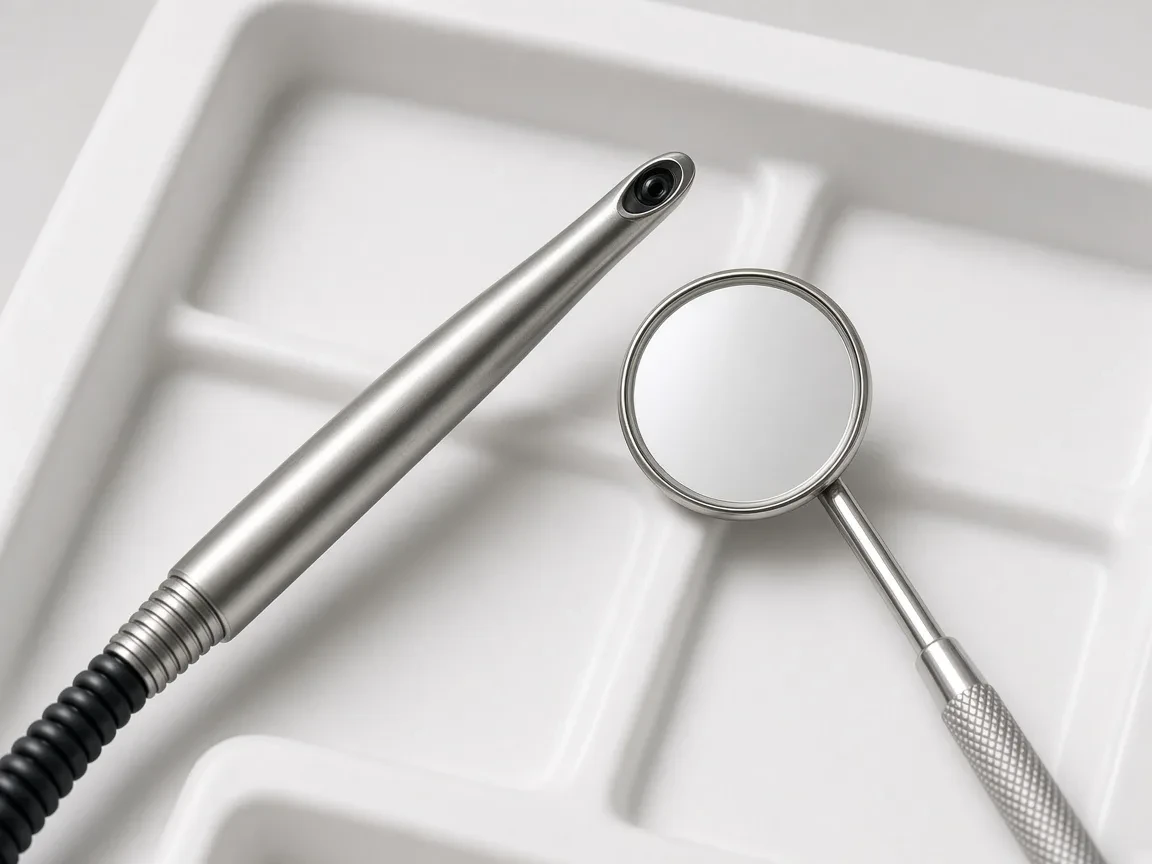
Intraoral Cameras: How to Choose.
How to choose an intraoral camera: focus, capture, software, and how MouthWatch, DEXIS, Acteon, Digital Doc, and Carestream differ.

Reviewed by Dr. Sean Myran, DMDDoctor of Dental Medicine, University of Pennsylvania
How we rank explains how these product lists are ordered.
An intraoral camera is a patient-communication tool with a clinical side effect: it records what you saw on a cracked cusp, an open margin, or inflamed tissue. It is not a radiograph and it is not an impression scanner. Buy it when you want the patient to see the same surface you are looking at, and when the image needs to land in the chart without a workaround.
How to choose an intraoral camera
- Focus. Autofocus is easier for a team that shares the camera. Fixed-focus wands are simpler and cheaper, and they punish a shaky working distance.
- Capture. A button on the wand beats reaching for a mouse. Confirm the image files into the practice-management or imaging software you already use.
- Wand size. A slim head reaches second molars. A larger head can carry a better sensor and still be miserable on a small mouth.
- Cord and infection control. USB wands need a sleeve that does not smear the lens. Cordless models trade the cord for a battery and a dock.
- Extras you will use. Caries-fluorescence or periodontal modes are useful only if the team will turn them on. They are not a reason to buy a camera the team will leave in a drawer.
How common cameras differ
| Brand | Known for | Best fit | Watch for |
|---|---|---|---|
| MouthWatch | A widely sold USB camera aimed at case presentation | Offices that want a straightforward wand and a lower entry cost | Confirm it writes images into your charting software |
| DEXIS | DEXcam, built to sit next to DEXIS imaging | Practices already on DEXIS sensors | Less attractive if you are not in that software |
| Acteon | SoproCare, with daylight, caries, and perio image modes | Offices that will use the diagnostic viewing modes | The modes only help if the team is trained on them |
| Digital Doc | IRIS cameras, long sold as a dedicated intraoral wand | Practices replacing an older Digital Doc unit | Check sheath fit and software capture on the current model |
| Carestream Dental | CS 1200 and CS 1500 cameras in the CS imaging family | Offices already on Carestream imaging | Match the camera to the software version you run |
| Dentsply Sirona | SiroCam, tied to Sidexis | Practices that want the camera in the same database as their X-rays | Do not assume a SiroCam is the right wand if imaging lives elsewhere |
MouthWatch
MouthWatch is the camera many offices meet first because the wand is simple and the price is easier than a camera bundled into a full imaging system. The test that matters is whether a captured frame lands in the patient record your team already has open.
DEXIS
DEXcam is the companion to DEXIS sensors and DEXIS imaging software. If radiographs already live there, the camera should too. If they do not, you are buying a second imaging home.
Acteon SoproCare
SoproCare’s distinction is the viewing modes: a daylight image, a caries mode, and a periodontal mode. Those are useful in hygiene conversations when the team knows what the colors mean. They are clutter if nobody is trained.
Digital Doc
The IRIS line is a purpose-built intraoral camera, not a webcam in a sleeve. Offices replacing an older Digital Doc usually stay with the brand because the capture habit is already in the operatory. Confirm the current sheath and the software plugin before you reorder “the same camera.”
Carestream and Sirona
Carestream’s CS cameras and Sirona’s SiroCam are at their best inside CS Imaging and Sidexis. Buy them when the radiograph database is already that brand. A camera that cannot file the image without an export step will not get used between patients.
Related guides
Camera questions
Is an intraoral camera the same as an intraoral scanner?
No. A camera takes a picture the patient can look at. A scanner records a 3D surface for a crown, aligner, or denture. They solve different problems.
Can one camera serve every operatory?
Yes, if it is cordless or on a long enough cord and the software is on every computer. Most offices that present treatment in more than one room end up with a camera in each room, because a shared wand stays at the front desk.
Related articles
Keep exploring related topics from Dental Country.
Top 10 Periotomes in Dentistry
Compare anterior and posterior periotomes from Premier, Hu-Friedy, Directa Luxator, TBS, and Nordent for atraumatic extractions.
Read article
Top 10 Dental Latex Rubber Dam Sheets
Compare latex dental dam sheets by gauge, size, and scent — Coltene Hygenic, Patterson Super Dam, Cranberry, and Medicom.
Read article
Dental Amalgam Separators: How to Choose
How to choose an amalgam separator: central or chairside, canister recycling, and how Solmetex, Rebec, Dürr, and Metasys differ.
Read article
Dental Instrument Washers: How to Choose
How to choose a dental instrument washer: cassette capacity, drying, and how SciCan HYDRIM, Melag, and Miele differ.
Read article