
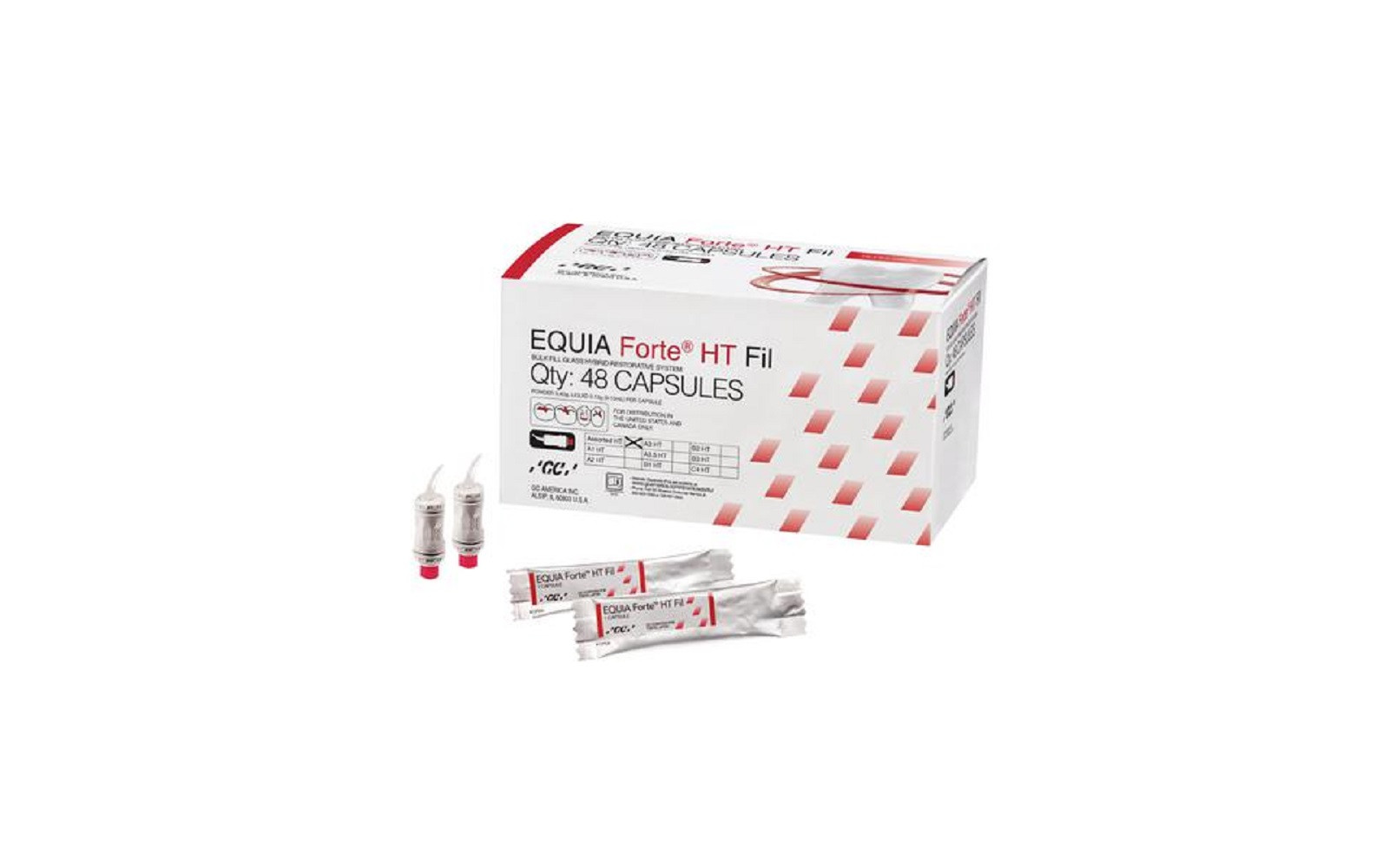
Top 10 Glass Ionomer Luting Cement.
Glass ionomer luting cements: RelyX Luting Plus, FujiCEM Evolve, Fuji PLUS, and Ketac Cem by delivery and ceramic.
How to Choose a Glass Ionomer Luting Cement
Glass ionomer luting on this list is three chemistries, plus two products that are not cements. Resin-modified glass ionomers (RelyX Luting Plus Automix, FujiCEM 2, Meron Plus QM, FujiCEM Evolve, and the older powder-liquid RelyX Luting) add resin to the ionomer so you get fluoride release, a chemical bond, and a tack-cure on the newer syringes. Fuji PLUS is GC’s resin-reinforced glass ionomer in capsules, with an optional conditioner. Ketac Cem and Ketac Cem Maxicap are conventional glass ionomers: acid-base set only, no tack light, no resin modification. Item 5, Fuji TRIAGE, is a glass ionomer sealant. Item 6, Quick Up, is a self-cure composite for picking up denture attachments. Neither one will lute a crown.
Match the cement to the ceramic and the retention. A retentive zirconia or PFM crown is why these RMGIs exist. 3M’s RelyX Luting Plus indications are metal, porcelain-fused-to-metal, alumina and zirconia core ceramics, orthodontic bands, and cementation of those restorations to implant abutments — not glass-ceramic veneers. GC does list lithium disilicate among FujiCEM Evolve’s high-strength ceramics, on retentive preps, with a 3-second tack cure. A thin veneer or a prep with no walls still belongs on the resin cement page.
Buying criteria that actually change the outcome
- RMGI vs conventional GI — RelyX Luting Plus, FujiCEM 2, FujiCEM Evolve, and Meron Plus QM when you want paste delivery and a tack-cure cleanup. Ketac Cem when you want a conventional powder-liquid or capsule ionomer and the prep is retentive. Conventional GI is the weaker choice on a short, overtapered prep.
- Which ceramic — zirconia and metal are the home field for this class. Lithium disilicate is named for FujiCEM Evolve and, in VOCO’s international Meron Plus QM instructions, for high-strength ceramics; 3M does not put glass-ceramic veneers on RelyX Luting Plus. Read the IFU in the box you stock before you drop a resin cement protocol.
- Delivery — automix syringe (RelyX Luting Plus, Meron Plus QM, FujiCEM Evolve), Paste Pak that needs GC’s dispenser (FujiCEM 2), capsule and mixer (Fuji PLUS, Ketac Cem Maxicap, Fuji TRIAGE), or a scoop (Ketac Cem powder, RelyX Luting). The Ketac Cem photo on this page is a powder refill. Powder without the liquid is not a cement.
- Tack cure vs a clock — Luting Plus, Meron Plus QM, and FujiCEM Evolve let you flash the excess and peel it in the gel. FujiCEM 2, Fuji PLUS, Ketac Cem, and RelyX Luting do not add that photoinitiator step. Waiting until the cement is rock-hard under the contact is how “easy cleanup” fails.
- Label the row before you order it — Fuji TRIAGE is a sealant. Quick Up is an attachment composite. Ketac Cem Maxicap is not Ketac Cem Plus, which is a different, resin-modified 3M cement and is not this capsule.
| Material | Maker | What it is | Delivery | Best use | Watch-out |
|---|---|---|---|---|---|
| RelyX Luting Plus Automix | 3M | RMGI luting cement | Automix syringe; self-cure, optional tack light | Metal, PFM, zirconia and alumina core ceramics, bands, implant abutments | Not 3M’s glass-ceramic veneer cement |
| FujiCEM 2 | GC | RMGI luting cement | Paste Pak; white tips | Metal, PFM, resin, and zirconia indirect restorations | Needs the dispenser. No tack-cure. White tips do not fit the older pink FujiCEM cartridge. |
| Fuji PLUS | GC | Resin-reinforced GI luting cement | Capsules on this listing | Metal, PFM, resin, zirconia crowns and bridges, ceramic inlays, posts | GC contraindicates pulp capping. Conditioner is optional and changes the bond. |
| Meron Plus QM | VOCO | Fluoride-releasing RMGI luting cement | QuickMix syringe; self-cure, optional tack | Metal restorations, zirconia, high-strength ceramic inlays, posts | The old chart’s “no fluoride” cell was wrong. Confirm lithium disilicate against the IFU you have. |
| Fuji TRIAGE | GC | GI sealant, not a luting cement | Capsule | Fissure protection; pink on erupting molars, white on erupted teeth | Will not cement a crown |
| Quick Up | VOCO | Self-cure composite for attachment pickup, not a glass ionomer | QuickMix syringe | Chairside pickup of Locator, ball, and telescopic attachments | Do not load it into a zirconia crown |
| Ketac Cem Radiopaque | 3M | Conventional GI luting cement | Powder refill on this listing; liquid is separate | Retentive metal and PFM, bands, posts | No tack light. Powder alone is not a mix. |
| RelyX Luting | 3M | Earlier hybrid glass ionomer | Powder and liquid, hand mix | Retentive metal and PFM when you still mix this kit | No automix and no tack-cure. Luting Plus is the current syringe. |
| Ketac Cem Maxicap | 3M | Same conventional Ketac Cem chemistry | Maxicap capsule | Ketac Cem without a scoop | Not Ketac Cem Plus. Needs a 3M capsule mixer. |
| FujiCEM Evolve | GC | Newer RMGI luting cement | Syringe; automix or hand mix; tack-cure | Retentive zirconia, lithium disilicate, PFM, metal, resin, and posts | Not an adhesive veneer cement. GC’s working time is about 2 minutes 15 seconds. |
When the ionomer is a liner or a filling instead of a cement: bases and liners · glass ionomer restoratives · resin cements
1. RelyX™ Luting Plus Automix — 3M

3M RelyX Luting Plus Automix is a resin-modified glass ionomer luting cement. The syringe mixes the pastes in the tip. 3M indicates it for porcelain-fused-to-metal crowns and bridges, metal crowns, inlays, and onlays, all-alumina or all-zirconia strengthened core ceramics, orthodontic bands, and final cementation of those restorations to implant abutments. A tack light-cure is the cleanup option: flash the excess, then peel it in the gel, or wait for the self-cure. Fluoride release is part of the RMGI, not a separate product.
It is the everyday crown cement for retentive metal and zirconia, not a veneer system. 3M’s own comparison material does not treat glass ceramics, including lithium disilicate, as a Luting Plus indication. Those cases are RelyX Ultimate or another adhesive resin cement. The line is sold under Solventum now; either name can be on the box. Item 8 is the older powder-liquid RelyX Luting, which does not have this tack-cure syringe.
Who it is for: Offices seating retentive PFM and zirconia crowns who want one RMGI automix and a tack-cure cleanup.
Tradeoff: Retention still matters. A short prep does not become an adhesive preparation because the syringe was convenient. Do not add a random dentin bonding agent unless the current IFU tells you to. Discard the first mix from a new tip.
2. GC FujiCEM™ 2 — GC

GC FujiCEM 2 is the Paste Pak resin-modified glass ionomer that FujiCEM Evolve later replaced in many operatories. It is a paste-paste cement for indirect restorations — metal, resin, zirconia, alumina — dispensed through GC’s Paste Pak dispenser. GC’s F2 Flex Fuse name is the marketing label on this generation. Fluoride release and a self-cure are the glass-ionomer half. There is no tack-cure photoinitiator; that shows up on Evolve, item 10.
The stocking trap is the tip. FujiCEM 2 uses white mixing tips, and they do not interchange with the older pink FujiCEM tips. A refill cartridge also does nothing without the dispenser. If you are buying a GC RMGI today and you want a syringe, a 3-second tack, and lithium disilicate written on the indication list, that product is Evolve, not this refill.
Who it is for: Practices that already own the FujiCEM 2 Paste Pak dispenser and are using up a system they know, on retentive metal and zirconia.
Tradeoff: No tack-cure, so cleanup is a clock, not a flash. Do not assume it has Evolve’s lithium disilicate wording. White tips only.
3. GC Fuji PLUS™ — GC

GC Fuji PLUS is a radiopaque resin-reinforced glass ionomer luting cement. This listing is the capsule package; powder and liquid also exist. GC’s indications cover metal-based inlays, onlays, crowns, and bridges; resin indirect restorations; all-ceramic inlays; high-strength zirconia crowns and bridges; and metal, ceramic, and fiber posts. The powder-liquid instructions list a contraindication that matters: pulp capping. They also list about 2 minutes 30 seconds of working time from the start of mix at 23°C, and finishing about 4 minutes 30 seconds after seating. Capsule times belong to the capsule IFU, not to a guess from the bottle sheet.
The optional Fuji PLUS Conditioner is a 20-second mild citric-acid step with ferric chloride, per GC’s product page. GC says it raises the bond and is aimed at sensitivity. It is optional, which means a “no-etch” capsule kit and a kit with conditioner are different protocols. Excess comes off when it feels rubbery. This is not FujiCEM 2 and it is not a self-adhesive resin cement.
Who it is for: GC users who want a capsule resin-reinforced ionomer for retentive metal, PFM, resin, and zirconia, and who will decide in advance whether the conditioner is part of the setup.
Tradeoff: Needs a capsule applier. Not a pulp-cap cement. Not a tack-cure syringe. An all-ceramic inlay indication is not a license to cement a non-retentive veneer and skip the resin-cement adhesive steps.
4. Meron Plus QM — VOCO

VOCO Meron Plus QM is a radiopaque, self-curing, fluoride-releasing, resin-modified glass ionomer in a QuickMix syringe. The old table on this page marked fluoride release as “No.” VOCO’s instructions say the opposite: fluoride-releasing. No separate primer or conditioner. Excess can be removed after a short tack light — VOCO says about 5 to 10 seconds per segment — or after the self-cure gel, about 2 minutes after placement. The cement itself keeps self-curing either way.
Read the indication block on the IFU you actually have. The US instructions name metal-based inlays, onlays, crowns, and bridges; high-strength zirconia crowns and bridges; high-strength all-ceramic inlays; and metal, ceramic, and fiber posts. VOCO’s international instructions also name lithium disilicate crowns and orthodontic bands. Those are not the same sentence. Do not inherit the broader list from a brochure if the box in the cabinet is the narrower one.
Who it is for: Practices that want VOCO’s paste-paste RMGI, with a tack-cure cleanup, for retentive metal and zirconia.
Tradeoff: Self-cure still has to finish under the crown; the tack only gels the excess. A new syringe should be bled until both pastes move. It is not Quick Up, the attachment composite later on this list, even though both are VOCO QuickMix syringes.
5. GC Fuji TRIAGE® — GC

GC Fuji TRIAGE is a glass ionomer sealant and surface-protectant in a capsule. It is not a luting cement. GC sells a pink shade for newly erupted molars, so you can see the seal at recall, and a white shade for fully erupted teeth. The clinical point is a moisture-tolerant seal on immature enamel and fissures when a resin sealant would fail the isolation, plus surface protection and hypersensitivity on root surfaces. Fluoride release is why it is a glass ionomer. None of that seats a crown.
It landed on a luting ranking because the original catalog mixed every GC ionomer into one table. Order it from the sealant conversation, not from the cement cabinet. A capsule still needs GC’s applier. Pink left on an erupted, visible molar is a shade choice you will see; white is the other SKU, not a bleach.
Who it is for: Pediatric and preventive setups that want a GI sealant when the tooth is erupting and dry isolation is unrealistic.
Tradeoff: It will not lute zirconia, PFM, or a post. Do not substitute it for FujiCEM Evolve because both say Fuji. Ionoseal’s “extended fissure sealing” indication, on the liner page, is a light-cured liner used in a dry field — a different material from this capsule.
6. Quick Up® — VOCO

VOCO Quick Up is a self-curing composite for the chairside pickup of attachments in full and partial dentures: ball abutments, Locator-style attachments, telescopes, and secondary parts such as bar retainers. It is gingiva-colored. It is not a glass ionomer, it does not release fluoride as an RMGI, and it is not a crown cement. The old chart scored its bond strength as if it were Meron Plus QM. That number was the wrong comparison.
The point of a direct pickup is that the attachment is related in the mouth instead of on a model. Block out undercuts before you express the composite, or the denture will not come off the abutment. Some Quick Up kits include Fit Test C&B silicone for that block-out; a syringe refill is not automatically the whole kit. The photo is the QuickMix syringe. Read the label before it gets stored next to Meron Plus QM.
Who it is for: Dentists who pick up implant and root attachments in the denture at the chair and want VOCO’s self-cure composite for that step.
Tradeoff: Self-cure composite in a warm mouth does not give you a long debate. It will not cement a zirconia crown, and it will lock onto an unblocked undercut. Low heat is a handling claim, not a reason to skip the block-out.
7. Ketac™ Cem Radiopaque — 3M

3M Ketac Cem Radiopaque is a conventional glass ionomer luting cement: powder and liquid, self-cure, radiopaque, fluoride-releasing, with a chemical bond to tooth. This ranking’s photo is the 33 g powder refill. The liquid is a separate bottle. Ordering the picture and expecting a mix is how a cement runs out on a Friday. There is no resin tack-cure. You mix, load, seat, and wait until the excess is ready to chip away.
It is the right family for retentive metal and PFM crowns, inlays, onlays, posts, and orthodontic bands when a conventional ionomer is what you meant. It is the wrong family for a glass-ceramic veneer and a weak choice for a short, non-retentive prep, where an RMGI or a resin cement is the more honest system. 3M also sells Ketac Cem Plus, a resin-modified cement with a tack-cure. Plus is not this powder.
Who it is for: Offices that still mix conventional Ketac Cem and need the radiopaque powder that matches the liquid they already have.
Tradeoff: Ratio, humidity, and a cool slab are the technique. No tack light. Confirm you are not refilling a Plus syringe with this powder — they are different products. Item 9 is the same conventional chemistry in a Maxicap.
8. RelyX™ Luting — 3M

3M RelyX Luting, in the introductory powder-and-liquid kit, is the earlier hybrid glass ionomer in this RelyX pair. You mix it by hand. It was the permanent cement for metal and PFM work, posts, and orthodontic bands before Luting Plus put the same idea in an automix syringe with a tack-cure. Fluoride release and a hybrid-ionomer set are the class. “Zero solubility,” which the old write-up stated as a fact, is a brochure absolute this page will not repeat. A set glass ionomer is less soluble than a fresh mix; it is not a reason to ignore margins or the IFU.
If the cabinet already has Luting Plus Automix, this intro kit is a second protocol, not a cheaper refill of the syringe. The paste in item 1 will not be reconstituted from this powder. Hand-mix consistency — 3M described it as mousse-like when the ratio is right — is the skill that makes the seating film thin. A dry, crumbly mix is a measuring error.
Who it is for: Practices that still hand-mix RelyX Luting for retentive metal and PFM and are replacing the intro kit, not starting a zirconia-heavy schedule.
Tradeoff: No automix, no tack-cure, more mix variation. Glass-ceramic veneers are still not this cement. For the current 3M RMGI syringe, use item 1.
9. Ketac™ Cem Maxicap™ — 3M

3M Ketac Cem Maxicap is conventional Ketac Cem in a capsule. The chemistry matches item 7: self-cure glass ionomer, fluoride release, chemical bond, radiopaque cementation of retentive crowns, bridges, inlays, onlays, posts, and bands. The capsule removes the scoop. It does not add a resin or a tack-cure. You still need 3M’s capsule activator and applier. A GC capsule gun will not run a Maxicap.
The name to refuse at checkout is Ketac Cem Plus. Plus is the resin-modified automix (or clicker) with a tack-cure, closer to RelyX Luting Plus than to this capsule. Maxicap is the conventional ionomer with the ratio already in the capsule. If the prep is non-retentive zirconia, neither conventional version is the cement that fixes the prep.
Who it is for: Offices that want Ketac Cem’s conventional ionomer and already own the Maxicap mixer.
Tradeoff: Capsules expire and they set once activated. You still wait on a chemical set. It is not an RMGI, and it is not a substitute for FujiCEM Evolve when the indication you needed was lithium disilicate with a tack-cure.
10. GC FujiCEM™ Evolve — GC

GC FujiCEM Evolve is the newer resin-modified glass ionomer, in a syringe that can be automixed with Push and Click tips or hand-mixed on a pad. GC’s technique guide lists a working time of 2 minutes 15 seconds, an optional 3-second tack cure to gel the excess, and finishing about 4 minutes 30 seconds after seating. Indications in GC’s materials include metal and PFM, resin indirect restorations, all-ceramic inlays, high-strength ceramics such as zirconia and lithium disilicate, and metal, ceramic, and fiber posts. GC also describes moisture tolerance and rechargeable fluoride release. The tack-cure light does not replace the glass-ionomer set; it only firms the excess so you can peel it.
This is the GC syringe to compare with RelyX Luting Plus, with one indication difference worth reading twice: Evolve’s high-strength list includes lithium disilicate, and Luting Plus’s 3M list does not treat glass-ceramic veneers as its job. Both still assume retention. A non-retentive anterior is a resin cement and a dry field. Evolve is the successor story to FujiCEM 2; the Paste Pak refill in item 2 does not gain a tack-cure because the office owns one syringe of Evolve.
Who it is for: Practices that want GC’s current RMGI syringe for retentive zirconia, lithium disilicate, and PFM, and that will tack-cure the excess instead of waiting until it flakes.
Tradeoff: Working time is short once the paste is warm. Hand-mix and automix are both on the syringe; mixing them up wastes the tip or leaves an unmixed paste. Not a veneer adhesive. Confirm the current IFU for surface treatment of the ceramic — sandblasted zirconia and etched, silanated lithium disilicate are not the same intaglio.
Frequently Asked Questions
Which of these will cement a zirconia crown?
For a retentive zirconia crown, RelyX Luting Plus, FujiCEM 2, Fuji PLUS, Meron Plus QM, and FujiCEM Evolve are the resin-modified or resin-reinforced ionomers on this list. Ketac Cem is the conventional ionomer for retentive metal and PFM. It is less forgiving on a short prep than an RMGI, and it is not a tack-cure zirconia cement. Fuji TRIAGE and Quick Up will not cement it. A non-retentive zirconia crown is a resin-cement case.
Does Meron Plus QM release fluoride?
Yes. VOCO’s instructions call Meron Plus QM a fluoride-releasing resin-modified glass ionomer. The older comparison table that said “No” was wrong.
What is the difference between Ketac Cem and Ketac Cem Plus?
Ketac Cem and Ketac Cem Maxicap, both on this page, are conventional glass ionomer cements. Ketac Cem Plus is a different, resin-modified 3M cement with a tack-cure, and it is not one of these ten rows. Do not refill one with the other.
Why are Fuji TRIAGE and Quick Up on a luting list?
Because the original ranking included them. Fuji TRIAGE is a glass ionomer sealant. Quick Up is a self-cure composite for denture-attachment pickup. Keep them out of the crown-cement tub.
Read next
Stay on cements and the ionomers next to them:
Related articles
Keep exploring related topics from Dental Country.
Top 10 Rubber Dam Clamps for Root Canals
Compare winged, wingless, Brinker, and serrated rubber dam clamps from Hu-Friedy, Coltene, and Kulzer for root-canal isolation.
Read article
Top 10 Porcelain Brushes for Dental Labs
Compare Kolinsky, red sable, and synthetic porcelain brushes from Renfert, Dixon, and Patterson for build-up, stain, and glaze.
Read article
Top 10 Bottle Cleaners for Dentists
Compare the best Bottle Cleaners for Dentists — our researched Top 10 ranking of the leading brands and options to help you choose the right fit for your practice.
Read article
7 Dental Websites to be Inspired by
Compare the best 7 Dental Websites to be Inspired by, ranked on performance, features, and value to help you choose the right fit for your practice.
Read article