
Dental Bases and Liners: Dycal, Vitrebond, TheraCal
Compare 10 bases and liners, including Dycal and Vitrebond Plus, by chemistry, light cure, and pulp-capping instructions.

Reviewed by Dr. Sean Myran, DMDDoctor of Dental Medicine, University of Pennsylvania
How we rank explains how these product lists are ordered.
How to Choose a Base or Liner
The materials in a bases-and-liners drawer do quite different jobs. Dycal is a self-setting calcium hydroxide for pulp capping, and Calcimol LC is a light-cured, resin-modified calcium hydroxide. Vitrebond Plus and Fuji Lining LC are resin-modified glass ionomer (RMGI) liners: light-cured, fluoride-releasing, and placed on dentin rather than an open exposure. The rest are easy to mix up when ordering. Lime-Lite Enhanced is a light-cured resin liner containing hydroxyapatite, and Pulpdent’s instructions say not to place it directly on an exposed pulp. Ionoseal is a one-component, light-cured glass-ionomer composite. ACTIVA BioACTIVE Base/Liner is a dual-cure bioactive liner. Copalite is a cavity varnish on this list. Temrex’s current page titles the same product Copalite Dental Seal and Solvent and does not describe it as a fluoride-releasing liner. Multi-Cal is a non-setting calcium hydroxide paste for pulp therapy and canal dressing, not a hard base you can condense amalgam against.
Choose based on whether the pulp is exposed and what restoration goes on top. 3M’s Vitrebond Plus instructions are explicit that it is not indicated for direct pulp capping. If you’re capping an exposure, place a small amount of calcium hydroxide on it first, then Vitrebond Plus over that and the surrounding dentin. For a deep but closed dentin floor under composite, an RMGI or Ionoseal is the usual choice. Copalite is now only used under shallow amalgams, and it should never go under a bonded composite.
What actually changes the outcome
- Whether the pulp is exposed. Use calcium hydroxide (Dycal or Calcimol LC) on an exposure you’ve decided to cap. RMGI liners go over dentin or over that thin calcium hydroxide layer, never directly on the pulp. Pulpdent’s instructions for Lime-Lite Enhanced and ACTIVA BioACTIVE Base/Liner carry the same “not on an exposed pulp” limit.
- Light cure or chemical set. Light-cured liners (Vitrebond Plus, Ionoseal, Calcimol LC, Lime-Lite, Fuji Lining LC) let you move on as soon as the light reaches the floor. Dycal sets on its own, and Multi-Cal doesn’t set hard at all.
- What goes on top. RMGI liners and Ionoseal are designed for use under composite and amalgam. Copal varnish blocks resin bonding, so keep it out of composite preps. If a water-based cement is going over Lime-Lite, Pulpdent says to wipe off the oxygen-inhibited layer first.
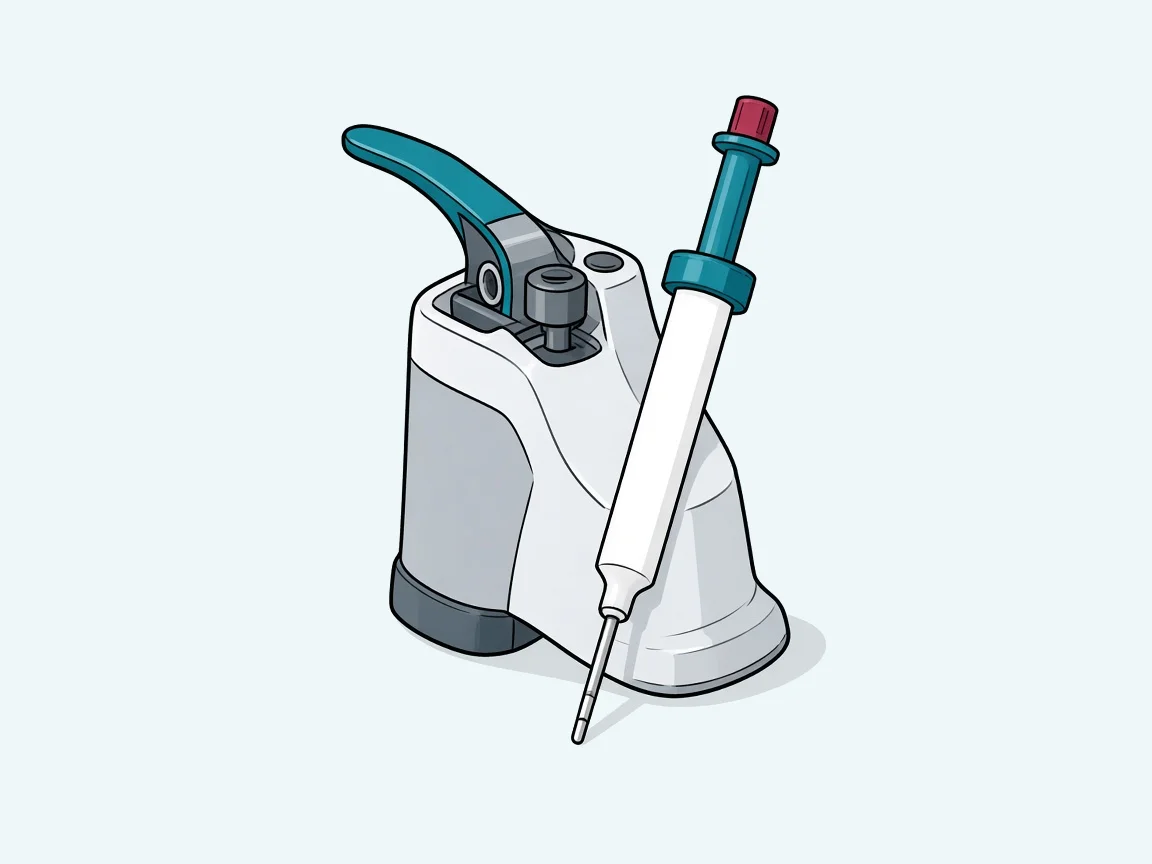
- Delivery you already have. The options are a clicker (Vitrebond Plus), a Paste Pak (Fuji Lining LC) or a syringe (Ionoseal, Calcimol LC, Lime-Lite, ACTIVA, Multi-Cal). A Paste Pak refill is useless without the dispenser.
- Fluoride release doesn’t make a pulp cap. RMGI liners release fluoride and Copalite doesn’t. Either way, fluoride release doesn’t turn a varnish, a non-setting paste or an RMGI into a direct pulp-capping material.
| Material | Maker | What it is | How it sets | Best use | Watch-out |
|---|---|---|---|---|---|
| Lime-Lite Enhanced | Pulpdent | Light-cure resin liner with hydroxyapatite | Light-cure syringe | Liner or base under composite and amalgam when the pulp is closed | Not a calcium hydroxide cement, and not for an exposed pulp. |
| Dycal | Dentsply Sirona | Self-setting calcium hydroxide liner | Two-paste chemical set | Direct and indirect pulp capping | No light cure. Keep the layer thin and cover it if you need a harder base. |
| Vitrebond Plus | 3M | Light-cure RMGI liner/base | Paste-liquid clicker, light-cure | Liner under composite, amalgam, ceramic and metal | Not for direct pulp capping, per 3M. Skip polyacrylic-acid pretreatment. |
| Ionoseal | VOCO | One-component light-cure glass-ionomer composite | Syringe, light-cure | Liner, extended fissure sealing, small lesions | VOCO says to keep the surface dry. Not a self-cure glass ionomer. |
| Calcimol LC | VOCO | Light-cure resin-modified calcium hydroxide | Syringe, light-cure | Pulp capping and lining under restorations | Doesn’t self-set like Dycal, and isn’t an RMGI. |
| ACTIVA BioACTIVE Base/Liner | Pulpdent | Dual-cure bioactive base/liner | Automix; light-cure plus self-cure | Base or liner with no pulpal involvement; indirect pulp capping | Not for an exposed pulp. Different product from ACTIVA BioACTIVE-RESTORATIVE. |
| Fuji Lining LC | GC | Light-cure resin-reinforced glass ionomer liner | Paste Pak | Liner or base under composite or amalgam | Needs the Paste Pak dispenser and a curing light. Not a luting cement. |
| TheraCal LC | BISCO | Light-cure resin-modified calcium silicate liner | Syringe, light-cure | Direct and indirect pulp capping, and lining under restorations | BISCO specifies a layer under 1 mm, cured for 20 seconds. Not interchangeable with Vitrebond Plus. |
| Copalite | Temrex | Dental seal and solvent | Sold with a companion solvent | Under composites, amalgams, and other restoratives, per Temrex | Not fluoride-releasing on Temrex’s page. Not described as a pulp cap or a hard base. |
| Multi-Cal | Pulpdent | Non-setting calcium hydroxide paste | Doesn’t set hard | Pulp capping, pulpotomy, intracanal dressing | Won’t withstand amalgam condensation the way Dycal does. |
If what you need is really a filling, a cement or a seal: glass ionomer restoratives · glass-ionomer luting cements · flowable composites · dental adhesives
1. Lime-Lite™ Enhanced — Pulpdent

Pulpdent Lime-Lite Enhanced is a moisture-tolerant, light-cured, radiopaque cavity liner and base. Pulpdent describes it as a dentin-shade urethane-dimethacrylate resin that releases calcium, phosphate and fluoride and contains no Bis-GMA or BPA derivatives. Because it’s resin-based, it bonds to composites and adhesive primers. It isn’t a calcium hydroxide cement like Dycal, and an older version of this page blurred that distinction.
Pulpdent recommends placing a 1 to 1.5 mm layer on dentin and light-curing it for 20 seconds, adding further layers of the same thickness to build a base. It shouldn’t be placed directly on an exposed pulp. For a stronger bond to dentin, Pulpdent suggests using a bonding agent. If a water-based cement (zinc phosphate, polyacrylic or glass ionomer) goes over it, wipe the oxygen-inhibited surface with alcohol first.
Who it is for: Offices that want a syringe liner under composite or amalgam when the pulp is closed, and that light-cure every increment.
Tradeoff: It can’t do Dycal’s job on an exposure. It needs a curing light, and a deep base means several cured layers rather than one placement. “Moisture-tolerant” doesn’t mean it works in a bleeding prep.
Sources: Pulpdent Lime-Lite Enhanced page; Lime-Lite Enhanced instructions.
2. Dycal® — Dentsply Sirona

Dentsply Sirona Dycal is the self-setting calcium hydroxide liner on this list: a two-paste base and catalyst that you mix and place. Dentsply Sirona describes it as a rigid-setting, self-curing, radiopaque liner for direct pulp capping and as a protective liner under adhesives, varnishes, filling materials and cements, and says it won’t inhibit the polymerization of acrylic or composite restorations. It’s still the go-to material for many clinicians when the decision is a direct or indirect pulp cap rather than a light-cured dentin substitute. It sets chemically, with no curing light.
Place it as a thin layer on the deepest dentin or on the exposure you’re capping, then cover it. A thick calcium hydroxide base is soft compared with an RMGI, and amalgam condensation or a later prep can break through it. 3M’s Vitrebond Plus protocol, calcium hydroxide on the exposure with an RMGI over it, is the practical way to pair item 2 with item 3.
Who it is for: Dentists who want a classic hard-setting calcium hydroxide for pulp capping, without a light-cured resin in contact with the exposure.
Tradeoff: You control the mix ratio and working time. It isn’t a fluoride-releasing RMGI and can’t be light-cured on demand. If you leave it thick, the restoration or the next bur can break through it.
Sources: Dentsply Sirona Dycal instructions.
3. Vitrebond™ Plus — 3M

3M Vitrebond Plus is a light-cure resin-modified glass ionomer liner/base dispensed from a paste-liquid Clicker. 3M indicates it under composite, amalgam, ceramic and metal. The paste is a radiopaque fluoroaluminosilicate glass and the liquid is a modified polyalkenoic acid, which gives it the glass ionomer’s adhesion to tooth and fluoride release. The light cure means you don’t wait for a long chemical set. 3M says to apply a thin layer of 0.5 mm or less; if you need more thickness, light-cure that layer and add a second one up to 1.5 mm, cured for 20 seconds. Minimum working time is 2 minutes 30 seconds at about 23°C.
The key instruction is that Vitrebond Plus is not indicated for direct pulp capping. On an exposure, 3M says to place a small amount of calcium hydroxide first and then this liner. Dentin pretreatment isn’t recommended, because polyacrylic-acid smear-layer cleansers reduce the bond, and the liner shouldn’t be carried out to the margins. The line is now sold under Solventum, though the box may still say 3M.
Who it is for: Practices that want 3M’s RMGI liner, dispensed with a measured click instead of a scoop, under everyday direct restorations.
Tradeoff: The clicker material still has to be mixed and light-cured. It’s the wrong first layer on an open pulp.
Sources: Vitrebond Plus instructions; Solventum Vitrebond Plus page.
4. Ionoseal® — VOCO

VOCO Ionoseal is a light-curing, one-component glass-ionomer composite cement in a syringe, so there’s nothing to mix. VOCO indicates it for linings under filling materials, extended fissure sealing and smaller lesions, and describes it as a light-cured, fluoride-releasing liner. The instructions say to keep the tooth surfaces dry and to cure for at least 20 seconds with the light close to the surface.
Clinically it sits next to Vitrebond Plus, but chemically it’s different: a ready-to-use resin-containing liner that can also seal a fissure, not a paste-liquid RMGI or a self-cure glass ionomer restorative. Extended fissure sealing is a genuine indication, but it doesn’t replace a dedicated sealant for a newly erupted molar in a wet field. That’s a case for a glass-ionomer sealant such as Fuji TRIAGE (listed, oddly, on the luting guide), not for placing Ionoseal in saliva. Sealant options are covered in the sealant guide.
Who it is for: VOCO users who want a no-mix, light-cured liner under composite or amalgam.
Tradeoff: The instructions call for a dry field, and an under-cured liner leaves uncured resin on the dentin. It isn’t Calcimol LC and isn’t a calcium hydroxide pulp-capping material. Syringe tips also waste a little material on very small liners.
Sources: VOCO Ionoseal instructions.
5. Calcimol LC — VOCO

VOCO Calcimol LC is a light-cured, resin-modified calcium hydroxide liner. VOCO indicates it for indirect pulp capping and lining under restorations, and says to use an aqueous calcium hydroxide instead when less than 0.5 mm of dentin remains or the pulp is exposed. VOCO also describes calcium-ion release, a high pH (9.5–11) and protection during total-etch techniques. It comes in VOCO’s non-drip syringe and sets with a curing light rather than Dycal’s two-paste chemical set.
Choose it when you want calcium hydroxide behavior with the control of a light cure. For an exposure, or dentin thinner than 0.5 mm, use Dycal or an aqueous calcium hydroxide such as Multi-Cal. If the floor is closed and you really want an RMGI, use Vitrebond Plus or Fuji Lining LC. An older version of this page claimed Calcimol “virtually eliminates sensitivity,” which is a marketing line. The useful facts are the chemistry and the pH range VOCO publishes.
Who it is for: Clinicians who cap or line with calcium hydroxide and prefer to control the set with a light.
Tradeoff: If the light doesn’t reach the deepest point, there’s no chemical set to fall back on. It doesn’t release fluoride like an RMGI liner, and it isn’t interchangeable with Ionoseal just because both come from VOCO.
Sources: VOCO Calcimol LC page; VOCO Calcimol LC instructions.
6. ACTIVA™ BioACTIVE Base/Liner — Pulpdent

Pulpdent ACTIVA BioACTIVE Base/Liner is a dual-cure bioactive liner in an automix syringe. Pulpdent recommends it as a base and liner for Class I, II, III and V restorations without pulpal involvement, for indirect pulp capping, and under composite or amalgam. The liner itself doesn’t need etching or a bonding agent. Light-curing takes 20 seconds, and Pulpdent describes an initial self-cure of roughly 3 minutes. As with Lime-Lite, it shouldn’t be placed directly on an exposed pulp, so put pulp protection down first if the case needs it.
Don’t confuse it with ACTIVA BioACTIVE-RESTORATIVE, which has a different viscosity and, according to Pulpdent, does need a bonding agent. The base/liner is the flowable one. The dual cure helps when you’re not sure light reached every part of a deeper layer, but it doesn’t change the exposed-pulp limit, and it isn’t a luting cement.
Who it is for: Offices that want Pulpdent’s bioactive liner without a separate etch-and-bond step for the liner, under a composite they still bond as usual.
Tradeoff: Discard the first bit from the automix tip so both components are flowing evenly. The self-cure is a backup, not a reason to skip light-curing the surfaces you can reach. An open pulp still needs a pulp-capping material, not this syringe on its own.
Sources: Pulpdent ACTIVA BioACTIVE Base/Liner page; ACTIVA BioACTIVE Base/Liner instructions.
7. GC Fuji Lining™ LC — GC

GC Fuji Lining LC is a light-cured, resin-reinforced glass ionomer liner, sold as a paste-paste Paste Pak and as a powder-liquid. This listing is the Paste Pak refill. It does the same job as Vitrebond Plus: a radiopaque liner or base under composite or amalgam, with fluoride release and an ionic bond to tooth. It’s a dentin substitute, not a crown cement. FujiCEM and Fuji PLUS are on the luting guide.
The Paste Pak only makes sense if the office still has GC’s dispenser. The cartridge won’t fit a Vitrebond dispenser, and it isn’t a capsule restorative. It needs a light cure. If you’re filling a cervical lesion rather than lining a prep, look at Fuji II LC on the glass ionomer restorative guide instead of building the liner up into a restoration.
Who it is for: GC offices that already use Paste Pak liners and want a light-cured RMGI under composite and amalgam.
Tradeoff: You need both the dispenser and a curing light. It isn’t a calcium hydroxide pulp-capping material, and despite the name it has nothing in common with FujiCEM Evolve as a cement.
Sources: GC Fuji Lining LC product page; GC Fuji Lining LC Paste Pak instructions.
8. TheraCal LC® — BISCO
This slot used to be the original 3M Vitrebond introductory kit (Benco catalog 7510), which Benco lists as no longer available. Solventum’s current liner page lists Vitrebond Plus, which is already item 3, so TheraCal LC takes this spot. It’s a different chemistry: BISCO describes it as a light-cured, resin-modified calcium silicate for direct and indirect pulp capping, and as a protective liner under composites, amalgams, cements and other base materials.
BISCO recommends a thin layer under 1 mm on moist dentin, light-cured for 20 seconds. That’s the opposite of Vitrebond Plus, which shouldn’t go directly on an exposure. TheraCal LC is designed to go on the exposure, while Vitrebond Plus needs calcium hydroxide placed there first. The two aren’t substitutes for each other.
Who it is for: Offices that want a light-cured calcium silicate liner for direct or indirect pulp capping, and that keep Vitrebond Plus for closed dentin.
Tradeoff: Keep the layer under 1 mm and cure it. It isn’t a bulk base technique, and it isn’t a fluoride-releasing RMGI.
Sources: BISCO TheraCal LC page; Benco listing for Vitrebond kit 7510.
9. Copalite® Varnish

Temrex’s product page titles this Copalite Dental Seal and Solvent and says the product cannot be sold in the EU or Canada. The page says the seal protects dentin and enhances adhesion, forms a barrier on prepared tooth surfaces, and reduces microleakage and post-operative sensitivity. It says the companion solvent is for cleanup and handling, and that the product is for use under composites, amalgams, and other restoratives. Those are Temrex’s words. The page does not mention fluoride. Copalite is not fluoride-releasing in that description.
The photograph on this page is captioned as a Copalite varnish bottle refill, 14 ml. Temrex’s page does not state a bottle volume or a number of coats, and it does not describe the material as a base or a pulp-capping agent. It also does not include instructions for use, so the product page is the description Temrex currently publishes.
Who it is for: Practices that specifically want Temrex’s Copalite Dental Seal and Solvent for the uses named on the manufacturer page.
Tradeoff: It does not replace Dycal or Vitrebond Plus when you need a pulp cap or a hard liner. Temrex’s published description is short. It does not give a coat count, and it does not limit the product to amalgam.
Sources: Temrex Copalite Dental Seal and Solvent page.
10. Multi-Cal™ — Pulpdent

Pulpdent Multi-Cal is a non-setting calcium hydroxide paste in a syringe. Staying soft is the point: it’s meant for intracanal dressing, pulpotomy and pulp-capping procedures where you want calcium hydroxide therapy rather than a hard liner. It’s radiopaque, so it shows on a radiograph. It isn’t Dycal, and it isn’t a base you can build under a composite or condense amalgam against.
An older version of this page included it in the liner table and even credited it with fluoride release. It’s an alkaline pulp and canal medicament. If you need a liner under a definitive restoration, use Dycal, Calcimol LC or an RMGI. If you need a canal dressing between visits, this is the right syringe.
Who it is for: Clinicians who want a non-setting calcium hydroxide for pulp therapy and intracanal use, not a structural base.
Tradeoff: It won’t set under pressure, so using it as the liner under an amalgam leaves the restoration without a solid floor. Place it only on the exposure or in the canal you intend to treat.
Sources: Pulpdent Multi-Cal page; Multi-Cal instructions.
Frequently Asked Questions
Can I use Vitrebond Plus for a direct pulp cap?
No. 3M’s instructions say Vitrebond Plus is not indicated for direct pulp capping. If you’re capping an exposure, place a small amount of calcium hydroxide on it, then Vitrebond Plus over that and the surrounding dentin. Dycal and Calcimol LC are the calcium hydroxide materials on this list.
What is Copalite doing on a liner list?
The original ranking included it. Temrex’s page calls it Copalite Dental Seal and Solvent and says it is for use under composites, amalgams, and other restoratives. It is not a glass ionomer or a calcium hydroxide liner, and it is not fluoride-releasing. It does not replace Dycal or Vitrebond Plus when the pulp needs a base or a pulp cap.
Which liner is light-cured?
Lime-Lite Enhanced, Vitrebond Plus, Ionoseal, Calcimol LC, Fuji Lining LC and TheraCal LC are light-cured. ACTIVA BioACTIVE Base/Liner is dual-cure, Dycal sets chemically, Multi-Cal doesn’t set hard, and Copalite is Temrex’s seal and solvent, not a light-cured base.
When should I leave the liner drawer and use a restorative glass ionomer?
When you’re filling the lesion rather than lining it. Fuji II LC, EQUIA Forte and other filling materials are on the glass ionomer restorative guide. For cementing a crown, see the luting guide rather than using a thicker layer of Fuji Lining LC.
Read next
More on pulp protection and the materials that go over it:
What changed: Nov 2026: added a comparison table, manufacturer sources, and price ranges. Rewrote the product notes in plain language and removed repeated reviewer notes.
Related articles
Keep exploring related topics from Dental Country.
Universal Composites: Filtek Supreme, TPH, Tetric
Universal composites by shade system, with two bulk fills and an ORMOCER at 1.2% shrinkage.
Read article
Core Buildup Materials: LuxaCore, Clearfil DC, Ketac
Core buildup materials: dual-cure LuxaCore and Clearfil, a gray Ketac Silver cermet, or a light-only composite.
Read article
Denture Acrylics: Lucitone 199, Nature-Cryl, Unifast
Denture acrylics for every job: Lucitone 199 heat-cure bases, chairside relines, self-cure repairs, and milled PMMA discs.
Read article
Dental Adhesives: Scotchbond, OptiBond, Clearfil SE
Scotchbond Universal, Single Bond 2, OptiBond Solo Plus, Clearfil SE Bond, and iBond, sorted by etch step.
Read article