
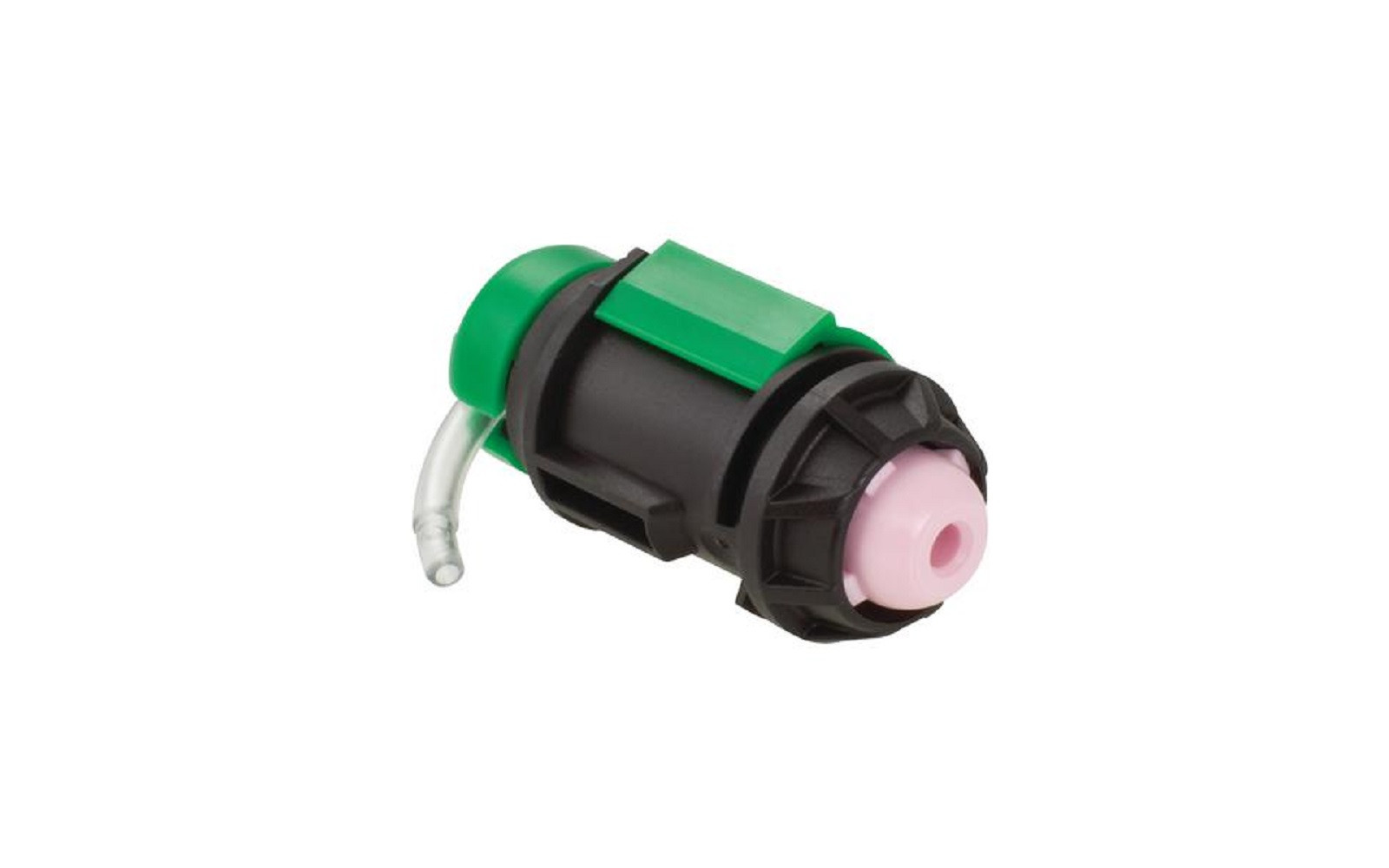
Top 10 Glass Ionomer Restoratives.
Glass ionomer restoratives compared: Fuji II LC, EQUIA Forte, packable Fuji IX, and Ketac Silver cermet.
How to Choose a Glass Ionomer Restorative
Glass ionomer on a restorative list means four different chemistries. Resin-modified, light-cured materials (Fuji II LC, Fuji Automix LC, Ionolux, Photac Fil Quick) give you a command set. Conventional self-cure materials (Fuji IX GP Extra, IonoStar Plus, Ketac Silver) set on their own and do not need a curing light to finish the ionomer. Glass hybrids (EQUIA Forte and EQUIA Forte HT) are a high-viscosity ionomer plus a light-cured coat. Geristore is a dual-cure resin ionomer in a syringe, aimed at root-surface lesions where the margin is hard to keep dry and hard to reach with light.
Fluoride release is real for this class and is not a reason to put a glass ionomer on a high-stress occlusal and walk away. VOCO’s IonoStar Plus page is explicit that Class I use is for non-occlusion-bearing cavities, with Class II listed as semi-permanent. GC’s EQUIA Forte system includes the coat; placing the capsule and skipping the coat is a different restoration from the one GC describes.
Buying criteria that actually change the outcome
- Command set vs chemical set — light-cured RMGIs when you need to move on and can get light to the restoration. Self-cure when the lesion is a bulk you do not want to depend on light to finish, accepting a waiting time (IonoStar Plus is two minutes from placement in VOCO’s description).
- Coat or no coat — EQUIA Forte and Forte HT are glass-hybrid systems. The nanofilled coat is light-cured over the ionomer. Fuji IX is often coated too. A light-cured RMGI such as Fuji II LC is not that two-step hybrid.
- Esthetics — Ketac Silver is a silver cermet and it is gray. EQUIA Forte HT is the higher-translucency glass hybrid. Fuji II LC is a tooth-colored RMGI for cervical and primary teeth. Do not promise a composite polish from any of them.
- Mixer vs syringe — most of the GC and 3M capsules need a triturator. Fuji Automix LC is the paste-paste RMGI that does not. Geristore is a dual-cure syringe, not a capsule.
- Where composite fails first — cervical erosion, root caries, primary teeth, and interim posterior restorations in a wet field are why these materials exist. A visible Class IV is still a composite conversation.
| Material | Maker | Family | How it sets | Best use | Watch-out |
|---|---|---|---|---|---|
| Fuji II LC | GC | Resin-modified GI | Light-cure capsule | Class III and V, cervical erosion, primary teeth, base | Not a glass-hybrid bulk posterior system |
| EQUIA Forte | GC | Glass hybrid plus coat | Ionomer self-cures; coat is light-cured | Class I, II, and V, including higher-caries patients | The coat is part of the restoration |
| Geristore | DenMat | Dual-cure resin ionomer | Dual-cure syringe | Cervical and root-surface lesions, including subgingival | Not a packable capsule GI |
| Fuji IX GP Extra | GC | Packable conventional GI | Self-cure capsule | Posterior, ART, high-caries, no light required | More opaque than Forte HT; coat is still part of a good GI finish |
| Ionolux | VOCO | Resin-modified GI | Light-cure capsule | Cervical, primary, and other RMGI indications | Needs a light; not IonoStar Plus |
| Photac Fil Quick | 3M | Resin-modified GI | Light-cure Aplicap | Cervical and primary RMGI restorations | Legacy 3M capsule; confirm it is still the SKU you want |
| EQUIA Forte HT | GC | Higher-translucency glass hybrid | Ionomer self-cures; coat is light-cured | Same hybrid idea as Forte, better shade match | Still not a composite; still needs the coat |
| Fuji Automix LC | GC | Resin-modified GI | Light-cure automix syringe | RMGI liner or cervical fill without a capsule mixer | Same light-cure limits as other RMGIs |
| IonoStar Plus | VOCO | Fast-setting conventional GI | Self-cure, about 2 minutes; no conditioner required | Non-occlusion-bearing Class I, semi-permanent Class II, Class III and V, primary, core, liner | Not a permanent bite-bearing Class II |
| Ketac Silver | 3M | Silver cermet GI | Self-cure Aplicap | Cores and non-esthetic posterior fills | Gray. Not a tooth-colored restorative |
When the ionomer is a cement or a core instead of a filling: GI luting cements · core buildup materials
1. GC Fuji II LC® — GC America

GC Fuji II LC is a resin-modified glass ionomer in capsules. You triturate, place, and light-cure. GC’s long-standing indications are the ones RMGIs are actually good at: Class III and Class V, cervical erosion and abrasion, root caries, primary teeth, and a base or liner under another restorative. It releases fluoride. A cavity conditioner is part of getting the bond GC describes; the material is more forgiving of moisture than a composite and still not a license to restore a bleeding sulcus.
Light cure is the reason it wins over Fuji IX when you want a command set in a cervical lesion you can see. It is not EQUIA Forte. You are not bulk-filling a permanent occlusal with a glass hybrid and a coat. You are placing a tooth-colored RMGI where flexure, wet dentin, and fluoride matter more than a mirror finish.
Who it is for: Practices that want a capsule RMGI with a light cure for cervical lesions, primary teeth, and liners, and that already have a mixer.
Tradeoff: Needs the curing light and, for best results, the conditioner. A deep Class II in an adult is the wrong hero case. Capsules that are activated and then left will set in the tip. Shade range is GI shade range — translucent enamel incisal edges are a composite.
2. EQUIA® Forte — GC America

GC EQUIA Forte is a bulk-fill glass hybrid: a high-viscosity glass ionomer, in the Fuji IX tradition, plus EQUIA Forte Coat, a light-cured nanofilled resin coating. The capsule is the restorative. The coat is not optional decoration. GC indicates the system for Class I, II, and V restorations, including patients with higher caries risk, where a moisture-tolerant bulk fill is more realistic than rubber-dam composite.
The ionomer sets chemically, so you are not depending on light to cure the bottom of a 4 mm base the way you are with a bulk-fill composite. You do light-cure the coat. That combination is the product. Skipping the coat because the schedule slipped is how a Forte restoration becomes a plain high-viscosity GI with a rough surface.
Who it is for: Offices placing bulk-fill glass hybrids in posterior and cervical teeth, especially when isolation or caries risk makes composite the more fragile plan.
Tradeoff: It will not polish like Filtek. Forte (this listing) is the earlier hybrid; Forte HT is the higher-translucency version in item 7. Do not stock both by accident and tell patients they are the same shade family unless you have checked. Occlusal wear and the coat’s integrity are the review points at recall, not a composite shine.
3. Geristore® — DenMat

Geristore is DenMat’s dual-cure resin ionomer, sold in this listing as a 5 g syringe intro kit rather than a capsule. Dual cure matters at the margin you cannot bathe in light: subgingival root caries, cervical lesions that run under the tissue, and other root-surface restorations where a purely light-cured RMGI or composite is hard to isolate and hard to cure. It is hydrophilic relative to a standard composite, which is the clinical point, and it is not a conventional packable glass ionomer.
Syringe delivery fits those lesions better than a capsule aimed at an occlusal box. You can place it where a triturated Fuji IX would be the wrong viscosity and the wrong esthetic. It is also the odd one out on a “glass ionomer restorative” list: resin ionomer chemistry, dual cure, no GC coat, no silver cermet color.
Who it is for: Clinicians restoring root caries and cervical lesions at or below the gingiva who want a dual-cure resin ionomer instead of a light-only RMGI.
Tradeoff: Dual cure still wants a clean field and a read of DenMat’s bonding steps. It is not Ketac Silver and it is not EQUIA Forte — do not bulk-fill an occlusal and coat it with a different manufacturer’s glaze. Tooth-colored resin ionomer can still show if the shade is wrong; gray cermet is worse. Intro kits are a poor long-term inventory plan; reorder the syringe you actually use.
4. GC Fuji IX GP® Extra — GC America

GC Fuji IX GP Extra is a packable, high-viscosity conventional glass ionomer in capsules. It is self-cure. No curing light is required to set the ionomer, which is why it remains an ART and outreach material and a posterior restorative where the light and the dam are not realistic. “Extra” is GC’s higher-translucency, faster-setting development of Fuji IX, not a resin-modified Fuji II LC.
Packable means you can condense it into a Class I or V and it will hold shape while it sets. It is still opaque next to EQUIA Forte HT, and the surface still wants a coat or varnish if you care about early water balance — read the current GC instructions rather than leaving it bare because it “sets on its own.” Fluoride release and chemical bond to tooth are the GI reasons to choose it over a composite you cannot isolate.
Who it is for: Clinics that place conventional packable GI in posterior and cervical teeth, including settings where a curing light is a poor plan, and that have a capsule mixer.
Tradeoff: Self-cure means you wait. It is not a command-set RMGI. Esthetics are the reason Forte HT exists. Do not use it as a tooth-colored core if the margin will show; Ketac Silver is the ugly radiopaque core, and a dual-cure composite is the cuttable one.
5. Ionolux® — VOCO

VOCO Ionolux is VOCO’s light-cured, resin-modified glass ionomer in application capsules. It is the VOCO answer to Fuji II LC: triturate, place, light-cure, for the cervical, primary, and liner indications an RMGI is for. It is not IonoStar Plus. IonoStar Plus is the self-cure capsule later on this list, with a two-minute chemical set and a different indication list.
Choose Ionolux when you want VOCO’s RMGI and you can get a curing light onto the restoration. Fluoride release is part of why you are in the GI drawer at all. The capsule still needs the applicator VOCO names (an AC-type gun is the usual family). A light-cured RMGI that never sees the light is just a chemical accident.
Who it is for: VOCO users who want a capsule RMGI with a command set for Class V, primary teeth, and liners.
Tradeoff: Do not substitute it for IonoStar Plus’s self-cure posterior protocol, and do not give it EQUIA’s coat-and-bulk story. Confirm the shade and the curing time on the current IFU. Capsules without a working gun are inventory, not a restorative.
6. Photac™ Fil Quick Aplicap™ — 3M

3M Photac Fil Quick is a resin-modified glass ionomer in 3M Aplicap capsules, light-cured. It sits in the same clinical slot as Fuji II LC and Ionolux: cervical restorations, primary teeth, and other RMGI fills where fluoride and a command set matter. Aplicap delivery means a 3M capsule activator and applier, not a GC capsule gun and not a syringe.
It is an older 3M restorative. That does not make the chemistry imaginary; it does mean you should confirm the shade and the package you are about to buy are current, and that the office still owns the Aplicap tool. Ketac Silver, later on this list, is the other 3M capsule and it is a gray cermet. They are not substitutes.
Who it is for: Offices already tooled for 3M Aplicaps who want a light-cured RMGI refill.
Tradeoff: Legacy SKUs get discontinued, and a light-cure RMGI with no applier is a paperweight. It is not a glass hybrid and it is not dual-cure. If the lesion is under the gingiva and the light cannot reach, Geristore’s dual cure is the more honest tool on this page.
7. EQUIA Forte® HT — GC America

GC EQUIA Forte HT is the higher-translucency generation of the EQUIA Forte glass hybrid. The architecture is the same: a high-viscosity glass ionomer in a capsule, plus a light-cured coat. HT is the one you pick when Forte’s opacity was the reason the restoration was obvious. It is still a glass hybrid, not a nanofill composite, and the coat is still part of the system.
Indications follow the Forte idea — posterior and cervical bulk-fill glass hybrid where composite isolation is the weak point. Translucency does not remove the need to keep early moisture off an unset ionomer or to cure the coat. If both Forte and Forte HT are on the shelf, the chart should say which coat and which capsule, or the shade match you bought HT for will be accidental.
Who it is for: Practices that like EQUIA’s bulk-fill glass hybrid and want the more tooth-like HT version for restorations patients will see.
Tradeoff: Better translucency is not composite esthetics in the incisal third. Do not skip the HT coat because the capsule looked done. Do not assume HT and original Forte capsules are interchangeable in a split-shade kit without checking GC’s current shade map.
8. GC Fuji Automix LC — GC America

GC Fuji Automix LC is a resin-modified glass ionomer in a paste-paste automix syringe, light-cured. It is the Fuji II LC idea without the capsule mixer: liner, base, and RMGI restorations you can inject. That matters in a room that does not have a triturator, or when you want a small cervical increment without activating a capsule.
The chemistry class does not change because the delivery did. You still light-cure it. You still respect RMGI indications rather than bulk-filling a permanent occlusal the way EQUIA’s hybrid system describes. Automix waste in the tip is the cost of skipping capsules; for a single small liner the waste can be most of the mix.
Who it is for: Offices that want GC’s light-cured RMGI and do not want to depend on a capsule mixer for every cervical or liner.
Tradeoff: Tip waste and a light-cure requirement. It will not set in the dark like Fuji IX or IonoStar Plus. It will not dual-cure under tissue like Geristore. If the practice already runs Fuji II LC capsules well, a second RMGI format mostly adds inventory unless the mixer is the bottleneck.
9. IonoStar® Plus — VOCO

VOCO IonoStar Plus is a fast-setting conventional glass ionomer in application capsules. VOCO’s page lists a chemical set of about two minutes from placement, no preparatory conditioner, a viscosity that changes so it adapts and then packs, fluoride release, tooth-like fluorescence, and radiopacity they state at 230% aluminum. Indications on that page: non-occlusion-bearing Class I, semi-permanent Class I and II, Class III and V, root caries, deciduous teeth, base or liner, core build-up, temporary restorations, and extended fissure sealing.
Read the occlusion line twice. This is not a permanent load-bearing Class II composite replacement. It is a fast GI for the lesions VOCO names, including a core when a glass ionomer core is what you wanted (see also Ketac Silver if you need a radiopaque cermet). The new capsule tip is part of the pitch — smaller cavities and hard-to-reach spots — and it still needs VOCO’s AC applicator.
Who it is for: Clinicians who want a fast self-cure GI, without a conditioner step, for cervical lesions, primary teeth, non-occlusion-bearing Class I, and semi-permanent posterior fills.
Tradeoff: Two minutes is fast for a self-cure and still a wait. Class II as a permanent, occlusion-bearing restoration is outside VOCO’s wording. It is not light-cured Ionolux. Fluorescence and fluoride do not make the surface a composite. Capsules require the gun.
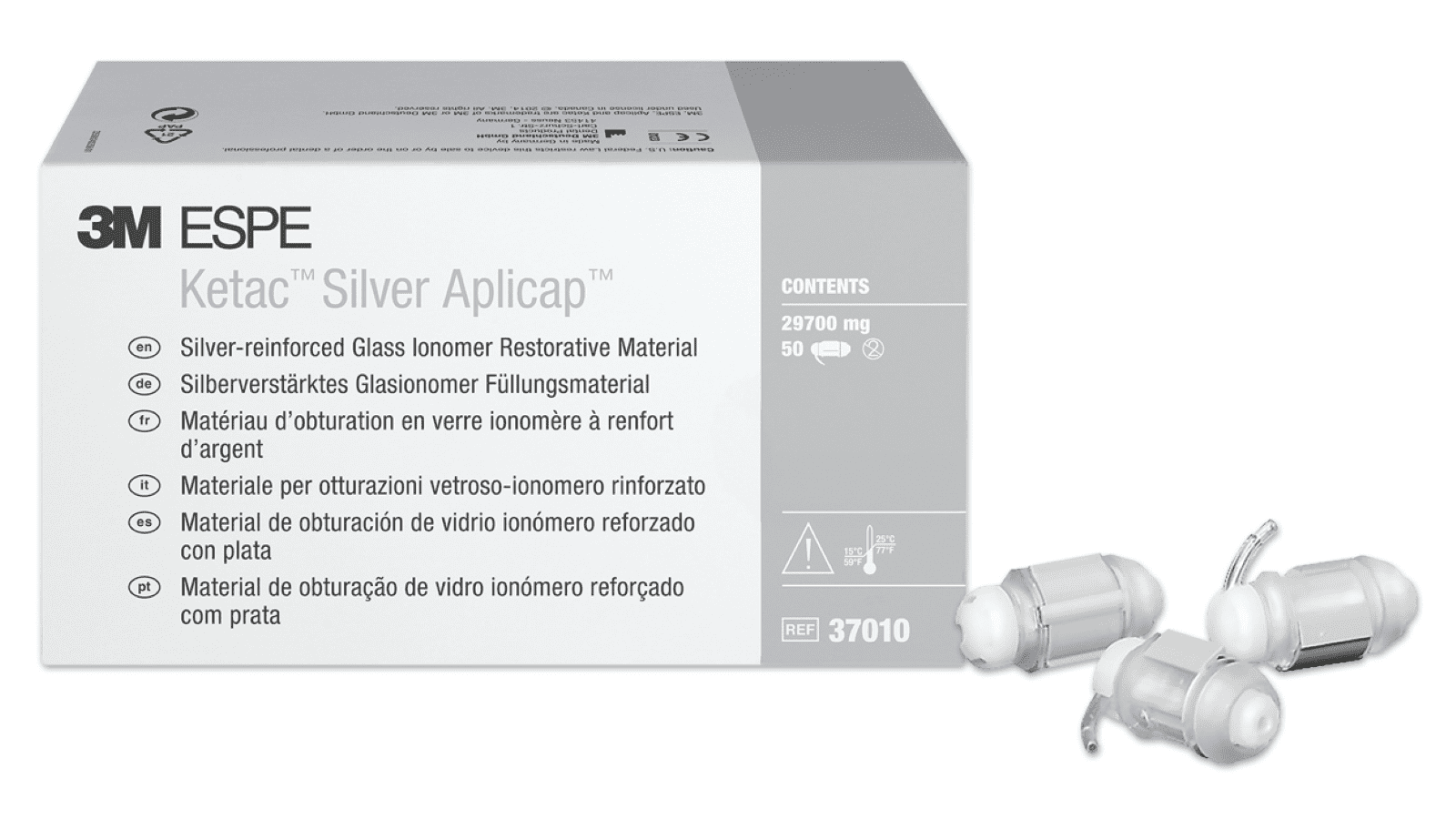
10. Ketac™ Silver Aplicap™ — 3M

3M Ketac Silver is a silver-reinforced glass ionomer (a cermet) in Aplicap capsules, self-cure. The silver makes it radiopaque and gray. It is a core and non-esthetic posterior material, not a cervical esthetic GI. Fluoride release and a chemical set remain, which is why it is still used under crowns and in places a tooth-colored filling was never the point.
On a restorative list it is the contrast case. Fuji II LC, Ionolux, and Forte HT are about hiding the filling. Ketac Silver is about a radiopaque, self-cure bulk you can place when isolation is mediocre and the crown will cover the color. The same capsule appears on the core-buildup guide for that reason. It cuts differently from dentin — harder and more likely to ditch the tooth if you are prepping a margin — which is the opposite of what DMG claims for LuxaCore.
Who it is for: Offices that want a gray, radiopaque, self-cure cermet for cores and posterior restorations that will not show, and that already have Aplicap tools.
Tradeoff: Patients will see it if the crown margin does not cover it. It is not a substitute for EQUIA Forte HT. Self-cure means you wait before you prep the core. Silver reinforcement is not a bonded composite’s strength in a non-retentive build-up; if the core has to retain a crown on a short tooth, look at a dual-cure core composite and a real adhesive.
Frequently Asked Questions
What is the difference between Fuji II LC and Fuji IX GP Extra?
Fuji II LC is a resin-modified, light-cured capsule for cervical lesions, primary teeth, and liners. Fuji IX GP Extra is a packable conventional glass ionomer that sets on its own, used for posterior and ART-style restorations when you do not want to depend on a curing light. Neither one is the EQUIA Forte glass hybrid plus coat.
Do I have to use the EQUIA coat?
Yes, if you are placing the EQUIA Forte or Forte HT system GC describes. The capsule is the high-viscosity ionomer; the coat is light-cured over it. Skipping the coat is a different restoration.
Can IonoStar Plus restore a biting Class II?
VOCO lists Class I as non-occlusion-bearing and Class II as semi-permanent, along with Class III and V, root caries, primary teeth, cores, liners, and temporaries. It is a fast self-cure GI (about two minutes, no conditioner on their page), not a permanent high-stress occlusal composite.
When is Ketac Silver the right glass ionomer?
When you want a self-cure silver cermet: radiopaque, gray, and typically a core or a posterior fill that will be covered. It is the wrong choice when the patient will see the restoration. Tooth-colored RMGIs and EQUIA Forte HT are the esthetic side of this list.
Read next
Stay on restorative materials:
Related articles
Keep exploring related topics from Dental Country.
Top 5 Core Buildup Materials in Dentistry
Core buildups compared honestly: dual-cure LuxaCore and Clearfil versus cermet and light-cure composites.
Read article
Top 10 Amalgam Carvers for Dentists
Dental carvers by tip: Ward, Hollenback, discoid-cleoid, and IPC, plus the PFI and Bliss that are for composite.
Read article
Top 10 Bottle Cleaners for Dentists
Compare the best Bottle Cleaners for Dentists — our researched Top 10 ranking of the leading brands and options to help you choose the right fit for your practice.
Read article
7 Dental Websites to be Inspired by
Compare the best 7 Dental Websites to be Inspired by, ranked on performance, features, and value to help you choose the right fit for your practice.
Read article