
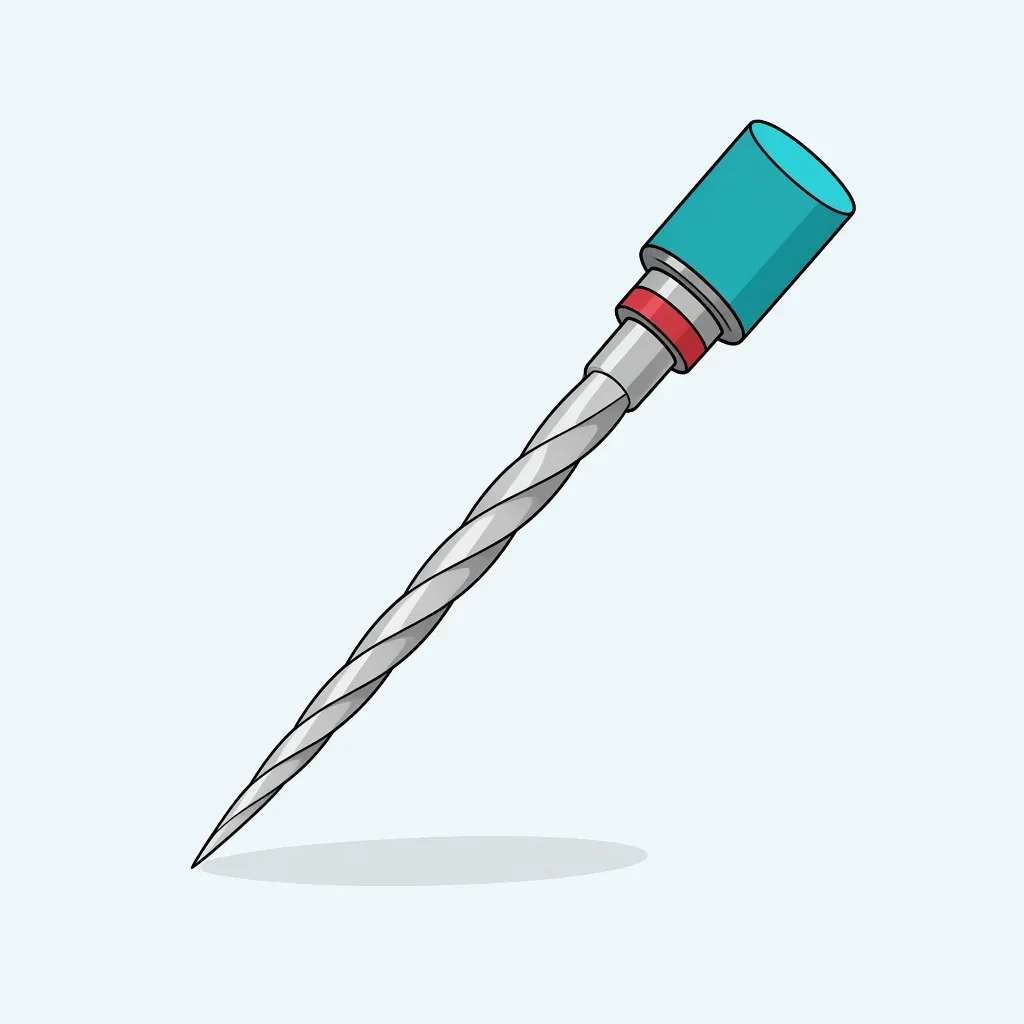
Endodontic Rotary Files: TF Adaptive, ZenFlex, K3
Compare 10 rotary files, including TF Adaptive, HyFlex CM, and HyFlex EDM, by motion, metal, and the speeds in the instructions.

Reviewed by Dr. Sean Myran, DMDDoctor of Dental Medicine, University of Pennsylvania
How we rank explains how these product lists are ordered.
How to Choose an Endodontic Rotary File
This list covers the Kerr, Coltene and Patterson NiTi files from the original ranking: TF Adaptive, Twisted Files, ZenFlex, K3, K3XF, Traverse, a Patterson house-brand file, and HyFlex CM and EDM. It isn’t a survey of every reciprocating system. ProTaper Gold and WaveOne Gold come up often in reviews, but they aren’t on this page. Whatever you choose, buy files that match the motion your motor actually runs.
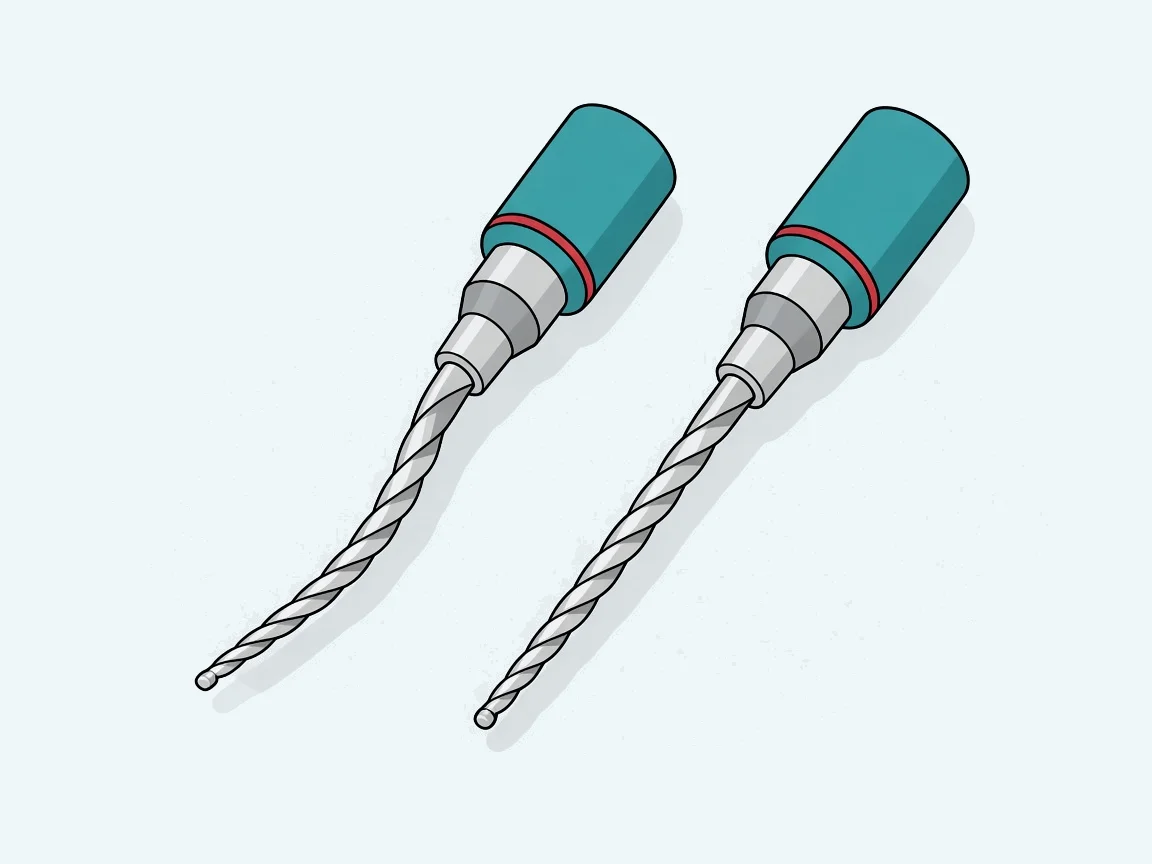
Metallurgy determines whether a file can be pre-bent and how much it tends to straighten a curve. K3 is ground NiTi: a stiffer, actively cutting file with a positive rake. K3XF is K3 with R-Phase heat treatment. ZenFlex is Kerr’s heat-treated controlled-memory file, which Kerr says holds a pre-curve. TF and TF Adaptive are twisted rather than ground. HyFlex CM and HyFlex EDM are controlled-memory files you can pre-bend, and Coltene says the heat of autoclaving can return an elastically deformed file toward its original shape. EDM adds an electrical-discharge-machined surface and a shorter sequence. Traverse is a glide-path file, not a finishing file.
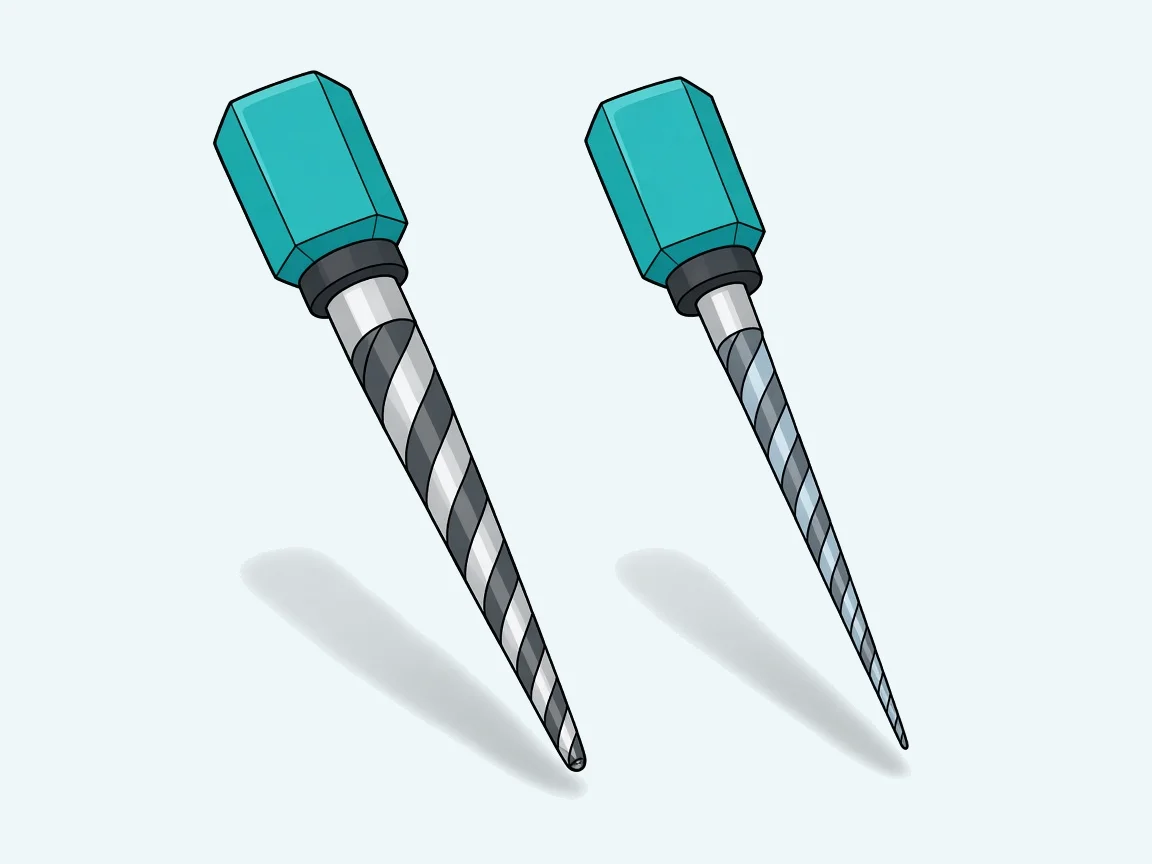
What actually changes the outcome
- Motion. TF Adaptive is designed for Kerr’s Adaptive Motion on an Elements motor, which shifts between rotation and reciprocation as the file loads. Twisted Files, ZenFlex, K3, K3XF, Traverse, HyFlex and Patterson’s NiTi files run in continuous rotation. An Adaptive file on a generic rotary preset isn’t the same procedure.
- Heat-treated or ground NiTi. Controlled-memory and other heat-treated files follow curves and can be pre-curved. Conventional ground files cut efficiently but can transport a curved canal if you push them.
- Sequence length. K3 and Twisted Files are multi-file sequences. Coltene’s HyFlex EDM literature says small, straight canals can be shaped with the OneFile after a glide path. Fewer files doesn’t mean less irrigation.
- Glide path versus shaping. The Traverse listed here is a 0.06-taper rotary glide-path file. Establish the path, then switch to the shaping file. Keep in mind that a 0.06 path file removes more dentin than a 0.02 scout.
- Length and pack size. Most of these refills are 25 mm. A 21 mm tooth doesn’t need a 25 mm file worked to the stopper, so match the length to the tooth before comparing brands.
| File | Maker | Metallurgy and motion | Role in the canal | Watch-out |
|---|---|---|---|---|
| TF Adaptive, small canals | Kerr | Twisted NiTi; Adaptive Motion | Small-canal assortment for the Elements adaptive motor | Not for a continuous-rotary preset |
| TF Twisted Files | Kerr | Twisted, not ground; continuous rotation | Rotary shaping sequence | Different motion from TF Adaptive |
| TF Adaptive procedure packs | Kerr | Same Adaptive files, procedure packaging | A per-case pack rather than a small-canal refill | Still needs Adaptive Motion |
| ZenFlex | Kerr | Heat-treated controlled memory; holds a pre-curve; continuous rotation | Shaping files, 25 mm in this listing | Flexible, but not adaptive motion |
| K3 | Kerr | Ground NiTi, positive rake; continuous rotation | Classic shaping sequence, 25 mm | Stiffer than K3XF or HyFlex in curves |
| Patterson NiTi | Patterson | NiTi; constant rotation, radial-landed flutes | 25 mm, 6 per pack; .04 and .06 tapers | Instructions do not name a heat treatment. Avoid abrupt apical curves. |
| K3XF | Kerr | Heat-treated K3; continuous rotation | More flexible K3 shaping, 25 mm | Not the original K3, and not HyFlex EDM |
| HyFlex CM | Coltene | Controlled memory; pre-bendable; continuous rotation | Shaping files, 25 mm | Heat can restore some elastic deformation; no EDM surface |
| Traverse | Kerr | Rotary glide path, 0.06 taper in this SKU | Glide path before shaping, 4 per pack | Not a finishing file; 0.06 is a wide path |
| HyFlex EDM | Coltene | EDM surface plus controlled memory; continuous rotation | Reduced sequence; refills of 3 | Use Coltene’s rpm and torque, not a K3 preset |
Isolation and obturation: rubber dam clamps · obturation systems
1. TF Adaptive Files, Small Canals — Kerr

Kerr TF Adaptive files are twisted rather than ground nickel-titanium, designed for Adaptive Motion on Kerr’s Elements motor. That motion stays in rotation until the file comes under stress, then shifts toward reciprocation. The small-canal refill (4 per pack in this listing) covers the narrow-canal end of the system. It isn’t a general-purpose rotary for any endo motor.
Kerr’s durability argument is that twisting preserves the metal’s grain structure, where grinding cuts across it. The practical requirement is the motor. If your practice doesn’t have Adaptive Motion, start with a continuous-rotary file (ZenFlex, K3XF, HyFlex) or buy the motor together with the files.
Who it is for: Endodontists and GPs who already shape with an Elements motor in Adaptive Motion.
Tradeoff: Another manufacturer’s reciprocation program isn’t the same as Adaptive Motion. Small-canal files are the wrong choice for a wide, straight retreatment that needs a larger tip. Follow Kerr’s sterilization and discard schedule, since twisted construction doesn’t mean unlimited reuse.
Sources: Kerr TF Adaptive files page.
2. TF® Twisted Files — Kerr

Kerr Twisted Files are the continuous-rotation version of Kerr’s twisted NiTi. You run them on a rotary preset in a sequence, as you would a conventional rotary system. The 3-pack listed here is a refill of the rotary file, not an Adaptive Motion pack.
The difference from item 1 is the motor setting: same family name, different motion. TF files in continuous rotation don’t do the load-based switch that Adaptive Motion is built around, and TF Adaptive files shouldn’t be run on a TF rotary preset as a substitute. Choose Twisted Files when you want Kerr’s twisted metallurgy and prefer to stay in continuous rotation.
Who it is for: Practices shaping in continuous rotation that want twisted NiTi rather than a ground or controlled-memory file.
Tradeoff: You still need a glide path and a full sequence. Twisted files are more flexible than older ground NiTi, but they aren’t HyFlex EDM and don’t recover their shape in the autoclave the way Coltene describes for HyFlex. Choose tip size and taper based on the canal you’ve just scouted.
Sources: Kerr TF Twisted Files page.
3. TF Adaptive Procedure Packs — Kerr

These are Kerr TF Adaptive files sold as procedure packs (6 per pack in this listing) rather than as the small-canal refill in item 1. The metallurgy and motion are the same. What changes is that you get the files for one Adaptive protocol packaged together for a case, instead of a set of identical small-canal refills.
Procedure packs make sense when every clinician in the office uses the same Adaptive sequence and you want trays set up to match the motor preset. They’re a poor fit if half the office still uses continuous-rotation K3 or HyFlex, because files end up in the wrong motor and the system gets the blame.
Who it is for: Offices standardized on TF Adaptive that want ready-made packs for operatory setup.
Tradeoff: It’s new packaging, not a new file, and still needs Elements Adaptive Motion. If a pack includes sizes you never use, it costs more per canal than refills of the two sizes you do. Keep Adaptive packs separate from your K3 cassettes.
Sources: Kerr TF Adaptive files page.
4. ZenFlex™ — Kerr

Kerr ZenFlex is a heat-treated, controlled-memory NiTi rotary shaping file, listed here in the 25 mm length, 6 per pack. Kerr markets the heat treatment for flexibility in curved canals and says the file holds a pre-curve. It runs in continuous rotation, doesn’t use Adaptive Motion, and isn’t a glide-path file.
A heat-treated file like this is a good choice when K3 feels too stiff for the curve you see on the preoperative radiograph and you don’t want to switch to Adaptive Motion or a dedicated reciprocating system. The extra flexibility reduces the tendency to straighten the canal. You still need a glide path, irrigation and a torque limit set for ZenFlex rather than an old K3 preset.
Who it is for: Continuous-rotary users who want Kerr’s heat-treated shaping file for curved canals, where 25 mm suits the working length.
Tradeoff: A flexible file can still separate if it binds in rotation, so confirm the rpm and torque in Kerr’s current preset before the first molar. Kerr’s claim that ZenFlex holds a pre-curve is different from Coltene’s claim that a deformed HyFlex recovers its shape in the autoclave.
Sources: Kerr ZenFlex page.
5. K3™ — Kerr

Kerr K3 is Kerr’s classic ground NiTi rotary, used in continuous rotation. Kerr describes a triple-fluted asymmetric design with a positive rake angle for active cutting, radial lands that support the blade, a third radial land that keeps the file centered, and a variable pitch that moves debris coronally. This refill is 25 mm, 6 per pack. It cuts well, and it’s stiffer than the heat-treated files that followed it, including K3XF and the controlled-memory HyFlex files on this list.
There are still good reasons to use K3. A wide, fairly straight canal, a retreatment that needs an actively cutting file, or a clinician who knows the sequence well will all get a predictable shape. The risk is taking that same stiff file to the apex of a sharply curved molar simply because it’s what’s in the cassette. That case is better suited to K3XF, ZenFlex or HyFlex, after a glide path.
Who it is for: Clinicians who already use the K3 sequence in continuous rotation and want the original ground file rather than the XF version.
Tradeoff: The positive rake cuts efficiently but can transport a curved canal if you push. If you want a more flexible file, reorder K3XF, not K3. Don’t run K3 at HyFlex EDM torque settings, since it cuts very differently from a controlled-memory file.
Sources: Kerr K3 file page; Kerr K3 shaping page.
6. Patterson® NiTi Rotary Files

The Patterson NiTi rotary files in this listing are 25 mm, 6 per pack. Patterson’s 25 mm family page says the files have radial-landed U-shaped flutes that lift debris coronally, allowing a crown-down technique and a continuously tapering preparation from orifice to apex. The safety tip has a minimal transition angle, which Patterson says is to prevent ledging and transporting. The page also lists a safe-ended tip, a 13 mm handle, color-coded bands for tip size, and color-coded silicone stops for taper. A hand file must be used before any rotary instrument. The 25 mm assortment includes .04 taper files and several .06 taper sizes.
The September 2023 instructions, manufactured for Patterson Dental Supply, describe the working part as a nickel-titanium alloy with a colored silicone stopper and a plated brass shank. They say to use the files in constant rotation at 150–350 rpm, and to set torque from the file-size table in that document. They do not describe heat treatment, a twisted manufacturing method, controlled-memory behavior, or Adaptive Motion. They say not to use these files in a canal with an abrupt apical curvature, because of the risk of separation, and to use pre-curved hand files in that apical region. The .04 and .06 ranges are listed as nonsterile boxes of 6. Instruments labeled sterile are single-use. Nonsterile instruments follow the processing steps in the instructions, and the silicone stops are not reused.
Who it is for: Practices buying the 25 mm Patterson NiTi refill for a constant-rotation crown-down sequence, using the speed and the torque table in Patterson’s instructions.
Tradeoff: This is not HyFlex CM and not TF Adaptive. The instructions specify constant rotation, not Adaptive Motion, and they do not describe controlled-memory behavior. In an abrupt apical curve, they say to switch to pre-curved hand files. Set the stopper to working length, as with the other 25 mm files.
Sources: Patterson NiTi rotary files, 25 mm; Patterson NiTi files instructions (September 2023).
7. K3XF™ — Kerr

Kerr K3XF is the heat-treated, more flexible version of K3, sold in a 25 mm refill, 6 per pack, for continuous rotation. The shaping design is still K3, but the metal is different. It’s the file to move to when the original K3 is too stiff for the curves you treat and you want to stay with a Kerr rotary sequence rather than switch to Coltene’s controlled-memory files or Adaptive Motion.
Don’t keep K3 and K3XF together in an unlabeled cassette. They look alike from the outside but behave very differently in a canal. Use the XF preset rather than old K3 torque settings.
Who it is for: K3 users who want a more flexible heat-treated file for curved canals without changing brands or motion.
Tradeoff: More flexible doesn’t mean unbreakable, and it isn’t a one-file system, so you still need a glide path and irrigation. K3XF doesn’t have HyFlex EDM’s electrical-discharge surface or Coltene’s shorter sequence. On a 21 mm tooth, a 25 mm file is fine as long as the stopper is set correctly.
Sources: Kerr K3XF procedure pack page.
8. HyFlex® CM — Coltene

Coltene HyFlex CM files are controlled-memory NiTi files for cleaning and shaping in continuous rotation, listed here at 25 mm, 6 per pack. Coltene supplies them presterilized by gamma irradiation and gives settings of 500 rpm and up to 2.5 Ncm. Controlled memory means the file can be pre-bent like a steel file and follows the canal rather than straightening it. The spirals may lengthen under force, and autoclaving can restore some deformation when it is elastic. Spirals that wind in the opposite direction during use are plastically deformed and won’t return to their original shape.
CM is the HyFlex to choose when you want a pre-bendable shaping file in a multi-file sequence and aren’t adopting the EDM OneFile protocol. It has a different surface and sequence from HyFlex EDM (item 10). Both are controlled memory, but only EDM is made by electrical discharge machining.
Who it is for: Clinicians shaping curved canals in continuous rotation who want a pre-bendable controlled-memory file and a conventional multi-file approach.
Tradeoff: Pre-bending helps with the curve you can see, but you still need a glide path. If a file hasn’t regained its shape after sterilization, discard it according to Coltene’s reuse rules rather than straightening it by hand. Don’t run it on an Adaptive Motion preset.
Sources: Coltene HyFlex CM instructions.
9. Traverse™ Glide Path Files — Kerr

Kerr Traverse, in this SKU, is a rotary glide-path file with a 0.06 taper, 4 per pack. A glide-path file creates a smooth, reproducible path to working length so that the first shaping file doesn’t cut a ledge. It doesn’t finish the canal, and the TF and K3 shaping files still need that path established first.
The 0.06 taper is worth noticing, because many glide-path files are 0.02 or 0.03. A 0.06 file removes more dentin while it’s establishing the path. That may suit a particular Kerr sequence, but it can take too much tooth structure in a long, thin root. Check the tip size on the package, since the listing only specifies taper, and make sure the path suits the shaping system you’ll use next.
Who it is for: Rotary users who want Kerr’s dedicated glide-path file before a TF, ZenFlex or K3 sequence and have deliberately chosen the 0.06 taper.
Tradeoff: A canal prepared only with Traverse isn’t shaped and isn’t ready to obturate. Don’t take a 0.06 path file around a severe curve as if it were a 0.02 scout. If your shaping system includes its own glide-path file, adding a second manufacturer’s 0.06 may over-enlarge the coronal third.
Sources: Kerr Traverse glide path page.
10. HyFlex® EDM — Coltene

Coltene HyFlex EDM files are controlled-memory NiTi files made by electrical discharge machining rather than grinding. Coltene credits the EDM surface for the files’ fracture resistance, alongside the same controlled-memory behavior as HyFlex CM: they can be pre-bent, follow the canal and recover their shape after autoclaving. They run in continuous rotation. Coltene’s instructions give shaping files 400–500 rpm and up to 2.5 Ncm, with glide-path files lower at 300 rpm and up to 1.8 Ncm. They’re supplied presterilized by gamma irradiation, and autoclaving can restore some deformation if it was elastic. The photo shows a 3-pack refill, so confirm which size is in the sleeve before setting the motor.
The main clinical difference from HyFlex CM is the shorter sequence. Coltene says small, straight canals can be prepared with the HyFlex OneFile (the variable-taper 25) after the glide path, while curved canals use a longer sequence. That’s a different procedure from a K3 or TF crown-down. EDM refills replace a specific size you’ve used up, not a stand-in for a CM 25/.06.
Who it is for: Practices that have adopted HyFlex EDM’s reduced continuous-rotary sequence and need refills of a particular size.
Tradeoff: Don’t run EDM on a K3 or Adaptive preset. The OneFile isn’t for every canal, and Coltene still describes longer sequences for curves. A 3-pack runs out quickly when you’re new to the system and discarding files early, which is the right instinct. Follow Coltene’s reuse and autoclave guidance, because shape recovery doesn’t mean unlimited use.
Sources: Coltene HyFlex EDM instructions; Coltene HyFlex EDM product page.
Frequently Asked Questions
Can I run TF Adaptive files in a normal rotary motor?
TF Adaptive is designed for Kerr’s Adaptive Motion, which shifts between rotation and reciprocation as the file loads, and a continuous-rotary preset doesn’t do that. For continuous rotation, Kerr’s twisted option is Twisted Files, not the Adaptive packs.
What is the difference between HyFlex CM and HyFlex EDM?
Both are Coltene controlled-memory files that can be pre-bent and regain their shape with heat. EDM files are made by electrical discharge machining and used in a shorter sequence, with Coltene’s own rpm and torque settings (400 rpm and up to 2.5 Ncm for the shaping files). CM is the controlled-memory file for a more conventional multi-file approach.
Is K3XF the same file as K3?
No. K3 is the original ground NiTi file with a positive rake, and K3XF is the heat-treated, more flexible version made for curves. Label them separately.
Do I still need a glide path if I bought a shaping file?
Yes. Traverse is on this list because a shaping file isn’t a glide-path file. This Traverse SKU has a 0.06 taper, which is larger than a 0.02 scout. Create the path, then shape. NiTi files don’t replace irrigation or accurate working length.
Read next
More on the endodontic setup:
What changed: Nov 2026: added a comparison table, manufacturer sources, and price ranges. Rewrote the product notes in plain language and removed repeated reviewer notes.
Related articles
Keep exploring related topics from Dental Country.

Core Buildup Materials: LuxaCore, Clearfil DC, Ketac
Core buildup materials: dual-cure LuxaCore and Clearfil, a gray Ketac Silver cermet, or a light-only composite.
Read article
Denture Acrylics: Lucitone 199, Nature-Cryl, Unifast
Denture acrylics for every job: Lucitone 199 heat-cure bases, chairside relines, self-cure repairs, and milled PMMA discs.
Read article
Dental Adhesives: Scotchbond, OptiBond, Clearfil SE
Scotchbond Universal, Single Bond 2, OptiBond Solo Plus, Clearfil SE Bond, and iBond, sorted by etch step.
Read article
Dental Rubber Dams: Latex vs Non-Latex, Framed vs Sheet
Latex versus latex-free rubber dam sheets from Hygenic, Fiesta, Flexi Dam, and SmartDam, compared by gauge, scent, and frame.
Read article