
Operatory Lights: LED Options and ISO 9680 Explained
Operatory lights by LED color, intensity, composite mode, and mounting: A-dec, Belmont, Planmeca, Pelton & Crane, and DentalEZ.

Reviewed by Dr. Sean Myran, DMDDoctor of Dental Medicine, University of Pennsylvania
How we rank explains how these product lists are ordered.
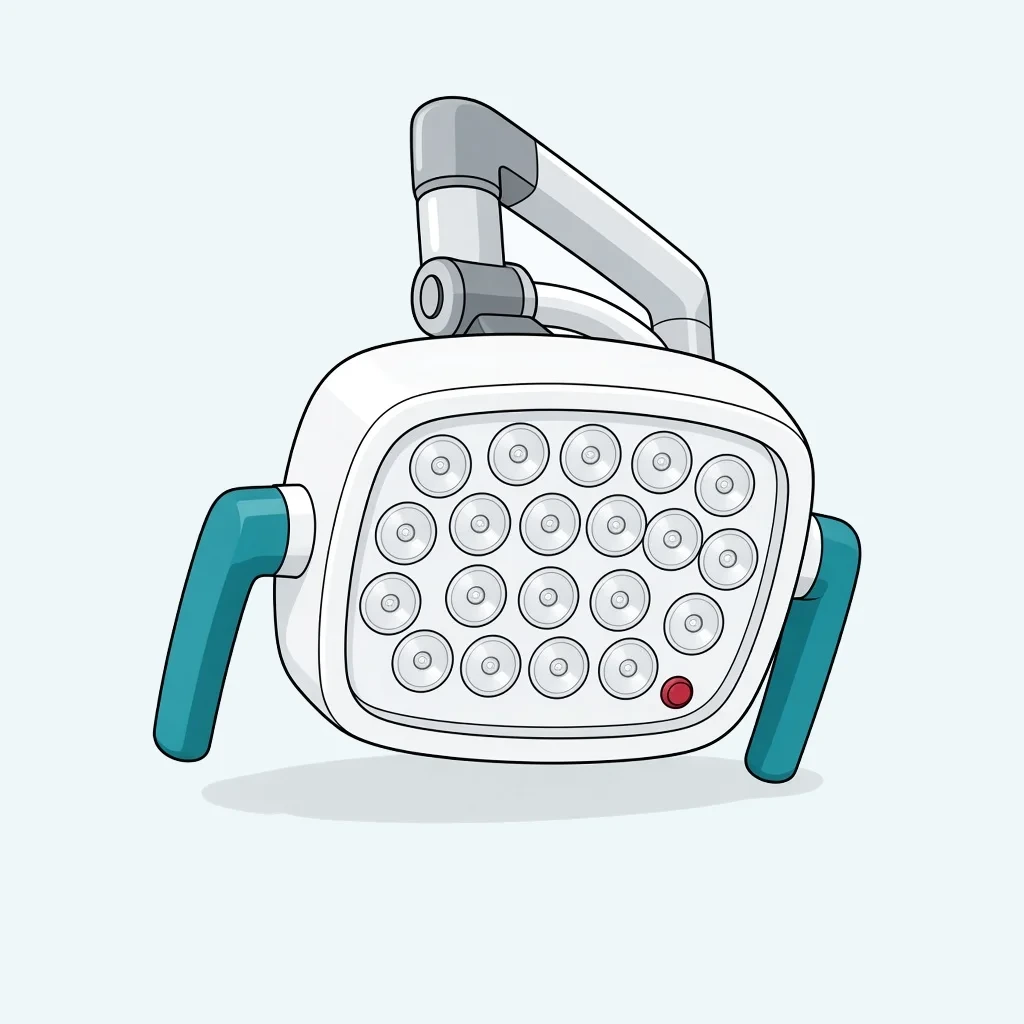
The operatory light is the light over the patient’s mouth, not the curing light in the handpiece tray and not the headlamp on your loupes. LED replaced halogen in current units. The useful differences are color for shade matching, a composite-safe mode, and whether the light mounts to the chair, the cabinet, the ceiling, or a track.
How to choose an operatory light
- Color temperature. Shade matching wants a neutral daylight, commonly around 5,000 K, without a strong blue or yellow cast. Ask to cure-safe the light and then look at a shade tab, not a white countertop.
- Intensity and pattern. You want a bright, even field in the mouth and less light in the patient’s eyes. A brighter spec is not better if the pattern has a hot spot.
- Composite mode. A no-cure or composite mode filters the wavelengths that set resin. It matters in restorative rooms. It is irrelevant in a surgery room that never places composite.
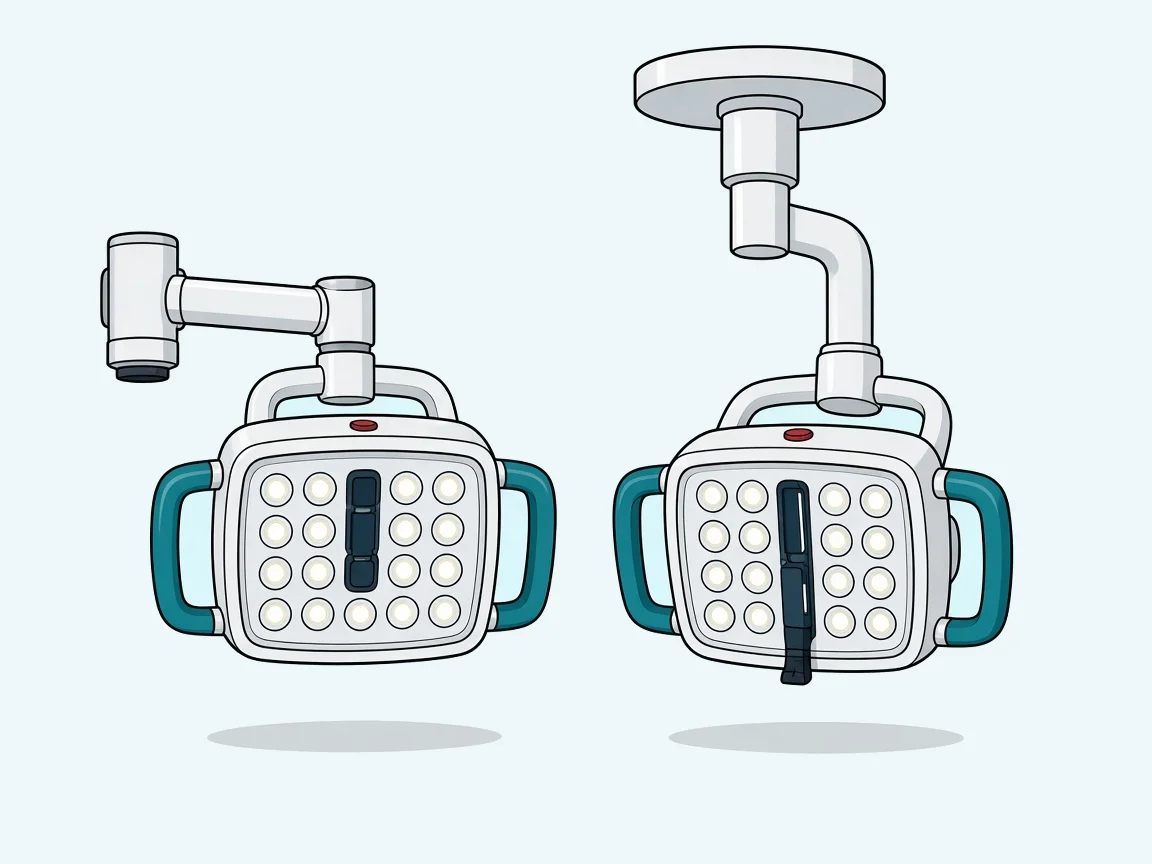
- Mount. Unit-mounted lights travel with the chair. Ceiling and track lights free the delivery unit and need a structural plan. A light that hits the assistant’s head all day is the wrong mount, whatever the brand.
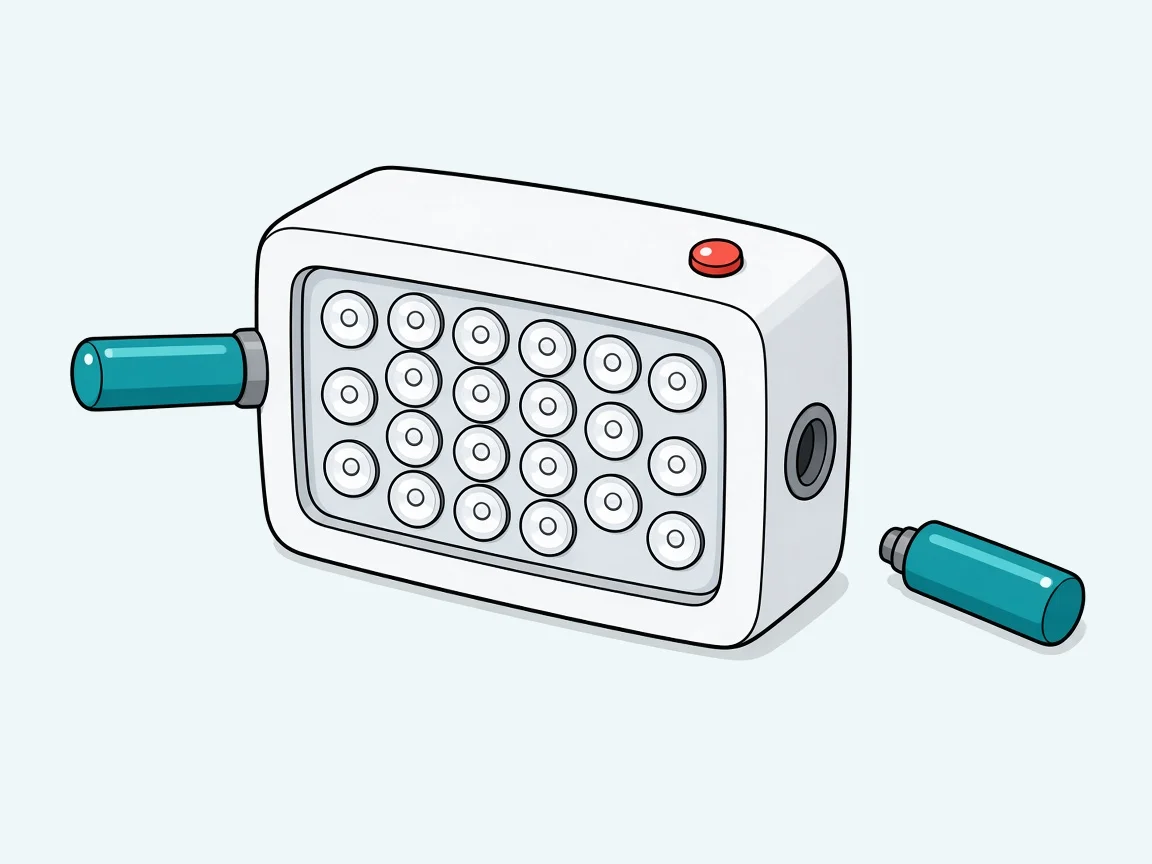
- Handles and barriers. Removable, autoclavable handles are the infection-control detail. Confirm the barrier sleeve you already buy actually fits.
How common operatory lights differ
| Brand | Known for | Best fit | Watch for |
|---|---|---|---|
| A-dec | LED lights on the 500 and related delivery systems | Offices buying A-dec chairs and delivery together | A light head from one generation may not mount on an older unit |
| Belmont | LED operatory lights sold with Belmont chairs | Practices standardizing on Belmont operatories | Compare mount options before the chair is bolted down |
| Planmeca | SingLED and the lights integrated on Planmeca units | Offices on Planmeca chairs | Integrated lights are not a free swap onto another brand’s unit |
| Pelton & Crane | LED heads from the Spirit-era operatories, including the service market | Offices keeping existing Pelton chairs | New manufacture ended; parts and refurbished heads are the live market |
| DentalEZ | LED lights paired with DentalEZ chairs and delivery | Offices already on DentalEZ | Confirm the arm reach over the headrest you actually use |
A-dec
A-dec’s LED lights are designed as part of the 500-series delivery and chair. Buying them with the unit avoids a mismatched arm. Retrofitting an older A-dec chair is a mount question: take the serial number to the dealer before you order a head that will not bolt on.
Belmont
Belmont sells LED operatory lights with its chairs. The clinical differences that show up in the mouth are color and the size of the pattern, which you can only judge in a lit operatory. Decide the mount while the chair position is still a drawing, not after the junction box is in.
Planmeca
SingLED is Planmeca’s operating light, and many Planmeca units carry an integrated light. Those heads belong on Planmeca delivery. They are not a universal upgrade for a different manufacturer’s arm.
Pelton & Crane
Pelton & Crane stopped building new dental equipment, and the Spirit chairs are now a refurbished and parts market. A replacement LED head for a chair you intend to keep can still be the right repair. It is a weak reason to buy a Pelton chair in the first place.
DentalEZ
DentalEZ lights follow DentalEZ chairs. The practical test is reach: with the headrest extended for a surgical or third-molar position, the light still has to land in the mouth without the arm sitting on the assistant. Do that test on the showroom chair before you sign.
Related guides
- Operatory equipment
- Dental chairs
- Delivery systems
- Operator stools
- Handpieces, including curing lights
What ISO 9680 covers
ISO 9680:2026 is the international standard for operating lights used in dental treatment to illuminate the patient’s oral cavity. It applies whatever the light source is. It does not apply to auxiliary lights, lights meant to touch the patient, lights in handpieces, dental headlamps, fibreoptic intraoral lights, or operating lights designed specifically for oral surgery. A loupe headlamp is outside this standard. Compare it on the headlamp guide, not by borrowing an operatory-light number.
Optical requirements in ISO 9680:2026 are specified at 700 mm so lights can be compared at one distance. Illuminance has to be adjustable, either continuously or in steps. The manufacturer’s specified maximum at the highest setting has to be at least 15,000 lx, and measured illuminance at the lowest and highest settings has to stay within 20 percent of the values the manufacturer declares. For general illumination of the oral cavity, the general colour fidelity index, Rf, has to be at least 85. That colour-fidelity requirement does not apply to modes intended only for handling light-activated restorative materials. The standard also limits illuminance in the patient’s eyes and sets a shadow requirement, tested with a 20 mm disc.
The CDC treats light handles as clinical contact surfaces: frequently touched surfaces in the patient-care area. Surfaces that are hard to clean should be barrier-protected, and the barrier should be changed between patients. Contact surfaces that are not barrier-protected are cleaned and disinfected after each patient with an EPA-registered hospital disinfectant. If the surface is visibly contaminated with blood, the CDC calls for an intermediate-level disinfectant, meaning one with a tuberculocidal claim. A light that cannot be barrier-wrapped or wiped on the manufacturer’s instructions is a light that fights the infection-control program.
Operatory light questions
Is this the same as a curing light?
No. A curing light polymerizes composite and lives in the handpiece rack or a cordless body. The operatory light illuminates the mouth. A composite mode on the operatory light only keeps that room light from setting the resin early.
Do I still need a headlamp if I buy a good operatory light?
Many dentists who wear loupes still want a headlamp, because the operatory light cannot follow a mirrored line of sight. The headlamp does not replace the room light for the assistant.
Is 15,000 lux a headlamp requirement?
No. ISO 9680:2026 sets that figure for dental operating lights, measured at 700 mm, and the standard excludes dental headlamps. A headlamp is a different device.
Sources
ISO 9680:2026
Dentistry — Operating lights. Scope and clause 4.1 requirements as published in the ISO standard and summarized from the public text of that edition, including the 700 mm test distance, adjustable illuminance, a specified maximum of at least 15,000 lx, colour fidelity Rf of at least 85 for general oral illumination, and the exclusion of dental headlamps.
Centers for Disease Control and Prevention
Sterilization and Disinfection. Dental Infection Prevention and Control.
Updated May 15, 2024cdc.gov (opens in a new tab)
Related articles
Keep exploring related topics from Dental Country.
Amalgam Separators: Solmetex, Rebec, Dürr, Metasys
Central or chairside amalgam separators, canister recycling, and how Solmetex, Rebec, Dürr, and Metasys differ.
Read article
Dental Cabinets: A-dec, Midmark, Pelton & Crane
Treatment room versus sterilization center cabinets, and how A-dec, Midmark, Pelton & Crane, and DentalEZ differ.
Read article
Delivery Systems: Rear, Side and Over-the-Patient
Over-the-patient, rear, and side delivery, and how A-dec, DentalEZ, Belmont, Pelton & Crane, Forest, and Planmeca systems differ.
Read article
Nitrous Oxide Systems: Porter vs Accutron, Plumbing
Nitrous oxide flowmeters, scavenging, and central gas versus portable tanks, and how Porter and Accutron systems differ.
Read article