

Nitrous Oxide Systems: Porter vs Accutron, Plumbing
Nitrous oxide flowmeters, scavenging, and central gas versus portable tanks, and how Porter and Accutron systems differ.

Reviewed by Dr. Sean Myran, DMDDoctor of Dental Medicine, University of Pennsylvania
How we rank explains how these product lists are ordered.
A nitrous oxide system is the flowmeter, the scavenging circuit, and the gas supply. Nasal hoods and disposable circuits are supplies that attach to it. The existing nitrous product list covers those masks and circuits. This guide is about the machine that mixes oxygen and nitrous and keeps waste gas out of the room.
How to choose a nitrous system
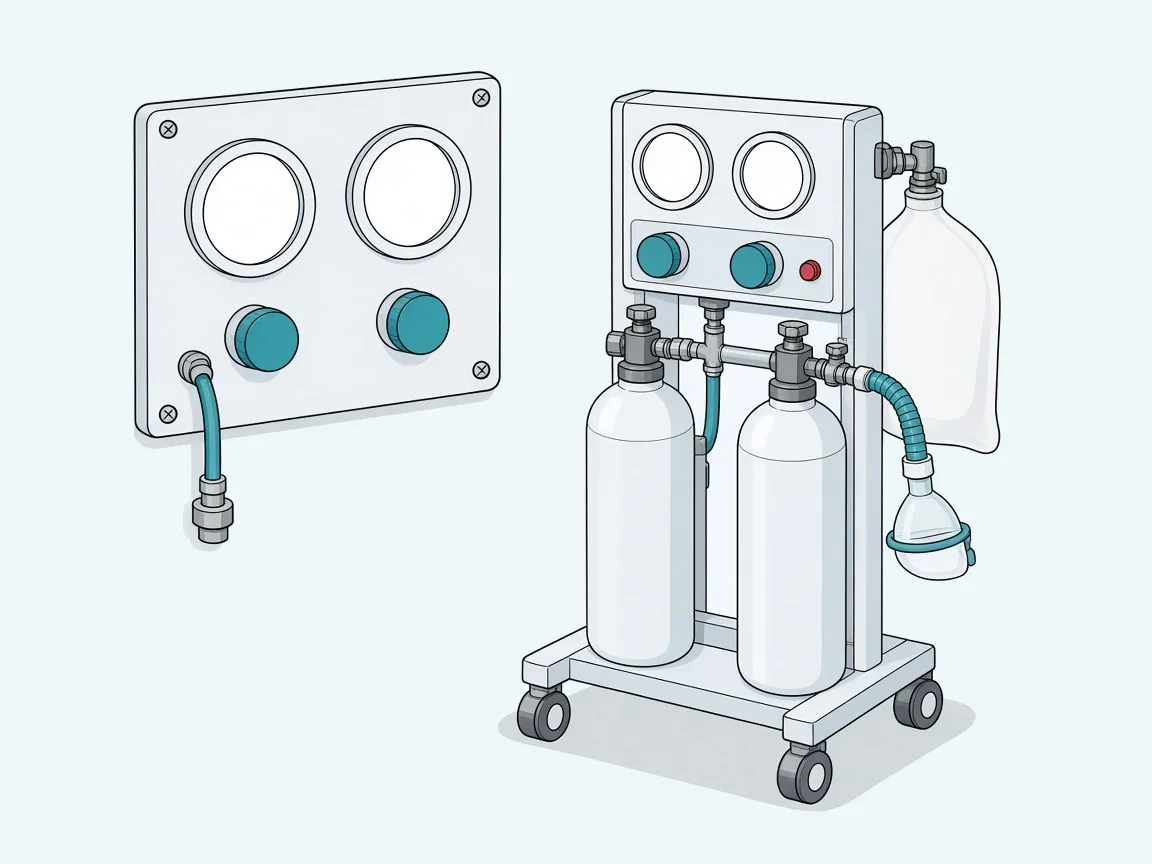
- Fail-safe mixing. Dental flowmeters are built so nitrous cannot flow if oxygen fails, and so the mix cannot drop below a minimum oxygen percentage. Confirm that behavior on the unit you are quoted. A medical anesthesia machine is a different device.
- Scavenging. A nasal hood without a scavenger dumps exhaled nitrous into the operatory. The scavenger needs its own vacuum source, rated for that flow, not the high-volume evacuator the assistant uses during a prep.
- Central gas or portable cylinders. A plumbed office has oxygen and nitrous manifolds, alarms, and a closet full of H cylinders. A portable stand carries E cylinders and moves between rooms. Plumbing costs more up front and is the right choice if more than one room uses nitrous every day.
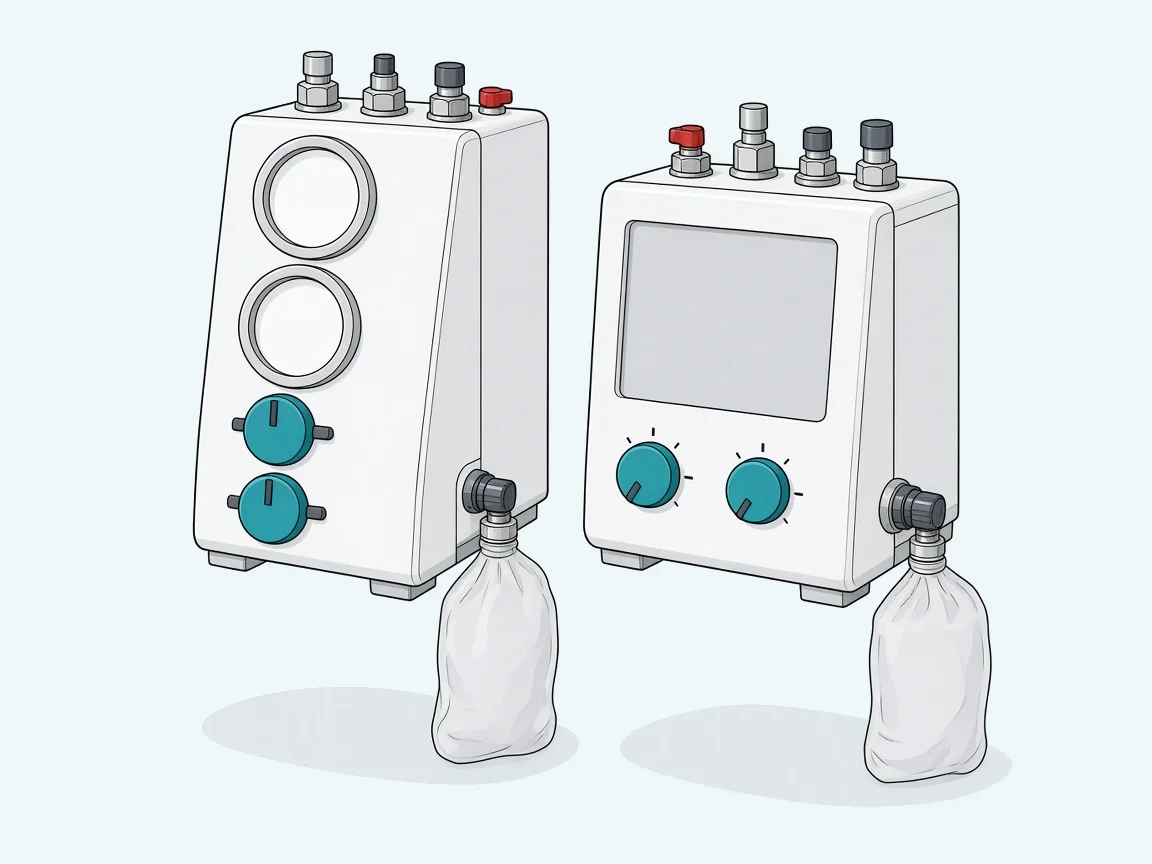
- Analog or digital display. Both styles set a total flow and a percentage. Digital units are easier to read from the assistant’s side. The clinical result is the same mix if the fail-safe works.
- Who services the gas. The flowmeter dealer and the medical-gas supplier are often different companies. Ask who changes cylinders, who certifies the lines, and who repairs the mixer.
How the two common systems differ
In the United States, quotes for dental nitrous almost always come down to Porter and Accutron. Treat the table as product differences, not a score.
| Brand | Known for | Best fit | Watch for |
|---|---|---|---|
| Porter | MXR analog flowmeters and Matrx digital MDM units, plus the Silhouette scavenging mask | Offices standardizing on one mixer and one mask system | The mask is not the flowmeter. Quote them separately |
| Accutron | Digital Ultra flowmeters, often packaged with ClearView hoods | Offices that want a digital display and a HuFriedyGroup supply relationship | Confirm the scavenger vacuum inlet matches the vacuum you already have |
Porter
Porter Instrument, part of Parker Hannifin, is the flowmeter a large share of U.S. offices already have on the wall or on a stand. MXR is the analog mixer. Matrx Digital MDM is the digital version of the same job. Silhouette is Porter’s low-profile scavenging mask, and it is sold as a breathing circuit, not as the mixer. If you already own Porter masks, staying with a Porter mixer avoids an adapter conversation. If you do not, choose the mixer and the mask as two line items.
Accutron
Accutron, now in the HuFriedyGroup, sells the Digital Ultra flowmeter and the ClearView single-use hoods. The digital head is the reason offices cross-shop it against Matrx. The hoods are the reason the package looks complete on a quote. Open the quote and find the scavenger connection. A hood that does not couple to your vacuum source is a mask, not a scavenging system.
Related guides
- Operatory equipment
- Nitrous masks, hoods, and circuits
- Dental vacuum systems
- Suction tips, traps, and line cleaners
What NIOSH says to buy and to plumb
NIOSH’s recommended exposure limit for nitrous oxide is 25 ppm as a time-weighted average during the time anesthetic is being given. NIOSH says that limit is meant to prevent decreases in mental performance, audiovisual ability, and manual dexterity. The same alert says an exposure limit aimed at reproductive effects cannot be set until more data exist. A 1992 study cited there found that female dental assistants exposed to unscavenged nitrous oxide for 5 or more hours a week had a lower probability of conception than unexposed assistants, and that assistants who used scavenging did not differ significantly from the unexposed group. Exposures in that study were not measured, so it is not a dose-response curve.
Control at the mask is the priority after leaks in the delivery system, because the dentist’s and assistant’s breathing zone is within inches of the mask. NIOSH has reported breathing-zone concentrations above 1,000 ppm. The alert’s control steps for scavenging are specific. Keep the scavenging exhaust at about 45 liters per minute. Flow rates under 40 L/min may leak around the mask. The flowmeter should be visible to the operator, permanently connected to the scavenging vacuum line, and validated to within 5 percent of actual flow. The mask has to seal on the nose. Different-diameter hoses for nitrous oxide and oxygen reduce a crossed connection.
Exhaust is part of the purchase, not an afterthought. NIOSH says to vent nitrous oxide from scavenging vacuum pumps to the outside of the building, away from fresh-air intakes, windows, and walkways. Scavenging exhaust should not be dumped into a recirculating ventilation system. If concentrations stay above 25 ppm with scavenging in place, NIOSH’s next steps are more outdoor air, balanced supply and exhaust so gas does not move into the next room, and local exhaust near the mouth. Do not stand between the patient and that exhaust duct. Dental operatories are harder to control than a hospital theater because only the nose is covered. The mouth is open.
Nitrous questions
Is a nasal hood the same as a nitrous system?
No. The hood delivers and scavenges at the patient’s nose. The system is the flowmeter and the gas supply. Replacing hoods does not replace a failing mixer.
Can I scavenge into the saliva ejector?
No. Scavenging vacuum is a continuous, metered draw sized for the nasal circuit. High-volume suction is a different line, used in the mouth, and it is off between patients. The scavenger should be connected the way the flowmeter maker specifies.
What scavenging flow does NIOSH specify?
About 45 liters per minute, measured on a flowmeter the operator can see. NIOSH says rates under 40 L/min can leak around the mask. The pump exhaust goes outdoors, not into the room’s return air.
Sources
National Institute for Occupational Safety and Health
Controlling Exposures to Nitrous Oxide During Anesthetic Administration. NIOSH Alert, DHHS (NIOSH) Publication No. 94-100.
Related articles
Keep exploring related topics from Dental Country.
Refurbished Dental Chairs: Where to Buy and What to Check
Where to buy a refurbished dental chair: service, parts, and how Dental Planet, Liquidators, Collins, ABC, and Capital differ.
Read article
Dental Air Compressors: Oil-Free, Dry Air and Sizing
Oil-free air, drying, and noise in a dental air compressor, and how Air Techniques, Dürr, Midmark, Jun-Air, and DentalEZ differ.
Read article
Amalgam Separators: Solmetex, Rebec, Dürr, Metasys
Central or chairside amalgam separators, canister recycling, and how Solmetex, Rebec, Dürr, and Metasys differ.
Read article
Dental Cabinets: A-dec, Midmark, Pelton & Crane
Treatment room versus sterilization center cabinets, and how A-dec, Midmark, Pelton & Crane, and DentalEZ differ.
Read article