
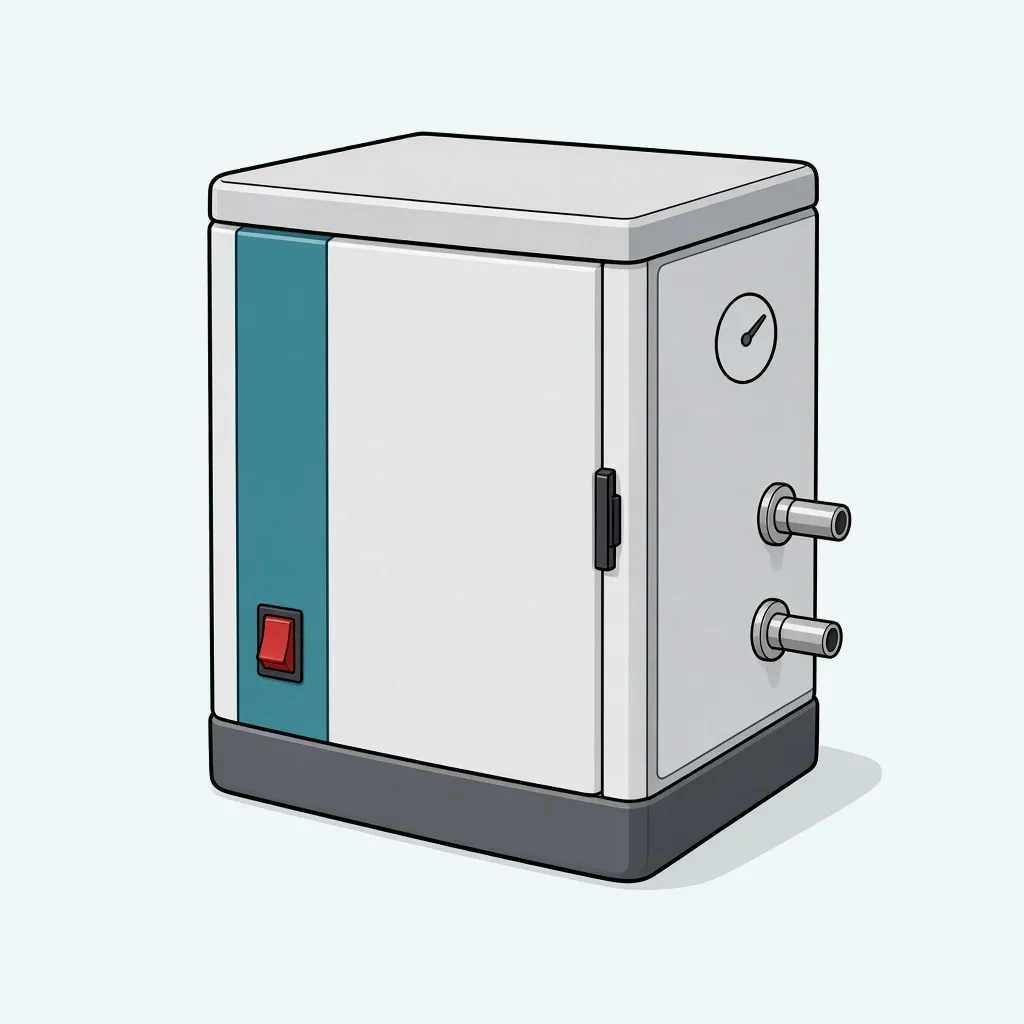
Dental Air Compressors: Oil-Free, Dry Air and Sizing
Oil-free air, drying, and noise in a dental air compressor, and how Air Techniques, Dürr, Midmark, Jun-Air, and DentalEZ differ.

Reviewed by Dr. Sean Myran, DMDDoctor of Dental Medicine, University of Pennsylvania
How we rank explains how these product lists are ordered.
A dental compressor runs handpieces, air-water syringes, and scalers. Oil in that air ruins turbines and contaminates lines, so dental compressors are oil-free. The rest of the decision is how many users you run at once, how dry the air is, and whether the closet can live with the noise.
How to choose a dental compressor
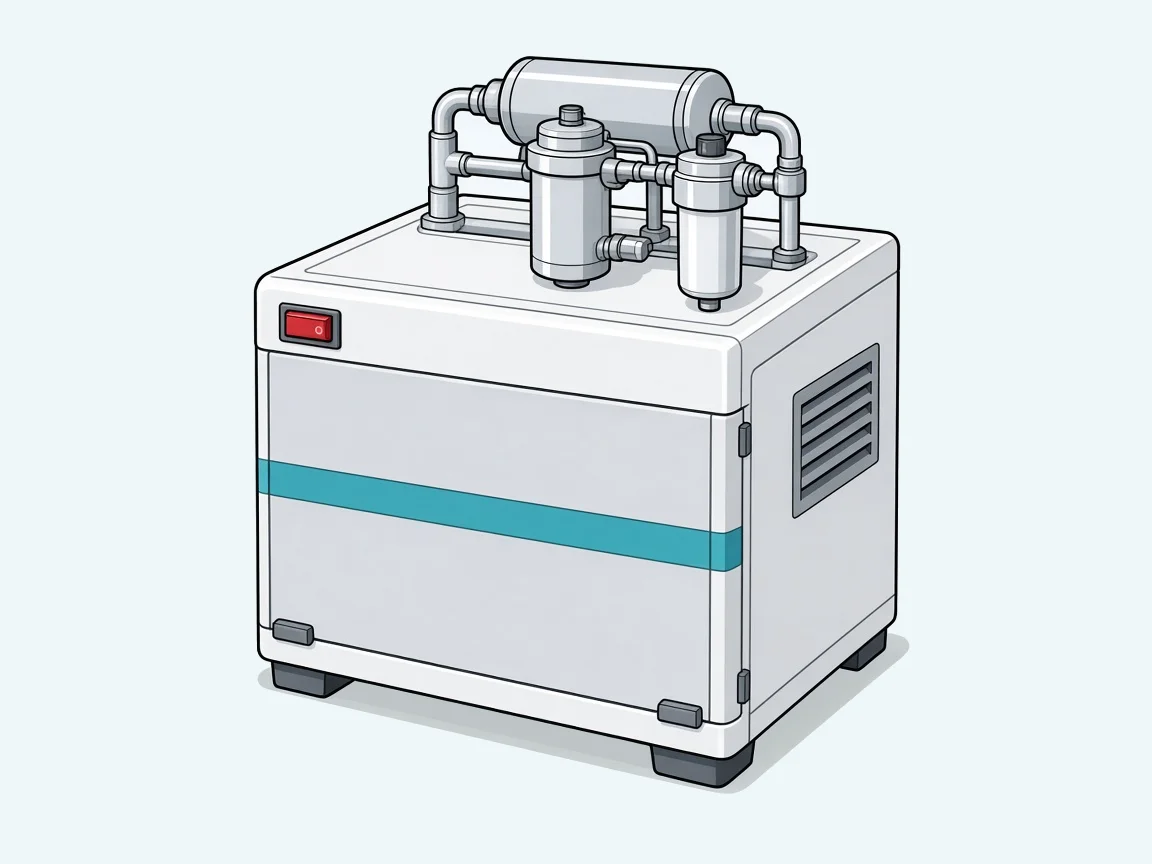
- Oil-free heads. This is not optional. An industrial oiled compressor does not belong on dental handpiece lines.
- Users, not chairs. Size the unit for how many handpieces run at the same time, including hygiene, not for the number of chairs in the floor plan.
- Drying. A coalescing filter and a dryer keep water out of turbines. A tank alone is not a dryer. Wet air is the failure mode that shows up months later.
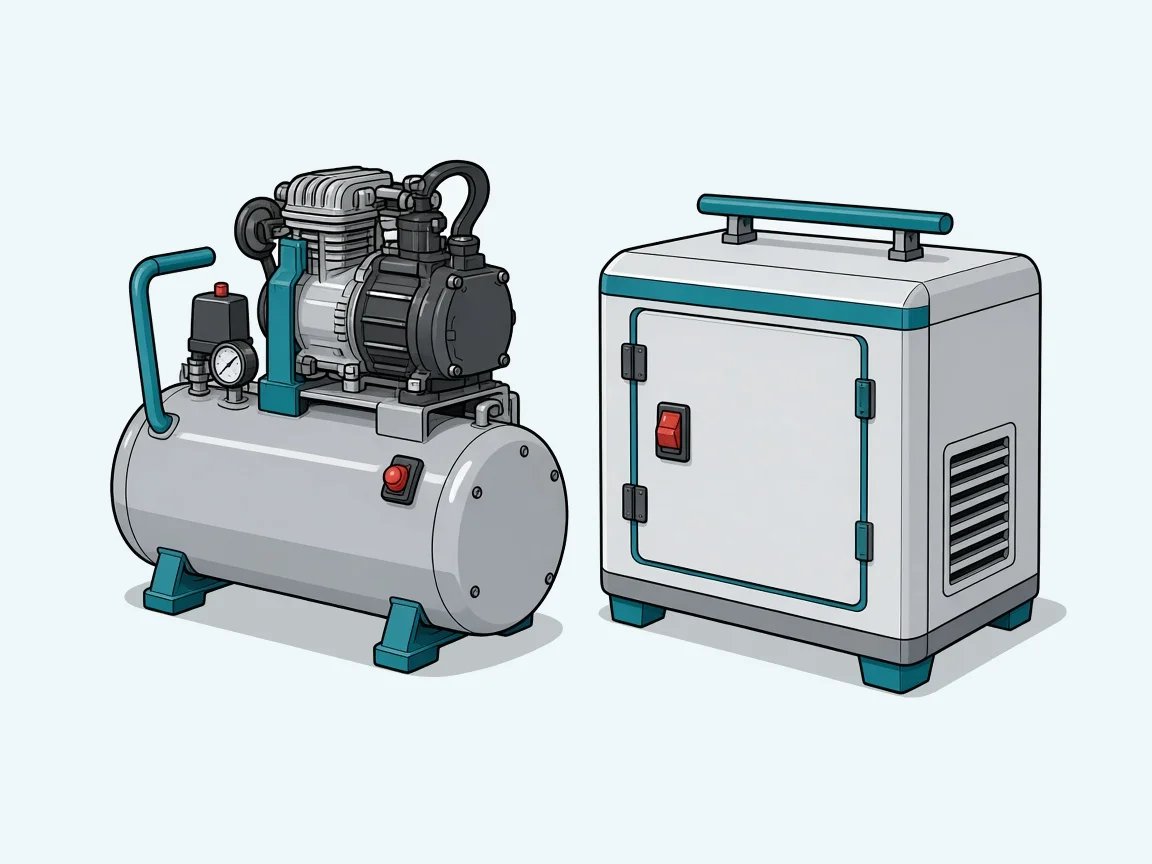
- Noise and the room. Open-head units are cheaper and louder. Cabinet and sound-reduced units cost more and can sit closer to patients. Measure decibels in the mechanical room you actually have, with the door you actually have.
- Redundancy. Two-head units can keep the office open when one head is down. A single head is a single point of failure on a surgery day.
How common compressor lines differ
| Brand | Known for | Best fit | Watch for |
|---|---|---|---|
| Air Techniques | AirStar NEO, which Air Techniques calls 100% oil-less, with a membrane dryer | Offices replacing an AirStar or matching an existing Air Techniques vacuum | User counts are on the model: 10 NEO is 1–2 users, 70 NEO is 7–12. Match the head count on the quote |
| Dürr Dental | Tornado, described as oil-free with membrane drying. Duo and Quattro are still Dürr compressor names | Offices that need the mechanical room near the operatories | Confirm the dryer is in the package. Do not treat a euro configurator price as a U.S. quote |
| Midmark | Smart Air models rated by users, from 1–3 (P21) through 7–10 (P72) | Practices buying chairs and mechanicals from one dealer | The spec sheet lists users and decibels. Confirm the oil-free declaration for that model before you assume it |
| Jun-Air | Quiet compressors from Gast, in oilless and oil-lubricated versions | Offices that need a quiet cabinet and have confirmed which head is on the quote | An oil-lubricated Jun-Air is not the oil-free compressor this guide starts from. Ask which one you are buying |
| DentalEZ Ramvac | Current compressor page. User counts run from the C3 (3 users) to the C18 (18 users) | Offices already on DentalEZ chairs and delivery | CustomAir is the older 1000-series manual, not the current product page. Confirm the model is oil-free |
Air Techniques AirStar
Air Techniques’ current compressor page is the AirStar NEO series, which the page calls 100% oil-less, with membrane drying. The stated simultaneous-user bands are: 10 NEO, 1–2 users; 21 NEO and 22 NEO, 2–3; 30 NEO, 3–4; 40 NEO, 4–6; 50 NEO, 5–8; 70 NEO, 7–12. A unit sized for two hygienists and one doctor is not the unit sized for five rooms. Air Techniques does not print a price on that page.
Dürr Dental
Dürr’s October 2025 Tornado announcement describes oil-free compression and the membrane dryer, and it says the air is dry, oil-free, and hygienic. Duo and Quattro, including tandem versions with membrane drying, are still named on Dürr’s 2026 equipment configurator. That configurator shows euro prices. They are not a U.S. street price, so they are not repeated here. Open the quote and find the dryer. A quiet compressor without the dryer is still a wet compressor.
Midmark
Midmark’s Smart Air spec sheet rates compressors by users: P21 and P22 at 1–3 users, P32 at 3–5, P52 at 5–7, and P72 at 7–10, with sound levels from 65 dBA (60 dBA with the cover) on the P21 up to 73 dBA (68 dBA with the cover) on the P72. Pull that user rating out of the operatory package. The sheet is the place to confirm whether the model you are quoted is declared oil-free. This guide does not add that word unless the declaration for that model is in front of you.
Jun-Air
Gast, which owns Jun-Air, says the line is available in oilless and oil-lubricated configurations. The lubricated 6-4, 6-15, and 6-25 piston systems are described as suitable for dental and medical equipment, and they are oil-lubricated. Calling every Jun-Air oil-free is not what that page says. If the office needs oil-free air at the handpiece, ask which head is on the quote and what the maker declares at the outlet. A quiet cabinet still needs intake air, heat exhaust, and a panel a technician can remove.
DentalEZ Ramvac
DentalEZ’s current compressor page is Ramvac, with Aeras monitoring. The sizing table lists the C3 for 3 users, the C5 for 5, the C8 for 8, the C12 for 12, and the C18 for 18. The 2026 utility catalog’s compressor section is that Ramvac line. The CustomAir name belongs to an older manual: the 1000-series user guide says those compressors use oil-less technology. Do not copy the CustomAir oil-less sentence onto a Ramvac model the current page does not describe that way. Confirm the dryer and who stocks a head.
Related guides
- Operatory equipment
- Dental chairs
- Dental vacuum systems
- Suction tips, traps, and line cleaners
What the air-quality standards cover
ANSI/ADA Specification No. 94 applies to compressed air used in the dental office to power dental equipment and laboratory equipment and to dry oral structures. It does not apply to air supplied as breathable air, and the standard says that air should never be used to support life. The foreword records the working group’s suggestion that the intake be outside the clinic and at least 10 meters (33 feet) from a hazardous gas or vapor, with examples that include an engine exhaust and a sewer vent. The same foreword warns that old air lines can contaminate a new compressor, so the lines may need to be cleaned or replaced, or point-of-use filters added, before the air at the chair meets the standard. Flow and pressure are deliberately outside the standard. They depend on the equipment, the length and diameter of the lines, and the number of bends.
ISO 22052:2020 is the standard for central compressed air source equipment that supplies dental air to dental units and other dental air-using devices. It includes purity requirements for that dental air, and requirements for what the manufacturer tells you about performance, installation, operation, and maintenance. It applies only to central equipment located outside the treatment room. It does not apply to a compressor sitting in the treatment room, to the building piping, or to dental laboratory uses such as CAD/CAM. A compressor in a closet off the operatory is not automatically “the ISO 22052 machine.” Read where the standard says the equipment has to sit.
A-dec’s aerosol white paper, summarizing ANSI/ADA Standard No. 94, lists an oil content of 0.05 ppm and a pressure dew point no higher than +5°C at 7 bar. Its summary of ISO 22052 lists a 0.22 micrometer bacterial filter rated above 99.99 percent and a pressure dew point no higher than +3°C at 0.7 MPa. Those are the tables in that paper, not a reprint of either standard. Use them as a checklist against the compressor maker’s own declaration, then confirm the declaration names the standard and the installation the standard actually covers.
Compressor questions
Can I use a hardware-store compressor?
No. Oiled shop compressors put oil vapor into handpiece lines. Dental units are oil-free for that reason.
How do I know the unit is big enough?
Count handpieces that run together at the busiest hour, including hygiene, then match the manufacturer’s user rating. Add a head of spare capacity if you plan to open another room within the warranty.
Does ISO 22052 apply to a compressor in the treatment room?
No. ISO 22052:2020 applies to central compressed-air equipment located outside the treatment room. It does not cover equipment in the treatment room, the building’s piping, or laboratory CAD/CAM air.
Sources
ANSI/ADA Specification No. 94 for Dental Compressed Air Quality
Scope and foreword as published in the ANSI preview, including the exclusion of breathable and life-support air and the working group’s suggestion that the intake be at least 10 m from hazardous gas or vapor.
ISO 22052:2020
Dentistry — Central compressed air source equipment.
A-dec
Aerosol Management During Dental Procedures In and Around the Oral Cavity. White paper. Table 3 summarizes ANSI/ADA 94 and ISO 22052 air-quality figures cited above.
Air Techniques
AirStar NEO, oil-less compressor and user bands.
Dürr Dental
New Tornado compressors, 1 October 2025.
Dürr Dental
Compressed air for dental practices.
Midmark
Smart Air compressor specification sheet.
Gast
Jun-Air, oilless and oil-lubricated.
Gast
Jun-Air 6-4, 6-15, and 6-25 lubricated piston systems.
DentalEZ
Ramvac dental air compressors.
DentalEZ
CustomAir 1000-series user guide, oil-less technology.
What changed: Nov 2026: AirStar NEO, Tornado, Smart Air, Jun-Air, and Ramvac were checked against the manufacturer pages. Jun-Air is not described as oil-free only. No prices.
Related articles
Keep exploring related topics from Dental Country.
Refurbished Dental Chairs: Where to Buy and What to Check
Where to buy a refurbished dental chair: service, parts, and how Dental Planet, Liquidators, Collins, ABC, and Capital differ.
Read article
Amalgam Separators: Solmetex, Rebec, Dürr, Metasys
Central or chairside amalgam separators, canister recycling, and how Solmetex, Rebec, Dürr, and Metasys differ.
Read article
Dental Cabinets: A-dec, Midmark, Pelton & Crane
Treatment room versus sterilization center cabinets, and how A-dec, Midmark, Pelton & Crane, and DentalEZ differ.
Read article
Delivery Systems: Rear, Side and Over-the-Patient
Over-the-patient, rear, and side delivery, and how A-dec, DentalEZ, Belmont, Pelton & Crane, Forest, and Planmeca systems differ.
Read article