
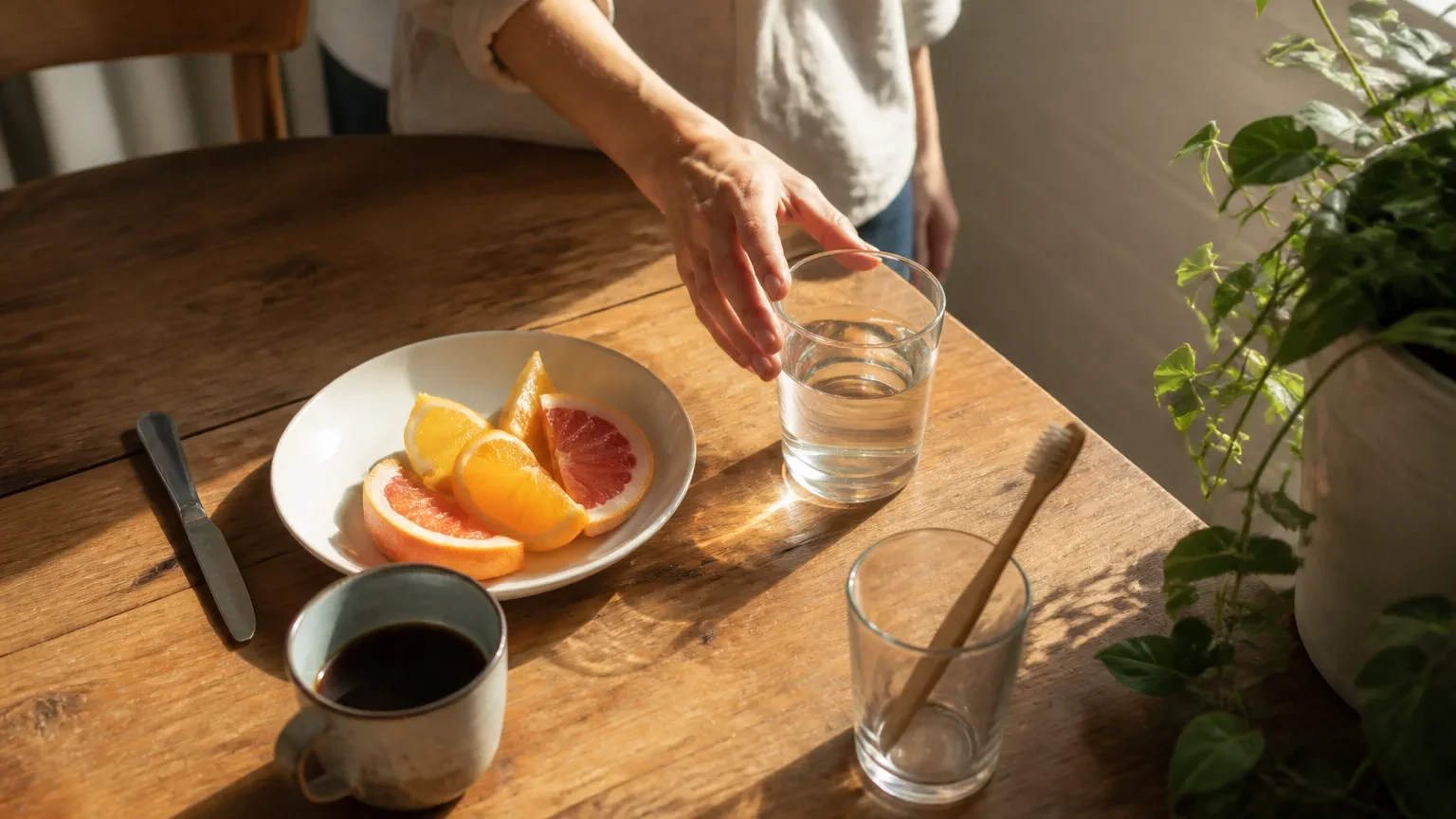
Is It Bad To Brush Right After Eating?
Brushing right after acidic foods or drinks can scrub softened enamel. Learn when to wait, rinse with water first, and time brushing more safely.

Reviewed by Dr. Sean Myran, DMDDoctor of Dental Medicine, University of Pennsylvania
It can be unwise to brush immediately after acidic foods or drinks because acids temporarily soften enamel, and scrubbing in that window may wear the surface more easily. Waiting about thirty to sixty minutes, rinsing with water, or chewing sugar-free gum to spur saliva is often gentler. MouthHealthy advises waiting after acidic foods or drinks before brushing so enamel can reharden. A neutral snack such as cheese or plain yogurt is less concerning than citrus, sports drinks, wine, or soda.
Picture the timeline. You finish a grapefruit and coffee; the mouth pH drops; enamel loses minerals for a while; saliva slowly buffers and repairs. Brushing with force in that dip is like wiping a soft table finish with a rough cloth. If morning sickness or reflux bathes teeth in acid, the same logic applies—rinse first, brush later, and talk with your dentist about lower-abrasion fluoride pastes.
Scenario → Timing Decision
- Soda, juice, energy drinks, wine, citrus: rinse with water, wait before brushing.
- Sticky sweets without much acid: clear residue sooner with floss and a careful brush is often fine.
- Reflux or vomiting: rinse with water or a dentist-recommended rinse; delay brushing.
- Dry mouth: acids linger longer—hydration and fluoride matter more; see daily habits in proper brushing.
MedlinePlus explains that acids from foods and bacteria can damage tooth enamel over time. Timing your brush is one practical way to stop home care from adding mechanical wear on top of chemical stress.
What if you must leave for work immediately after breakfast fruit? Swish water thoroughly, wipe gently with a cloth if needed, and do a complete soft brushing once you arrive or later in the morning when saliva has buffered. Do not abandon fluoride mornings entirely out of fear—just separate acid exposure from scrubbing. Night brushing after a non-acidic dinner can remain right away.
People who graze on citrus all afternoon create many mini acid attacks. Collapsing those sips into meals, then brushing on a delayed schedule, often protects enamel more than a heroic scrub after every orange wedge. The goal is fewer acid dips and safer mechanical cleaning—not fewer cleanings overall.
 Dilute, wait, then brush gently.
Rinse first when acids just hit
Keep a water bottle at desks where flavored sparkling water or vinaigrette salads show up at lunch. One thorough rinse dilutes acid and sugar before they sit in grooves. Sugar-free xylitol gum can help saliva if your dentist agrees it fits your diet. Avoid brushing immediately after a tasting-flight of citrus waters at the gym—wait, then use a soft brush with light pressure so you do not combine acid softening with abrasive force. Sports drinks deserve the same pause as soda.
Next Steps That Protect Enamel
- Finish acidic drinks with meals instead of sipping for hours.
- Use a straw for some acidic beverages when practical.
- Choose soft bristles and sensible paste abrasivity.
- Ask about prescription fluoride if erosion notches already exist.
- Keep breath-related cleaning focused on tongue and floss rather than constant acidic “detox” drinks.
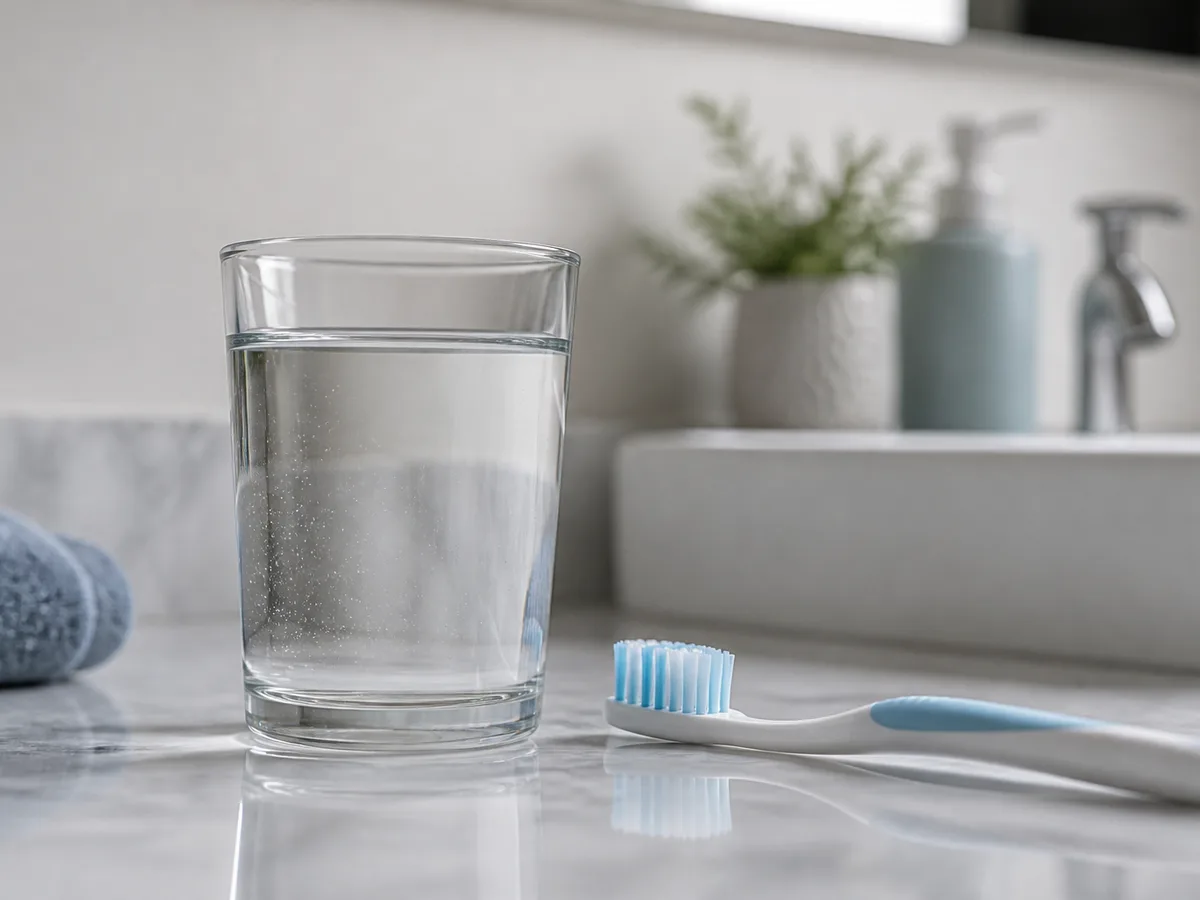 Your menu edits the brush clock.
Erosion patterns guide the advice
If your teeth look translucent at the edges or feel sandy near the gums, ask whether erosion is showing and how to time brushing around your real diet—not a perfect textbook menu. Bring a typical day of drinks list. For tailored erosion and fluoride planning, use Find a Dentist and mention reflux, sports drinks, or frequent citrus when you book. Small timing changes often protect enamel more than buying another specialty rinse.
Brushing right after eating is not always wrong, but it is risky after acids. Rinse, give saliva time to buffer, then brush softly with fluoride—and keep the rest of your interdental routine intact so sugar left between teeth does not become the new problem.
Related articles
Keep exploring related topics from Dental Country.

Electric Vs Manual Toothbrush: Which Is Better?
Neither brush wins by brand alone: powered heads help many adults stay thorough, while a well-angled soft manual brush still clears plaque when used carefully for two minutes.
Read article
Floss Vs Water Flosser: Which Should You Use?
Traditional floss scrapes contact points; water flossers flush pockets and hardware. Many mouths do best when the tool matches anatomy—and some use both.
Read article
How Often Should You Floss?
Most adults should clean between teeth once every day; higher gum inflammation, orthodontic hardware, or frequent food packing can justify careful extra sessions.
Read article
Is Mouthwash Necessary?
Rinses are optional helpers: fluoride formulas may support enamel, antiseptic ones can reduce germs short-term, yet neither substitutes for mechanical plaque removal.
Read article