
How Do You Brush Your Teeth Properly?
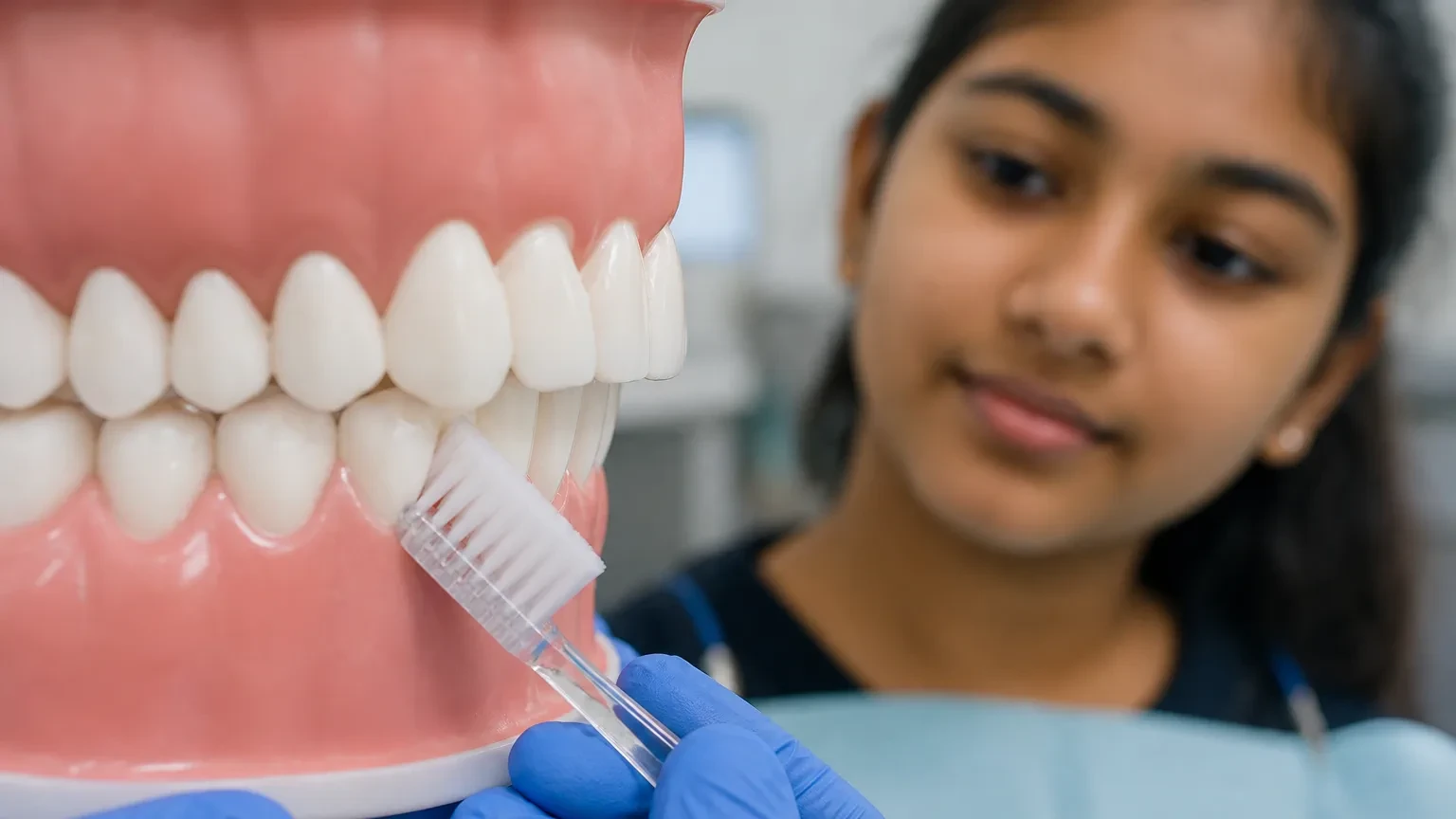
Proper brushing means a soft brush, forty-five-degree angle, two minutes, and gentle coverage of every surface. Follow a clear step-by-step technique.

Reviewed by Dr. Sean Myran, DMDDoctor of Dental Medicine, University of Pennsylvania
You brush properly by using a soft-bristled brush, placing it at about a forty-five-degree angle to the gumline, and cleaning every tooth surface with gentle short strokes for roughly two minutes, twice a day, with fluoride toothpaste. MouthHealthy outlines brushing twice a day with fluoride toothpaste for two minutes using a soft brush angled at the gumline. Scrubbing harder does not equal cleaner—it often equals recession and notch-like wear.
A step-by-step sequence keeps you from lingering on the easy front teeth while ignoring tongue-side lowers. Divide the mouth into quadrants and spend about thirty seconds each. Spit after brushing; heavy rinsing can wash away fluoride your dentist wants left behind. Match the handle to your hands—see electric versus manual options—then focus on angles.
Step-By-Step Technique
- Prep: pea-sized fluoride paste; soft or extra-soft head in good shape.
- Outer surfaces: angle toward gums; vibrate or circle gently along the margin.
- Inner surfaces: tilt vertically for front teeth; use the tip of the brush.
- Chewing surfaces: short back-and-forth strokes on molars and premolars.
- Along hardware: slow down around braces, implants, and partial clasps.
- Finish: lightly clean the tongue if coated—related to tongue cleaning—then spit.
CDC encourages brushing twice daily with fluoride toothpaste as a foundation of cavity prevention. Timing also matters: after acidic meals or sodas, wait before brushing so softened enamel is not scrubbed away—details in whether to brush right after eating.
Common faults include horizontal sawing only at the necks of teeth, skipping the side toward the cheek on upper molars, and finishing in under a minute. A smear of blood on the brush often means inflamed gums meeting plaque, not proof that soft brushing is wrong. Keep gentle daily technique for a week; if bleeding continues, schedule an exam rather than switching to a hard brush.
Crowded teeth, erupting wisdom teeth, and fixed retainers glued behind lower fronts all need slower passes. If floss shreds in one contact every night, mention it—sometimes a rough enamel edge or filling margin is snagging more than your skill is failing. Parents can brush a young child’s teeth from behind while the child leans back, guiding small circles until the child can take over with supervision.
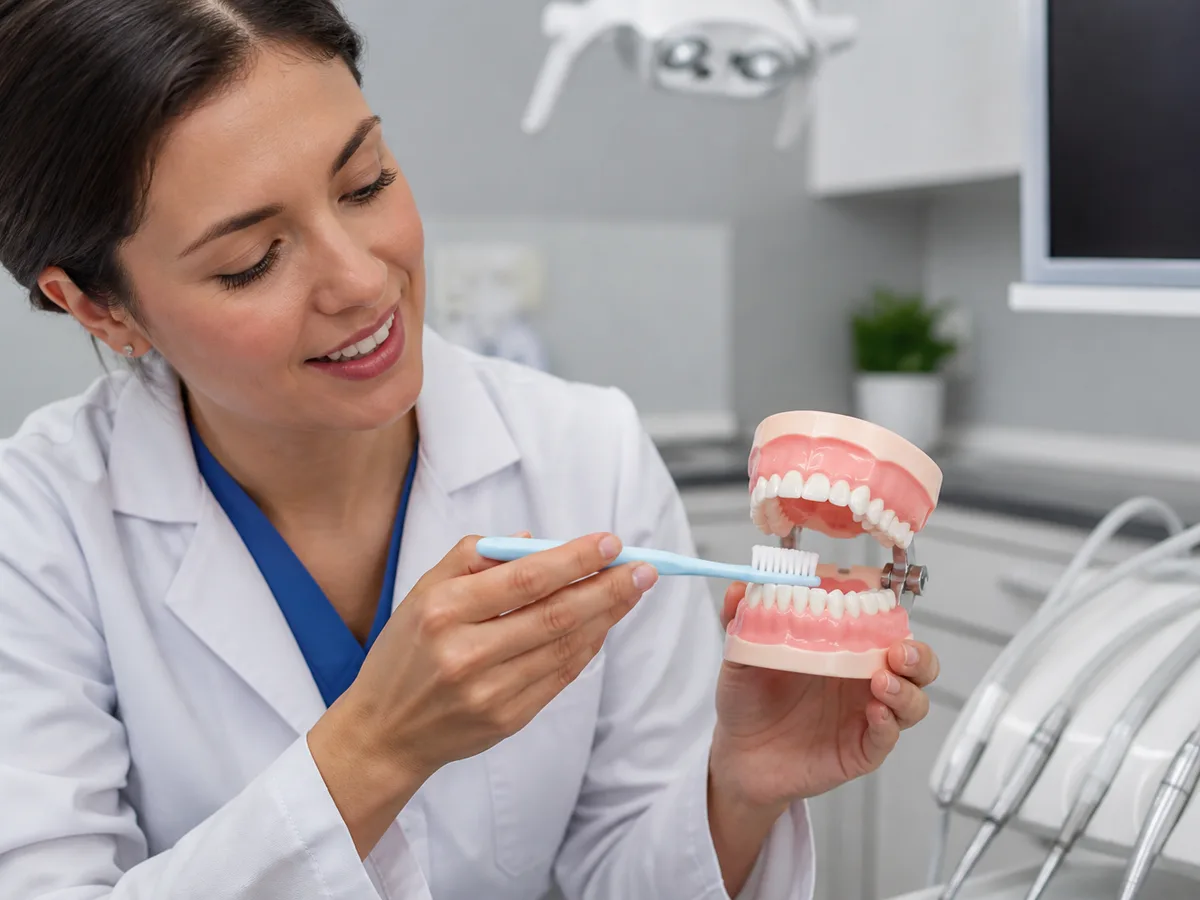 Watch the surfaces you cannot feel easily.
The inside lowers are easy to skip
Stand at the mirror for a few nights and watch whether the brush truly reaches the tongue side of your lower incisors—the classic tartar zone. Open slightly, angle the head vertically, and use gentle up-and-down strokes. If an electric brush is in play, let it hover without dragging. People with crowded lower teeth may need a smaller head or a single-tuft brush for those surfaces. Ask your hygienist to disclose plaque so missed islands become visible rather than theoretical.
Technique Checks Worth Asking About
- Are my bristles flared from pressure within weeks?
- Do notches near the gumline suggest abrasion from excess force?
- Should I switch paste for sensitivity while technique improves?
- Is two minutes on a timer realistic with my gag reflex?
Sensitivity that spikes only when cold air hits one notch-shaped spot is different from whole-mouth zings after sweets; describe the pattern so your dentist can separate abrasion, decay, and gum recession. Small clarifications like that keep advice specific instead of generic “brush better” slogans.
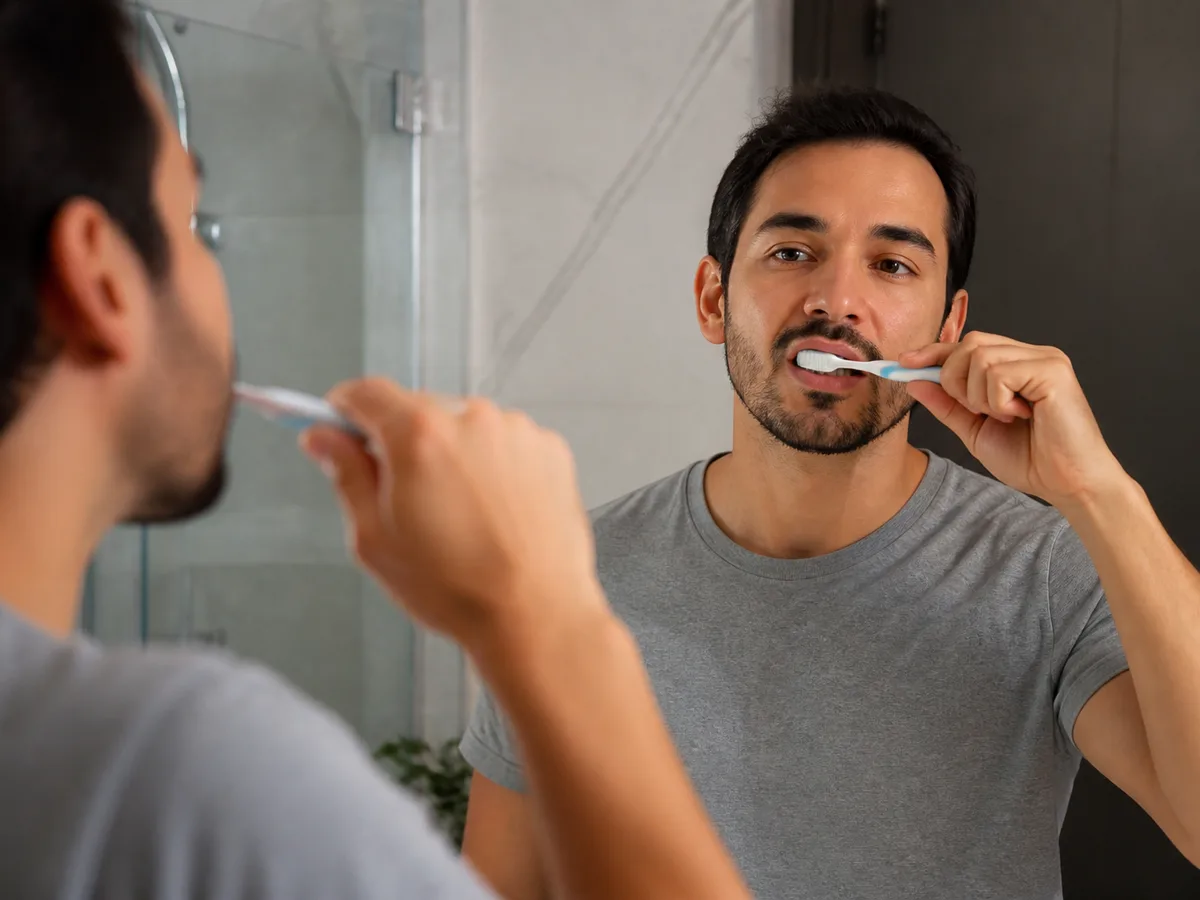 Time plus angle beats force.
Pace the mouth in four blocks
Use a phone timer, brush app, or built-in electric timer until two minutes feels natural. Rushing the last quadrant is how wisdom-tooth areas stay furry. If mornings are chaotic, make the night session your thorough pass and keep mornings honest but calm. For hands-on coaching, use Find a Dentist and ask for a hygiene visit that includes a technique demo with your own brush. Bring photos of any worn spots near the gumline so pressure coaching is specific.
Proper brushing is a repeatable sequence: soft head, gumline angle, full coverage, patient timing, fluoride paste. Master those steps and the rest of home care—floss, tongue, rinse—has a cleaner surface to work on.
Related articles
Keep exploring related topics from Dental Country.

Electric Vs Manual Toothbrush: Which Is Better?
Neither brush wins by brand alone: powered heads help many adults stay thorough, while a well-angled soft manual brush still clears plaque when used carefully for two minutes.
Read article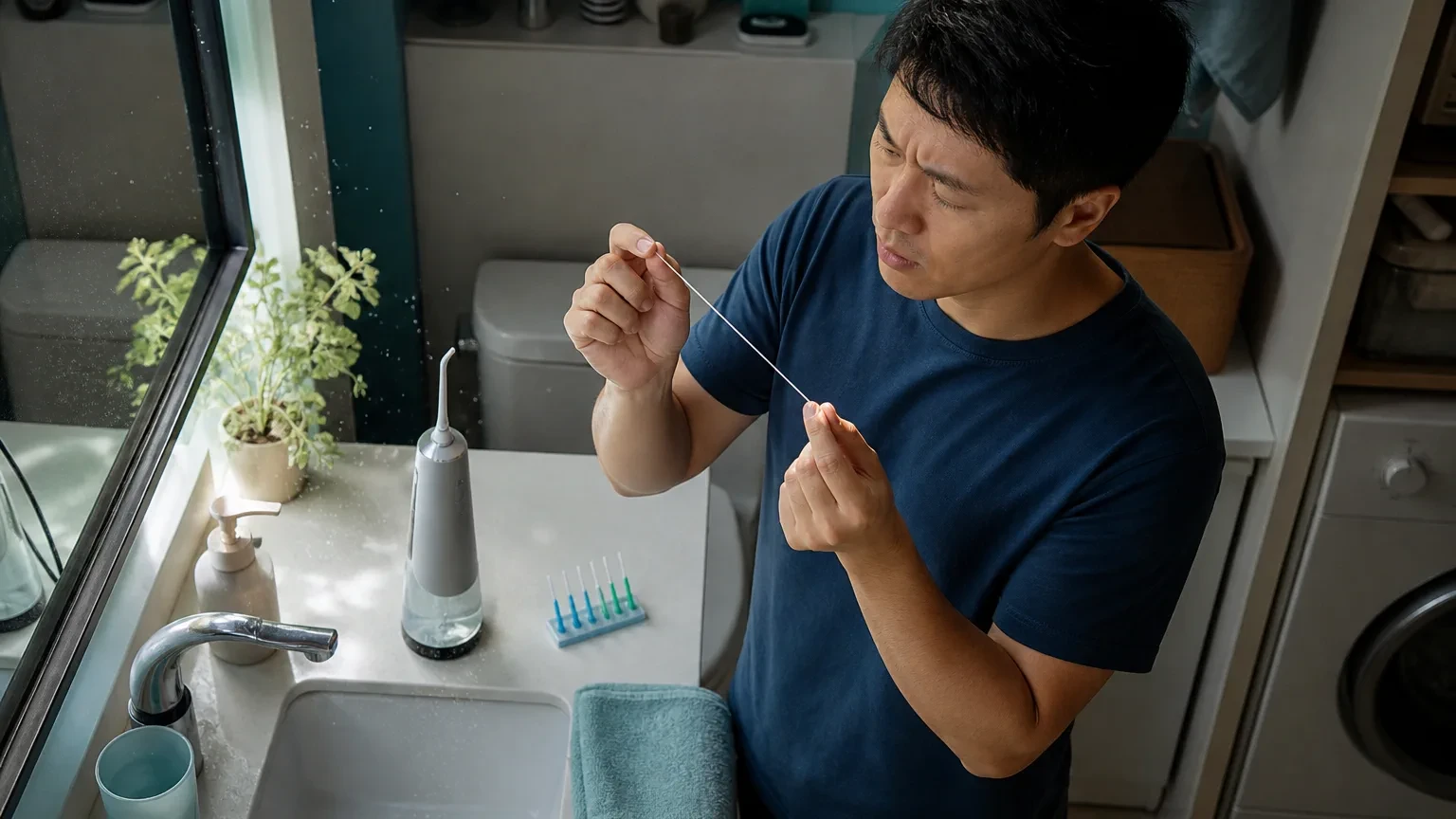
Floss Vs Water Flosser: Which Should You Use?
Traditional floss scrapes contact points; water flossers flush pockets and hardware. Many mouths do best when the tool matches anatomy—and some use both.
Read article
How Often Should You Floss?
Most adults should clean between teeth once every day; higher gum inflammation, orthodontic hardware, or frequent food packing can justify careful extra sessions.
Read article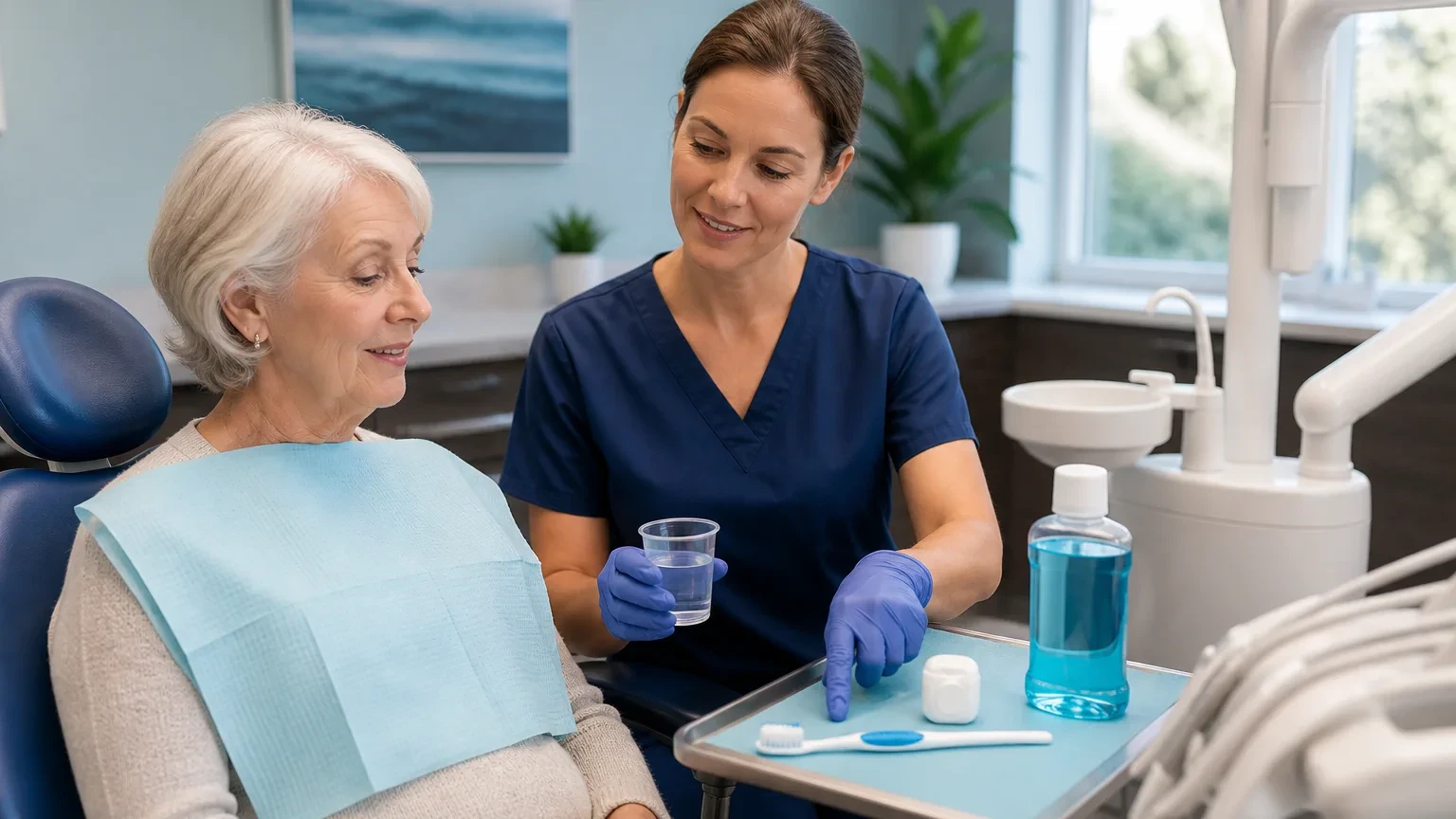
Is Mouthwash Necessary?
Rinses are optional helpers: fluoride formulas may support enamel, antiseptic ones can reduce germs short-term, yet neither substitutes for mechanical plaque removal.
Read article