
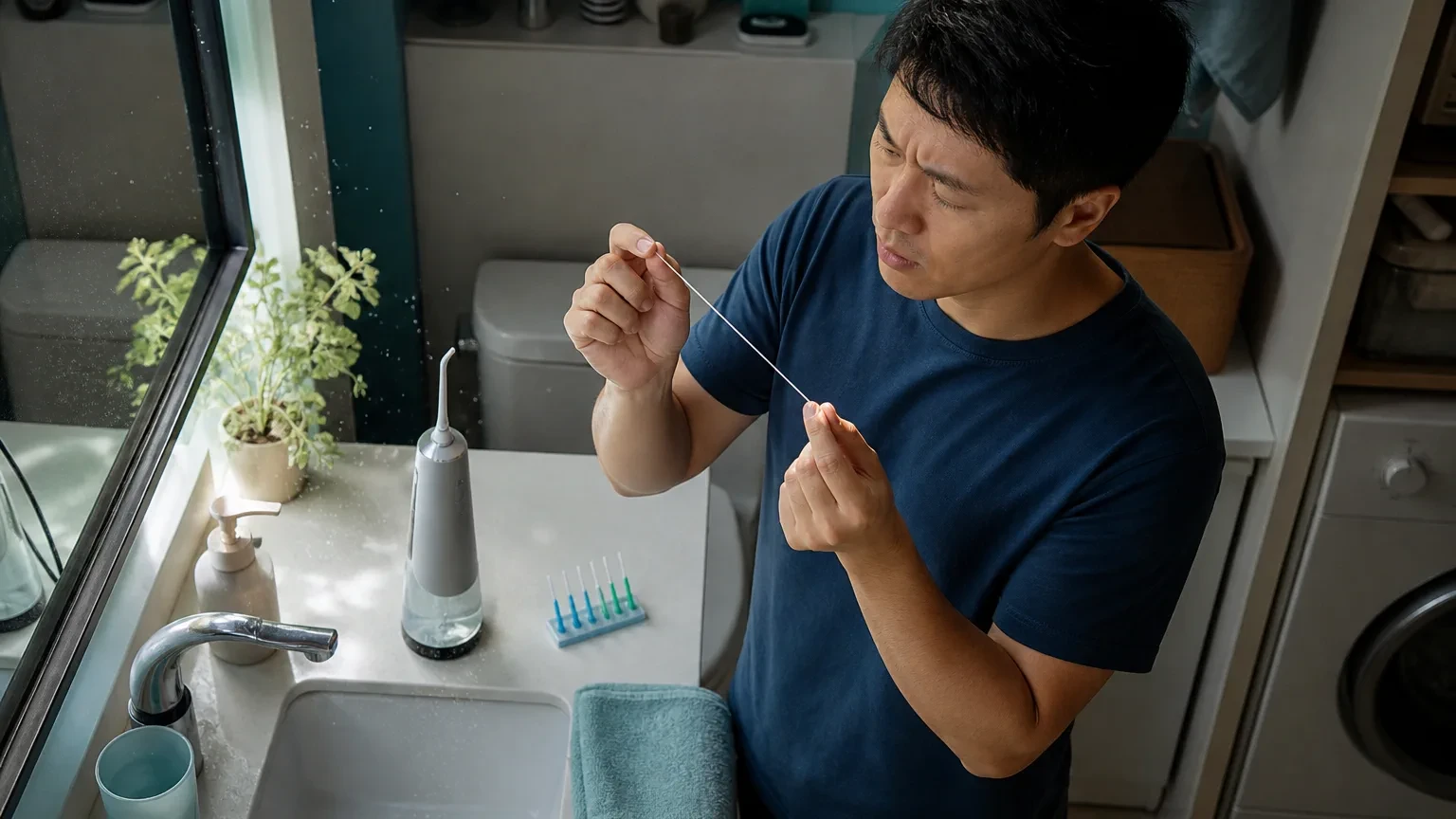
Floss Vs Water Flosser: Which Should You Use?
String floss and water flossers both clear between-teeth plaque in different ways. Learn which tool fits braces, bridges, dexterity, and daily habit.

Reviewed by Dr. Sean Myran, DMDDoctor of Dental Medicine, University of Pennsylvania
String floss and water flossers both aim at the plaque your toothbrush misses between teeth, but they work differently. Floss scrapes the tight contact where molars touch; a water flosser pulses fluid along the gumline and around braces, bridges, and implants. MouthHealthy explains that cleaning between teeth daily is essential and that floss or other interdental cleaners can do the job. The right pick is the one you will use thoroughly once a day—not the one that looks futuristic on the counter.
Think of this as a decision guide rather than a brand war. If your contacts are tight and you can C-shape floss without shredding, classic floss is inexpensive and portable. If dexterity, gagging, fixed retainers, or orthodontic wires make string miserable, a water flosser often raises compliance. Some people floss contacts at night and use a water flosser around implants or under a bridge. Neither tool excuses skipping a daily interdental habit.
Decision Guide By Situation
- Tight contacts, no hardware: waxed or tape floss usually reaches best; soft picks help if floss shreds.
- Braces or wires: water flossers and threaders often win for daily use; still guide floss behind the wire when you can.
- Bridges, implants, or periodontal pockets: irrigators flush where string may not travel comfortably—ask which tip your dentist prefers.
- Limited hand strength: a floss holder or water flosser reduces fine-motor demand.
- Travel weeks: pack floss even if a water flosser stays home.
MedlinePlus describes flossing as a way to remove plaque and food from between teeth where a brush cannot reach. Water flossers are interdental cleaners in the same family of goals, not magic that dissolves tartar already locked onto roots. Hardened calculus still needs a professional cleaning.
Technique still decides outcomes. Floss that snaps down and skips the gumline leaves a rectangle of plaque. A water flosser aimed only at the tongue and never paused at each embrasure mostly rinses spit. Start on the lowest comfortable pressure and trace the gum margin tooth by tooth. If gums bleed at first, gentle daily use plus a checkup usually calms inflammation—bleeding is a signal to improve cleaning, not to quit forever.
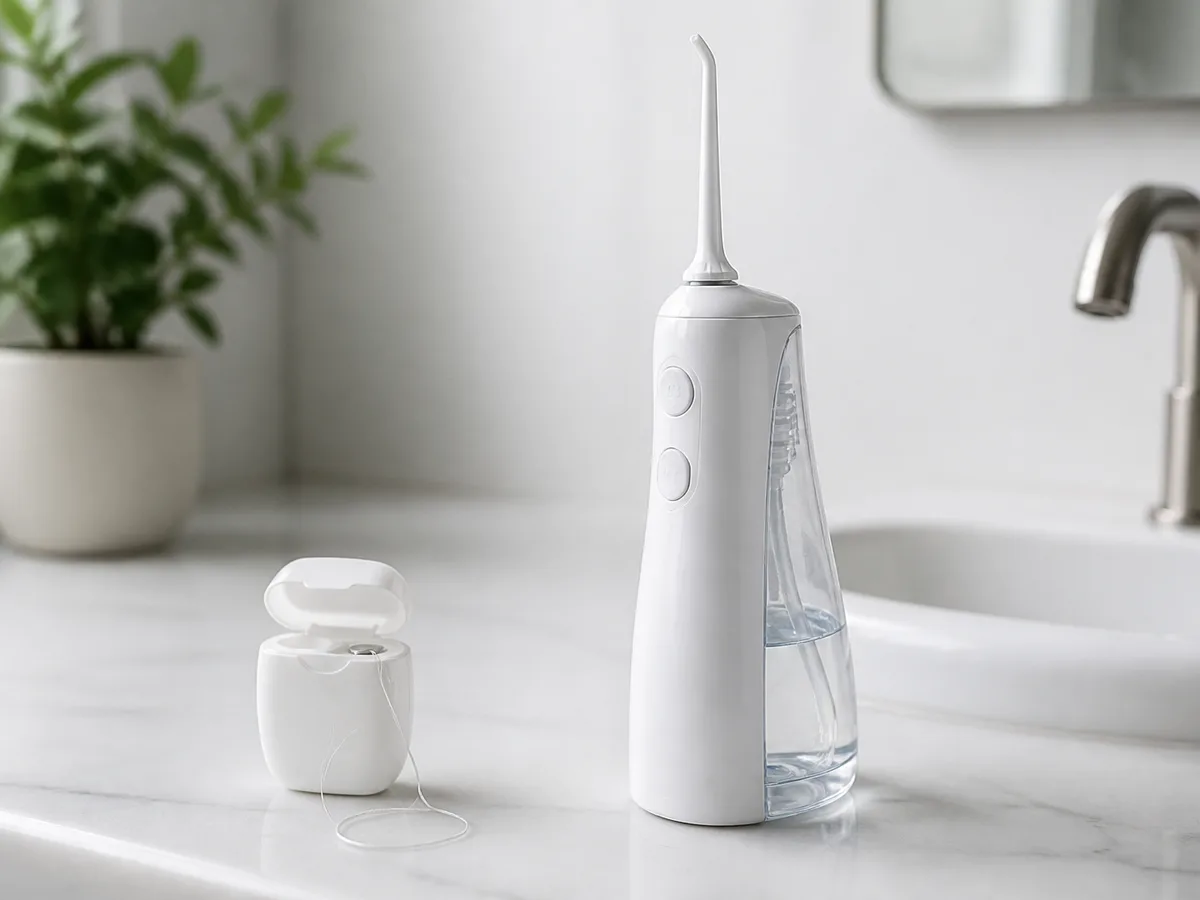 Each side of the contact needs its own wipe.
Wrap, slide, wipe—do not saw
Slide floss gently past the contact, wrap it against one tooth in a C shape, and wipe under the gumline with a few up-and-down strokes before repeating on the neighboring tooth. Use a fresh segment as the strand frays. If floss consistently shreds in one spot, ask whether a rough filling edge or tartar ledge needs smoothing—related to why brush choice alone never finishes the job between teeth. Tape floss can feel kinder on tight contacts than thin unwaxed string.
Can You Combine Tools?
- Floss tight contacts, then irrigate braces or a bridge.
- Use a water flosser nightly if string is impossible, and add soft picks where food packs.
- Keep mouthwash as a rinse if you like freshness—see whether mouthwash is necessary—not as a floss substitute.
- Ask your hygienist to watch one session so pressure and angle match your gum chart.
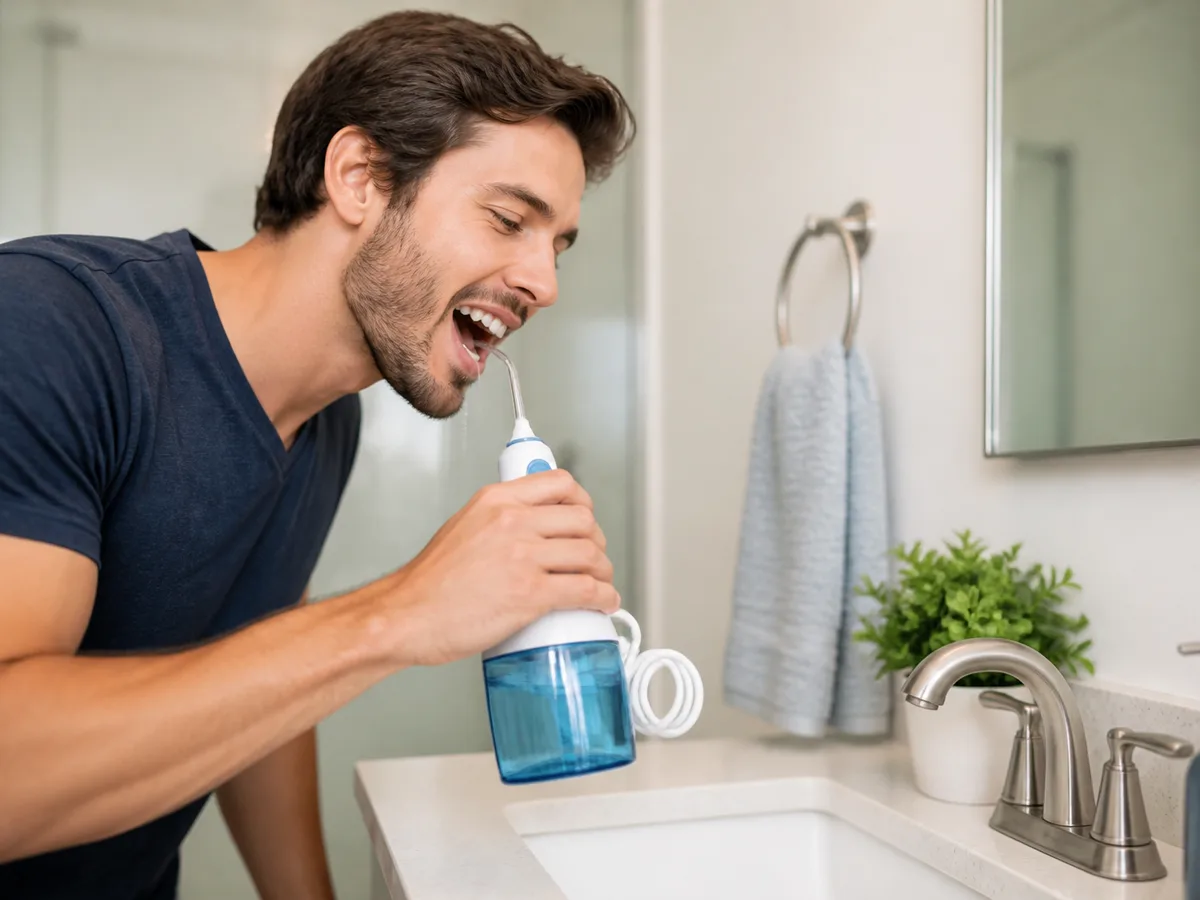 Irrigation works when it follows the gum map.
Pause at each space, then move on
Lean over the sink, close lips enough to limit spray, and follow the gumline on the lowest setting that still feels effective. Trace the cheek side and tongue side of each tooth, especially around molars that trap popcorn. Empty and air-dry the reservoir so biofilm does not grow in the tank. For personalized advice on floss versus irrigator around your restorations, use Find a Dentist and request a hygiene visit that includes interdental coaching. Bring the tip you own so recommendations match your device.
Floss versus water flosser is a fit question. Pick the cleaner you will finish every night, master its angle, and keep professional cleanings on the calendar so mineralized deposits never become the default between-teeth landscape.
Related articles
Keep exploring related topics from Dental Country.

Electric Vs Manual Toothbrush: Which Is Better?
Neither brush wins by brand alone: powered heads help many adults stay thorough, while a well-angled soft manual brush still clears plaque when used carefully for two minutes.
Read article
How Often Should You Floss?
Most adults should clean between teeth once every day; higher gum inflammation, orthodontic hardware, or frequent food packing can justify careful extra sessions.
Read article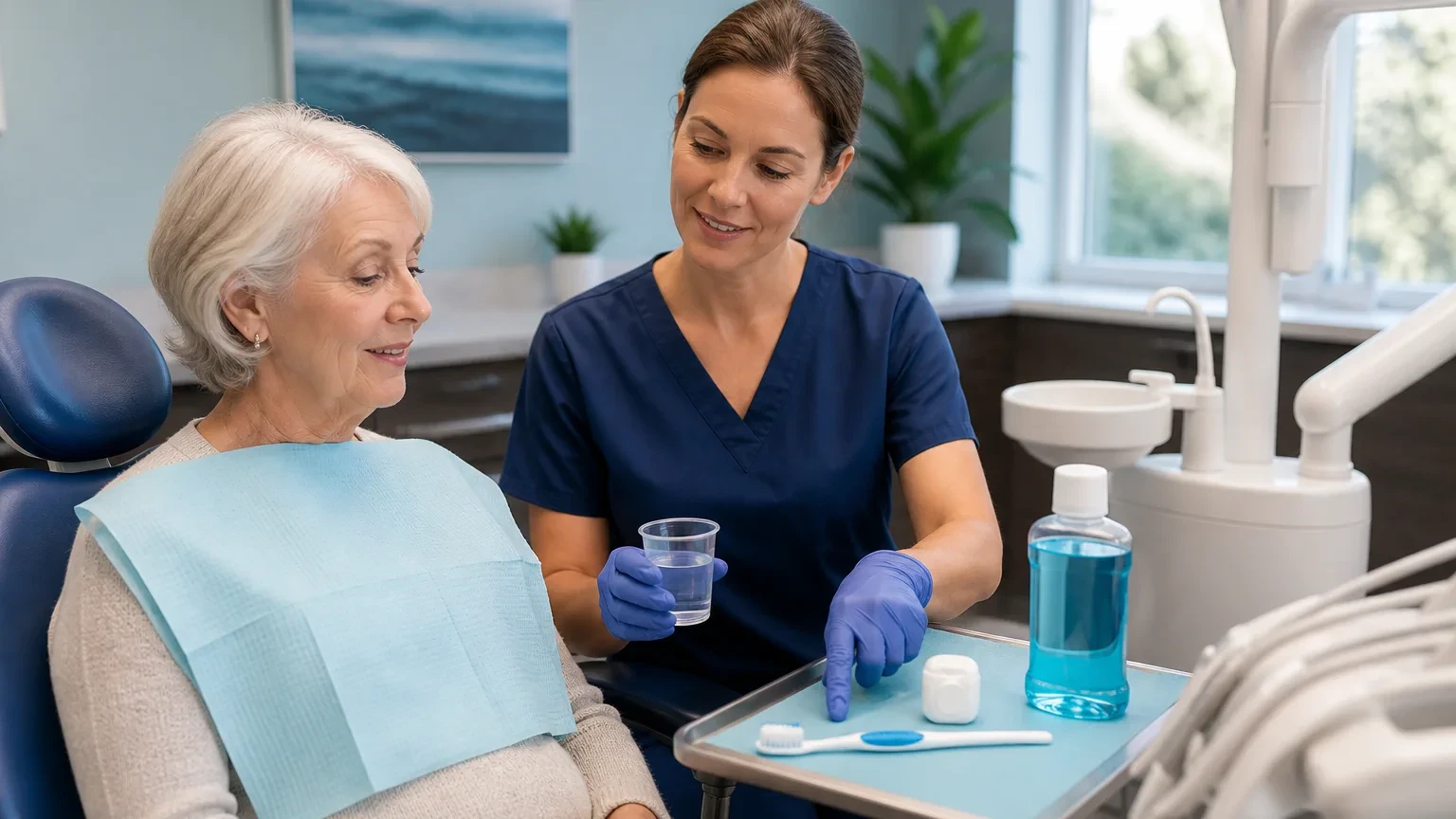
Is Mouthwash Necessary?
Rinses are optional helpers: fluoride formulas may support enamel, antiseptic ones can reduce germs short-term, yet neither substitutes for mechanical plaque removal.
Read article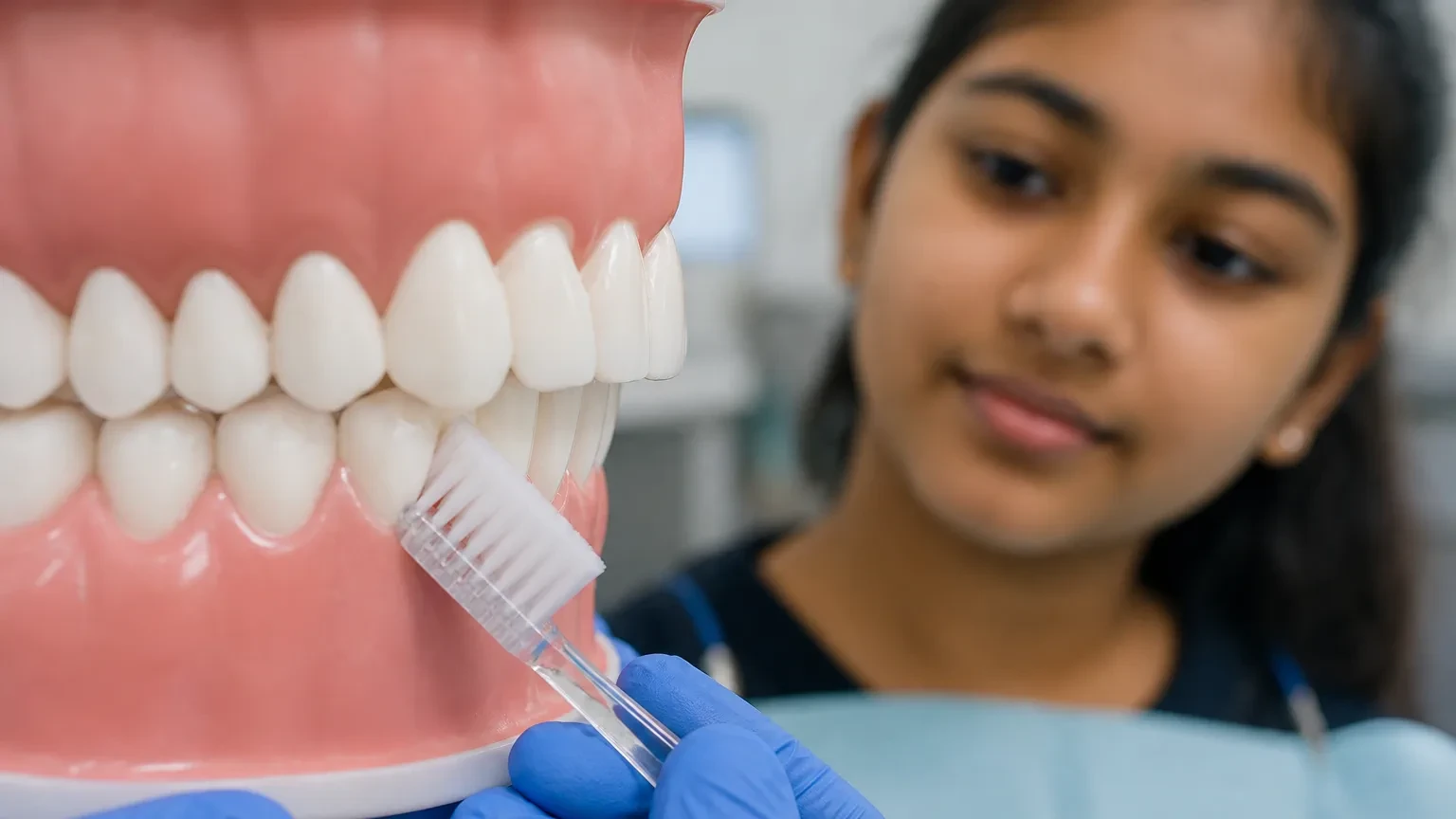
How Do You Brush Your Teeth Properly?
Proper brushing is paced and angled: soft bristles at the gumline, short strokes on every face of each tooth, about two minutes, twice daily with fluoride paste.
Read article