
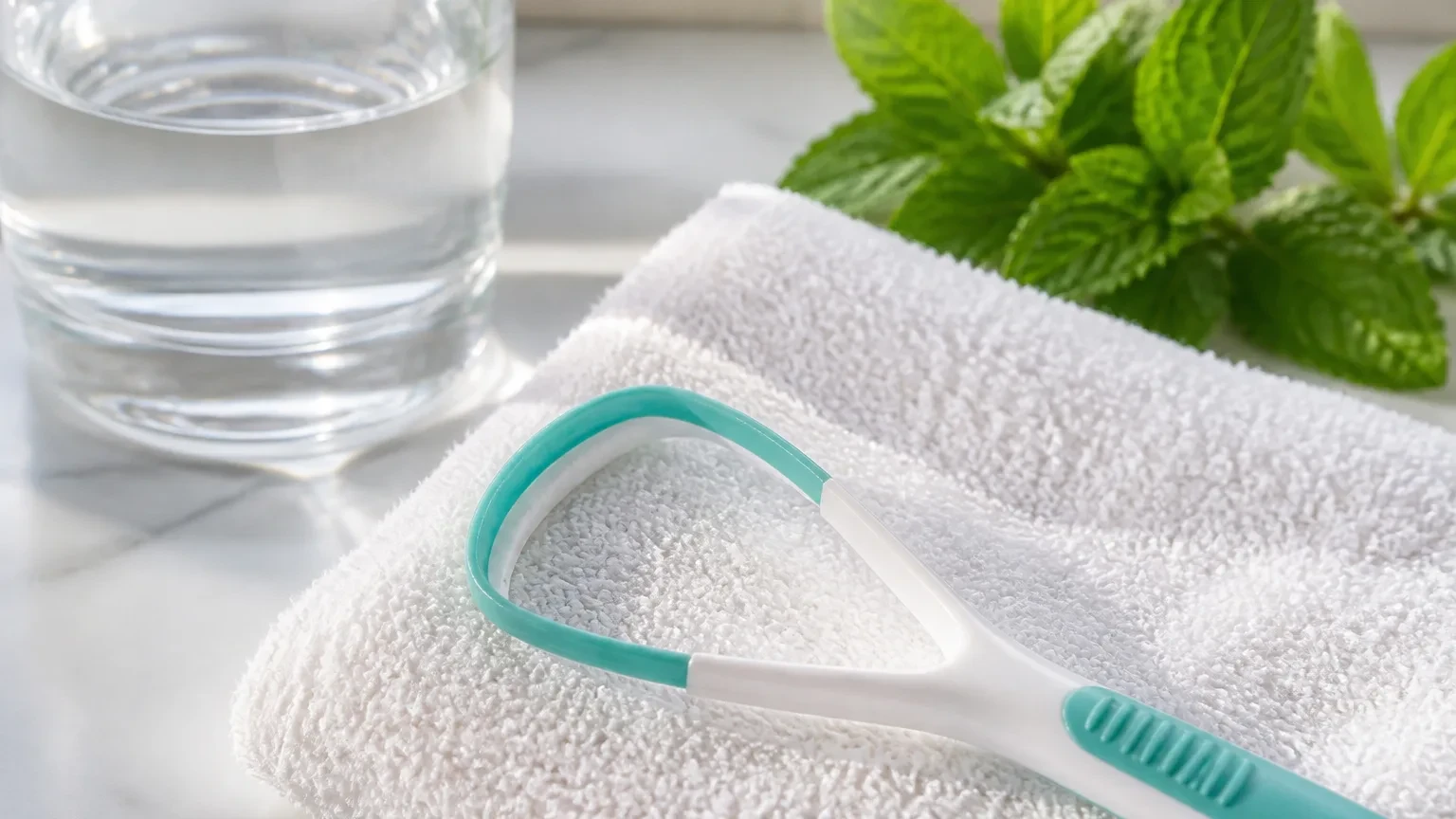
Should You Brush Your Tongue?
Cleaning your tongue can reduce odor-causing film and improve freshness. Learn how tongue brushing or scraping works and how gently to do it.

Reviewed by Dr. Sean Myran, DMDDoctor of Dental Medicine, University of Pennsylvania
Yes—you should usually clean your tongue as part of daily oral hygiene because its bumpy surface traps bacteria, food debris, and dead cells that contribute to bad breath and a coated feeling. A soft brush or tongue scraper used gently from back to front can thin that film. MouthHealthy notes that brushing your tongue helps freshen breath by cleaning odor-causing bacteria. Tongue care complements brushing and flossing; it does not replace them.
How it works is mostly mechanical. Anaerobic bacteria thrive in the low-oxygen grooves of a coated tongue and release sulfur compounds that smell sharp. Scraping or brushing disrupts that layer so saliva and rinsing can clear residue. People who mouth-breathe at night, drink little water, or smoke often see thicker coats. If odor persists despite tongue cleaning, widen the search with a broader bad-breath plan.
How Tongue Cleaning Fits Your Routine
- After brushing teeth: extend the soft brush onto the tongue with light pressure.
- Or use a scraper: place toward the back, pull forward, rinse the tool, repeat a few times.
- Stay gentle: stop short of gagging hard enough to injure tissue.
- Rinse: water or a mild rinse if your dentist agrees—see when mouthwash helps.
- Clean the tool: wash scrapers; replace brush heads on schedule.
MedlinePlus discusses bad breath and lists tongue bacteria among common contributors. White coats are often hygiene- and dryness-related; persistent patches, pain, or ulcers lasting beyond two weeks deserve a professional look rather than endless scraping.
Candidacy notes: most healthy adults can clean the tongue daily. People with a strong gag reflex should start farther forward and move back slowly over days. After oral surgery, follow your surgeon’s instructions before scraping near healing sites. Children can learn a gentle brush swipe once they tolerate it; force is never the goal.
Color alone is a weak diagnosis. A thin white film that brushes away often reflects debris and dryness; a painful plaque that does not wipe off, or a sudden change in tongue texture, deserves an exam rather than a sharper scraper. Stay curious about patterns—worse after alcohol, better after hydration—and share those notes at your visit so advice matches your real week, not a generic checklist.
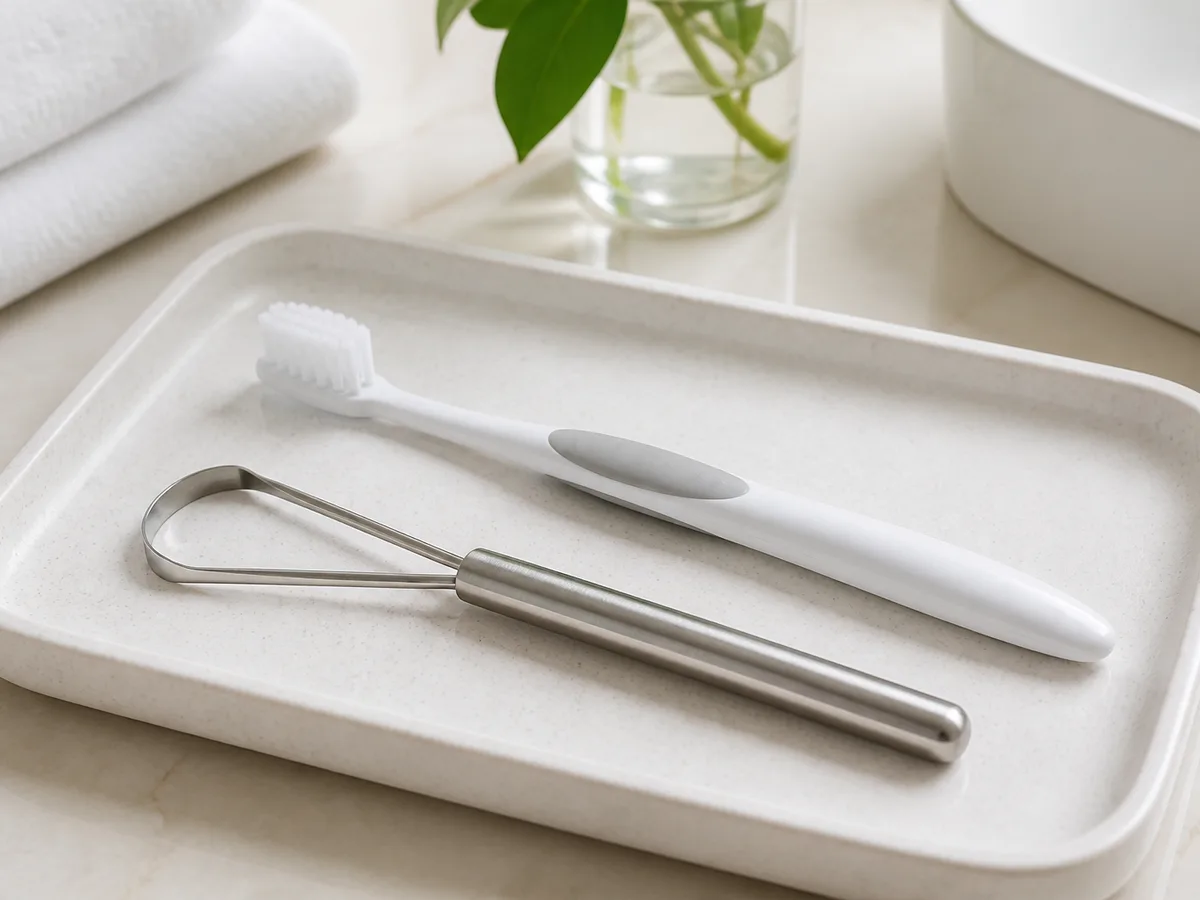 Light strokes, rinsed tool, done.
Thin the film; do not scrub raw
One or two careful passes often remove more film than aggressive digging. If you see a little white residue on the scraper, that is the coating leaving—not proof you need ten more strokes. Over-scraping can leave the tongue sore and more coated the next day as tissue reacts. Pair tongue care with proper tooth brushing so paste and floss are not ignored while you chase mintiness. Night cleaning matters because mornings reveal what grew while saliva flow dropped.
When Tongue Cleaning Is Not Enough
- Odor returns within an hour despite a clean tongue.
- Gums bleed or teeth feel furry—floss and brush technique need work.
- Dry mouth medicines dominate; sip water and ask about saliva supports.
- Tonsil stones, sinus drainage, or reflux seem linked—mention them at medical and dental visits.
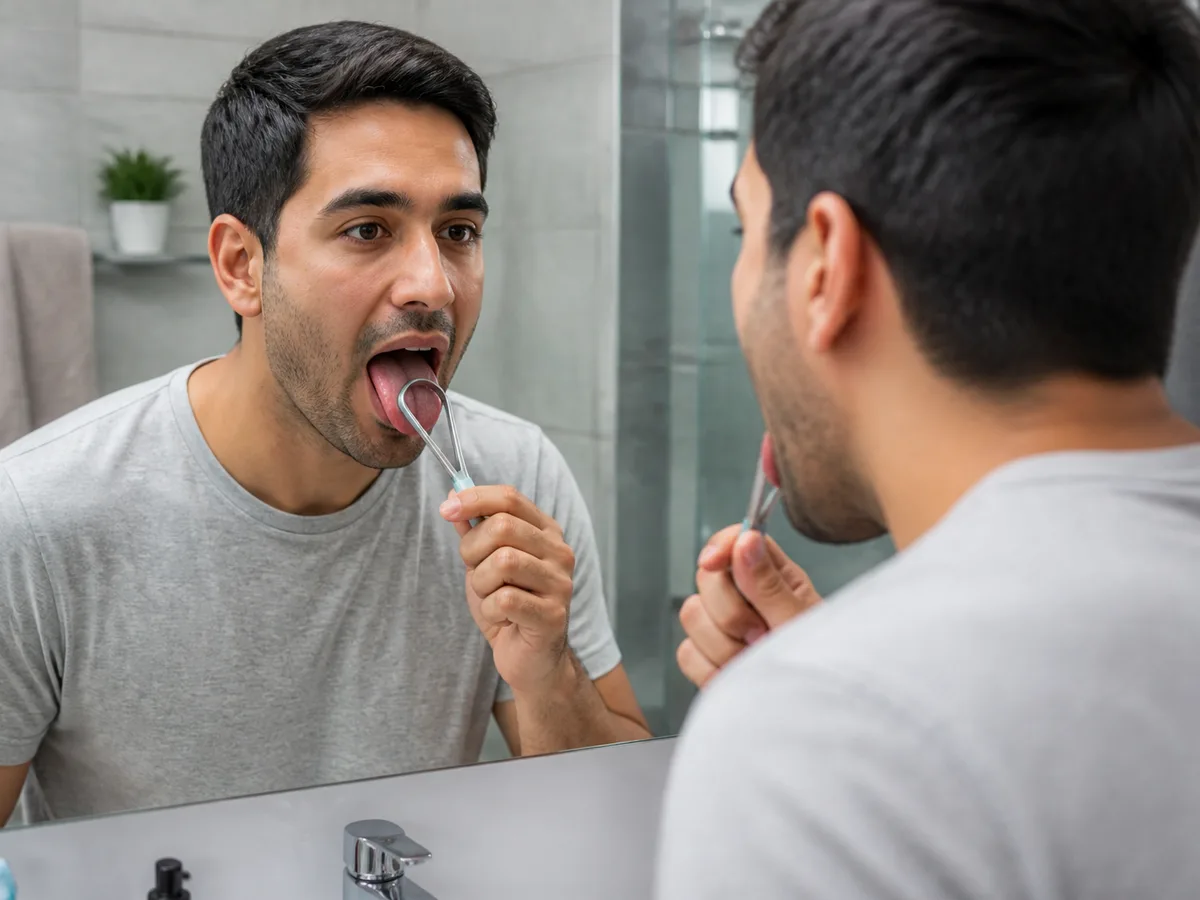 Persistent coats deserve an exam.
Coatings have more than one story
Ask your dentist whether the coat looks like routine debris, yeast-related change, or something that needs a medical referral. Bring a list of medicines that dry the mouth. If scrapers make you gag, ask about smaller tools or brush-only methods. For a clinician who will check soft tissue and breath sources without judgment, use Find a Dentist and mention how long the coating has lasted when you schedule. Photos of the tongue in natural light can help if the coat varies by day.
Brushing or scraping the tongue is a small, high-yield habit for freshness and comfort. Keep pressure light, clean daily, and escalate to a dental visit when coating or odor refuses to match the effort you are already investing.
Related articles
Keep exploring related topics from Dental Country.

Electric Vs Manual Toothbrush: Which Is Better?
Neither brush wins by brand alone: powered heads help many adults stay thorough, while a well-angled soft manual brush still clears plaque when used carefully for two minutes.
Read article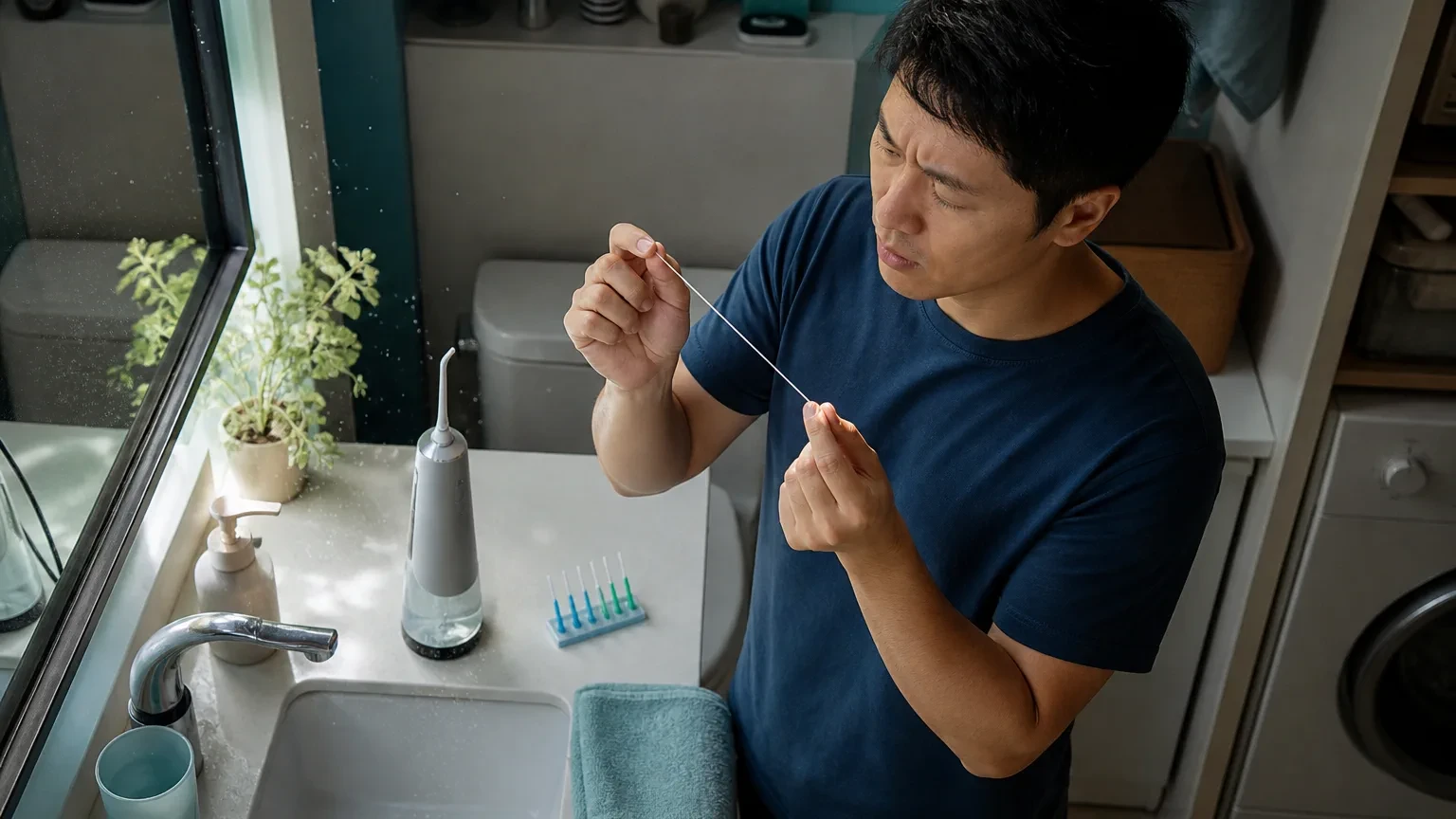
Floss Vs Water Flosser: Which Should You Use?
Traditional floss scrapes contact points; water flossers flush pockets and hardware. Many mouths do best when the tool matches anatomy—and some use both.
Read article
How Often Should You Floss?
Most adults should clean between teeth once every day; higher gum inflammation, orthodontic hardware, or frequent food packing can justify careful extra sessions.
Read article
Is Mouthwash Necessary?
Rinses are optional helpers: fluoride formulas may support enamel, antiseptic ones can reduce germs short-term, yet neither substitutes for mechanical plaque removal.
Read article