

What Toothpaste Should You Use?
Most adults need fluoride toothpaste; sensitivity, tartar, or whitening goals can refine the formula. Use a checklist to match paste to your risk.

Reviewed by Dr. Sean Myran, DMDDoctor of Dental Medicine, University of Pennsylvania
Most adults and children who can rinse and spit should use a fluoride toothpaste as the default, then customize for sensitivity, gum comfort, or whitening only when those extras match real needs. Fluoride is the ingredient with the strongest everyday evidence for fighting decay. MouthHealthy advises choosing a toothpaste with fluoride and looking for the ADA Seal of Acceptance when possible. Flavor and foam are preferences; active ingredients are the decision.
CDC highlights fluoride toothpaste as a proven way to prevent cavities. Whitening pastes may polish surface stain but can feel scratchy on exposed roots. “Natural” pastes without fluoride may leave you under-protected if cavities are a concern. Charcoal products can be abrasive—ask before making them daily drivers.
Toothpaste Candidacy Checklist
- Standard cavity risk: fluoride paste twice daily; soft brush technique from proper brushing guidance.
- Sensitive teeth: potassium nitrate or stannous fluoride formulas used consistently for weeks.
- High decay / dry mouth: ask about prescription-strength fluoride paste.
- Gingivitis focus: stannous fluoride options may help some patients—confirm with your dentist.
- Whitening interest: gentle formulas after tartar is cleaned; do not scrub harder.
- Kids: smear or pea-size amounts by age; fluoride unless told otherwise.
If you grind, have acid reflux, or sip citrus all day, enamel already takes chemical hits—choose lower-abrasion pastes and fix timing habits covered in brushing after acidic meals. Tartar-control pastes can slow new mineralization for some people but will not remove ledges already stuck on teeth.
Reading the carton beats following social media swaps. Look for fluoride (sodium fluoride, stannous fluoride, or sodium monofluorophosphate), note any “consult your dentist” warnings, and be wary of pastes that promise extreme whitening overnight. If cinnamon or strong mint burns your tissues, try a mild flavor rather than abandoning fluoride entirely.
Budget shoppers can still choose well: many store brands carry the same fluoride actives as premium tubes. What usually fails is rotating five “detox” pastes while flossing stays rare. Pick one fluoride product you will finish, then revisit extras only if sensitivity, stain, or new decay shows up on exam. If you share a bathroom with kids, keep adult whitening or prescription tubes clearly separated from child-safe amounts.
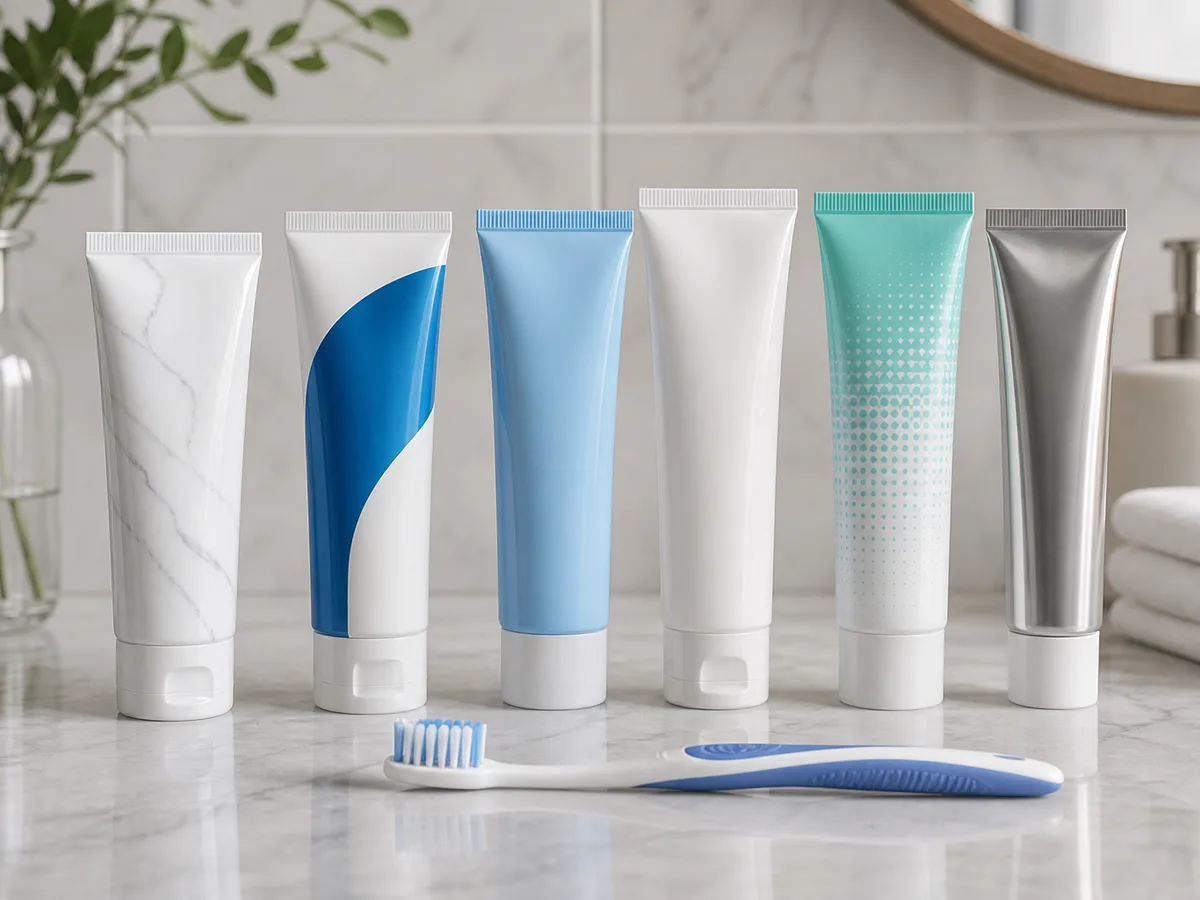 Fluoride dose beats foam volume.
More paste does not mean cleaner teeth
A pea-sized amount is enough for most adults; larger ribbons mostly foam into the sink. Spit after brushing and consider skipping a vigorous water rinse if your dentist wants fluoride to linger. Store kids’ pastes up high so flavored tubes do not become snacks. If you use a whitening strip system, ask whether your daily paste abrasivity stacks too high. Technique and brush type influence results as much as the brand on the tube.
When To Ask Before Switching
- You need a prescription fluoride product after several new cavities.
- Sensitivity pastes have not helped after consistent use.
- You have mouth sores that flare with certain detergents like heavy sodium lauryl sulfate.
- You are caring for a toddler still learning not to swallow paste.
 One well-chosen tube beats a crowded drawer.
Let the exam edit your shopping list
Bring your current tube to a cleaning and ask whether it fits your cavity and sensitivity pattern. Hygienists see the difference between paste problems and missed flossing quickly. If cost is tight, a basic ADA-accepted fluoride paste is usually a better buy than rotating trendy jars. For personalized product advice tied to your X-rays and gum chart, use Find a Dentist and mention dry mouth or whitening goals when you book. Leave with one clear daily paste—not five experiments.
Use fluoride toothpaste unless your dental team directs a special plan, then add sensitivity or whitening features only when they earn a place. The checklist above turns aisle confusion into a short conversation at your next visit.
Related articles
Keep exploring related topics from Dental Country.

Electric Vs Manual Toothbrush: Which Is Better?
Neither brush wins by brand alone: powered heads help many adults stay thorough, while a well-angled soft manual brush still clears plaque when used carefully for two minutes.
Read article
Floss Vs Water Flosser: Which Should You Use?
Traditional floss scrapes contact points; water flossers flush pockets and hardware. Many mouths do best when the tool matches anatomy—and some use both.
Read article
How Often Should You Floss?
Most adults should clean between teeth once every day; higher gum inflammation, orthodontic hardware, or frequent food packing can justify careful extra sessions.
Read article
Is Mouthwash Necessary?
Rinses are optional helpers: fluoride formulas may support enamel, antiseptic ones can reduce germs short-term, yet neither substitutes for mechanical plaque removal.
Read article