
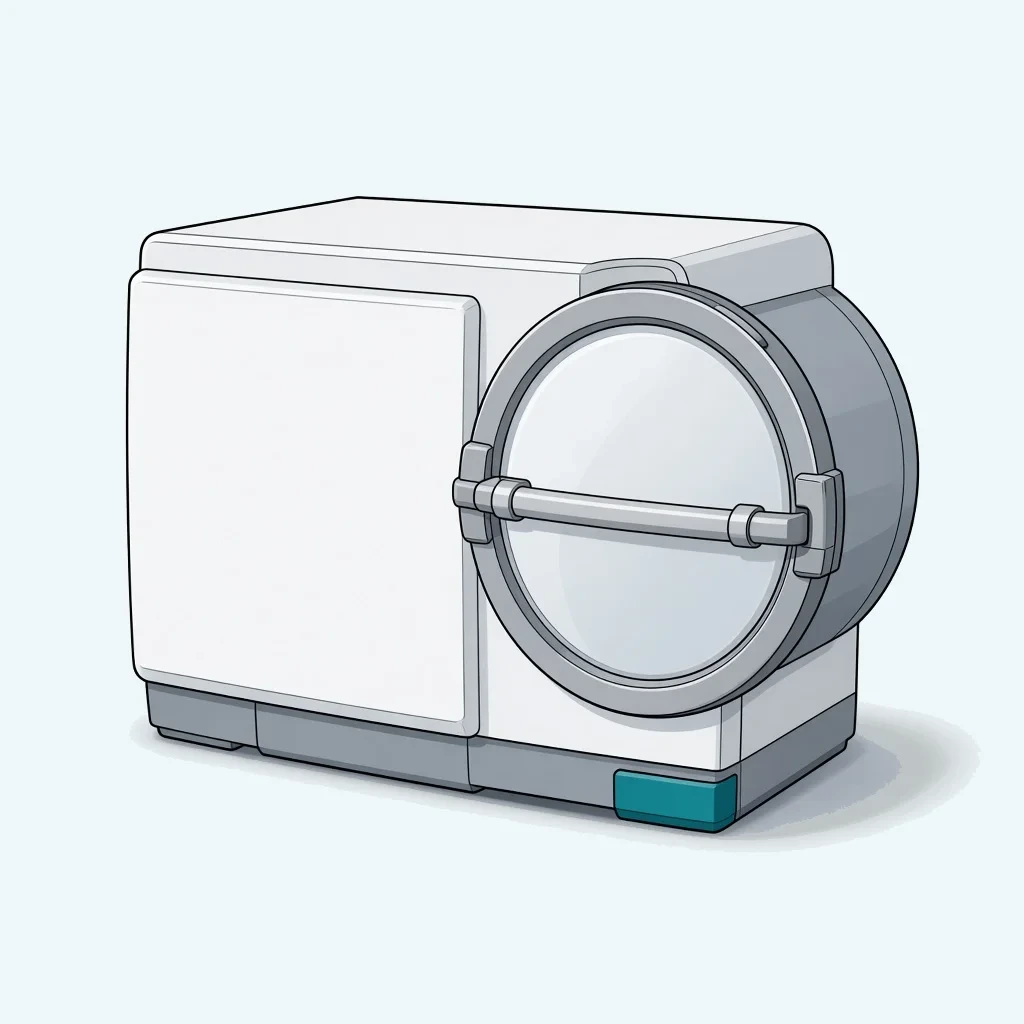
Dental Sterilizers: Midmark, STATIM, Tuttnauer, Lexa
Steam chamber, cassette, or dry-heat sterilizers for the dental office, and how Midmark, SciCan, Tuttnauer, and W&H differ.

Reviewed by Dr. Sean Myran, DMDDoctor of Dental Medicine, University of Pennsylvania
How we rank explains how these product lists are ordered.
A sterilizer is the last machine in instrument processing. Cleaning comes first. The instrument washer or the ultrasonic cleaner does that job. This guide is the cycle after the cassette is clean and dry. An ultrasonic tank is not a sterilizer, and it is not listed here.
How to choose a dental sterilizer
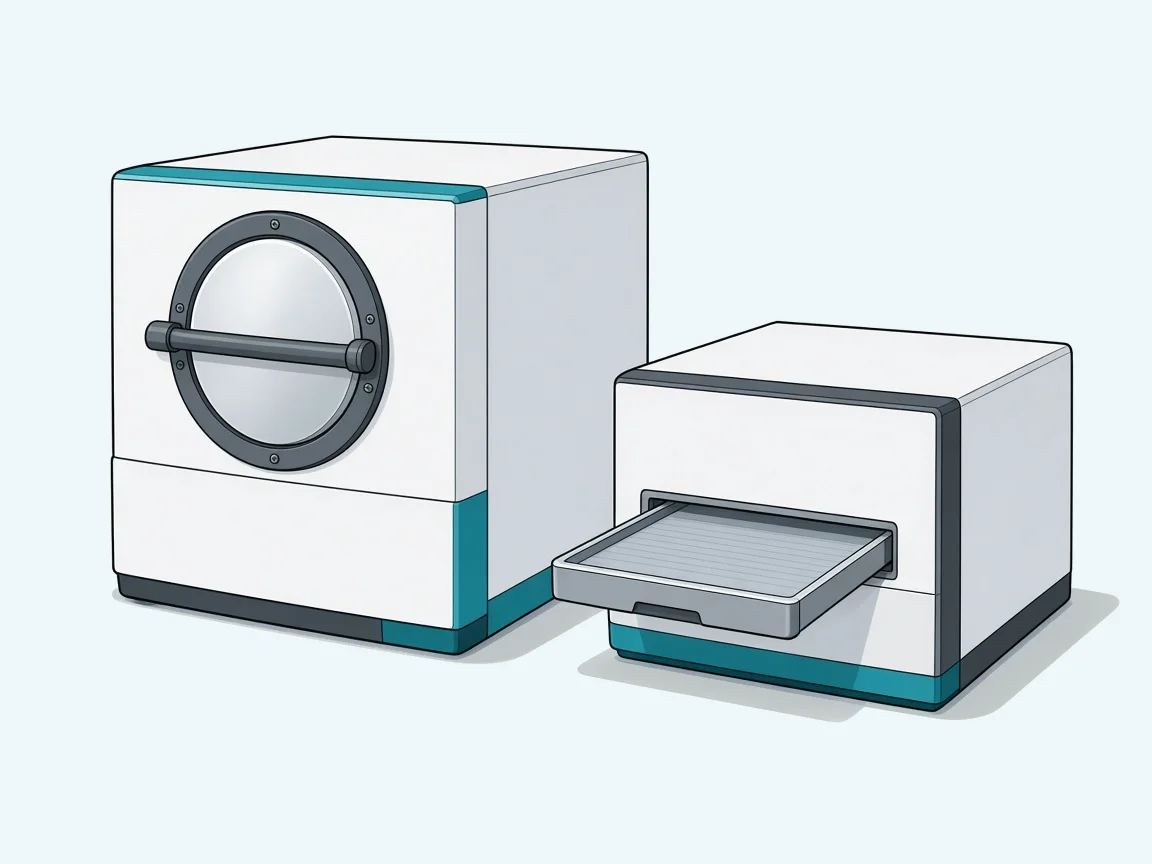
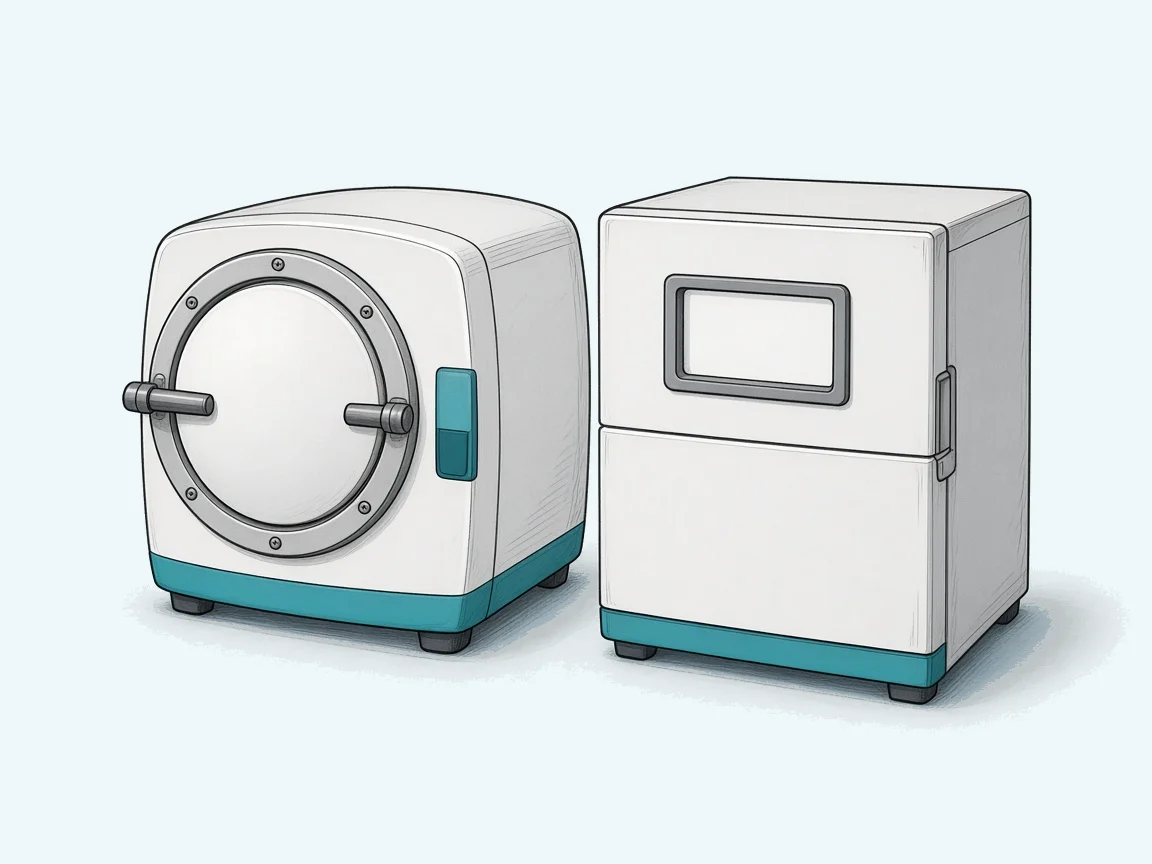
- Steam chamber, cassette, or dry heat. Most wrapped dental instruments are cleared for steam. A cassette sterilizer is a small steam chamber you lift off. Dry heat is an oven. It is a different process, and only for instruments the maker allows in dry heat.
- What fits in one cycle. Chamber size is the number of cassettes or pouches per load, from the current manual for that model. A family name is not a volume. The larger Midmark is not the smaller Midmark. A STATIM cassette is not a chamber stack.
- How it dries. A wet pouch is not ready to store. Some chambers open the door to dry. Some dry with the door closed. A cassette dries the load that fits in that cassette, not the day’s pouches.
- Where the water comes from. Some units use a reservoir you drain. Some use fresh water every cycle. Use the water the manual names.
- One machine rarely does both jobs. A cassette turns a small load around between patients. A chamber takes the wrapped cassettes. Offices that try to make one unit do both usually wait on the one they bought.
How common sterilizer lines differ
Treat the table as product differences, not a score. Take chamber size from the current manual for the model on the quote.
| Line | Type | Best fit | Watch for |
|---|---|---|---|
| Midmark M9 and M11 | Tabletop steam. Midmark’s drying description keeps the door at a partially open dry position | Offices that already buy Midmark and want a chamber unit | The M11 is the larger model. Open-door drying is not closed-door drying. Read the manual for the generation on the quote |
| SciCan STATIM G4 | Cassette steam. A small amount of water each cycle | A small load that has to be ready between patients | The 2000 cassette is 11 × 7.1 × 1.4 in. The 5000 cassette is 15 × 7 × 3 in. Neither holds a day’s pouches |
| SciCan STATCLAVE G4 | Chamber steam. Vacuum before the cycle and vacuum drying after, door closed | Wrapped cassettes when you want a SciCan chamber next to the STATIM | SciCan’s “as little as 38 minutes” figure is for a 3.5 lb test load, not a full stack |
| Tuttnauer | EZ-series manuals and the current T-Edge 10 and 11 both describe closed-door drying. They are not the same machine | The other common U.S. quote beside Midmark | A model name has to be on the quote. Dealers still say Valueklave for a compact unit. That name was not on the T-Edge manual |
| W&H Lexa | 28 L chamber. Closed-door vacuum drying and fresh water each cycle | Offices buying the sterilizer W&H documents as Lexa | Cycle times on the page are approximate and depend on the load. Confirm the badge you will call for service |
Midmark
Midmark still sells the M9 and the M11 as tabletop steam sterilizers. On the -04x installation manual, the door moves itself to a partially open drying position after the chamber pressure reaches zero. On the -05x drying description, the door has to stay at that dry position: closing it can build pressure and set an error, and opening it past the dry position also sets an error. That is not closed-door drying. The M11 is the larger of the two names. Chamber volume still comes from the manual for the generation on the quote, not from an old comparison grid. Midmark does not publish a street price on the product page checked.
SciCan STATIM
SciCan’s U.S. page lists the STATIM 2000 G4 and the STATIM 5000 G4. Both use a small amount of water for each cycle, and the chamber comes out of the unit. The 2000 cassette’s internal size is 11 × 7.1 × 1.4 inches. The 5000 cassette’s internal size is 15 × 7 × 3 inches. Those are different loads. SciCan’s cycle table marks total cycle time as excluding drying. Use a STATIM for the instrument you need back before the next patient. It is the wrong only-sterilizer for a day of pouched cassettes, and it is not the STATCLAVE.
SciCan STATCLAVE
STATCLAVE G4 is SciCan’s chamber sterilizer. The page describes a vacuum before the cycle and a vacuum after it, with the door closed, and it says fresh water is used in every cycle. The chamber is 11 inches in diameter and 15 inches deep. SciCan says a wrapped load can be sterilized and dried in as little as 38 minutes, and the footnote says that result is a 3.5 lb (1.59 kg) test load. A full stack is a different time. G4 connectivity does not replace a failed indicator.
Tuttnauer
Tuttnauer’s EZ manual says drying is done with the door closed: an air compressor draws air through a 0.2 µm HEPA filter and pushes it through the heated chamber. The March 2026 manual for the T-Edge 10 and T-Edge 11 also says drying is performed with the door closed, and it describes a vacuum stage before and after the exposure. Those are different machines. Dealers still use the Valueklave name for a compact unit. That name does not appear in the T-Edge manual checked here, so a quote that says only “Tuttnauer” or only “Valueklave” is not a chamber size.
W&H Lexa
W&H’s Lexa page describes a 28 liter chamber, closed-door vacuum drying, and fresh water for each cycle. The listed unit weight is 48 kg. Cycle times on that page are marked approximate and can change with voltage and load. It is a chamber sterilizer, not a cassette and not a dry-heat oven. Confirm the nameplate you will call for service. A rebadged package was not documented on the W&H page.
Dry heat
CPAC’s SteriDent page describes a static-heat dry sterilizer, models 200 and 300, at 320°F (160°C) for 60 minutes, with no water and no steam. CPAC’s RapidHeat line is a different dry-heat process, forced air rather than static heat, and it is not the SteriDent cycle. Use either one only when the instrument instructions allow that dry-heat cycle. A handpiece cleared for steam does not become a dry-heat instrument because an oven is already on the counter. A current manufacturer page for a “Wayne” dry-heat oven was not found, so that name is not a model in this guide.
Related guides
Sterilizer questions
Is the ultrasonic cleaner a sterilizer?
No. Cavitation in a tank removes debris. The cassette is still not sterile. That comparison lives on the ultrasonic cleaner page.
Does the washer replace the autoclave?
No. A washer can clean and thermally disinfect. Packaging and the sterilizer cycle come after it. The washer guide is the buying page for that machine.
Can dry heat replace steam for handpieces?
Only when the handpiece maker says so. The steam units above are the usual cycle for a turbine. Follow the handpiece instructions for the one you own.
Sources
Midmark
M9/M11 (-04x) installation and operation manual, door-open drying.
Midmark
M9/M11 (-05x) drying mode.
SciCan
STATIM G4, United States.
SciCan
STATCLAVE G4, United States.
Tuttnauer
EZ series operation manual, closed-door HEPA drying.
Tuttnauer
T-Edge 10 and T-Edge 11 instructions for use, March 2026.
W&H
Lexa sterilizer.
CPAC Equipment
SteriDent.
CPAC Equipment
RapidHeat, a separate dry-heat process.
What changed: Nov 2026: checked Midmark, STATIM, STATCLAVE, Tuttnauer, Lexa, and SteriDent against the current manuals. Dropped the unsourced Wayne oven. No prices.
Related articles
Keep exploring related topics from Dental Country.
Dental Ultrasonic Cleaners: BioSonic, SweepZone, Crest
Ultrasonic cleaners compared on cassette fit, sweep, and heat, and how BioSonic, L&R, and Crest units differ.
Read article
Instrument Washers: HYDRIM vs MELAtherm vs Miele
Instrument washers compared on cassette capacity and drying, and how SciCan HYDRIM, Melag, and Miele differ.
Read article
Handpiece Cleaners and Lubricants: Sprays and Systems
Handpiece cleaners and lubricants matched to the unit, with Morita, DentaLube, KaVo, Midwest, and NSK compared.
Read article
Instrument Cassettes: IMS Signature vs Infinity Sizes
Instrument cassettes by capacity and rails, and how IMS, compact, and E-Z Jett cassettes differ.
Read article