
How Loud Is Snoring? Decibel Levels & Distance Explained.
clear, practical guidance from Dental Country to help you compare options and decide with confidence.
Most snoring measures between 50 and 60 decibels (dB) — about the loudness of a normal conversation or a quiet office. Severe snoring can exceed 80 dB, comparable to a vacuum cleaner, and the loudest snore on record reached 111.6 dB. Anything above 60 dB is considered medically significant and a possible sign of sleep apnea.
Snoring Decibel Chart (At a Glance)
| Snoring Level | Decibels (dB) | Real-World Equivalent |
|---|---|---|
| Soft / quiet | 30–40 dB | Whisper, quiet library |
| Mild | 40–50 dB | Refrigerator hum |
| Moderate | 50–60 dB | Normal conversation |
| Loud | 60–70 dB | Dishwasher, office printer |
| Very loud | 70–80 dB | Vacuum cleaner |
| Dangerously loud | 80–90 dB | Lawnmower, heavy traffic |
| Record-setting | 100+ dB | Motorcycle, chainsaw |
Average snoring noise can be heard across a 40 feet wide room to the point that it can disturb one’s sleep. But, this number is subjective to many factors, from how loud the snoring is (the sound’s decibel) and barriers between a snorer and the listener!
The best way to determine a better answer to this question is to learn more about sound, how it moves through the air, and how distance and barriers affect it.
There are many ways to measure the volume of noises, and decibels are the most common. Decibels are a logarithmic scale that attempts to represent the range of human hearing. Moving up to 10 on the scale makes a sound ten times louder. A decibel of 0 means that the sound is barely audible, while a decibel of 90 is so loud that OSHA requires workers to wear ear protection.

Loudest snoring measured at 93 dB
If your partner’s snoring sounds like a freight train barreling through your bedroom, you may wonder – just how loud can snoring get? Well, based on scientific research, the loudest snoring has been recorded at a whopping 93 decibels!
Let me explain what that means. A team of researchers had subjects sleep with monitors by their pillows to measure their snoring levels in decibels. That’s the unit used for sound pressure. Any guesses on how loud 93 dB is? That’s about the same level as a lawnmower running right next to your ear! No wonder it jolts you awake, right?
Now 93 dB was the highest level recorded in the study. But even those who didn’t quite hit rock concert volumes still clocked in at dangerously high levels. For example, one woman’s snoring registered 78 dB on the first night – about the same loudness as a vacuum cleaner. Yikes!
The study also found men tend to snore louder than women on average and are more likely to snore overall. So if your husband sounds like heavy machinery at night, don’t worry – there are solutions to help lower the volume so you can both sleep peacefully!
The key is visiting a doctor to get to the root of what’s causing the noisy snoring. Things like sleep apnea, being overweight, alcohol use, and other factors can contribute. With an expert’s help, those decibel levels can be brought down to a more restful range. Sleep soundly soon!

While the average snoring volume is around 38 dB, it is not uncommon to find snoring that exceeds 93 dB. A Swedish woman with sleep apnea had her snoring measured at 93 decibels. The Daily Mail reported on a grandmother who hit 111.6 dB during a night’s sleep. 93 decibels is equivalent to talking loudly or the volume of an alarm clock… ouch!
If your partner’s snoring is rattling the windowpanes, that’s a red flag – extremely loud snoring can signal sleep apnea. This dangerous disorder causes breathing to stop repeatedly during sleep.
But how can you gauge snoring volume? Researchers break it down into mild, moderate and severe categories. Mild snoring is like soft whispering. Moderate snoring is in the talking volume range. And severe snoring means full-on shouting and roaring while sawing logs.
The louder the snoring, the higher someone’s risk for developing sleep apnea. Fortunately, there are now handy smartphone apps that can measure decibel levels right from your bedside table.
These apps listen to the snoring and provide a reading of how many decibels – that’s the sound pressure level – the snoring reaches. Results can give insight into snoring severity and prompt people with extremely loud, chainsaw-like snoring to get checked for sleep apnea.
You can rest easy knowing solutions exist for taming even the most floor-shaking snores. Doctors can provide treatments to help open up airways and reduce snoring intensity. Soon you’ll be sailing off to a quiet slumber instead of jolting awake all night!
Table 1: The severity of snoring and it’s decibel range
| Snoring Level | Decibel Range |
|---|---|
| Mild snoring | 1 (40–45 dB) |
| Moderate snoring | 2 (45–55 dB) |
| Severe snoring | 3 (55–60 dB) |
| Very severe snoring | 4 (≥ 60 dB) |
Symptoms of sleep apnea
If your partner’s snoring resembles a roaring freight train or chainsaw concert night after night, that’s a red flag for sleep apnea. This serious disorder causes people to actually stop breathing repeatedly as they sleep, often for 10 seconds or longer at a time.
The loudest, most rattling snores happen when throat tissues collapse, completely blocking the airway. People with sleep apnea often don’t even realize they temporarily stop breathing until they wake up gasping for air and feeling exhausted. Definitely frightening!
Beyond loud snoring, other sleep apnea symptoms include waking up frequently at night or feeling tired all day despite sleeping. Women are more prone to the condition than men, as are people who are obese or have thicker necks.

If you can hear your partner sawing logs even outside the bedroom, or they wake up snorting and snoring loudly, it may indicate underlying sleep apnea. In that case, breathing pauses likely occur multiple times per night, explaining the daytime drowsiness.
The good news – sleep studies can diagnose sleep apnea, and treatments like CPAP machines, mouthpieces, and surgical procedures can help reopen airways and restore peaceful, uninterrupted breathing at night. No more frightening snoring symphonies! Talk to your doctor if you suspect your partner’s disruptive snoring may point to sleep apnea. Relief and restful sleep are possible!
Although snoring sounds are usually humorous and evocative, there is a real science behind them. A loud snore can reach a louder noise level than the OSHA-safe noise level for an eight-hour day. In addition, the World Health Organization (WHO) has linked the sounds of snoring to sleep disruption. It is important to note that noise over fifty decibels is considered excessive.
Solutions

There is no doubt that the best solution to get rid of snoring noise is to treat it at the source. Here is a list of treatments currently available for snoring. But assuming that is not possible or successful, some solutions can help block or mask the disturbing noise of snoring by others.
1) Soundproofing
Snoring is low-frequency noise. Even the loudest snore will be challenging to hear in another apartment. However, if the snorer has poor soundproofing, it might be possible to be heard in another apartment, which could be considered a breach of the warranty of habitability. If you are unsure of the noise level of your neighbor’s snoring, many apps can help.

2) Earplugs
Using earplugs can help to muffle snoring noise. These inexpensive devices can be purchased at your local drugstore. Silicone earplugs are designed to reduce noise levels in loud environments. While a sleep test is unnecessary, regular follow-ups can help rule out other causes of snoring.

3) Distance
The distance at which snoring can be heard was determined using an acoustic analysis of a 5-second acoustic signal. A recording device took the recordings with a sampling rate of 44,100 Hz. The recordings were stored on a computer and analyzed using digital recording software. That showed that moving away from the snorer by 30 feet or more can help reduce the disturbance significantly, but that is impossible for most.
Sound loudness drops roughly 6 dB every time the distance from the source doubles (the inverse-square law). That means a 60 dB snore right next to your ear is only about 48 dB ten feet away, and around 36 dB across a 40-foot room — still loud enough to wake a light sleeper. Walls and closed doors typically reduce sound by another 10–30 dB depending on construction.
| Distance from Snorer | Loudness of a 60 dB Snore | Audibility |
|---|---|---|
| At the pillow (3 ft) | ~60 dB | Very loud |
| Across the room (10 ft) | ~48 dB | Clearly audible |
| Hallway (25 ft) | ~38 dB | Soft but disturbing |
| Through a closed door (40 ft + wall) | ~20–25 dB | Often inaudible |
| Next apartment / two walls | < 15 dB | Rarely audible |
As you can see, it is very hard not to hear snoring by moving away a few feet.
4) Headphones
Noise-cancellation headphones create an opposing sound wave that can block snoring noise. The challenge is mostly the discomfort of wearing such devices.
5) White noise makers
White noise machines emit a constant, soothing sound that can help mask the sound of snoring.
Learn about how snoring may affect your relationship.
Frequently Asked Questions
How many decibels is normal snoring?
Normal, mild snoring is typically 40–50 dB — about the level of a refrigerator hum. Moderate snoring averages 50–60 dB, similar to normal conversation.
Is snoring louder than a vacuum cleaner?
Severe snoring can match or exceed a vacuum cleaner. Vacuums run at about 70–80 dB, and recorded snoring routinely hits 80 dB or higher in people with obstructive sleep apnea.
At what decibel level is snoring considered dangerous?
Snoring above 60 dB is considered clinically significant and warrants a sleep evaluation. Levels above 80 dB are strongly associated with obstructive sleep apnea and should be assessed by a sleep specialist.
Can a snore really be louder than 100 decibels?
Yes. The Guinness World Record for the loudest snore is 111.6 dB, recorded in 2009. That is louder than a motorcycle and approaches the threshold for hearing damage with prolonged exposure.
How far away can loud snoring be heard?
A 70 dB snore can be heard across a 30–40 foot room and faintly through a closed door. Very loud snoring (80+ dB) can sometimes be heard in adjacent rooms, but rarely carries through more than one solid interior wall.
Related articles
Keep exploring related topics from Dental Country.
How Much Do Dental Implants Cost?
How much do dental implants cost in 2025? Get the full breakdown of single, multiple, and All-on-4 implant pricing, plus tips to save money.
Read article
Can I smoke while wearing clear aligners?
Smoking with clear aligners in place is strongly discouraged — heat and residue can stain trays and slow treatment. See safer habits.
Read article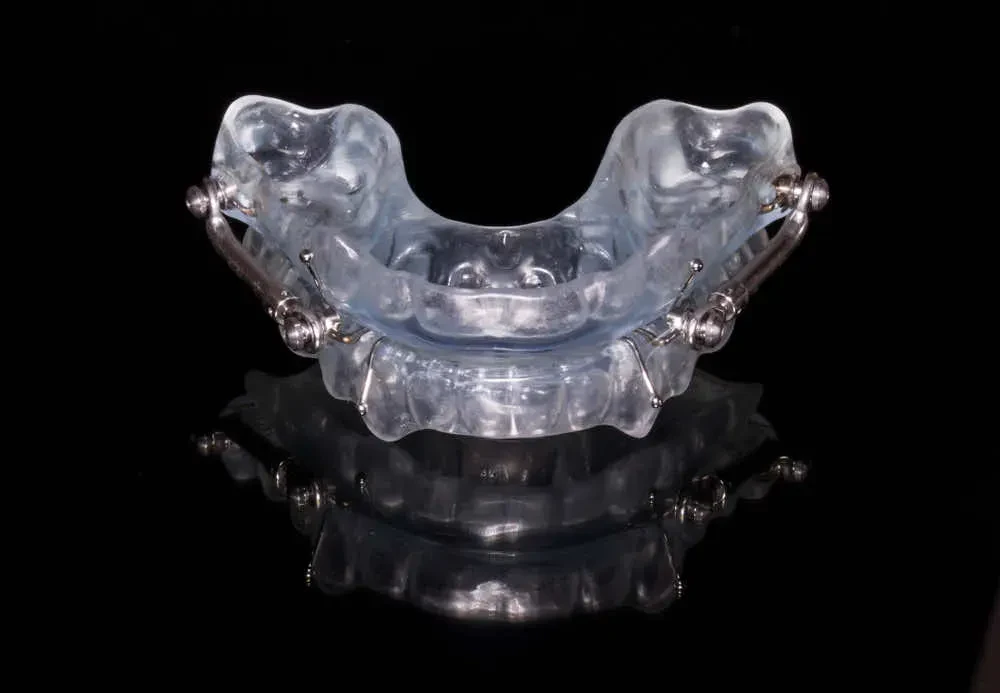
Using Snoring Devices? The Side Effects You Should Know
Millions Seek Relief from Noisy, Disruptive Snoring If you're one of the estimated 60 million Americans who snore, you know the sound – that disruptive.
Read article
Stopping Snoring Without Surgery
A Prevalent but Treatable Problem Snoring is an incredibly common issue, with over half of men and around 40 percent of women snoring regularly.
Read article