
What Is An Oral Cancer Screening?
An oral cancer screening is a quick mouth and neck check during dental visits. Learn what dentists look for and when a sore needs faster attention.

Reviewed by Dr. Sean Myran, DMDDoctor of Dental Medicine, University of Pennsylvania
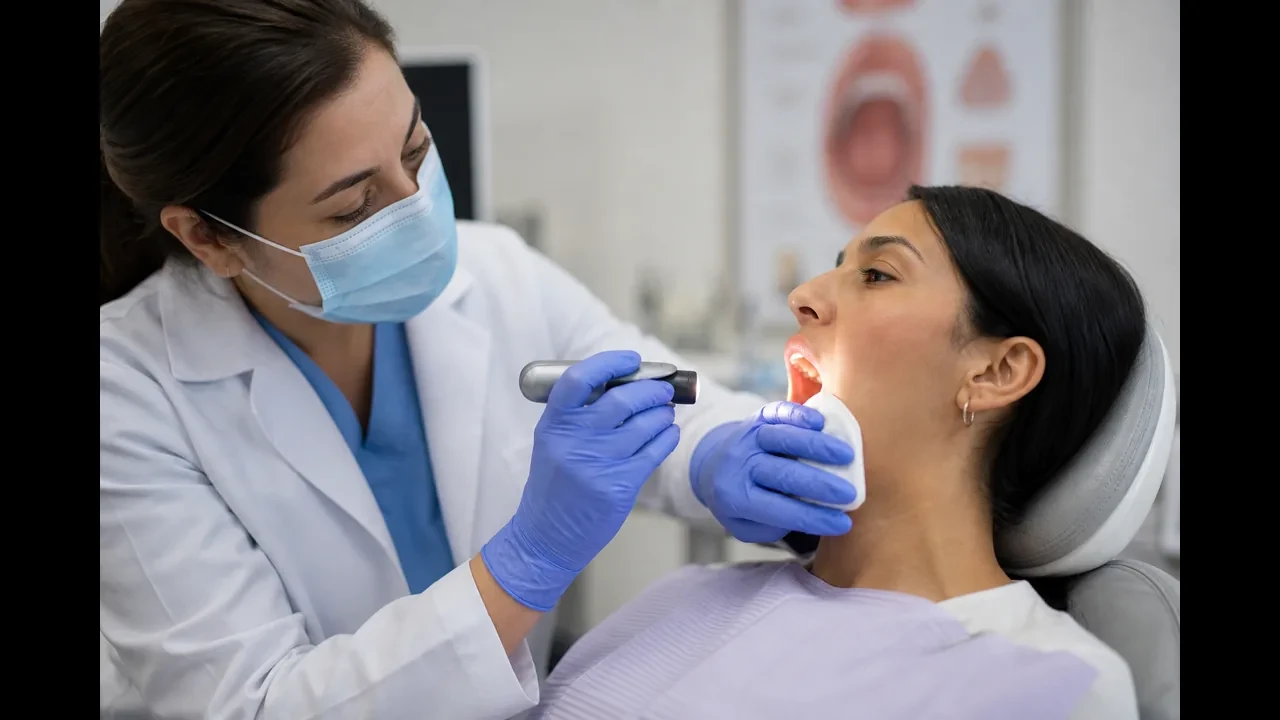
An oral cancer screening is a focused exam of the lips, cheeks, tongue, floor of mouth, palate, throat area, and often the neck lymph nodes to look for persistent sores, red or white patches, lumps, or other tissue changes that need monitoring or biopsy. MouthHealthy explains that dentists check for signs of oral cancer during regular visits and lists warning signs to watch for. It is usually quick, painless, and built into routine dental checkups.
CDC notes that dentists and doctors may examine the mouth for signs of oral or oropharyngeal cancer during checkups. Screening is not the same as a cancer diagnosis. Most irregularities are not cancer, yet lasting changes deserve a documented follow-up rather than watchful waiting without a date.
What The Screening Process Usually Includes
- Extraoral look: face symmetry, lip borders, and neck palpation.
- Intraoral visual exam: retracting cheeks, lifting the tongue, inspecting the floor of mouth and soft palate.
- Feel for firmness: gloved fingers check for lumps you cannot see.
- Adjunctive lights or dyes (optional): some offices add tools; ask what a positive flag would mean.
- Documentation: photos or notes if a spot will be rechecked.
Tobacco, heavy alcohol use, HPV-related risk for some throat cancers, prolonged sun exposure to lips, and older age are among factors clinicians keep in mind, but screenings matter for people without those histories too. A clean screening today does not replace attention to a new sore that appears next month.
Some offices photograph a questionable area or draw its outline in the chart with measured size. That baseline makes the two-week recheck honest: larger, darker, firmer, or more raised are clearer reasons to refer. If you are offered a brush biopsy or specialist visit, ask what the test can and cannot rule out so expectations stay grounded. Screening is a filter, not a guarantee that every future change is impossible.
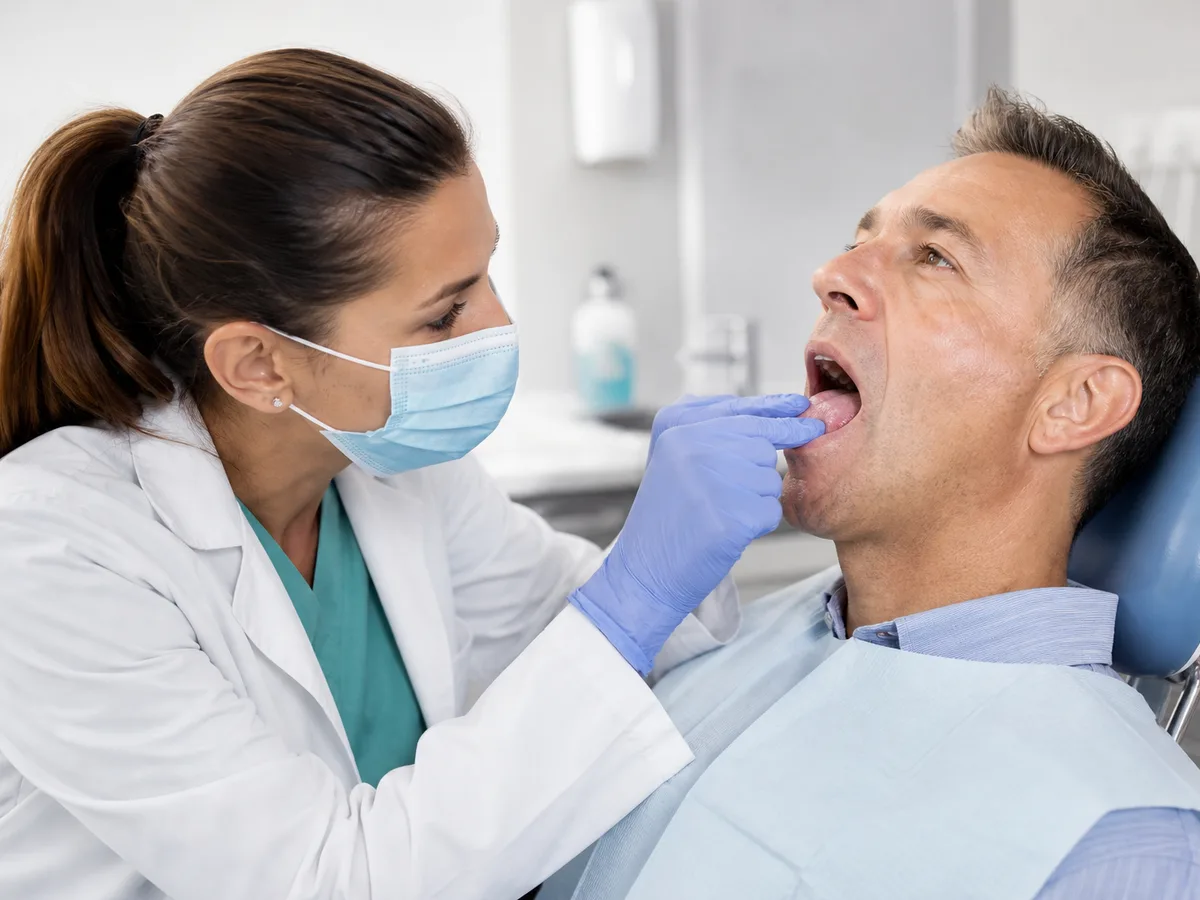 Look and feel, then schedule follow-up.
Soft tissue gets equal attention
Teeth often dominate dental visits, yet soft tissue saves lives when changes are caught early. Expect the dentist to ask you to say “ah,” stick out your tongue, and move it side to side. If something looks atypical, you may hear a two-week recheck plan or a referral to an oral surgeon or ENT. Ask for the location in plain language—“right border of tongue”—so you can monitor the same spot at home without guessing.
When To Seek Care Sooner Than Your Recall
- A sore or ulcer that lasts longer than two weeks.
- A red or white patch that does not wipe away.
- A lump in the neck, lip, or mouth that grows.
- Hoarseness, trouble swallowing, or a feeling of something caught in the throat that persists.
- Unexplained numbness, loose teeth without periodontal cause, or ear pain on one side with a mouth lesion.
These signs are not a diagnosis. They are reasons to call promptly rather than waiting for the next cleaning. Prevention habits in cavity prevention support tooth health; screening protects soft tissue on a parallel track. Fluoride questions live in adult fluoride guidance, separate from cancer checks.
Lip sunscreen, tobacco cessation support, limiting heavy alcohol, and HPV vaccination discussions with a physician are lifestyle layers that sit beside dental screening. None of them replace the in-chair look-and-feel exam, and the exam does not replace those habits. Think of them as parallel rails on the same preventive track.
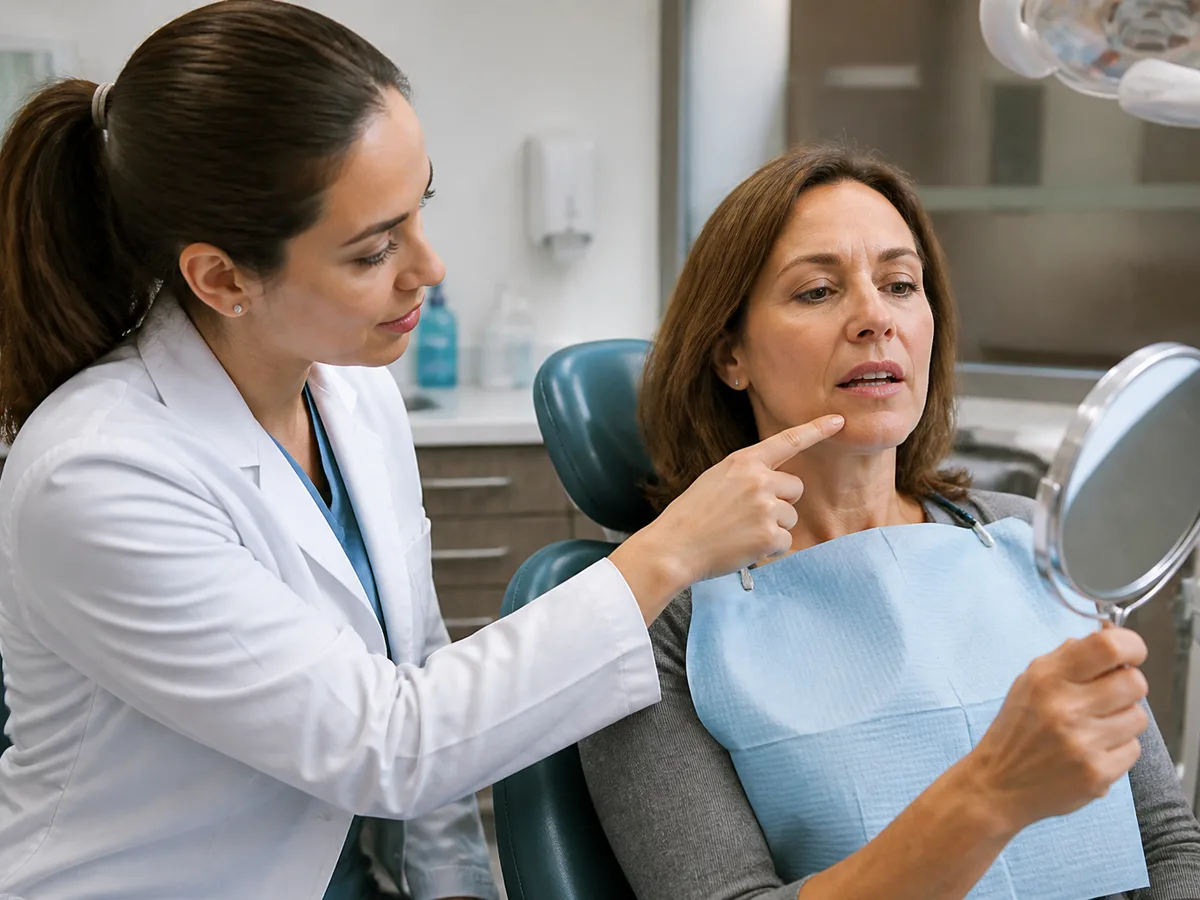 Persistent beats “probably nothing.”
Two weeks is a useful personal deadline
Mark your calendar when a bite sore or pizza burn starts. If it is not clearly healing by two weeks, call for an exam even if your teeth feel fine. Photos with the same lighting a few days apart help the clinician see change. For a dentist who includes soft-tissue screening in preventive visits, use Find a Dentist and mention any persistent patch when you book so enough time is reserved. Bring a list of tobacco or vaping habits honestly—accuracy improves the exam.
An oral cancer screening is a short, systematic soft-tissue exam with a clear when-to-call list for home. Keep the process on your checkup agenda and treat lasting sores as appointment-worthy, not background noise.
Related articles
Keep exploring related topics from Dental Country.
How Often Should You Get A Dental Cleaning?
Cleaning frequency follows risk: stable gums and low decay may fit a six-month rhythm, while bleeding, dry mouth, or rapid tartar often need closer recalls.
Read article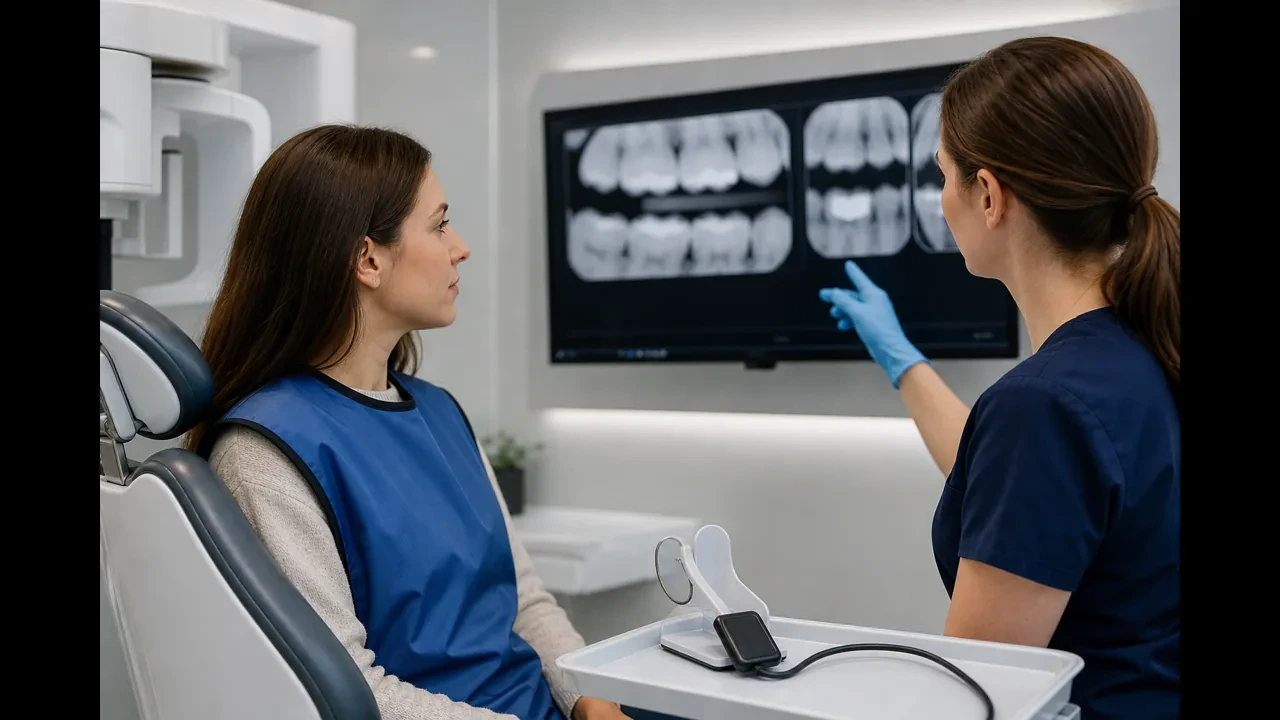
Are Dental X-Rays Safe?
Dental radiographs are low-dose tools used when the benefit of seeing hidden decay or bone loss outweighs the small radiation exposure of modern imaging.
Read article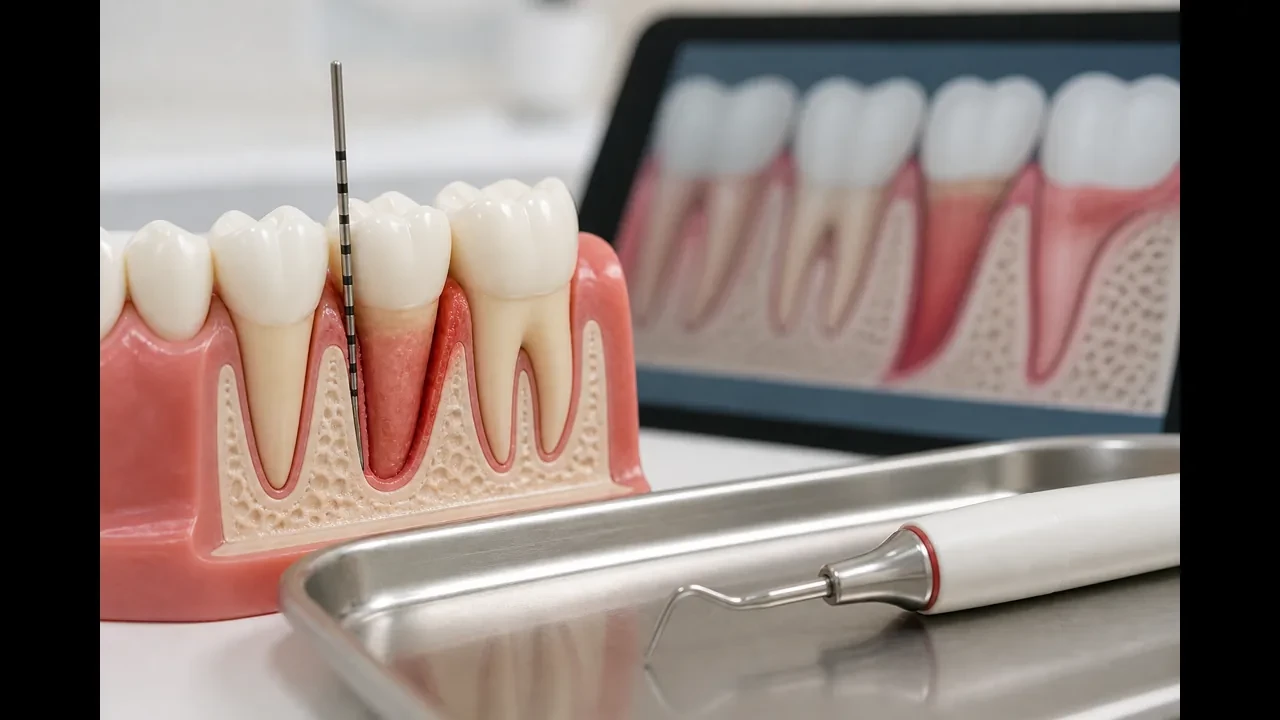
What Is A Deep Cleaning At The Dentist?
Deep cleaning reaches plaque and calculus under inflamed gums and along root surfaces, aiming to calm periodontal pockets that a polish alone cannot treat.
Read article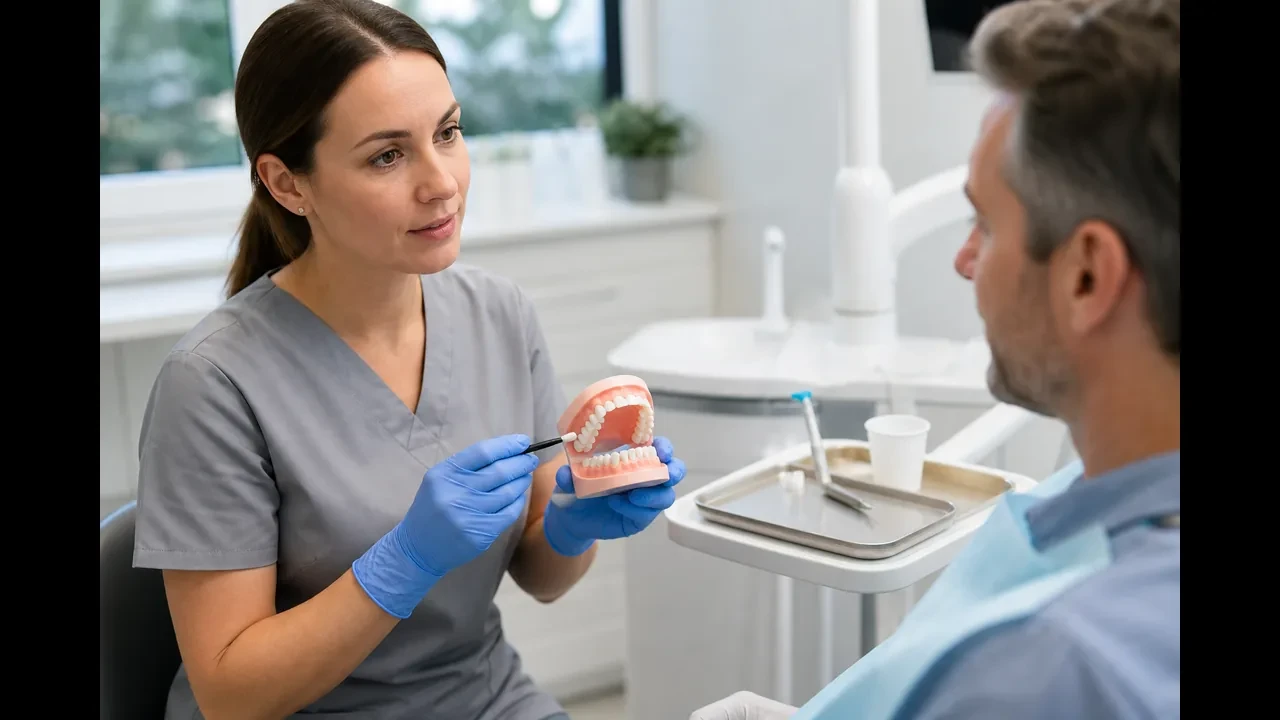
Do You Need Fluoride Treatments As An Adult?
Adult fluoride is about risk, not age: exposed roots, dry mouth, orthodontic scars, and recurring decay are common reasons in-office treatments still help.
Read article