
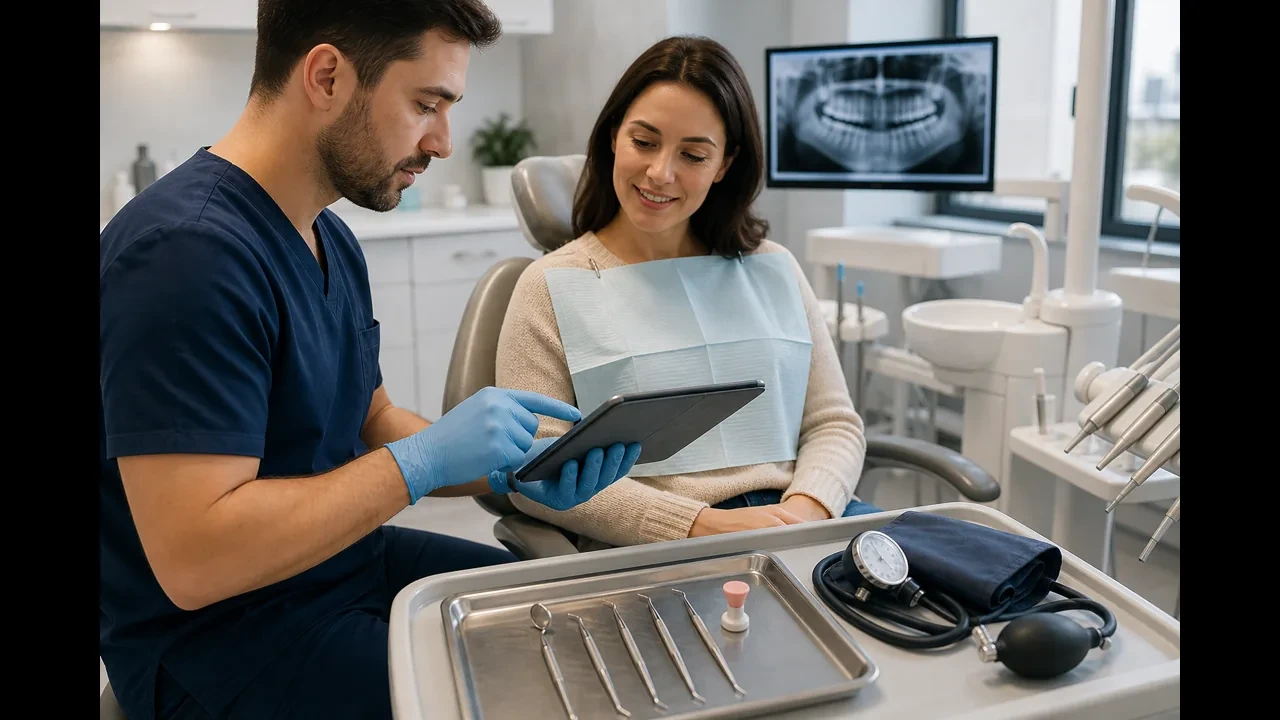
What Happens At A Routine Dental Checkup?
A routine checkup usually includes history, exam, gum checks, cleaning as needed, and sometimes X-rays. Walk through each step and why it matters.

Reviewed by Dr. Sean Myran, DMDDoctor of Dental Medicine, University of Pennsylvania
A routine dental checkup is a structured visit that updates your health history, examines teeth and soft tissues, assesses gum health, removes plaque and calculus as appropriate, and may include X-rays or an oral cancer screening. Mayo Clinic describes dental exams as checks of teeth, gums, and mouth that can include X-rays and cleanings. Knowing the steps reduces the feeling that instruments appear without purpose.
Visits vary by office and by your risk, yet the walkthrough below matches what most preventive appointments aim to cover. Children and periodontal maintenance patients may see extra time on education or pocket therapy. New patients often get a longer baseline exam than a three-month recall.
Step-By-Step Walkthrough
- Health and medicine update: new prescriptions, pregnancy, heart issues, or joint replacements can change anesthetic and antibiotic decisions.
- Concerns first: sensitivity, chips, dry mouth, or a spot you noticed with your tongue get named before polishing hides clues.
- Extraoral and soft-tissue look: jaw joints, lips, tongue, cheeks, and throat—overlap with oral cancer screening.
- Tooth-by-tooth exam: decay, cracked cusps, leaking margins, and wear patterns.
- Gum measurements and bleeding notes: pocket depths guide whether you need a standard cleaning or discussion of deep cleaning.
- Radiographs if due: timing follows individual risk and how recent your last films are.
- Cleaning and polish: scale tartar, floss contacts, and smooth stain where appropriate.
- Home-care coaching and next visit: products, technique tweaks, and recall months.
Not every checkup includes every tool on the same day. A short recall after periodontal therapy may focus on pocket sites and plaque score, while a comprehensive new-patient visit may add full charting, photographs, and a wider radiographic survey. If the schedule feels rushed, ask which steps are essential today and which can wait for a dedicated treatment-planning appointment. You are allowed to pause and ask what a number or photo means before the polish starts.
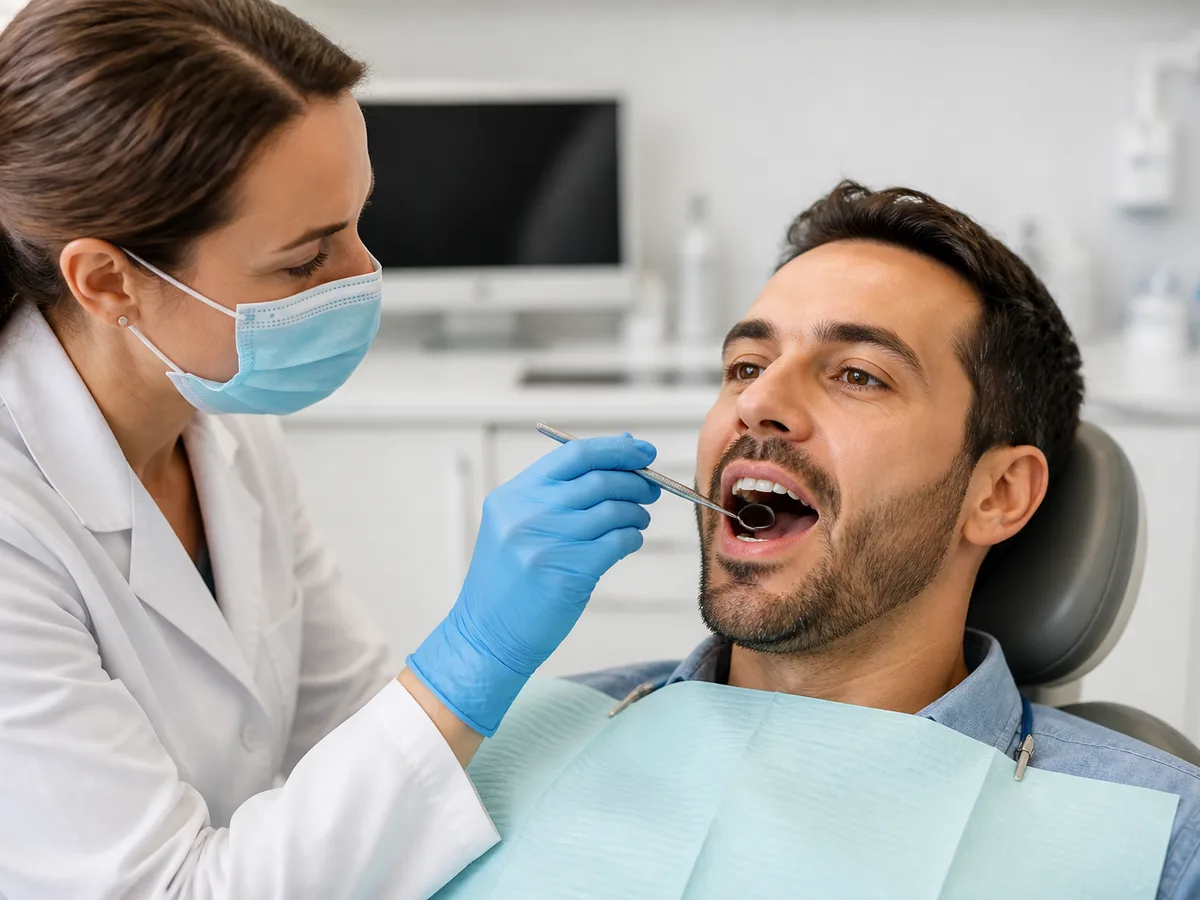 Charting turns feelings into a map.
Numbers explain the cleaning plan
Pocket charting can feel like gentle prodding. Bleeding on probing is information, not a scolding. Ask for your deepest numbers and whether they improved since last time. If several sites stay deep with calculus under the gum, the visit may shift from a simple polish toward periodontal therapy planning. Understanding that fork in the road makes the rest of the appointment clearer and helps you prioritize flossing where the chart is red.
What You Can Prepare
- List medicines and allergies on your phone.
- Bring prior X-rays or the portal login from another office.
- Note sensitivity triggers—ice water, sweets, biting.
- Arrive with questions about fluoride, night guards, or whitening so they fit the exam rather than a rushed goodbye.
 Clarity beats a vague “see you soon.”
Leave with a written next step
Before you stand up, confirm whether today’s visit was exam only, exam plus cleaning, or a referral for fillings or specialty care. Get the recommended recall months and any product names in writing. If you need a new preventive home base, use Find a Dentist and book a comprehensive exam rather than only an emergency slot. Pair findings with cleaning frequency guidance so the calendar matches your risk.
Parents bringing children should expect similar bones of the visit with extra time on eruption, thumb or pacifier habits, and sealant discussion when grooves are deep. Adults with many restorations should expect margin checks and bite assessment for wear. Anyone with medical complexity—anticoagulants, bisphosphonates, immune suppression—should flag that during the history step so the team plans safely before scaling or injections.
A routine checkup is less mysterious when you expect the sequence: history, look, measure, image if needed, clean, and plan. Each step exists to catch small problems while they are still small—and to coach the habits that keep the next visit uneventful.
Related articles
Keep exploring related topics from Dental Country.
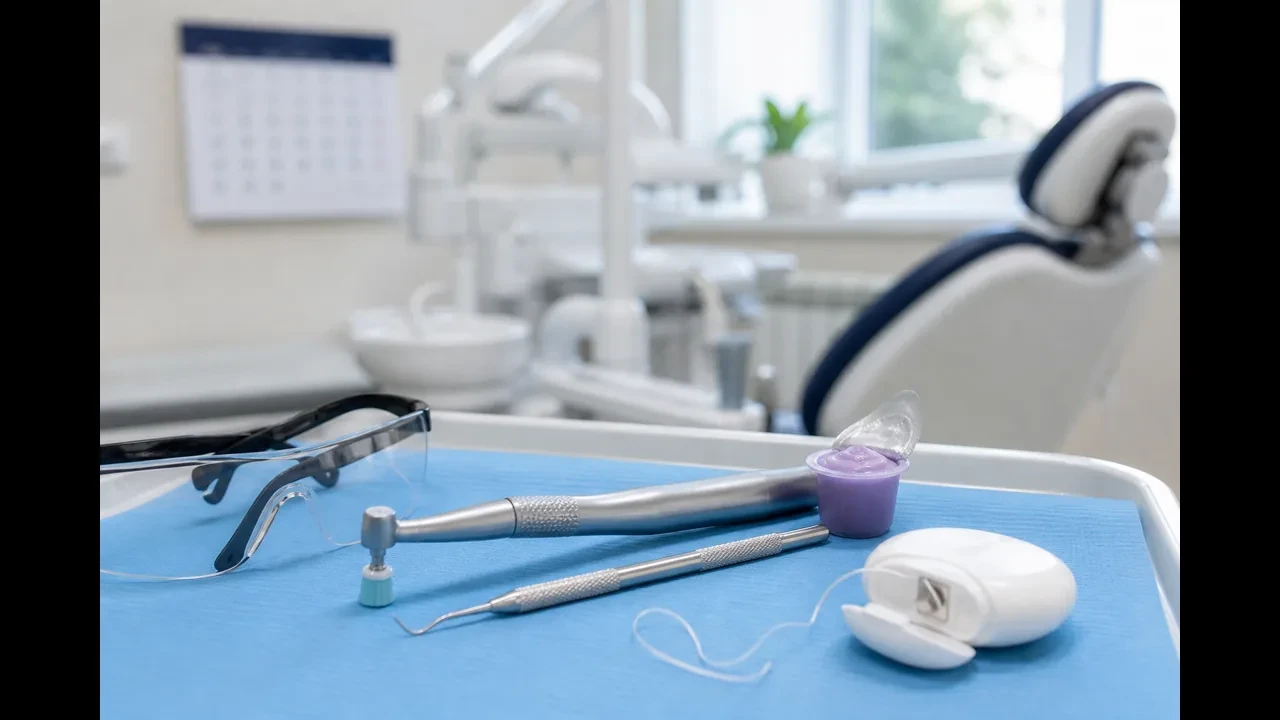
How Often Should You Get A Dental Cleaning?
Cleaning frequency follows risk: stable gums and low decay may fit a six-month rhythm, while bleeding, dry mouth, or rapid tartar often need closer recalls.
Read article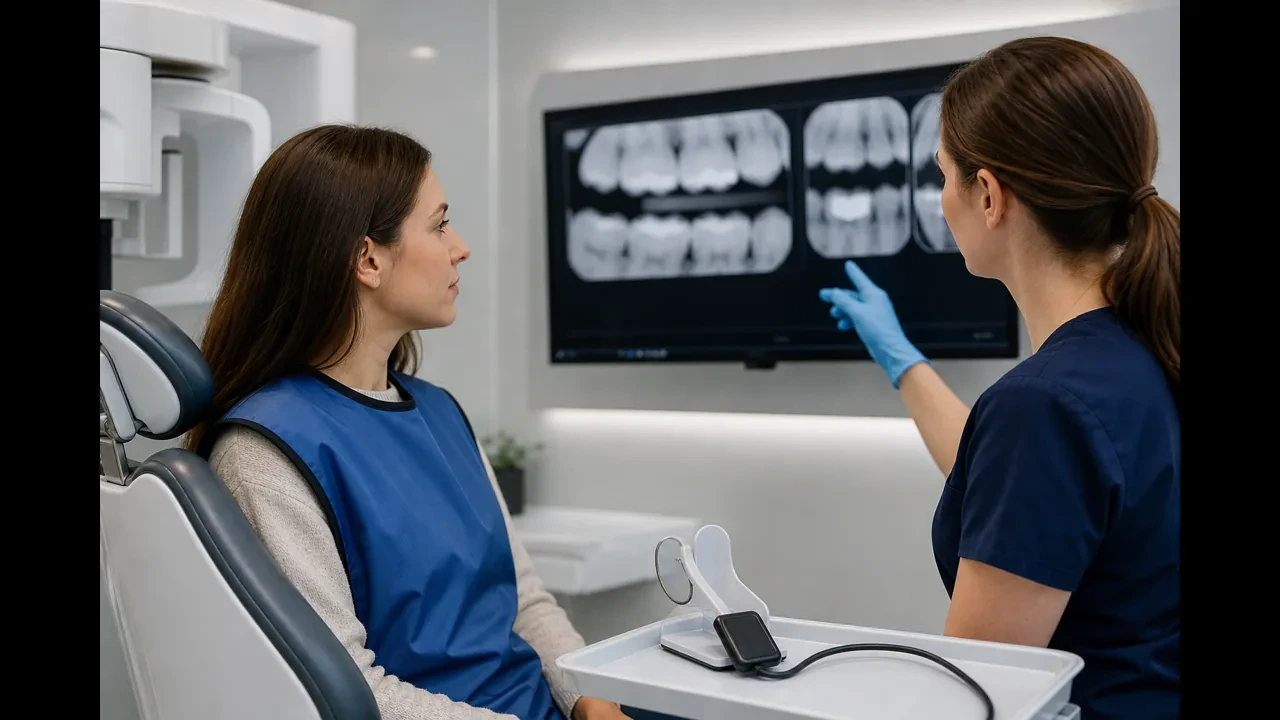
Are Dental X-Rays Safe?
Dental radiographs are low-dose tools used when the benefit of seeing hidden decay or bone loss outweighs the small radiation exposure of modern imaging.
Read article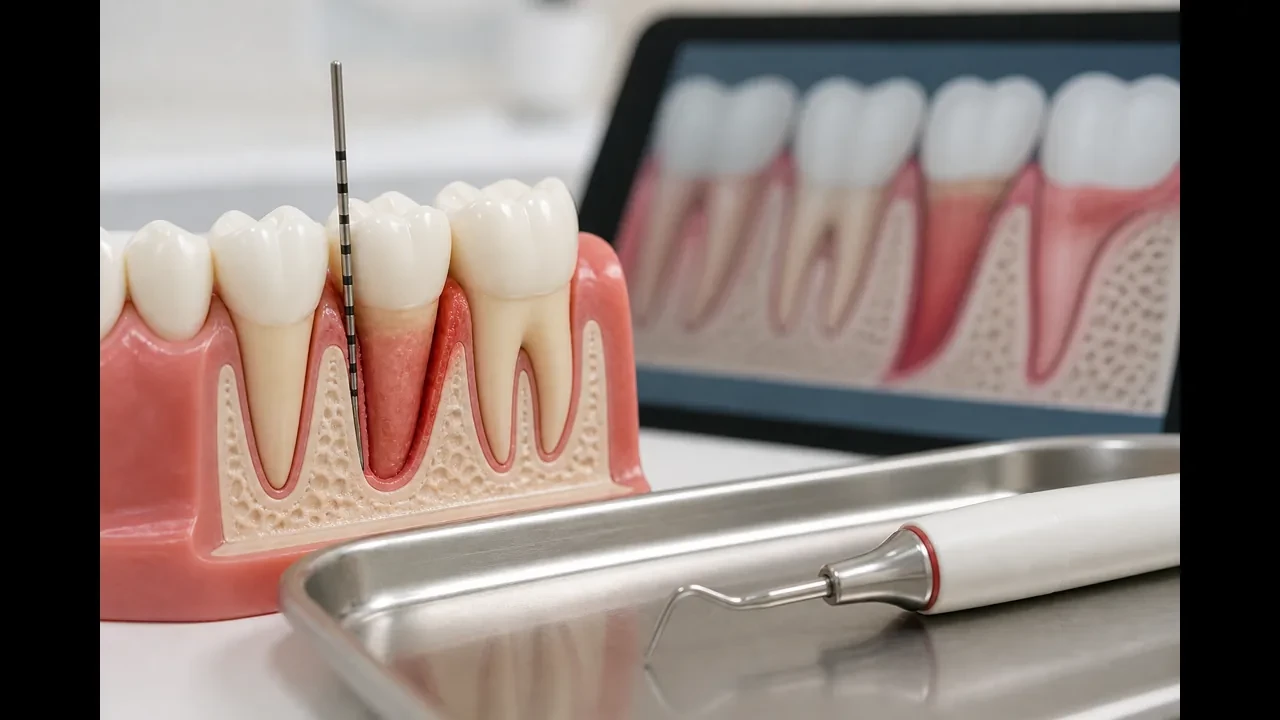
What Is A Deep Cleaning At The Dentist?
Deep cleaning reaches plaque and calculus under inflamed gums and along root surfaces, aiming to calm periodontal pockets that a polish alone cannot treat.
Read article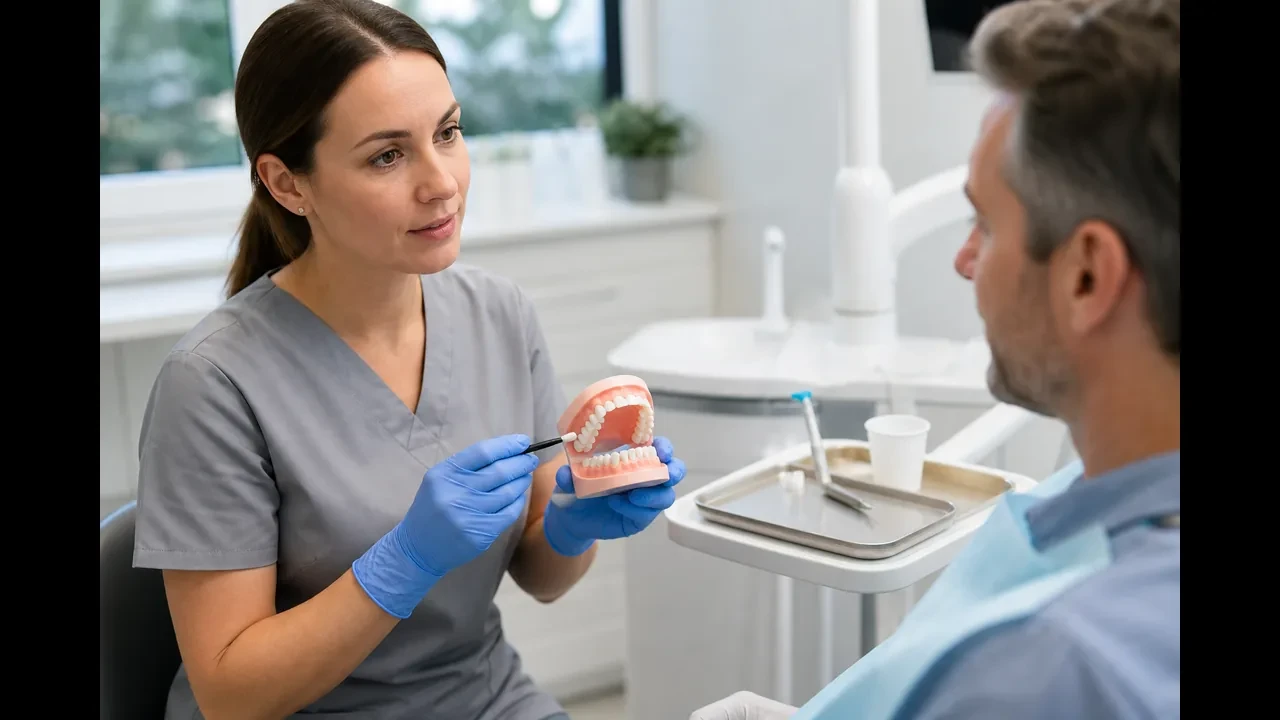
Do You Need Fluoride Treatments As An Adult?
Adult fluoride is about risk, not age: exposed roots, dry mouth, orthodontic scars, and recurring decay are common reasons in-office treatments still help.
Read article