
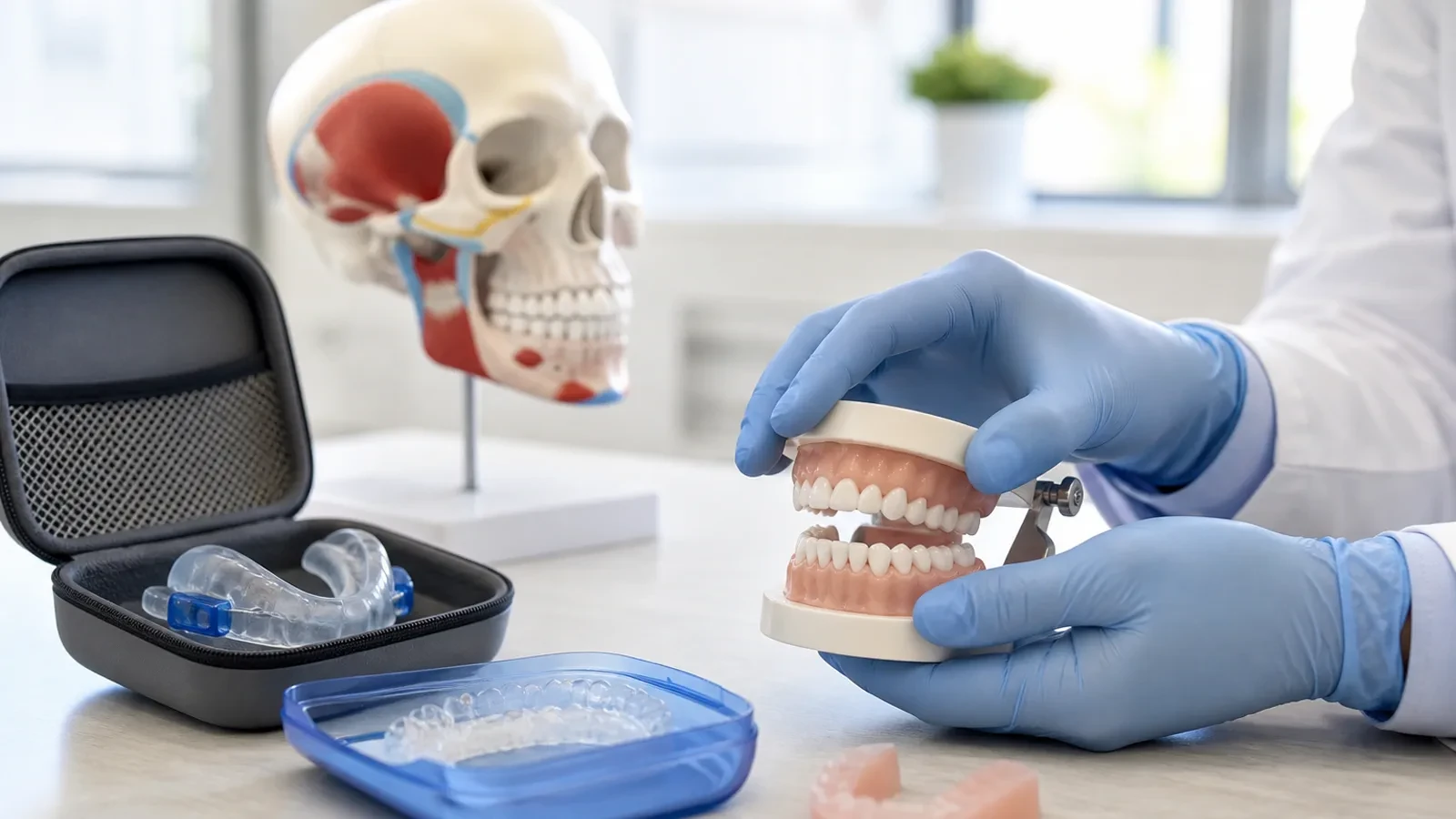
Do Oral Sleep Appliances Have Side Effects?
Oral sleep appliances can cause temporary jaw soreness, tooth tenderness, or bite changes. Learn common effects, what’s normal, and when to call.

Reviewed by Dr. Sean Myran, DMDDoctor of Dental Medicine, University of Pennsylvania
Yes—oral sleep appliances can have side effects. Short-term issues often include jaw muscle soreness, tooth tenderness, excess saliva or dry mouth, and a temporary odd bite feeling each morning. Longer-term concerns can include bite changes or ongoing joint discomfort if the device is not monitored. Mayo Clinic advises close follow-up so appliance use does not cause unwanted changes to your teeth. Most effects are manageable with titration and checkups; ignoring them is what turns a tool into a problem.
Use the short FAQ cluster below, then connect details to adaptation timelines and how mandibular advancement devices work.
What side effects are common in the first weeks?
Mild jaw ache, tooth pressure, lip awareness, and saliva changes are common while tissues adapt. Soft breakfast choices and the morning exercises your dentist recommends often help. Sharp tooth pain, cracked teeth, or inability to close normally after an hour awake deserve a call sooner—not another week of toughing it out.
Can an appliance change my bite?
It can. Holding the jaw forward nightly may gradually alter how teeth meet, especially without periodic checks. Small morning bite differences that resolve quickly can be expected; progressive daytime changes need adjustment or pause. AASM/AADSM guidance emphasizes dental oversight to survey for dental-related side effects or occlusal changes.
Will it hurt my TMJ?
People with irritable jaw joints can notice more clicking or stiffness when advancement is aggressive. A careful exam before treatment and slower titration reduce that risk. Pre-existing locking or severe TMD may mean the appliance path needs medical/dental co-management—or a different therapy.
Are drugstore anti-snore trays safer because they are softer?
Soft retail trays are not automatically safer. Poor fit can stress teeth unevenly, worsen clenching for some people, and delay real OSA care. Custom, titratable devices under professional care remain the evidence-aligned standard when oral therapy is prescribed.
NHLBI notes that dentists custom fit oral devices for comfort and teach you how to use them for best results. Comfort coaching is part of side-effect prevention. Keep cleaning habits strict; inflamed gums from a dirty device are an avoidable “side effect.”
Travel nights, colds, and dental work can temporarily change how the appliance feels. If you stop wearing it for a week, restart gently and message the office if tightness returns. Never bend clasps or advance the mechanism beyond instructed settings—DIY titration is a common path to sore joints.
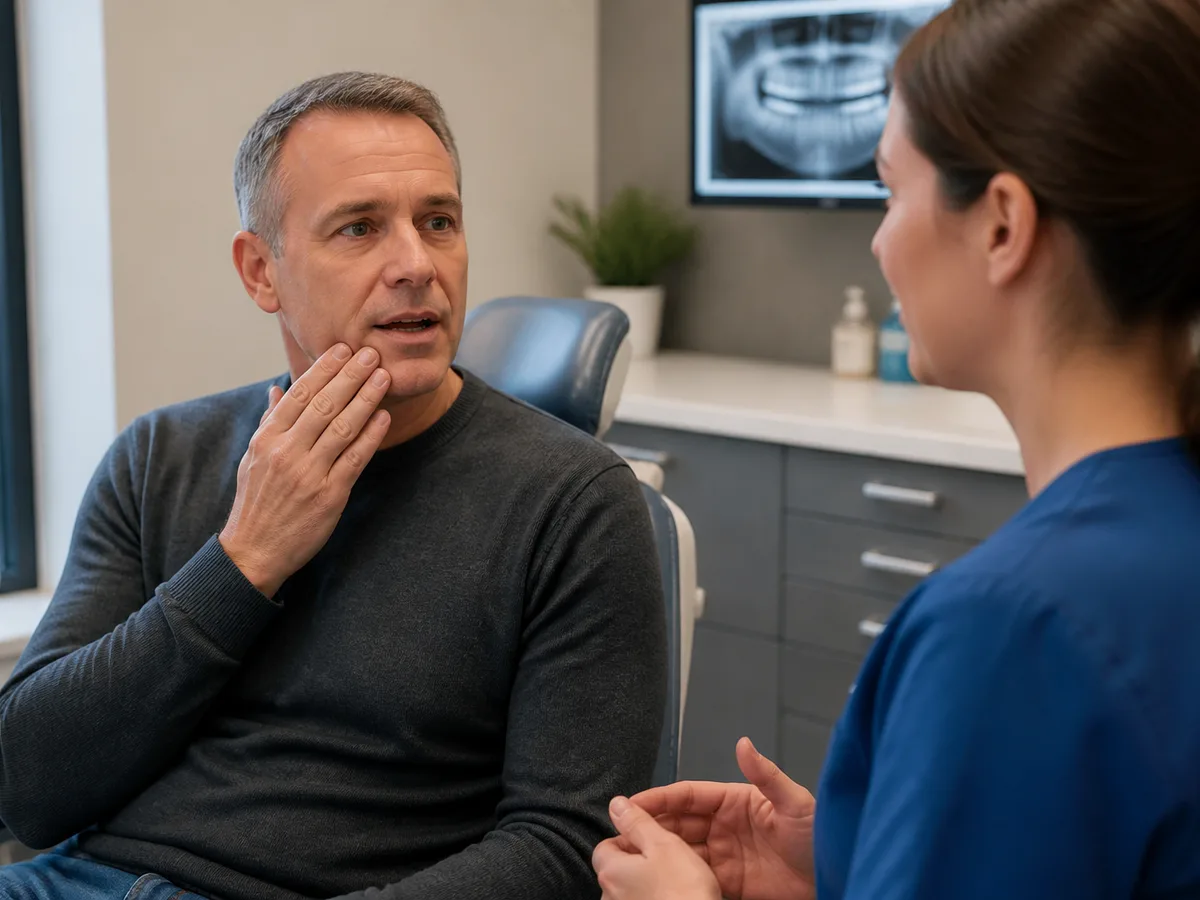 Monitoring is part of the prescription.
Scheduled checks catch problems early
Put recall visits on the calendar when the device is delivered—do not wait for a crisis. Dentists often want to see you several times in the first year, then periodically afterward. Bring notes on morning bite feel, headaches, and tooth mobility. If your physician also schedules a follow-up sleep test, keep both appointments; dental comfort and apnea control are different success meters. Skipping reviews to “save time” is how small shifts become hard-to-reverse changes.
When To Call Promptly
- Tooth looseness, cracked enamel, or persistent focal tooth pain.
- Jaw locking, swelling, or pain that worsens with each advancement.
- Daytime bite change that no longer settles.
- New choking, worsening sleepiness, or partner-reported pauses—efficacy may be failing.
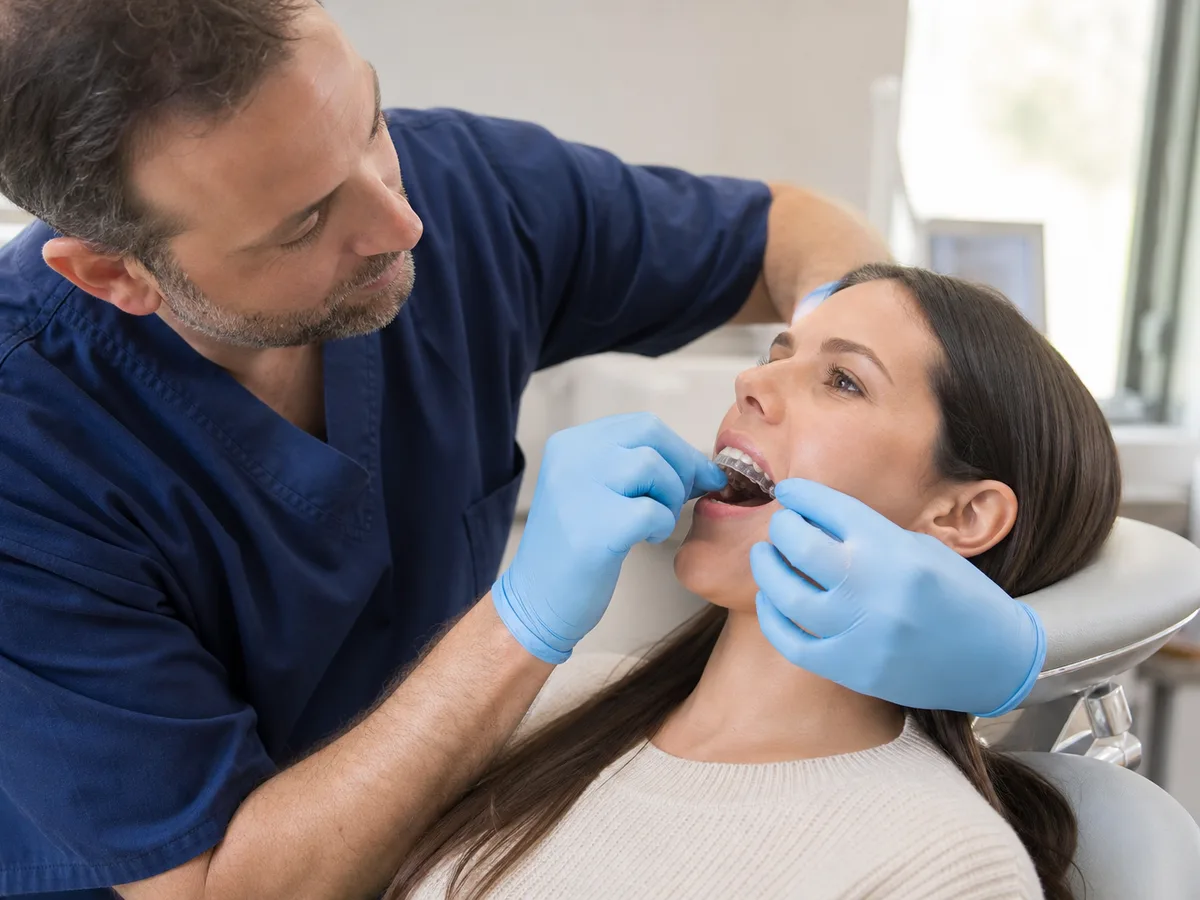 Report early; adjust precisely.
Most issues are fixable when reported early
Describe timing: during wear, on removal, or all day. That detail guides whether the fix is less advancement, acrylic relief, or a joint-focused pause. Mention what was covered at your consultation if goals feel unclear. For ongoing oversight from a dentist familiar with sleep appliances, use Find a Dentist and note side effects when you schedule so the visit is not a generic cleaning slot. Early tweaks protect both your airway therapy and your bite.
Oral sleep appliances can cause side effects, mostly manageable with fit, titration, and follow-up. Expect a short adaptation window, watch for bite drift, and keep medical partners informed if sleep symptoms return.
Related articles
Keep exploring related topics from Dental Country.
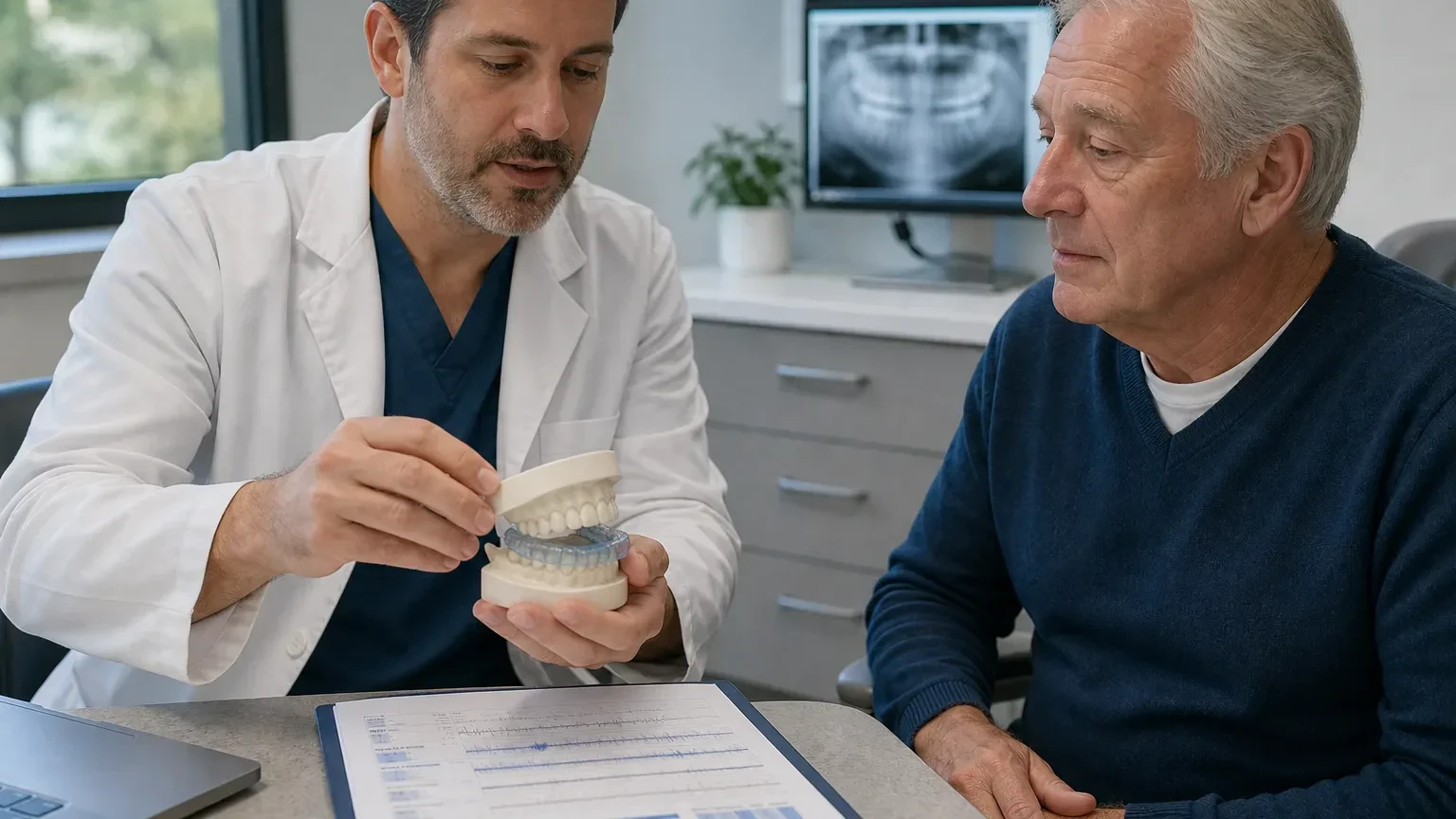
Can A Dentist Treat Sleep Apnea?
A dentist can often deliver a custom oral appliance for obstructive sleep apnea once a physician confirms the diagnosis—but dentists do not replace sleep-medicine evaluation or claim CPAP is unnecessary for every patient.
Read article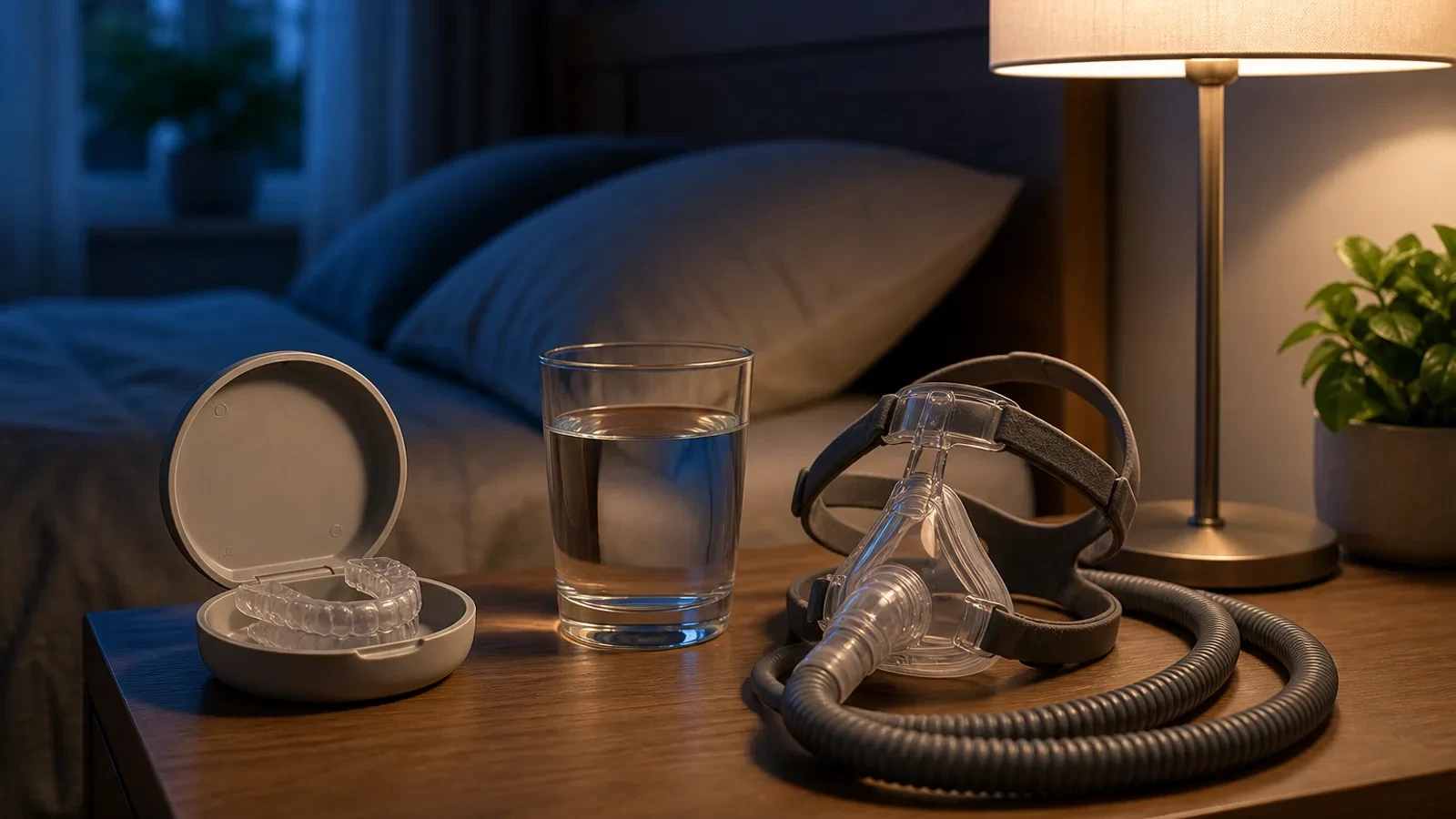
Oral Appliance Vs CPAP: Which Is Better?
CPAP usually opens the airway more reliably, while custom oral appliances can be simpler to travel with and tolerate—so “better” depends on severity, preference, and medical guidance rather than a single winner.
Read article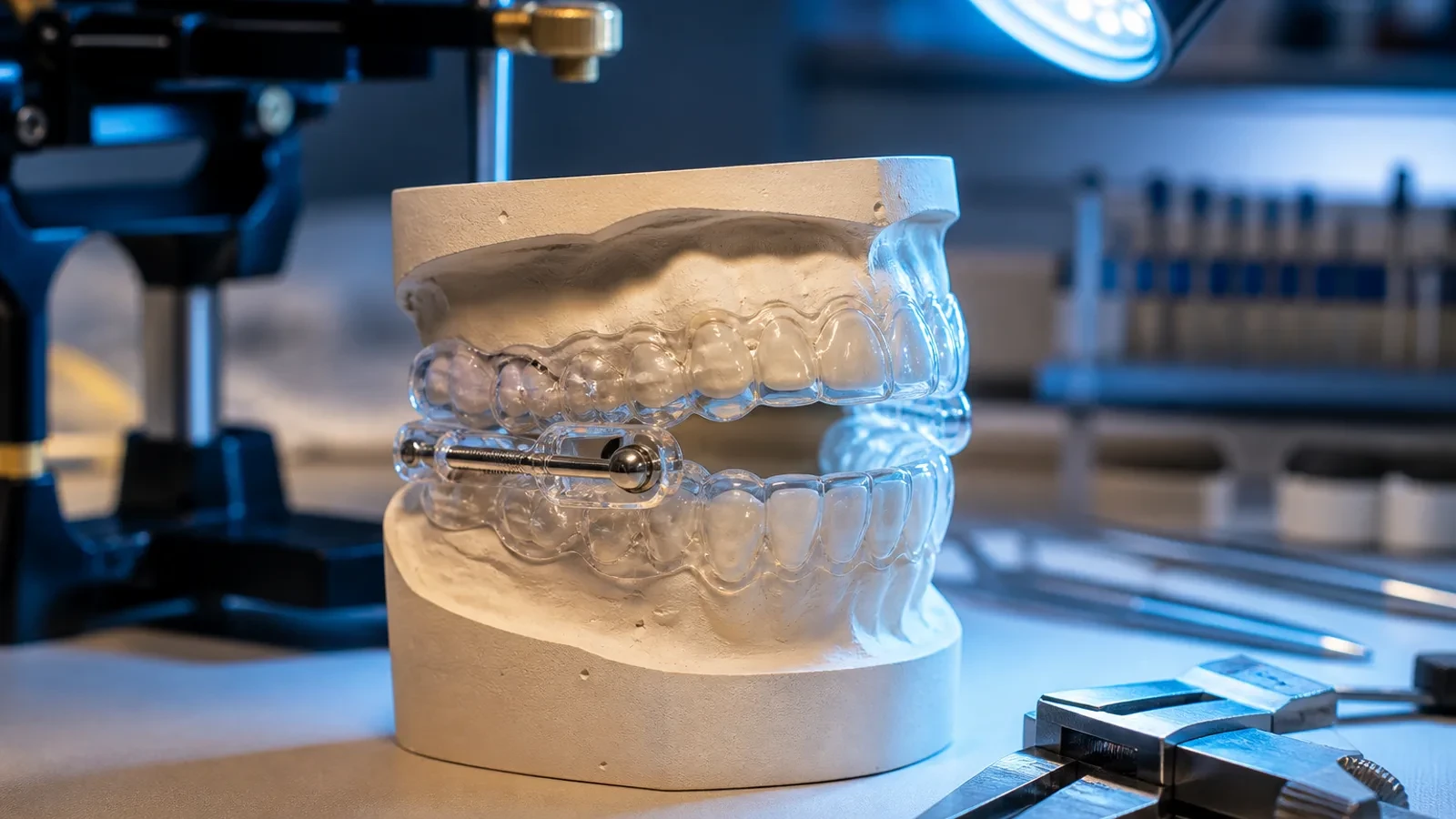
What Is A Mandibular Advancement Device?
A mandibular advancement device is a custom oral appliance that holds the lower jaw slightly forward during sleep to reduce airway collapse in selected people with snoring or obstructive sleep apnea.
Read article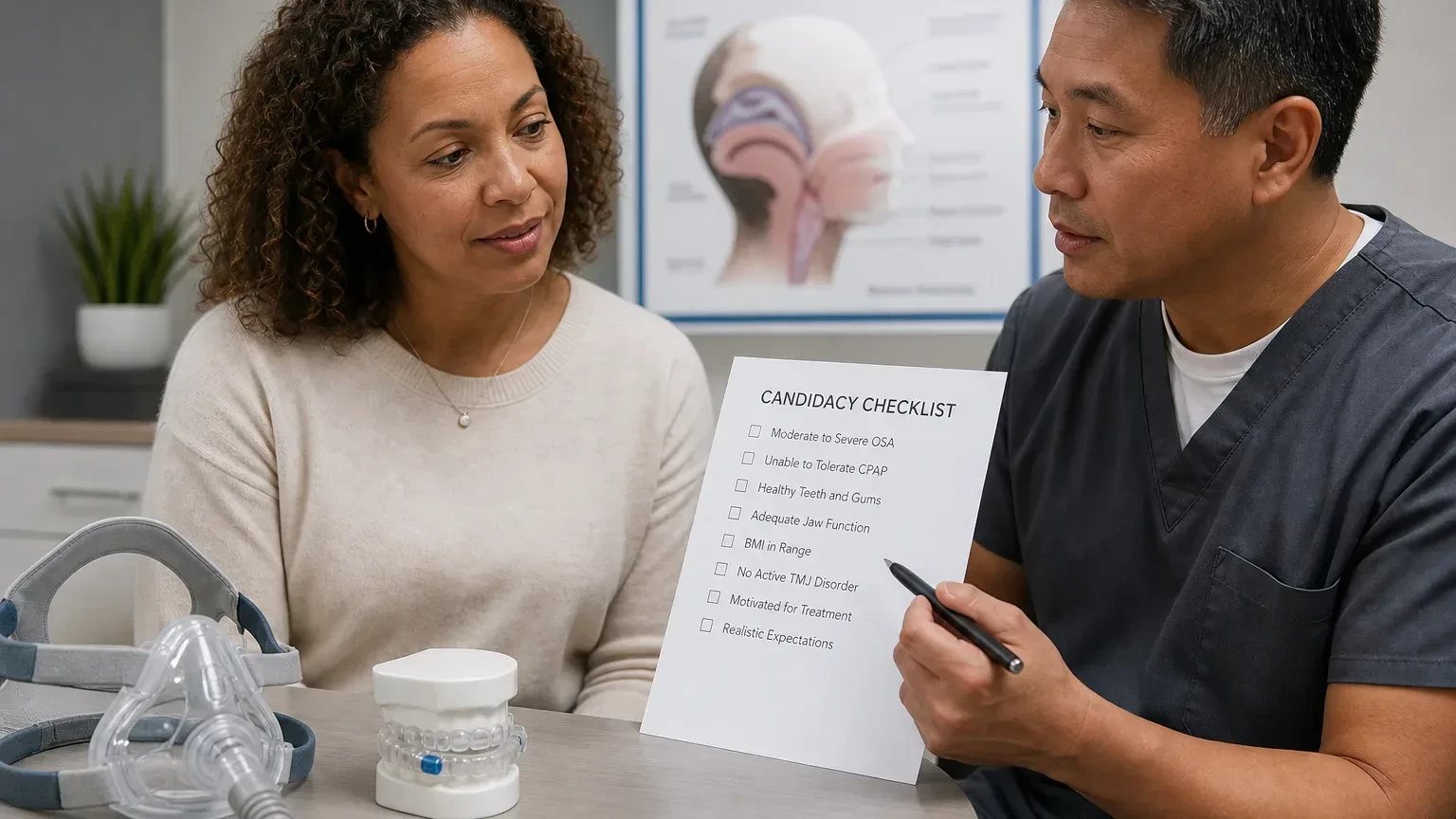
Who Is A Candidate For A Sleep Apnea Oral Appliance?
Strong oral-appliance candidates usually have a confirmed OSA or snoring diagnosis, enough healthy teeth, manageable jaw joints, and a physician plan that supports appliance therapy—especially when CPAP is poorly tolerated.
Read article