
Oral Appliance Vs CPAP: Which Is Better?
CPAP is often more effective at opening the airway; oral appliances can be easier for some patients. Compare roles, trade-offs, and who chooses which.

Reviewed by Dr. Sean Myran, DMDDoctor of Dental Medicine, University of Pennsylvania
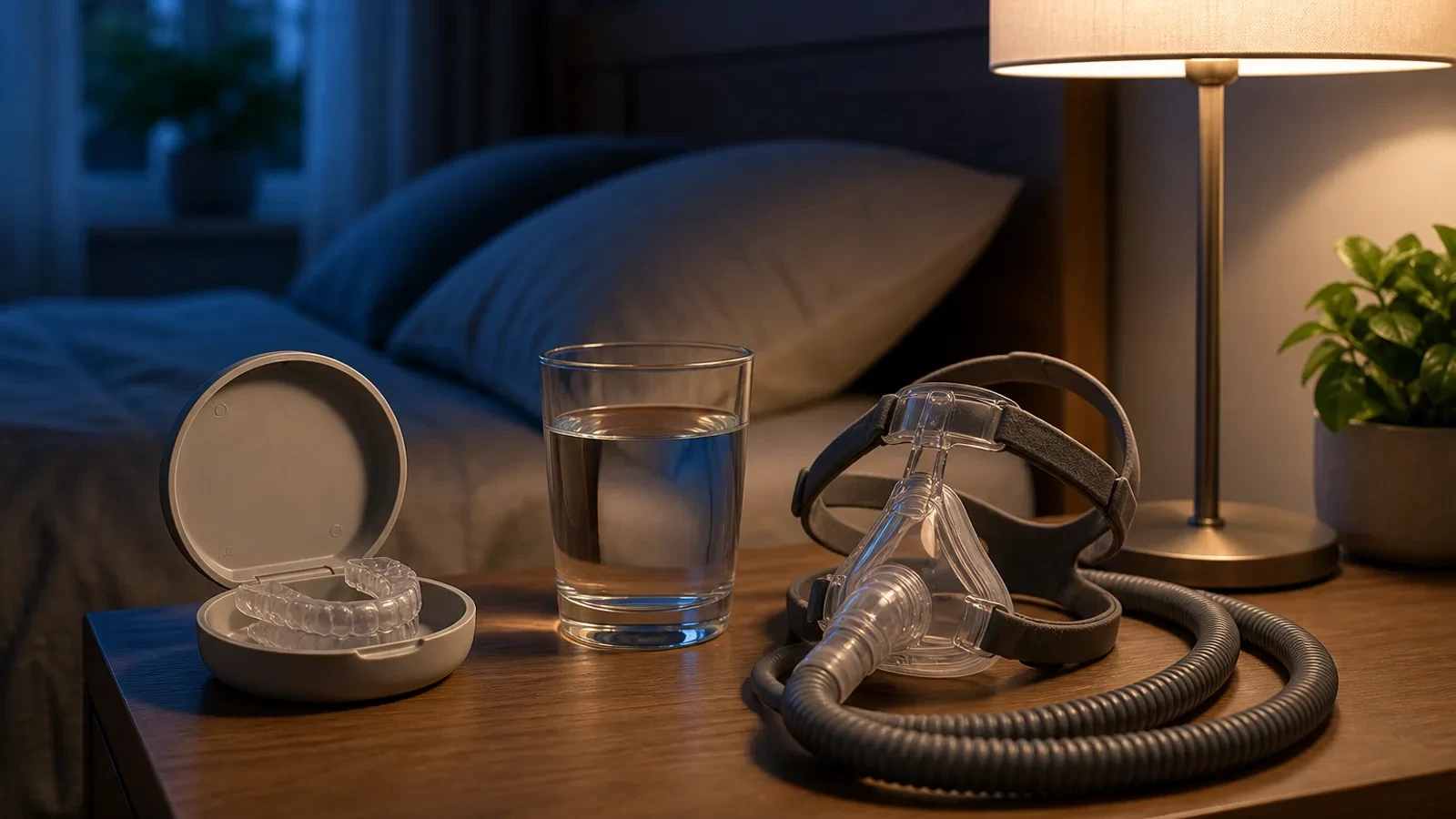
Neither oral appliances nor CPAP win for every person. Continuous positive airway pressure is generally more effective at keeping the airway open; custom oral appliances are often preferred by people who cannot tolerate masks or who need a quieter, more portable option for selected mild-to-moderate OSA—or for some with severe OSA when CPAP fails. Mayo Clinic notes that oral appliances are an alternative for some people with mild or moderate OSA and for people with severe OSA who cannot use CPAP, while emphasizing follow-up. “Better” means better for your diagnosis, adherence, and side-effect profile.
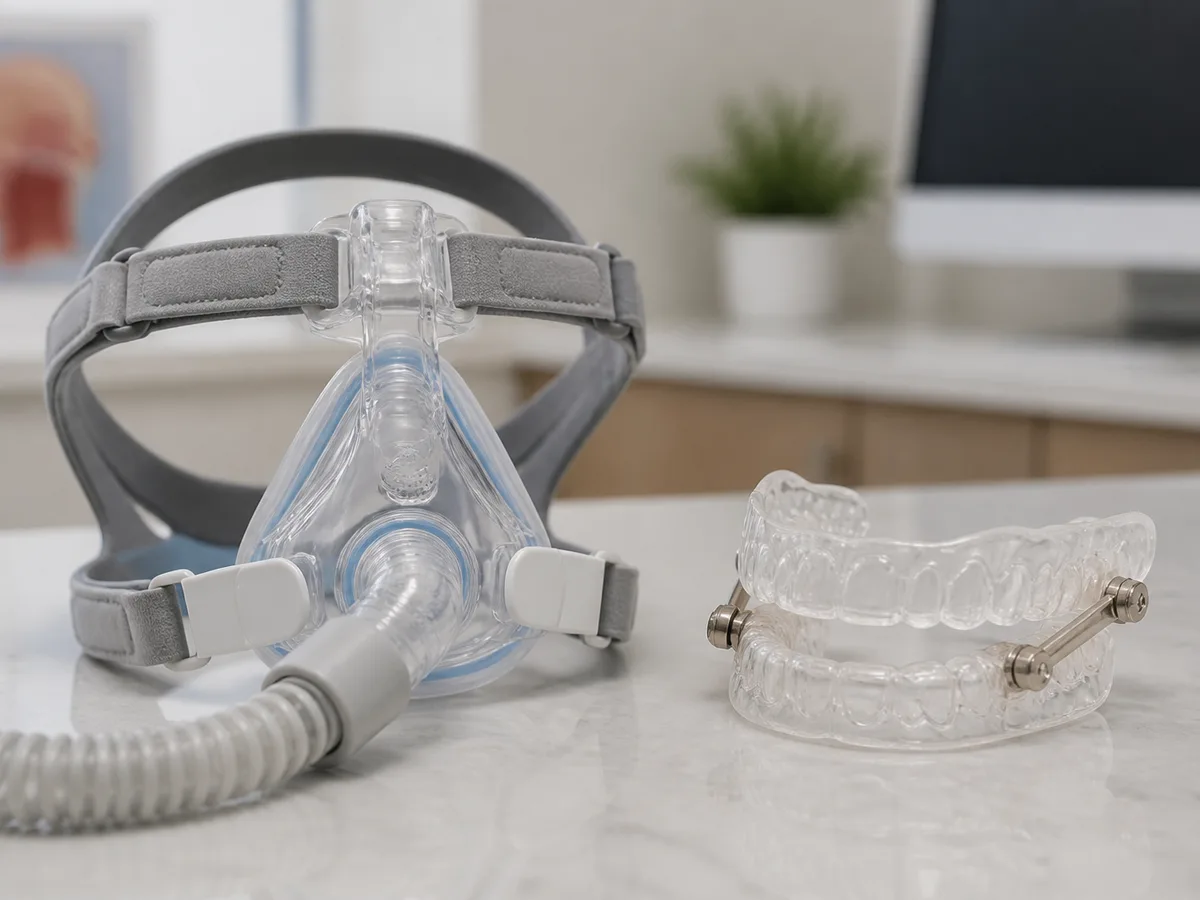
Start with a comparison, then read the nuance. CPAP pushes pressurized air through a mask; an oral appliance repositions the jaw or tongue. One is machine therapy; the other is dental device therapy. Physicians usually lead the choice; dentists deliver and monitor appliances when that path is chosen. Cross-check candidacy in oral appliance candidates and device basics in how mandibular advancement devices work.
Oral Appliance Versus CPAP At A Glance
- How it works: CPAP = air pressure stenting the airway; oral appliance = mechanical forward support of jaw/tongue.
- Typical strength: CPAP often reduces apnea events more; appliances can still improve symptoms and indices in selected patients.
- Adherence factors: mask leak, dryness, and claustrophobia challenge CPAP; jaw soreness and bite shifts challenge appliances.
- Travel and noise: appliances are compact and silent; CPAP needs power, distilled water for some humidifiers, and a case.
- Follow-up: both need monitoring—sleep testing for efficacy and dental checks for appliance side effects.
NHLBI describes PAP machines as the most common treatment and oral devices as an option when someone cannot tolerate or does not want CPAP. Severity, residual sleepiness, and cardiovascular risk can push the plan back toward PAP even if an appliance feels more comfortable. Comfort without efficacy is not a win.
Some people use both across a week: CPAP at home, appliance for camping nights—only when their clinicians agree that hybrid use is safe for their numbers. Others need to retry CPAP with a new mask before abandoning it. Dentists should not frame appliances as automatic CPAP replacements; sleep physicians should not dismiss appliances when guidelines support them for intolerant or preference-based cases.
Ask how success will be measured: symptom relief alone, a follow-up home sleep test, or both. Snoring that quiets is encouraging but incomplete if oxygen dips or apneas persist. Keep a short log of hours worn, morning alertness, and partner observations for the first month so comparisons are data-informed rather than vibe-based.
 Used therapy beats unused ideal therapy.
Lifestyle fit still needs medical fit
Portability tips the scale for frequent travelers, yet airway severity still sets the floor for what is acceptable therapy. If your study showed severe OSA, do not trade proven PAP control for a suitcase-friendly tray without clinician buy-in and a plan to retest. If your OSA is milder and CPAP sits unused in a closet, an appliance discussion may restore actual nightly treatment—which beats perfect equipment that never touches your face. Bring travel patterns and adherence history to the decision visit.
Questions That Clarify “Better”
- What was my apnea-hypopnea index, and does my physician consider an appliance appropriate?
- Have mask fit, humidity, and pressure settings been optimized before I abandon CPAP?
- What dental risks—bite change, jaw pain—am I accepting with an appliance?
- When will we retest sleep to confirm the chosen therapy works?
 Compare outcomes, not marketing slogans.
Preference matters after medical triage
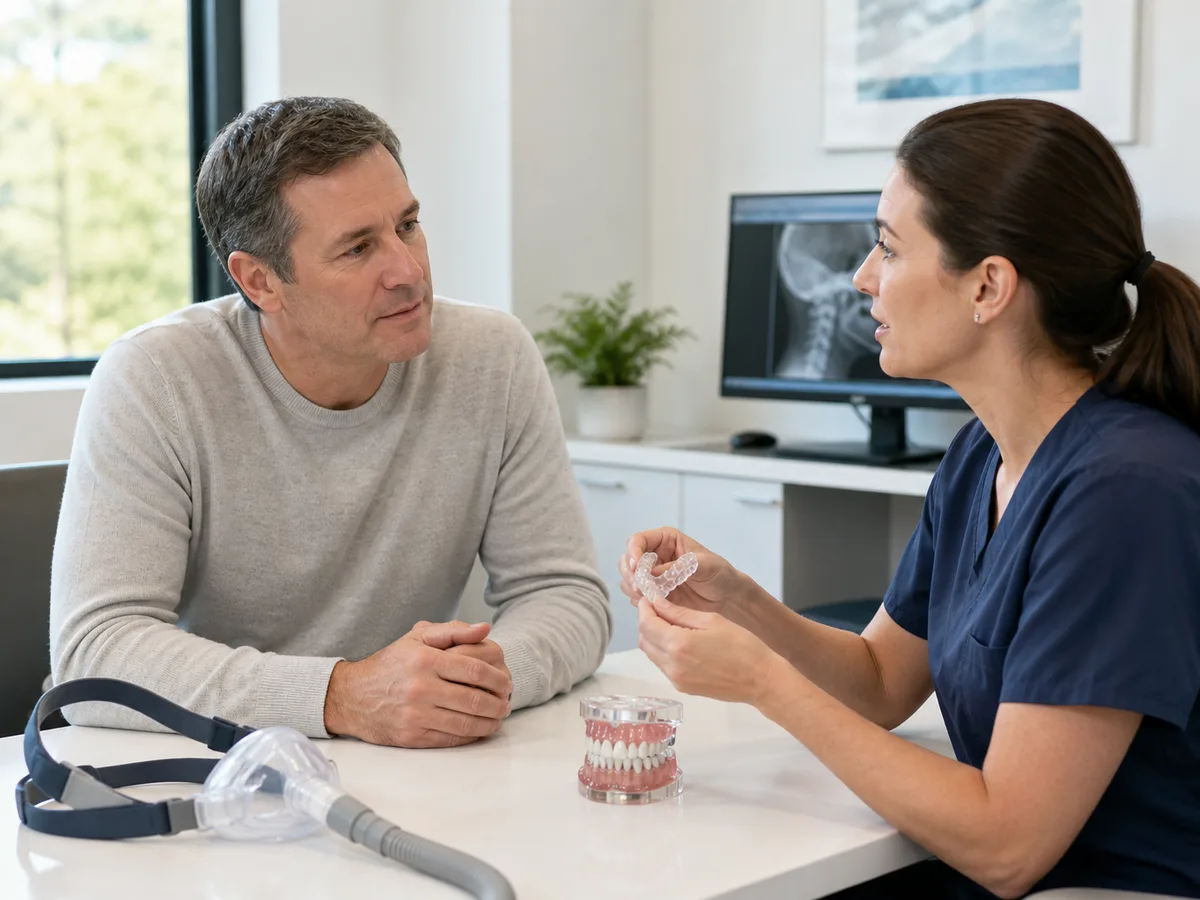
Bring CPAP download data if you have it, plus notes on skin marks, leaks, or panic with the mask. Ask whether appliance side effects are acceptable trade-offs for your case. For dental fabrication after a physician-guided choice, use Find a Dentist and mention OSA diagnosis and CPAP intolerance or preference when you schedule. The better device is the effective one you will actually wear under clinical oversight.
Oral appliances and CPAP solve the same airway problem with different tools. Let severity and medical advice set the shortlist, then choose the option you can use consistently—and verify that it still treats the apnea, not only the snore.
Related articles
Keep exploring related topics from Dental Country.
Can A Dentist Treat Sleep Apnea?
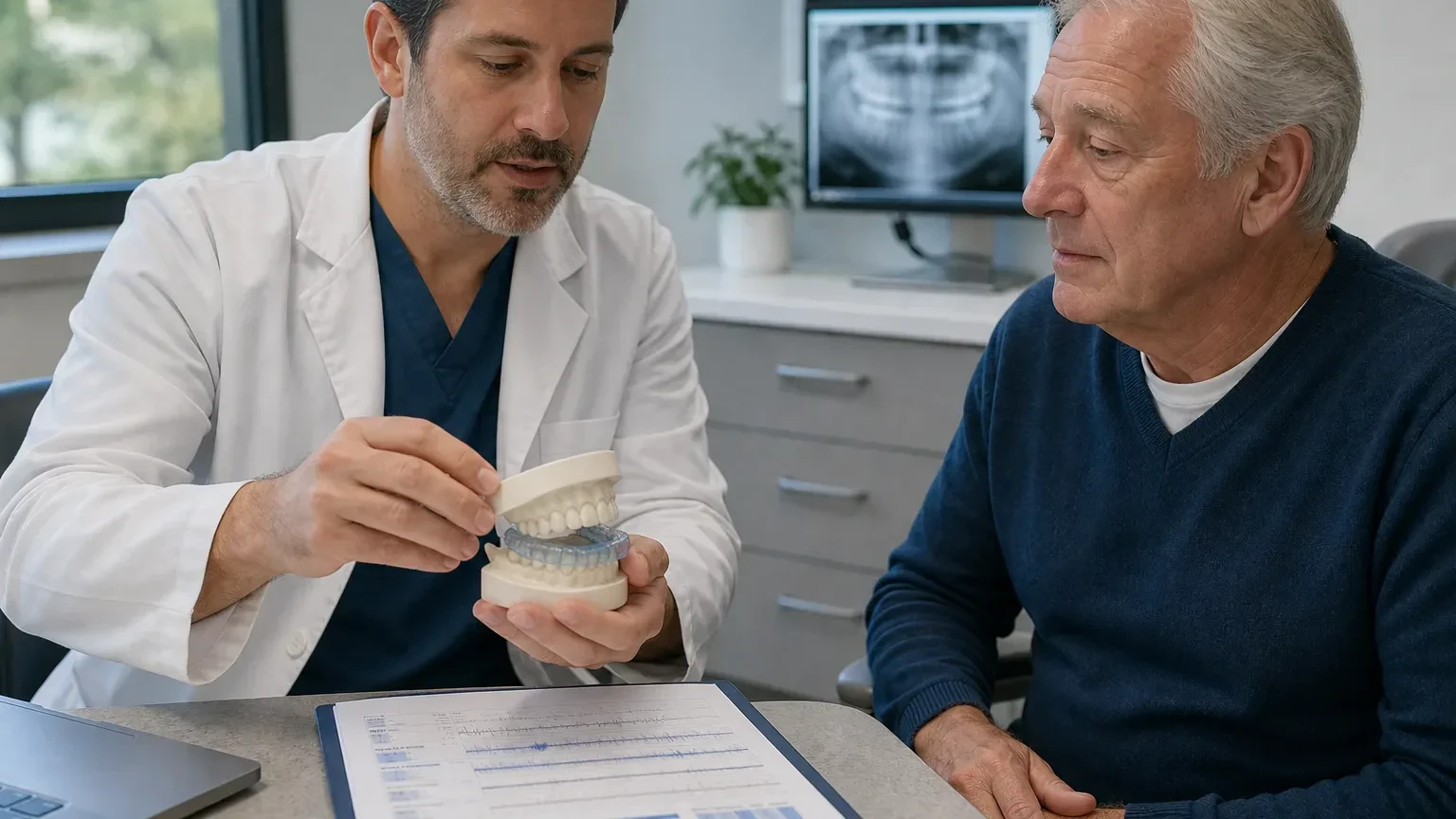
A dentist can often deliver a custom oral appliance for obstructive sleep apnea once a physician confirms the diagnosis—but dentists do not replace sleep-medicine evaluation or claim CPAP is unnecessary for every patient.
Read article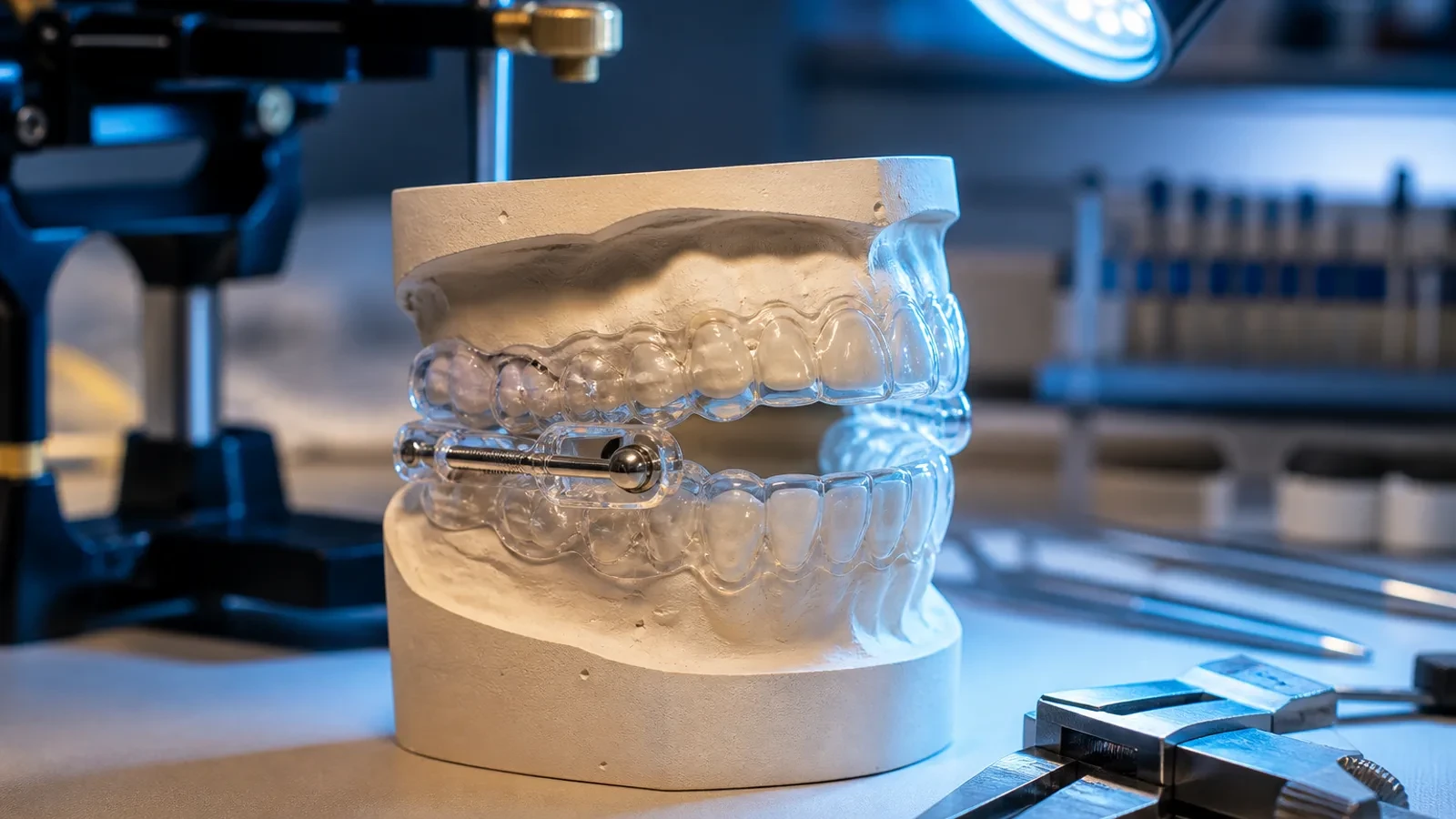
What Is A Mandibular Advancement Device?
A mandibular advancement device is a custom oral appliance that holds the lower jaw slightly forward during sleep to reduce airway collapse in selected people with snoring or obstructive sleep apnea.
Read article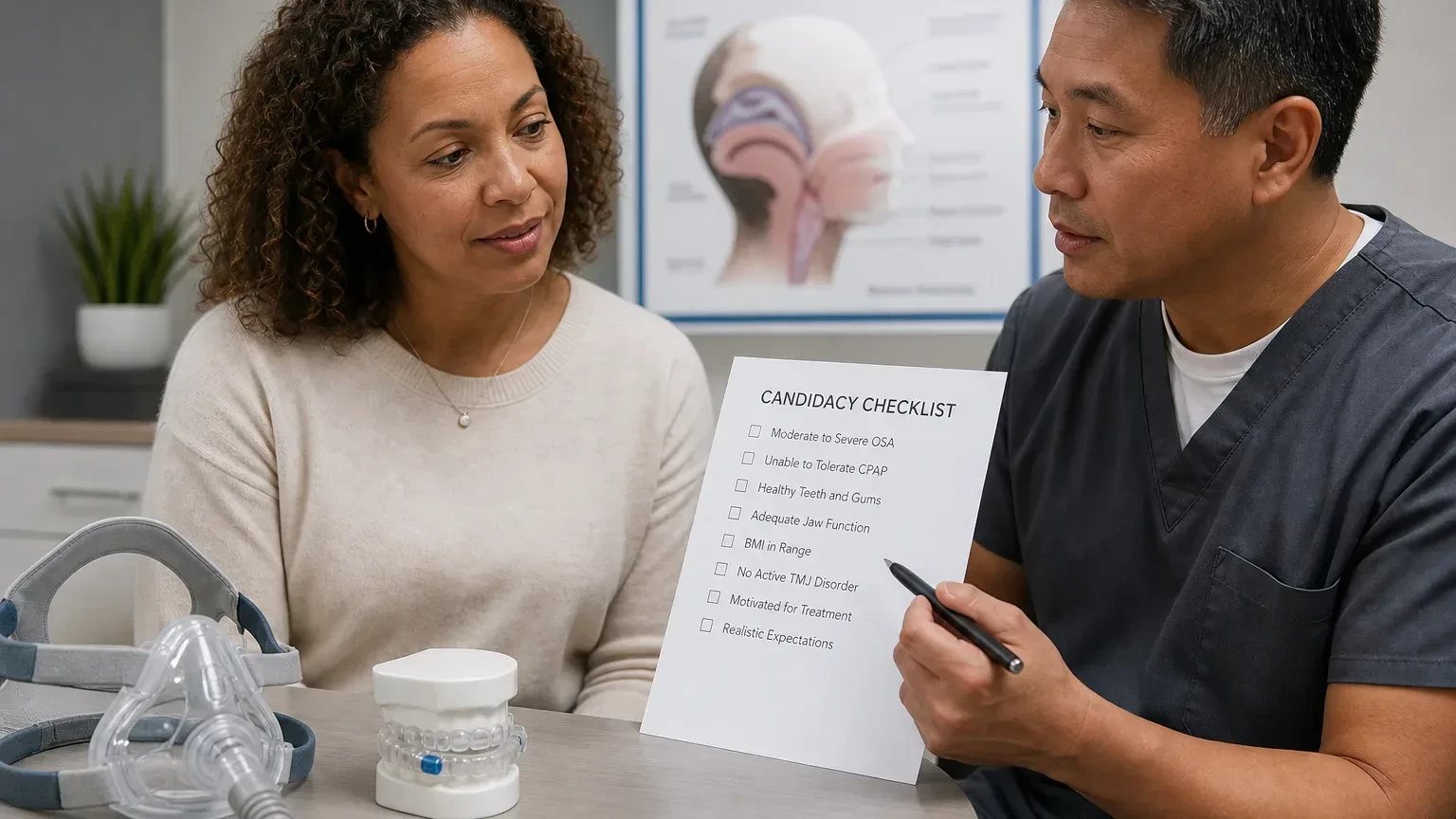
Who Is A Candidate For A Sleep Apnea Oral Appliance?
Strong oral-appliance candidates usually have a confirmed OSA or snoring diagnosis, enough healthy teeth, manageable jaw joints, and a physician plan that supports appliance therapy—especially when CPAP is poorly tolerated.
Read article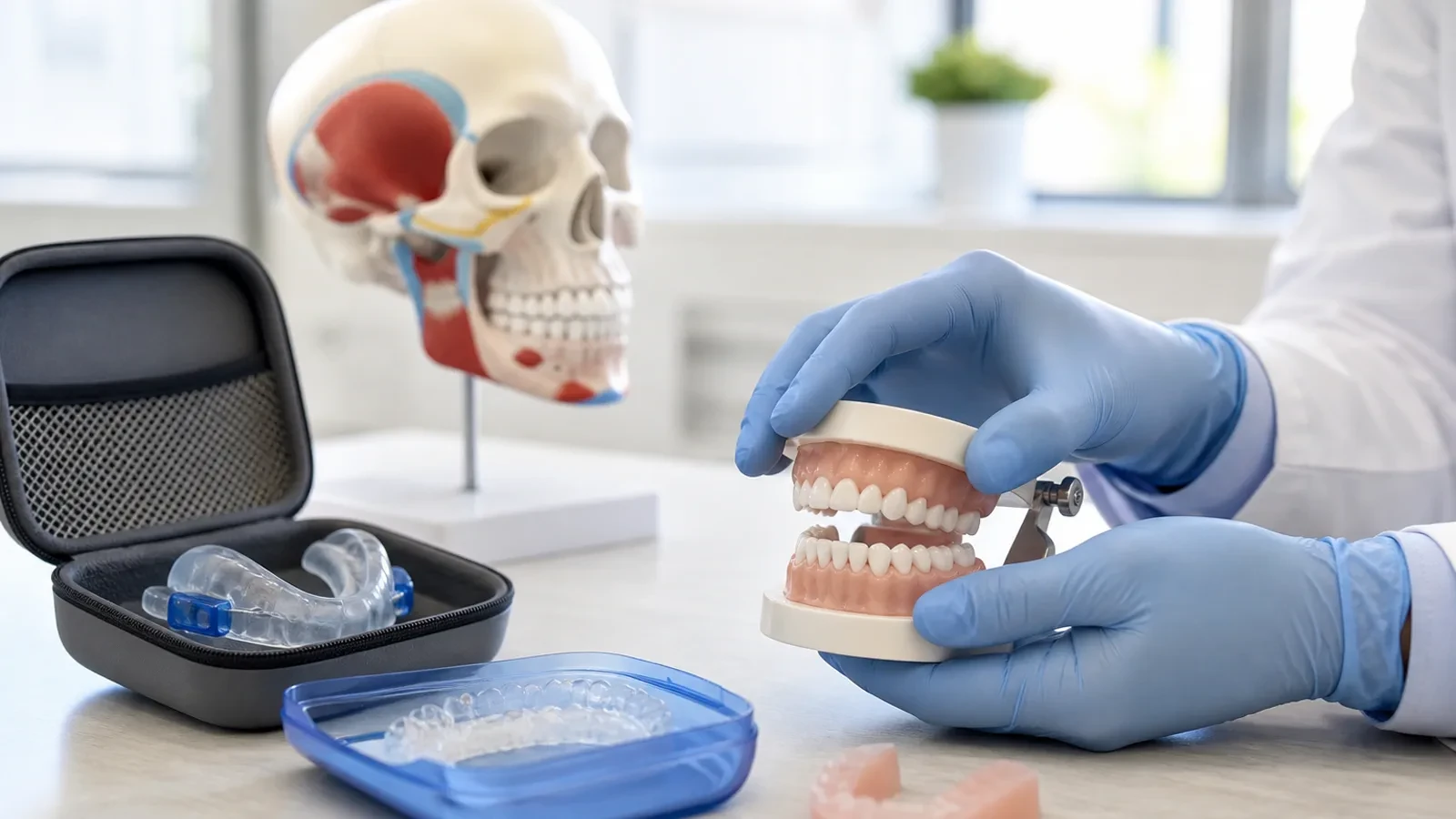
Do Oral Sleep Appliances Have Side Effects?
Yes—custom oral sleep appliances can bring temporary jaw or tooth soreness, excess saliva, and sometimes longer-term bite shifts, which is why dental follow-up is part of safe therapy.
Read article