
Who Is A Candidate For A Sleep Apnea Oral Appliance?
Oral appliance candidates often have mild to moderate OSA or cannot tolerate CPAP. See decision factors dentists and physicians weigh together.

Reviewed by Dr. Sean Myran, DMDDoctor of Dental Medicine, University of Pennsylvania
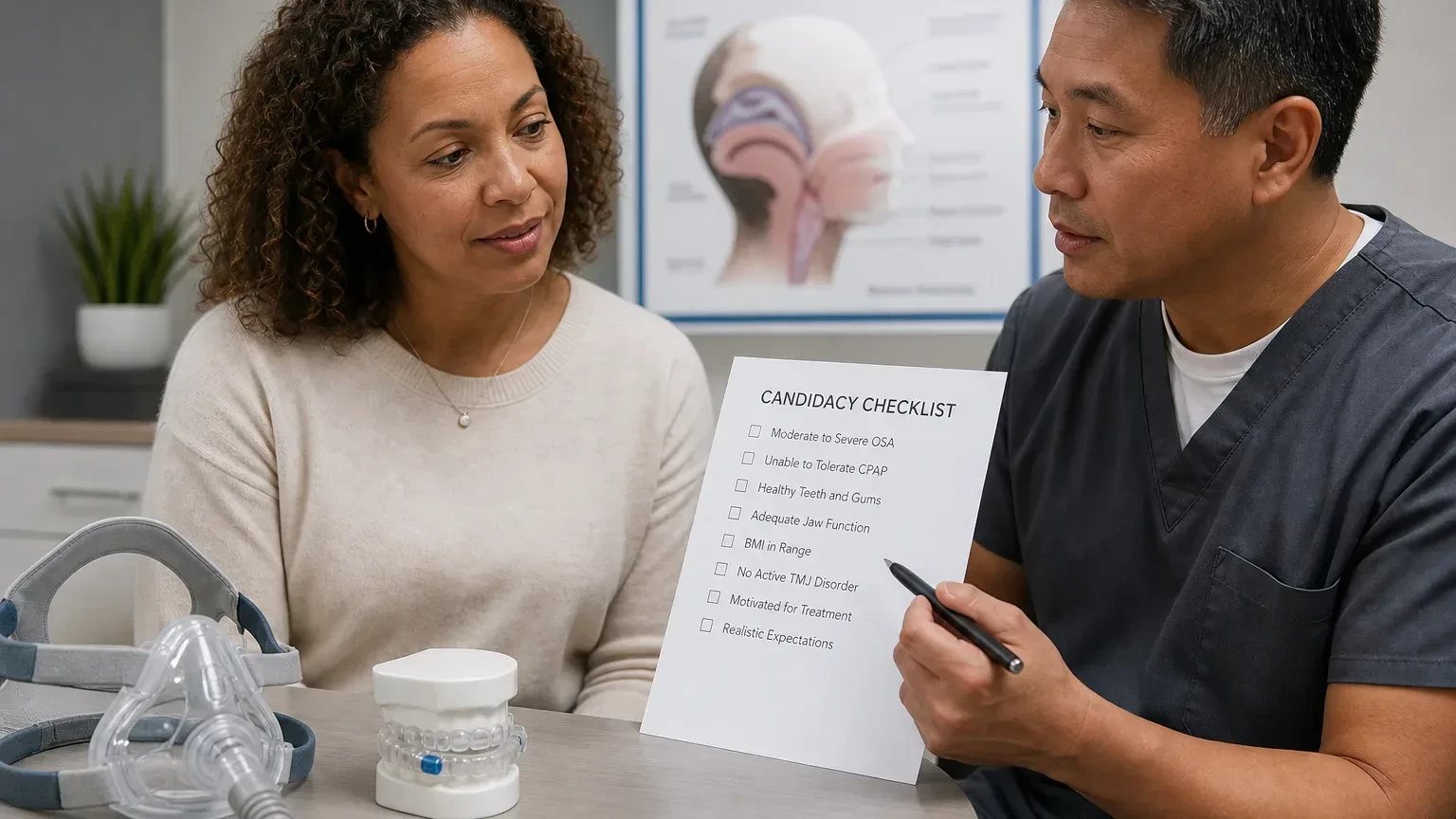
You may be a candidate for a sleep apnea oral appliance if a physician has diagnosed obstructive sleep apnea or primary snoring, your teeth and jaws can support a custom device, and your care team agrees an appliance is appropriate—commonly for mild to moderate OSA or when CPAP is not tolerated. AASM and AADSM recommend that sleep physicians consider oral appliances for adults with OSA who are intolerant of CPAP or prefer alternate therapy. Candidacy is a shared call, not a shopping decision.
Picture a familiar scenario. You completed a home sleep test showing mild OSA. CPAP air feels stifling after three weeks of mask swaps. Your dentist notes solid molars, healthy gums, and only mild morning jaw tightness. That story often leads to a custom appliance discussion. Contrast it with severe untreated OSA, few remaining teeth, and painful locking jaws—the next steps diverge. Map your path with how dentists fit into sleep care and how appliances compare with CPAP.
Decision Factors That Shape Candidacy
- Diagnosis and severity: documented OSA or snoring type, not guesswork from a partner’s complaints alone.
- CPAP history: true intolerance after reasonable troubleshooting versus never trying prescribed PAP.
- Dentition: enough stable teeth (or planned alternatives) to retain a device.
- Joints and muscles: significant TMD may need caution or co-management.
- Medical context: sleepiness at the wheel, heart disease, or oxygen needs can prioritize PAP or other medical therapies.
- Motivation: willingness to attend titration and follow-up visits.
MouthHealthy reports that research shows oral appliances can successfully prevent sleep apnea in some mild to moderate cases. “Some” is the operative word—appliances are not universal. NHLBI notes referral to a dentist or orthodontist for custom fitting when an oral device is prescribed.
Partial dentures, implants, and orthodontic retainers change the engineering problem. Tell your dentist about every prosthesis before impressions. Bruxism does not automatically disqualify you, but it may influence material choice and how aggressively the jaw is advanced. Pregnancy, recent oral surgery, and active gum infection usually pause elective appliance starts.
Insurance prior authorization sometimes requires proof of OSA diagnosis and CPAP trial documentation—another reason candidacy paperwork matters. Keep copies of sleep-study reports and CPAP compliance summaries. If your physician prefers you stay on PAP for severity reasons, respect that lane even if a friend swears by their appliance.
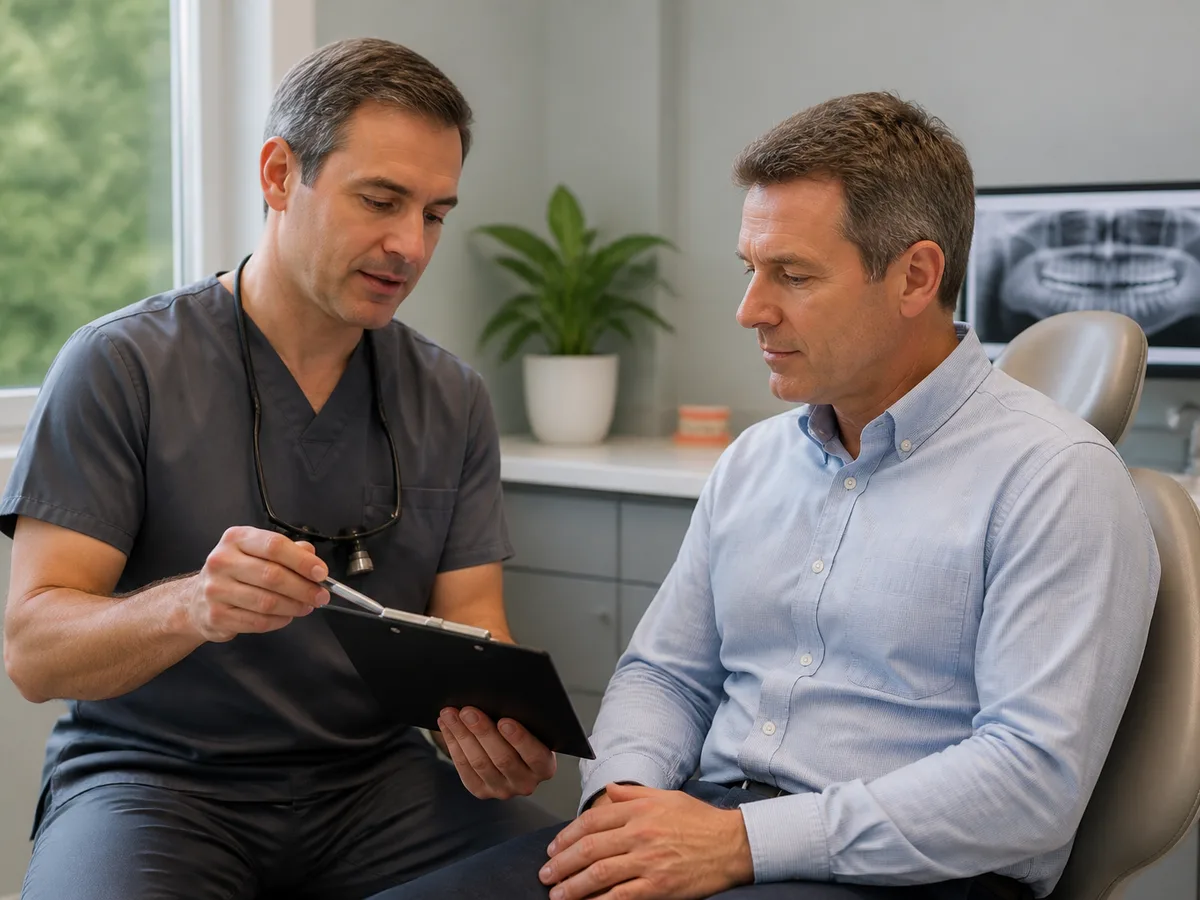 Checklist beats wishful thinking.
Teeth, joints, and sleep numbers all count
Before you fall in love with a quieter bedroom pitch, inventory the basics: confirmed diagnosis, tooth count, gum health, jaw comfort, and CPAP story. Bring that inventory to both physician and dentist visits. If three of five items are soft—loose teeth, untreated periodontitis, severe locking—candidacy may mean “not yet” rather than “never.” Stabilizing oral health first can open the door later. Honesty about skipping CPAP without troubleshooting also keeps the plan medically sound.
Next Steps If You Might Qualify
- Confirm or update your sleep diagnosis with a physician.
- Ask whether an oral appliance is appropriate for your severity and goals.
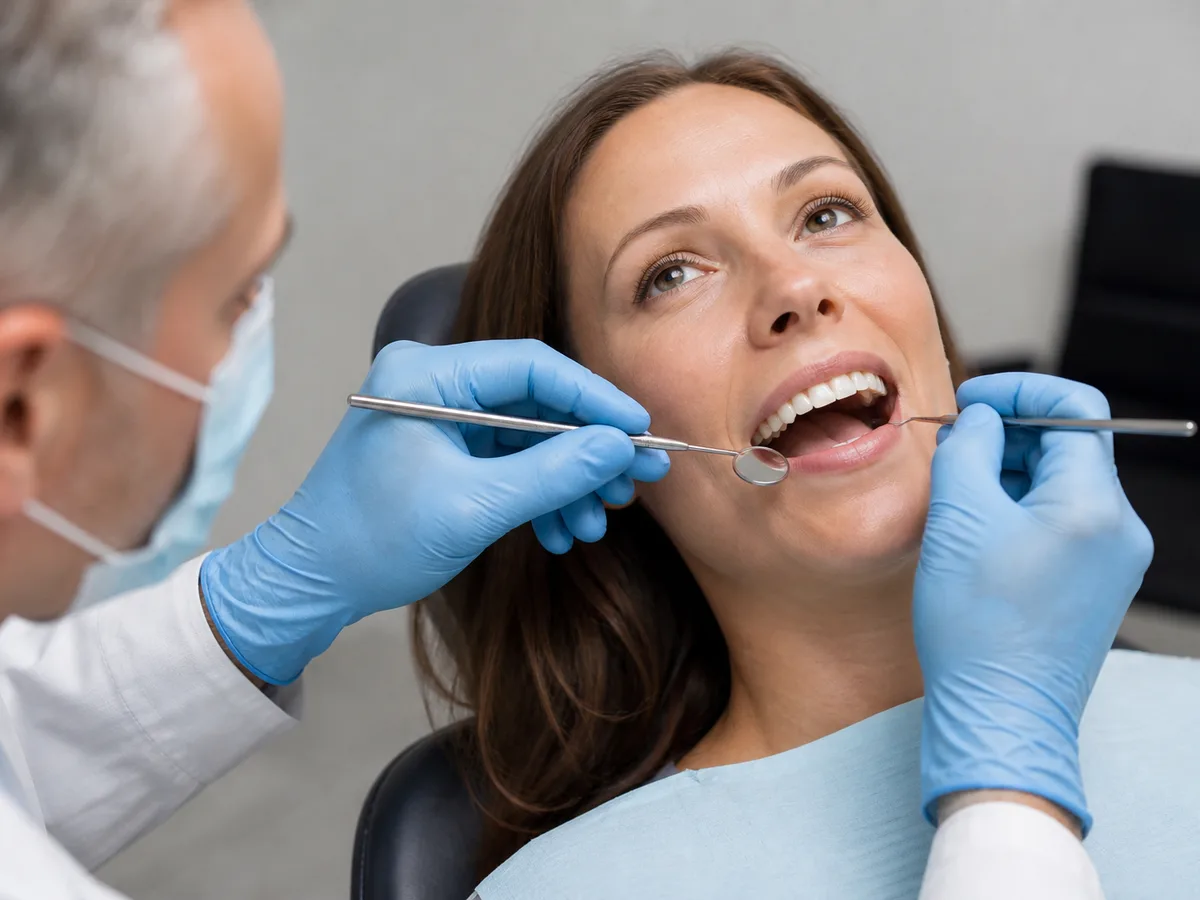
- Schedule a dental sleep evaluation for oral exam and records.
- Plan titration and a follow-up efficacy check—not a one-and-done delivery.
- Learn how adaptation usually unfolds so early soreness does not end therapy prematurely.
 Clarity prevents expensive mismatches.
Two specialties, one go/no-go call
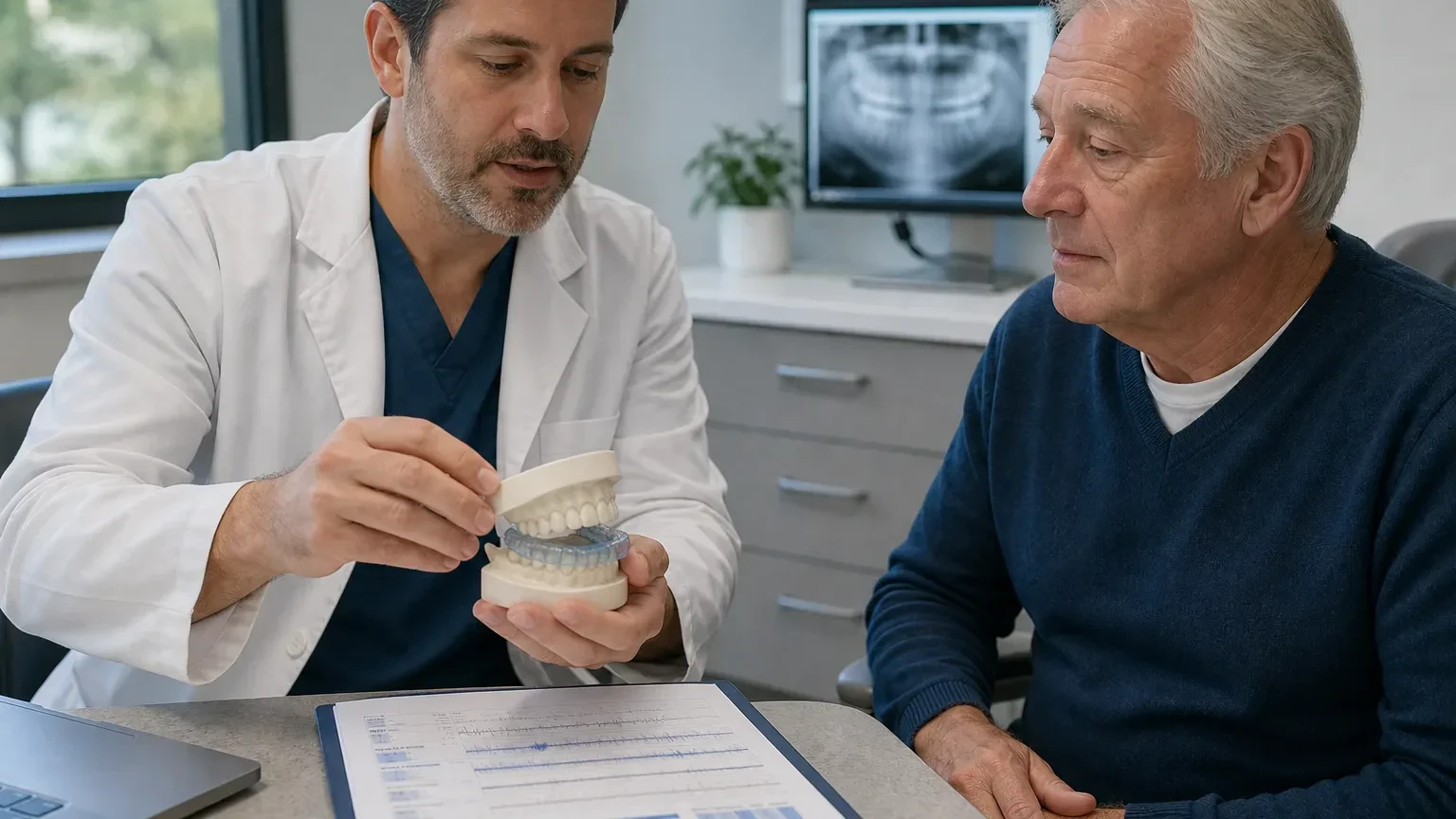
Leave with a clear yes, no, or not-yet—and the reason. “Not yet” might mean periodontal therapy first or a longer CPAP coaching trial. “Yes” should include who orders follow-up sleep testing. For a dentist who evaluates candidacy carefully, use Find a Dentist and mention your OSA diagnosis and CPAP experience when you book. Good candidates are made by criteria, not by social-media before-and-after snoring clips.
Oral appliance candidacy combines medical diagnosis, dental readiness, and realistic adherence. When those align—and your physician supports the path—a custom device can be a strong option. When they do not, another therapy deserves the spotlight.
Related articles
Keep exploring related topics from Dental Country.
Can A Dentist Treat Sleep Apnea?
A dentist can often deliver a custom oral appliance for obstructive sleep apnea once a physician confirms the diagnosis—but dentists do not replace sleep-medicine evaluation or claim CPAP is unnecessary for every patient.
Read article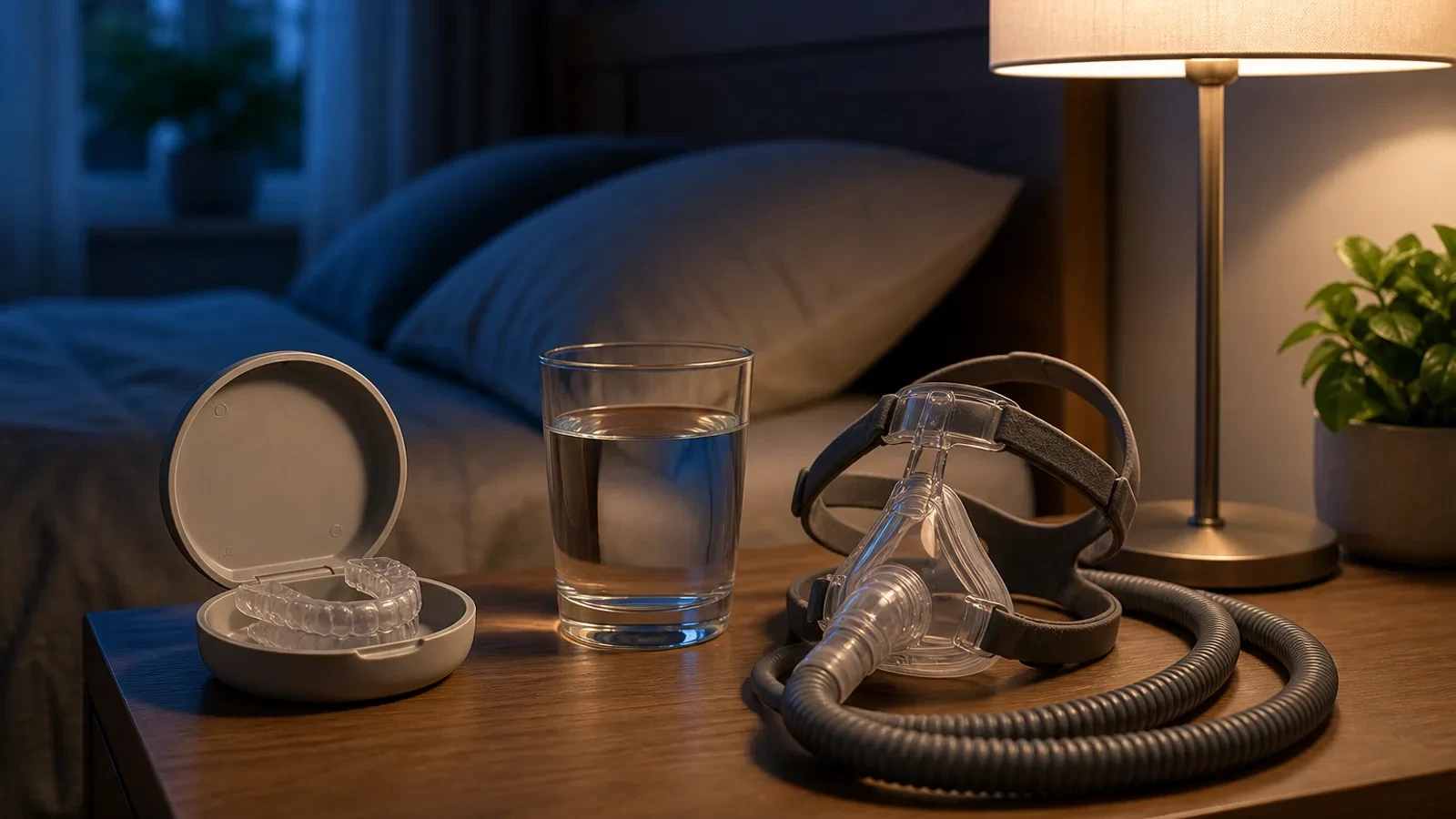
Oral Appliance Vs CPAP: Which Is Better?
CPAP usually opens the airway more reliably, while custom oral appliances can be simpler to travel with and tolerate—so “better” depends on severity, preference, and medical guidance rather than a single winner.
Read article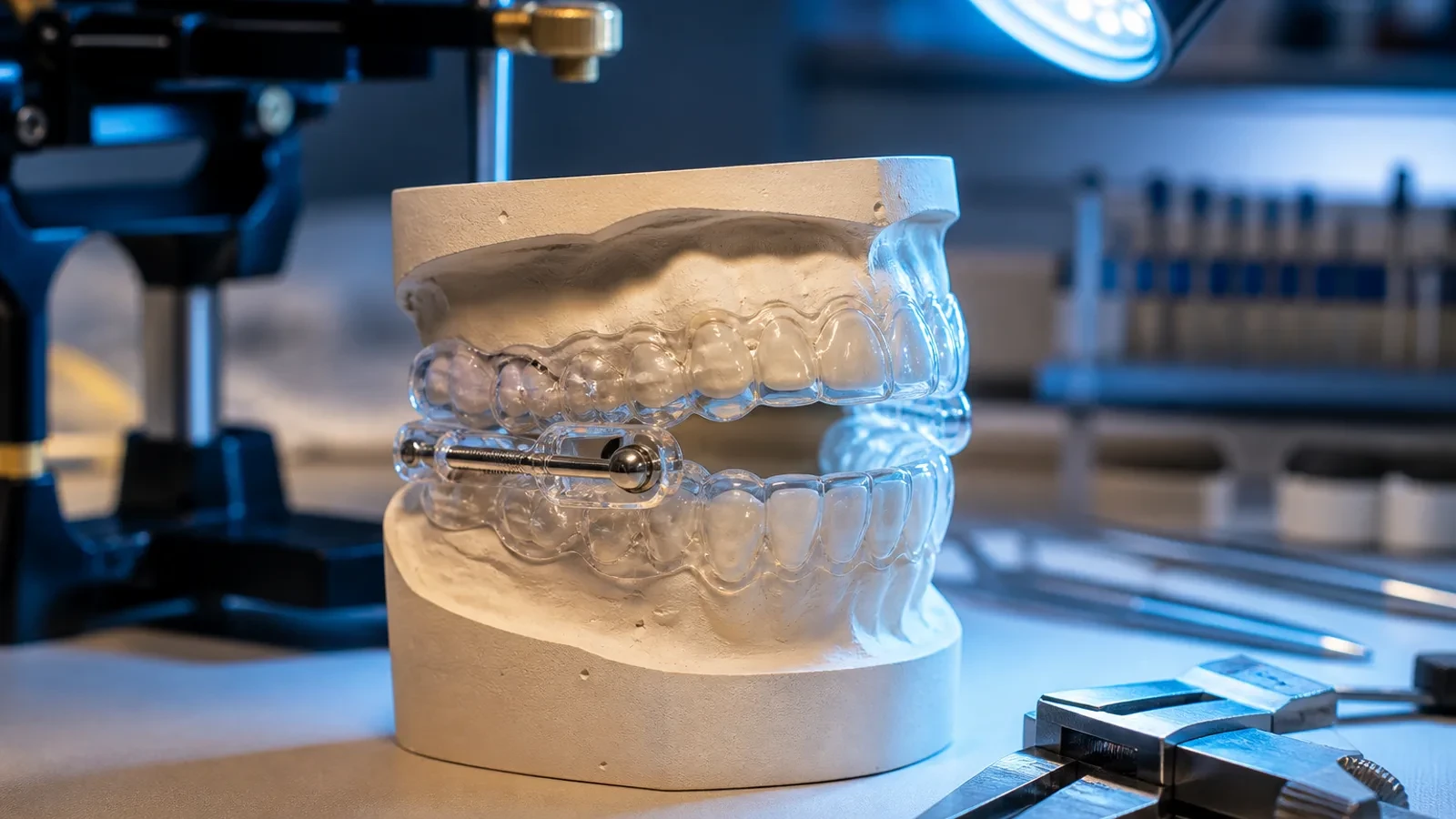
What Is A Mandibular Advancement Device?
A mandibular advancement device is a custom oral appliance that holds the lower jaw slightly forward during sleep to reduce airway collapse in selected people with snoring or obstructive sleep apnea.
Read article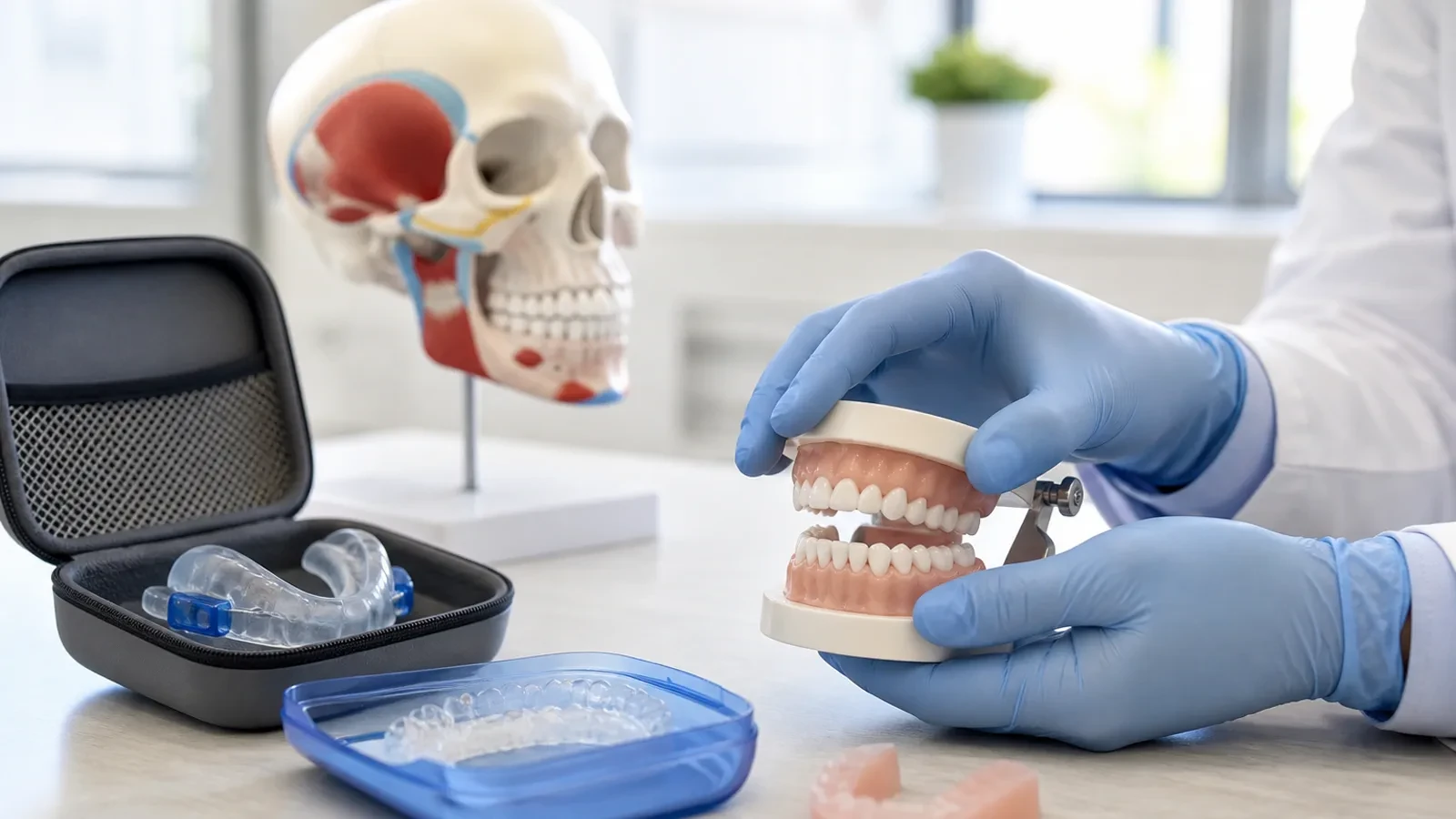
Do Oral Sleep Appliances Have Side Effects?
Yes—custom oral sleep appliances can bring temporary jaw or tooth soreness, excess saliva, and sometimes longer-term bite shifts, which is why dental follow-up is part of safe therapy.
Read article