
What Is A Mandibular Advancement Device?
A mandibular advancement device gently holds the lower jaw forward during sleep to help keep the airway open. See how it works and who may qualify.

Reviewed by Dr. Sean Myran, DMDDoctor of Dental Medicine, University of Pennsylvania
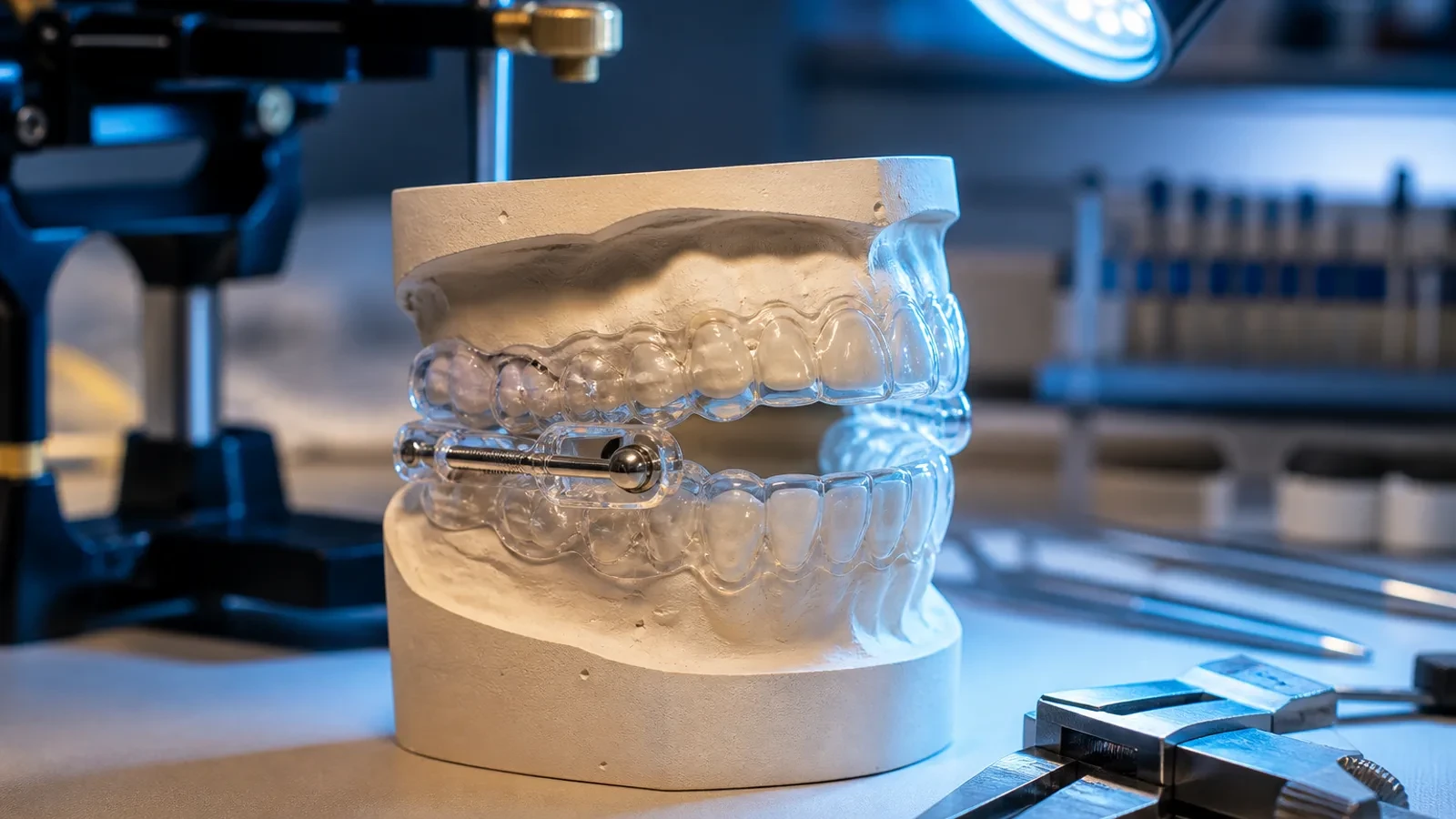
A mandibular advancement device (MAD) is a custom-fitted oral appliance that covers the teeth and holds the lower jaw (mandible) in a slightly forward position during sleep. That forward posture can help keep the tongue and soft tissues from collapsing into the airway. NHLBI describes mandibular repositioning mouthpieces that cover the teeth and hold the lower jaw to help keep the upper airway from blocking. It is one of the main oral-appliance designs used in dental sleep medicine—not a sports guard and not a daytime aligner.
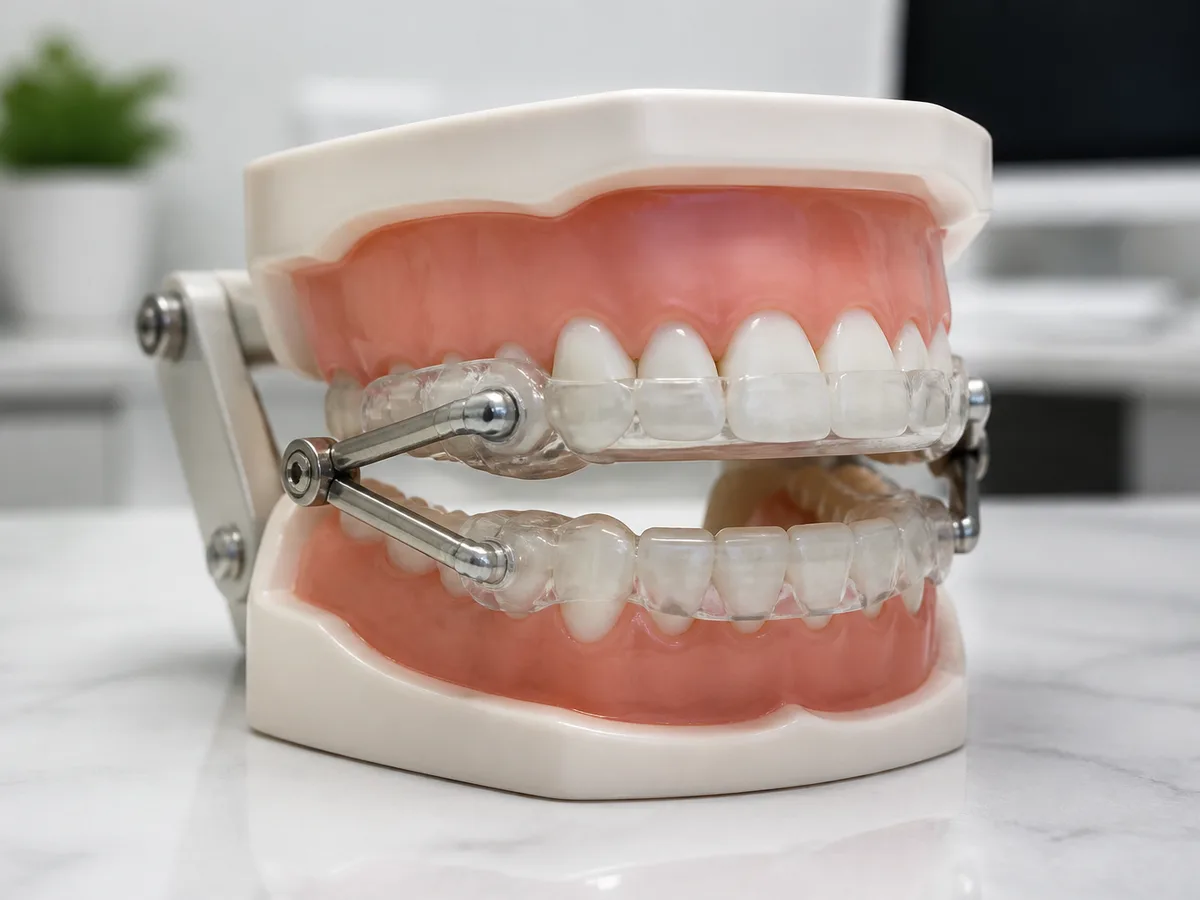
How it works is mechanical, not pharmaceutical. By stabilizing a more forward jaw position, the device may enlarge or stiffen the pharyngeal airway enough to reduce obstructive events and snoring in appropriate patients. Titration—small advances over follow-up visits—balances airway benefit against jaw or tooth discomfort. Candidacy notes matter as much as the plastic: enough healthy teeth for retention, manageable jaw-joint symptoms, and a medical plan that includes the appliance. Compare broader choices in oral appliance versus CPAP and readiness in candidate criteria.
How A MAD Is Built And Adjusted
- Records: scans or impressions, bite registration, and a joint/muscle exam.
- Fabrication: a lab-made, usually two-piece titratable appliance anchored on upper and lower teeth.
- Delivery: fit check, insertion training, and a conservative starting advancement.
- Titration: gradual forward adjustments guided by symptoms, comfort, and clinician judgment.
- Verification: medical follow-up or sleep testing as directed to confirm benefit.
Mayo Clinic explains that some devices bring the lower jaw forward to relieve snoring and improve OSA, and that fitting should be done by a dentist experienced with dental sleep appliances. AASM/AADSM guidance favors custom, titratable appliances delivered by a qualified dentist when oral appliance therapy is prescribed. Boil-and-bite drugstore trays rarely match that standard.
Tongue-retaining devices are a related but different design that holds the tongue forward with suction; they may be discussed when teeth are insufficient for a MAD. Neither design should be started as a self-diagnosis tool for gasping sleep. People with loose teeth, advanced periodontal disease, or limited protrusive jaw range need candid counseling before impressions.
Daytime speech, saliva, and a temporary odd bite feeling are common early on; lasting pain, tooth mobility, or major bite change deserve prompt adjustment. Cleaning routines and a protective case keep the device usable for years of nightly wear. Ask whether your model includes a compliance chip or simple wear log—habits matter as much as millimeters of advancement.
 Millimeters should earn their keep.
Small advances, measured goals
Titration is not a race to the most forward position. Over-advancement can strain joints and teeth without extra airway gain. Your dentist may advance in small steps while you report morning jaw feel, tooth tenderness, and residual snoring. Keep CPAP available if your physician wants a bridge during titration for higher-risk OSA. Photograph any new bite changes at recall visits so subtle shifts are tracked rather than argued from memory months later.
Candidacy Notes In Plain Language
- Best discussed after OSA or primary snoring is medically classified.
- Needs adequate dentition or carefully planned alternatives.
- Active severe TMD pain may require stabilization first.
- Not a silent substitute for CPAP when your physician says pressure therapy is still required.
 Education turns plastic into therapy.
Fit and follow-up define success
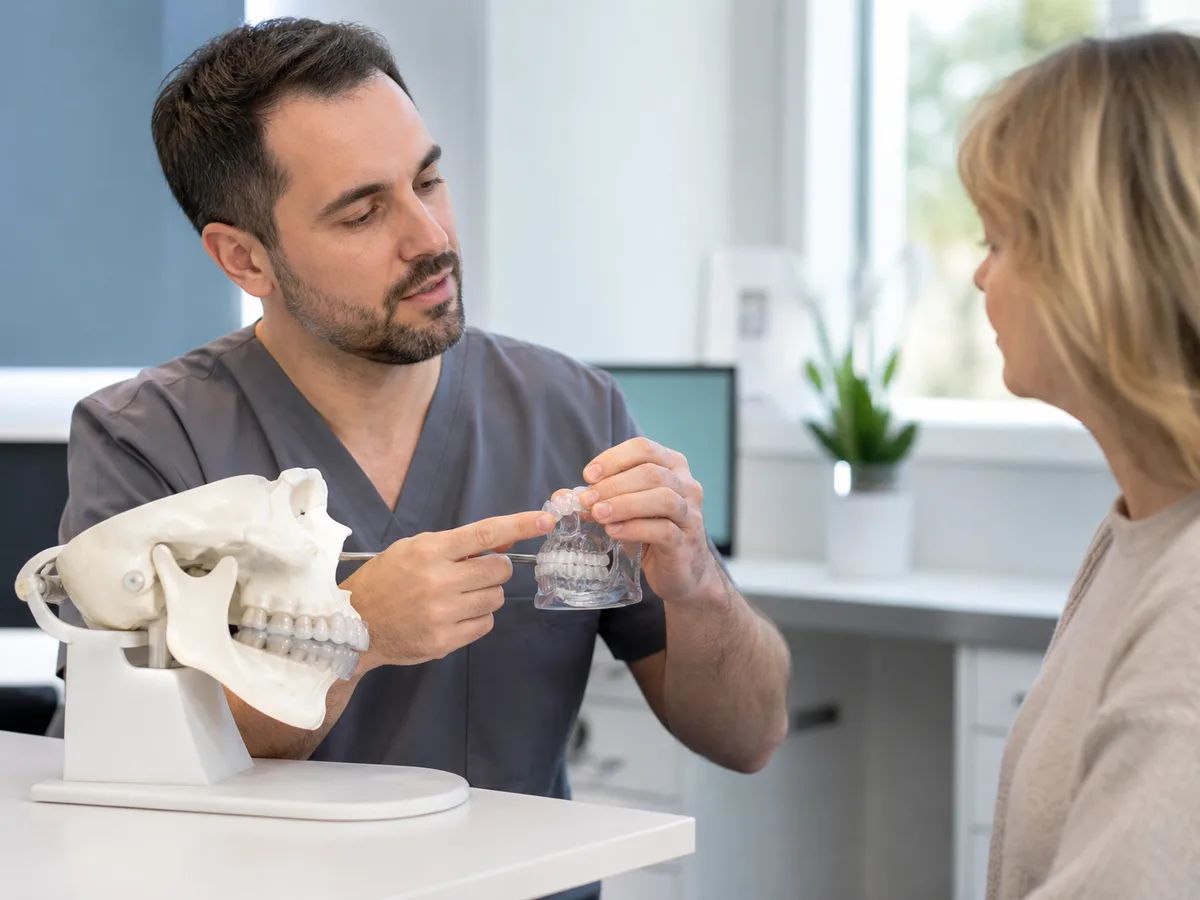
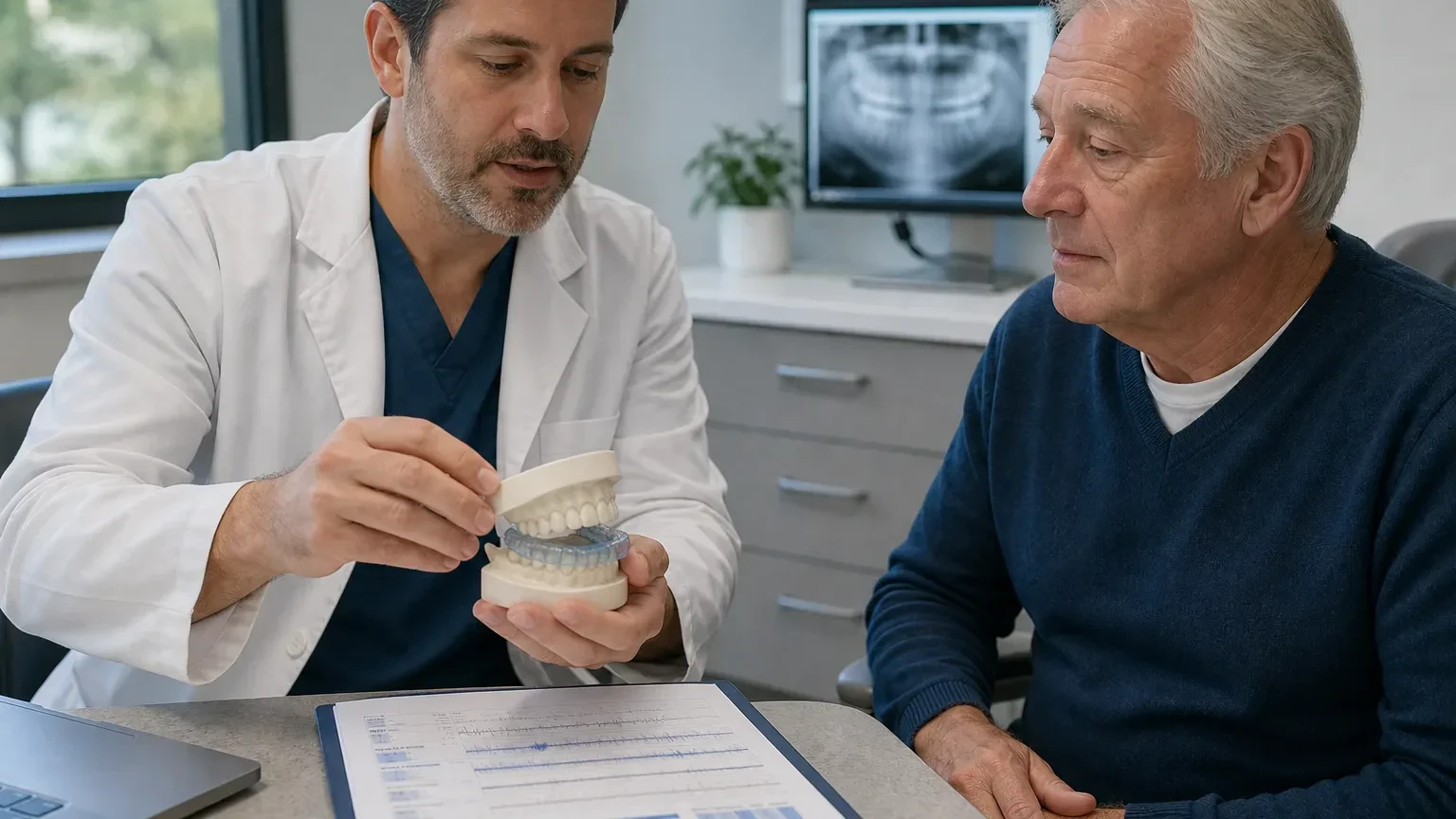
At delivery, practice inserting and removing the device until it feels routine. Ask how to clean it, what morning stretch or chew is reasonable, and when to call about side effects. For a dentist experienced with custom MADs, use Find a Dentist and mention physician-prescribed oral appliance therapy when you schedule. Understanding the mechanism helps you partner in titration instead of treating the device like a one-visit gadget.
A mandibular advancement device is a custom jaw-forwarding oral appliance used for selected snoring and OSA cases under clinical guidance. Know the mechanism, respect candidacy limits, and measure results—not just quieter nights.
Related articles
Keep exploring related topics from Dental Country.
Can A Dentist Treat Sleep Apnea?
A dentist can often deliver a custom oral appliance for obstructive sleep apnea once a physician confirms the diagnosis—but dentists do not replace sleep-medicine evaluation or claim CPAP is unnecessary for every patient.
Read article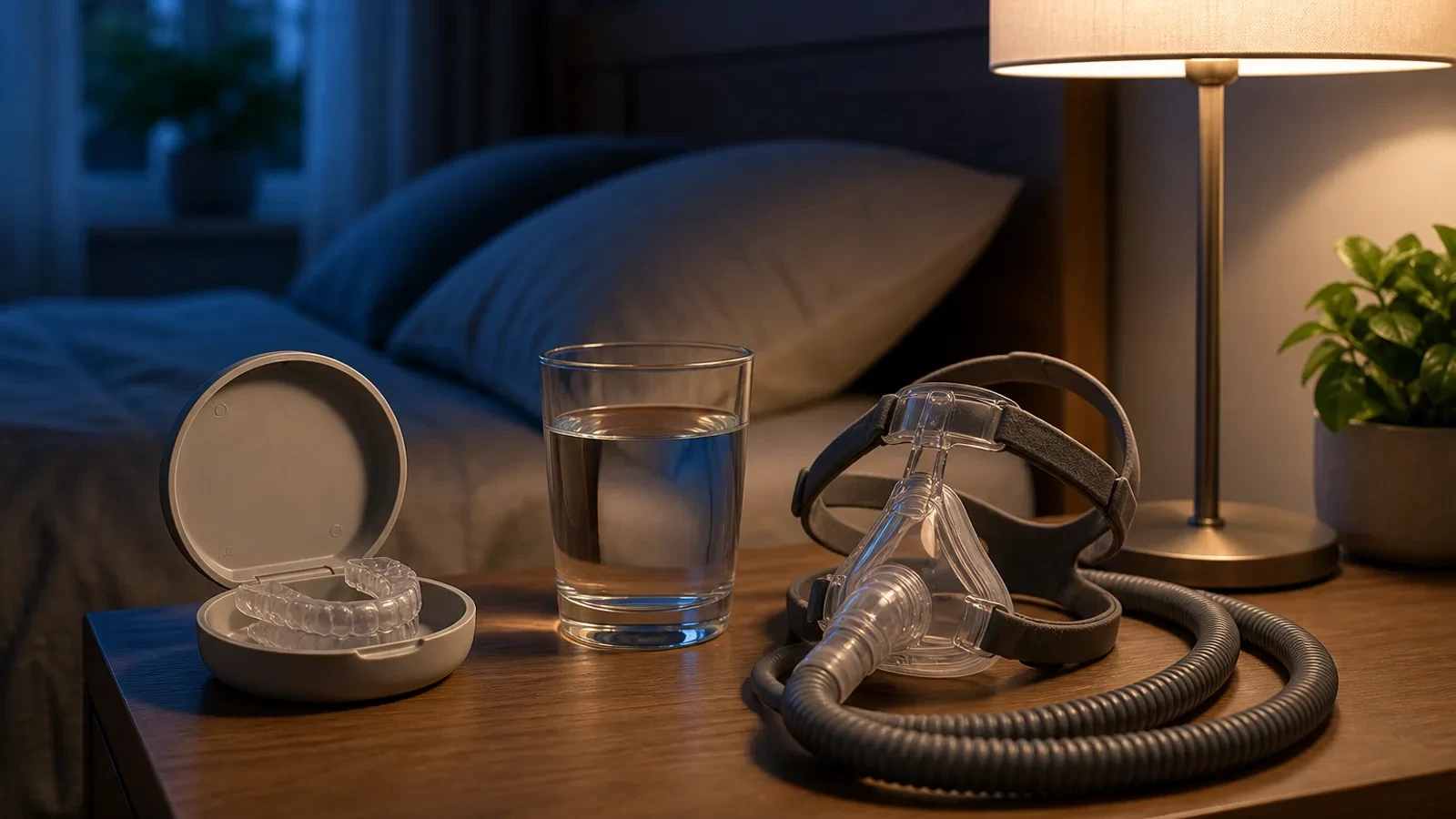
Oral Appliance Vs CPAP: Which Is Better?
CPAP usually opens the airway more reliably, while custom oral appliances can be simpler to travel with and tolerate—so “better” depends on severity, preference, and medical guidance rather than a single winner.
Read article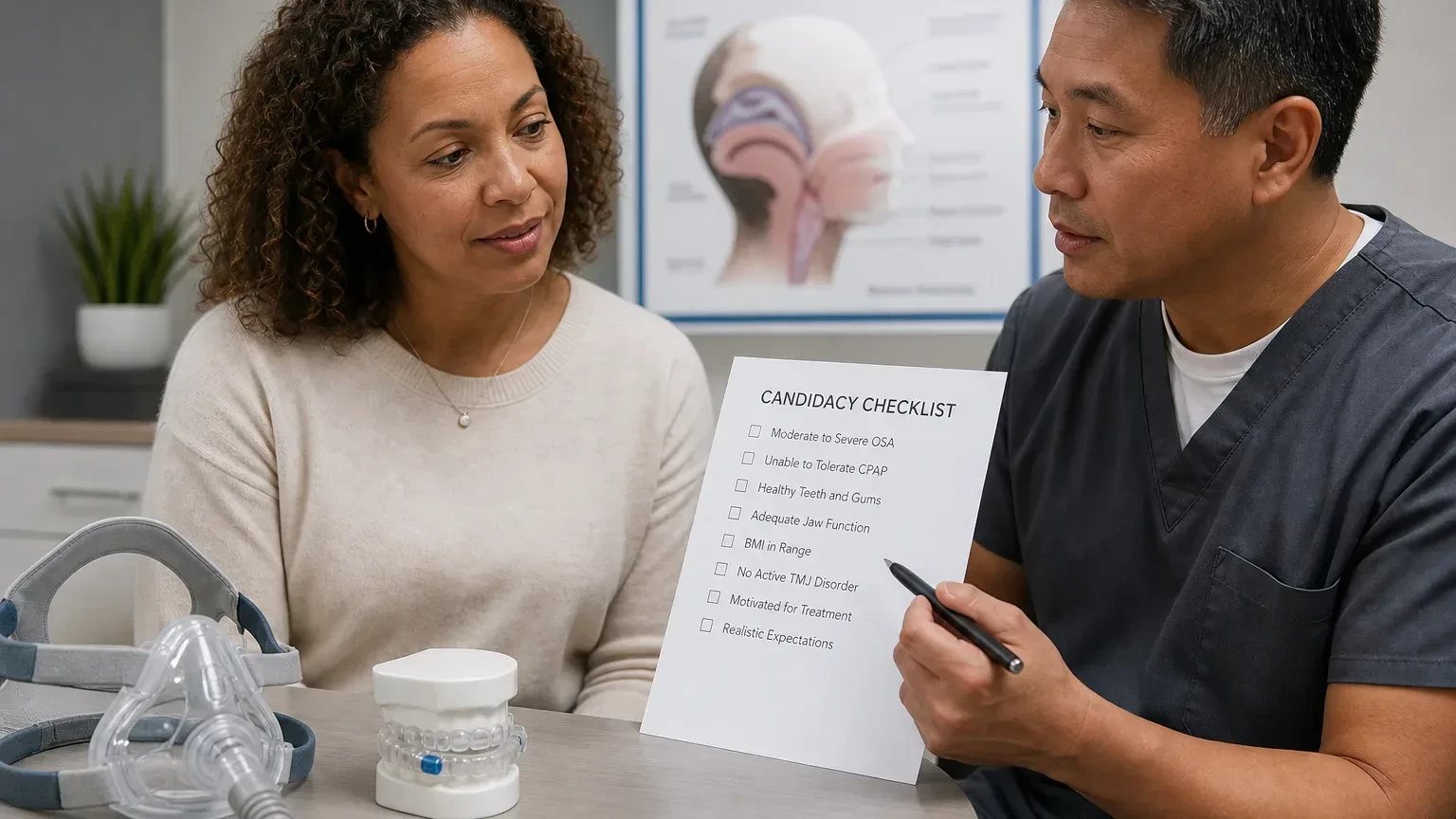
Who Is A Candidate For A Sleep Apnea Oral Appliance?
Strong oral-appliance candidates usually have a confirmed OSA or snoring diagnosis, enough healthy teeth, manageable jaw joints, and a physician plan that supports appliance therapy—especially when CPAP is poorly tolerated.
Read article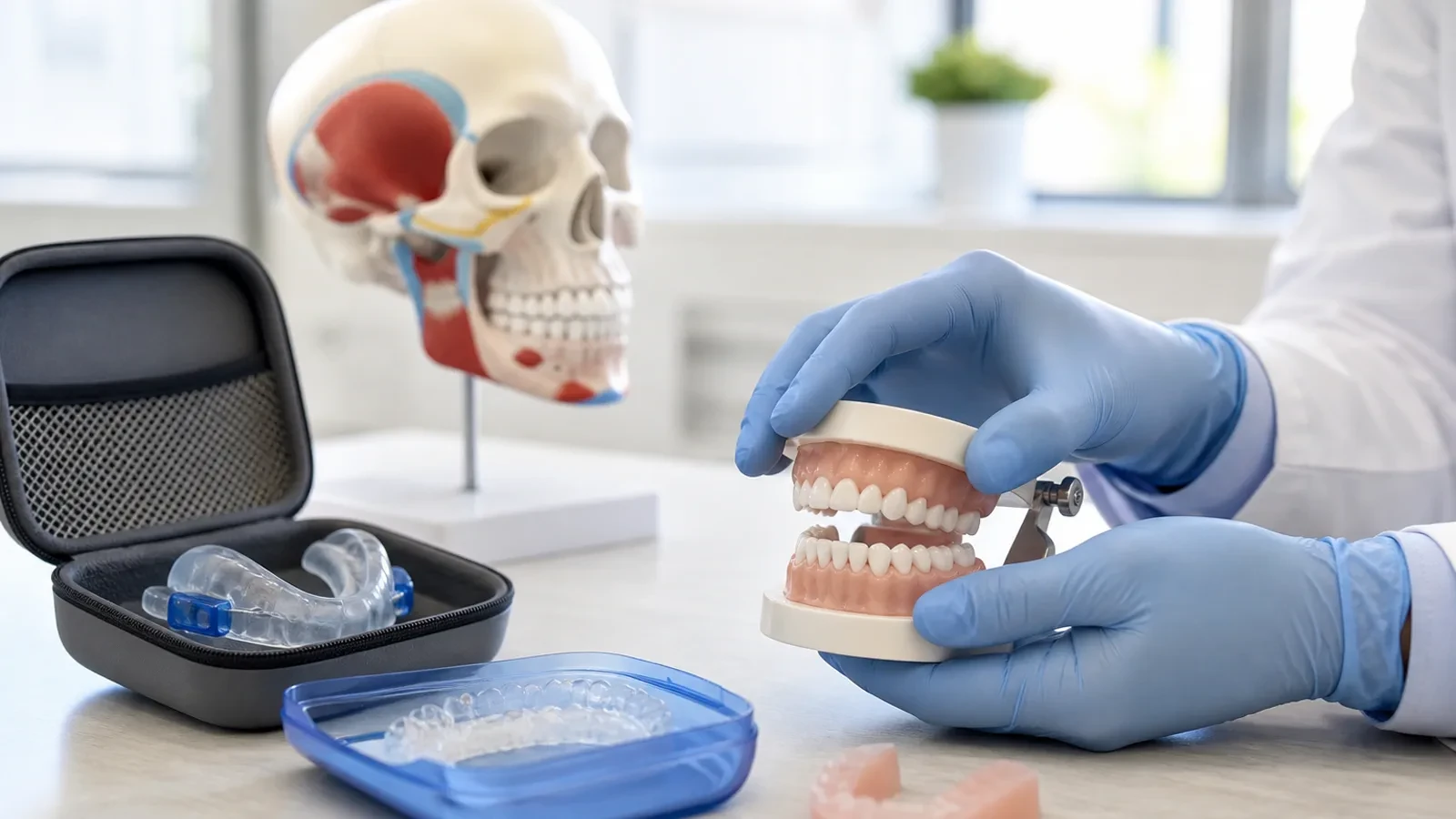
Do Oral Sleep Appliances Have Side Effects?
Yes—custom oral sleep appliances can bring temporary jaw or tooth soreness, excess saliva, and sometimes longer-term bite shifts, which is why dental follow-up is part of safe therapy.
Read article