
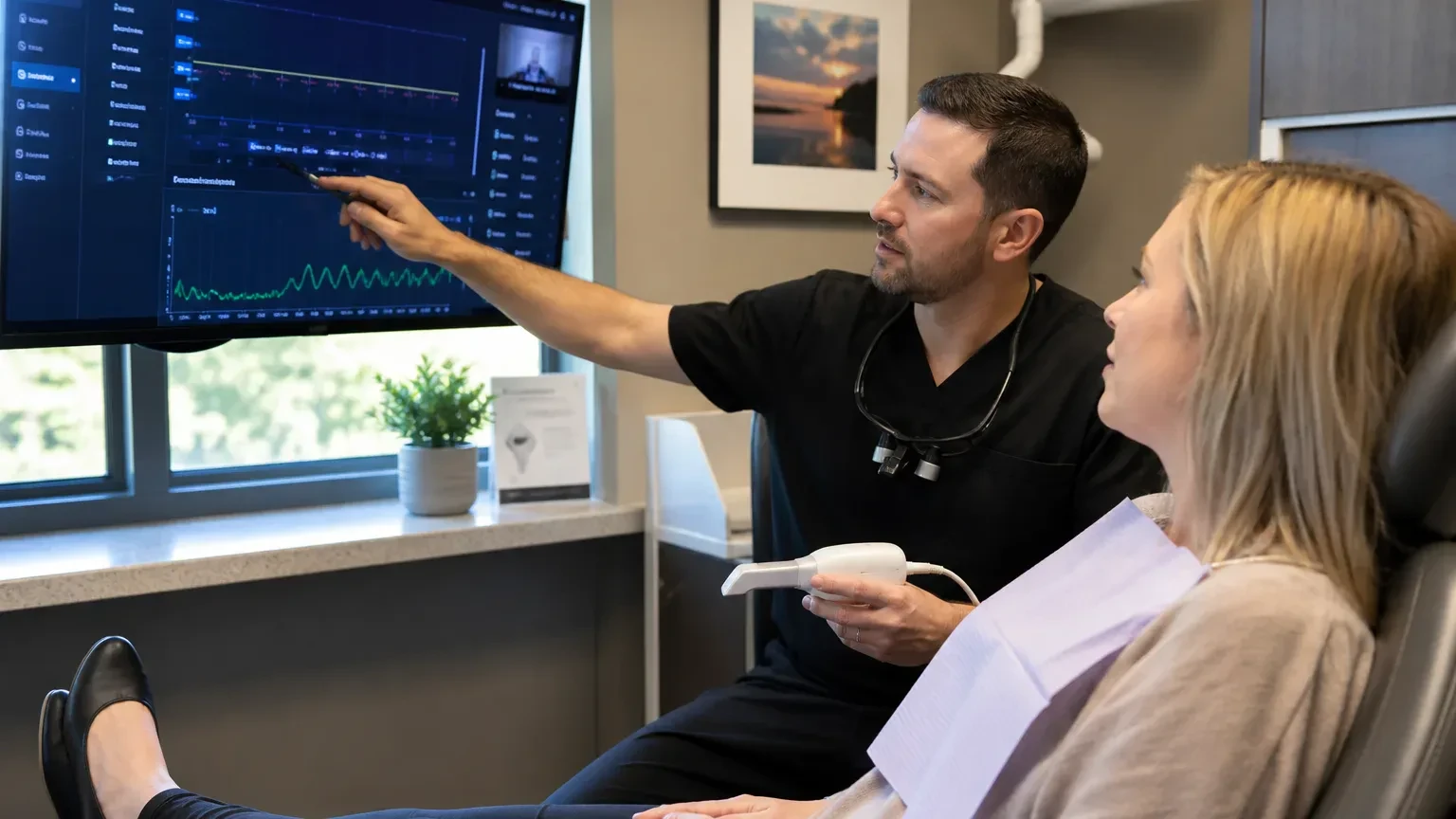
What Happens At A Dental Sleep Apnea Consultation?
A dental sleep apnea consult reviews your diagnosis, teeth and jaws, and appliance options. See the visit timeline and what to bring with you.

Reviewed by Dr. Sean Myran, DMDDoctor of Dental Medicine, University of Pennsylvania
At a dental sleep apnea consultation, the dentist reviews your medical sleep diagnosis and symptoms, examines teeth, gums, bite, and jaw joints, and discusses whether a custom oral appliance is appropriate—and what fabrication and follow-up would involve. Mayo Clinic recommends seeing a dentist experienced in dental sleep medicine appliances for fitting and follow-up therapy. Think process timeline, not a surprise tray at the door.
Bring sleep-study results, a medication list, CPAP history, and notes on jaw pain or missing teeth. The visit should clarify medical coordination: who prescribed appliance therapy, and how efficacy will be checked later. Preview candidacy themes from who qualifies and device basics from mandibular advancement devices.
A Typical Consultation Timeline
- Minutes 0–15: history—snoring, sleepiness, CPAP trials, medical conditions, prior appliances.
- Minutes 15–35: oral exam—tooth stability, periodontal status, range of motion, joint sounds, airway soft-tissue notes.
- Minutes 35–45: education—how appliances work, side effects, realistic expectations versus CPAP.
- Minutes 45–60: plan—records needed, insurance steps, titration schedule, and referral loops back to your physician.
- After the visit: impressions or scans only when you consent and authorization (if required) is understood.
AASM/AADSM guidance calls for qualified dentists to deliver custom titratable appliances and to oversee dental side effects when oral appliance therapy is prescribed. NHLBI notes dentists or orthodontists custom fit devices and teach you how to use them. Teaching time belongs in the consult, not as an afterthought on delivery day.
Imaging is not automatic. Photographs, scans, or selected radiographs support appliance design and baseline bite records. If active decay or gum disease appears, expect a pause for dental treatment first—starting advancement on unstable teeth invites failure. Ask how morning bite checks will be recorded so later changes have a comparison point.
Fees and timelines should be spelled out: consultation charge, appliance fee, included adjustments, and estimated weeks from records to delivery. If the office cannot explain medical billing steps, ask for a written estimate and prior-authorization plan before you commit. You can decline the same day; good consultations leave room to think.
Use the consult to pressure-test marketing language. Ask how often the dentist communicates with sleep physicians, what percentage of their appliance patients complete follow-up testing, and how they handle jaw pain that appears mid-titration. Vague answers are information. Clear protocols are also information—prefer the latter. If you feel rushed toward same-day scans without candidacy discussion, slow the visit down.
Bring a short list of personal constraints: gag reflex, shift work, frequent travel, or limited dexterity. Those details change appliance design and coaching more than brochure photos do. Mention whether a partner can attend follow-ups; third-person snoring reports remain useful after delivery. Leave time at the end for your own questions so the timeline is mutual, not merely recited.
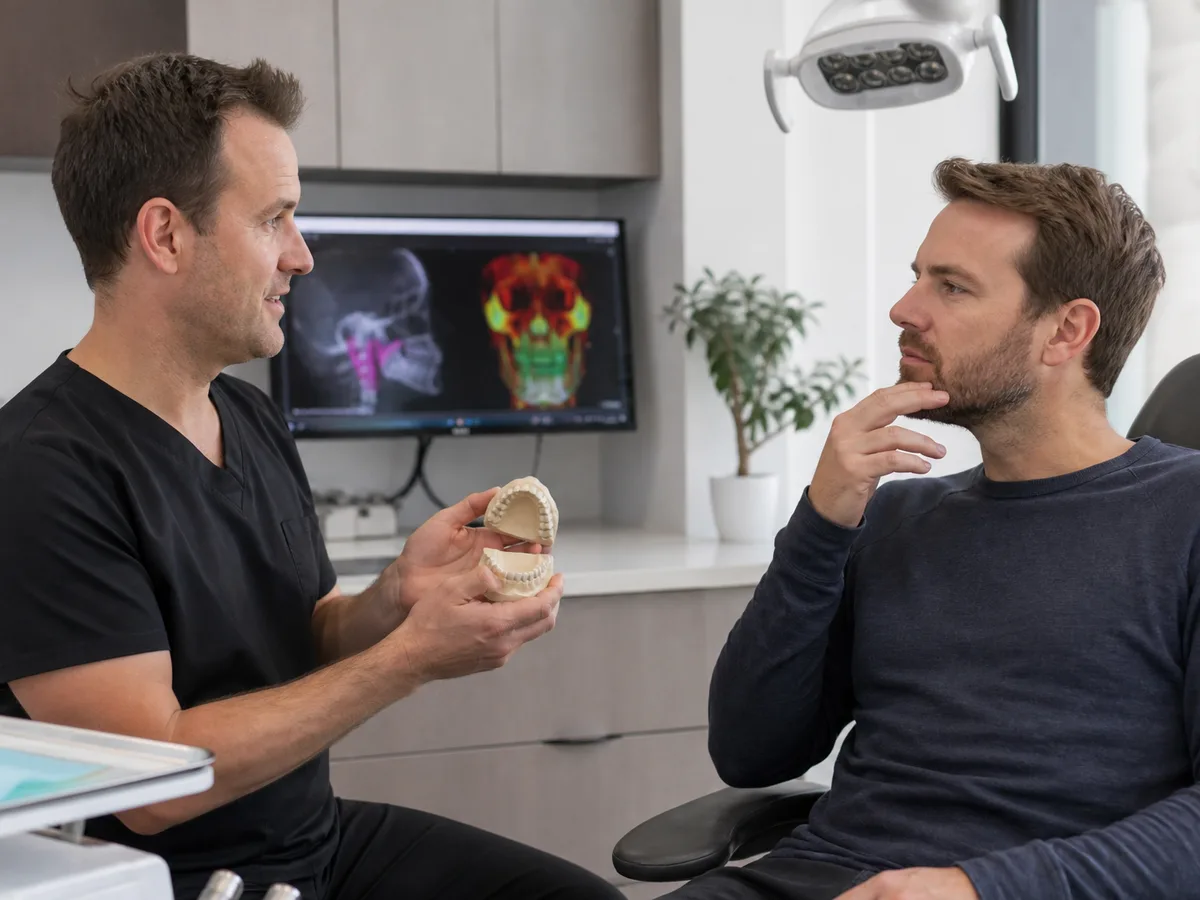 Documentation keeps the consult clinical.
Numbers guide whether dentistry should proceed
Open with your diagnosis and severity rather than only “I snore.” Ask the dentist to restate the plan in plain language: appliance versus not yet, and why. If they propose starting without any medical documentation, pause. A strong consult feels like triage and education—exam findings, risks, alternatives—more than a product pitch. Take notes on titration frequency and who you call for urgent jaw pain after hours.
What “Done For Today” Should Mean
- You know whether you are a likely candidate, deferred, or better served by another therapy.
- You have a written next step—records, authorization, or medical follow-up.
- You understand common side effects and adaptation expectations.
- You know how the dentist will communicate with your sleep physician.
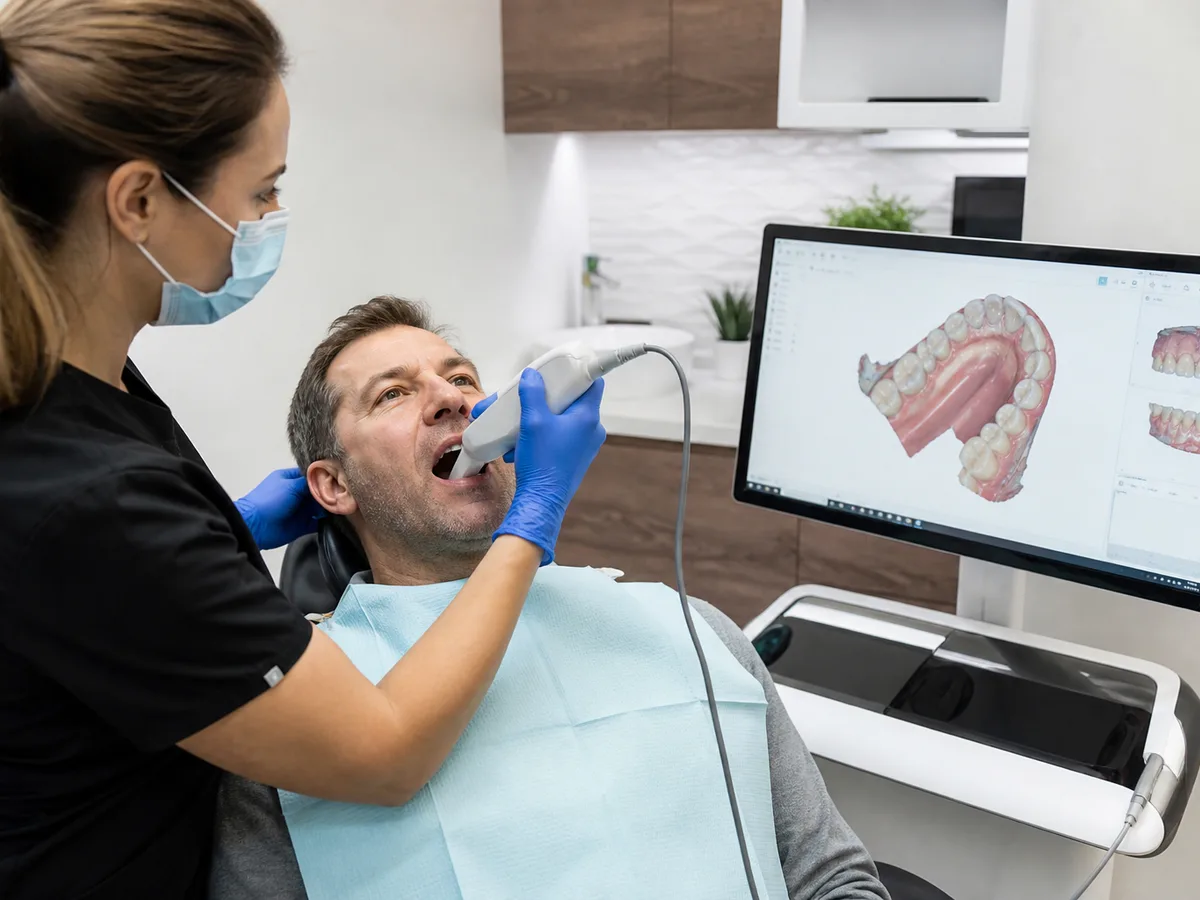 Sequence beats same-day urgency.
Leave with a sequence, not pressure
A useful ending is a dated sequence: authorization, scans, delivery, first adjustment, medical retest. Pressure to pay in full before you understand coverage is a reason to slow down. For a consultation-focused dentist, use Find a Dentist and request a dental sleep apnea evaluation when you book, mentioning that you already have study results. The visit succeeds when you understand the path—not when plastic is rushed into production.
A dental sleep apnea consultation is an exam-plus-planning visit under a medical diagnosis. Walk in with records, expect a structured timeline, and walk out knowing whether a custom appliance is appropriate—and what follow-up will prove it works.
Related articles
Keep exploring related topics from Dental Country.
Can A Dentist Treat Sleep Apnea?
A dentist can often deliver a custom oral appliance for obstructive sleep apnea once a physician confirms the diagnosis—but dentists do not replace sleep-medicine evaluation or claim CPAP is unnecessary for every patient.
Read article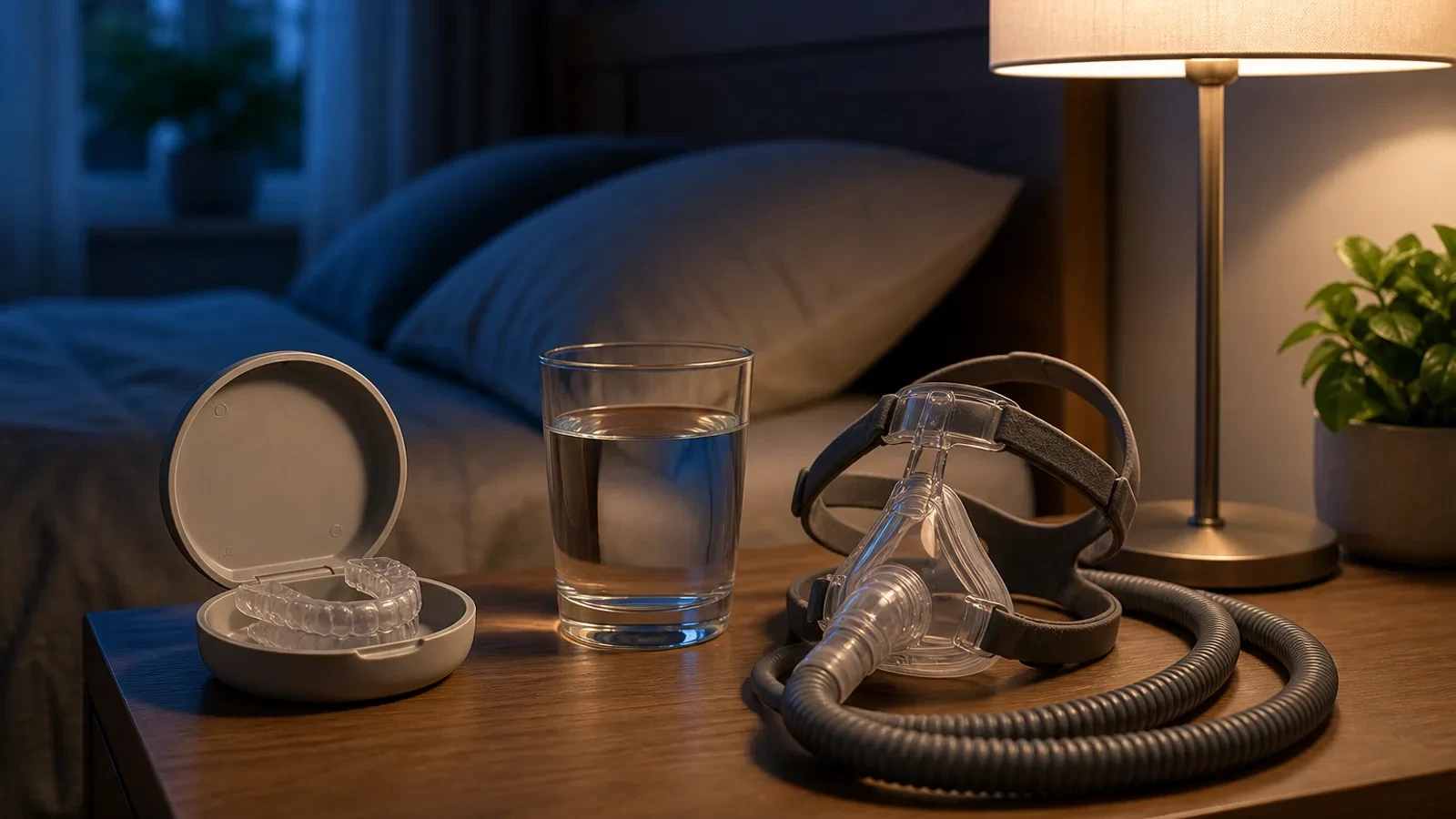
Oral Appliance Vs CPAP: Which Is Better?
CPAP usually opens the airway more reliably, while custom oral appliances can be simpler to travel with and tolerate—so “better” depends on severity, preference, and medical guidance rather than a single winner.
Read article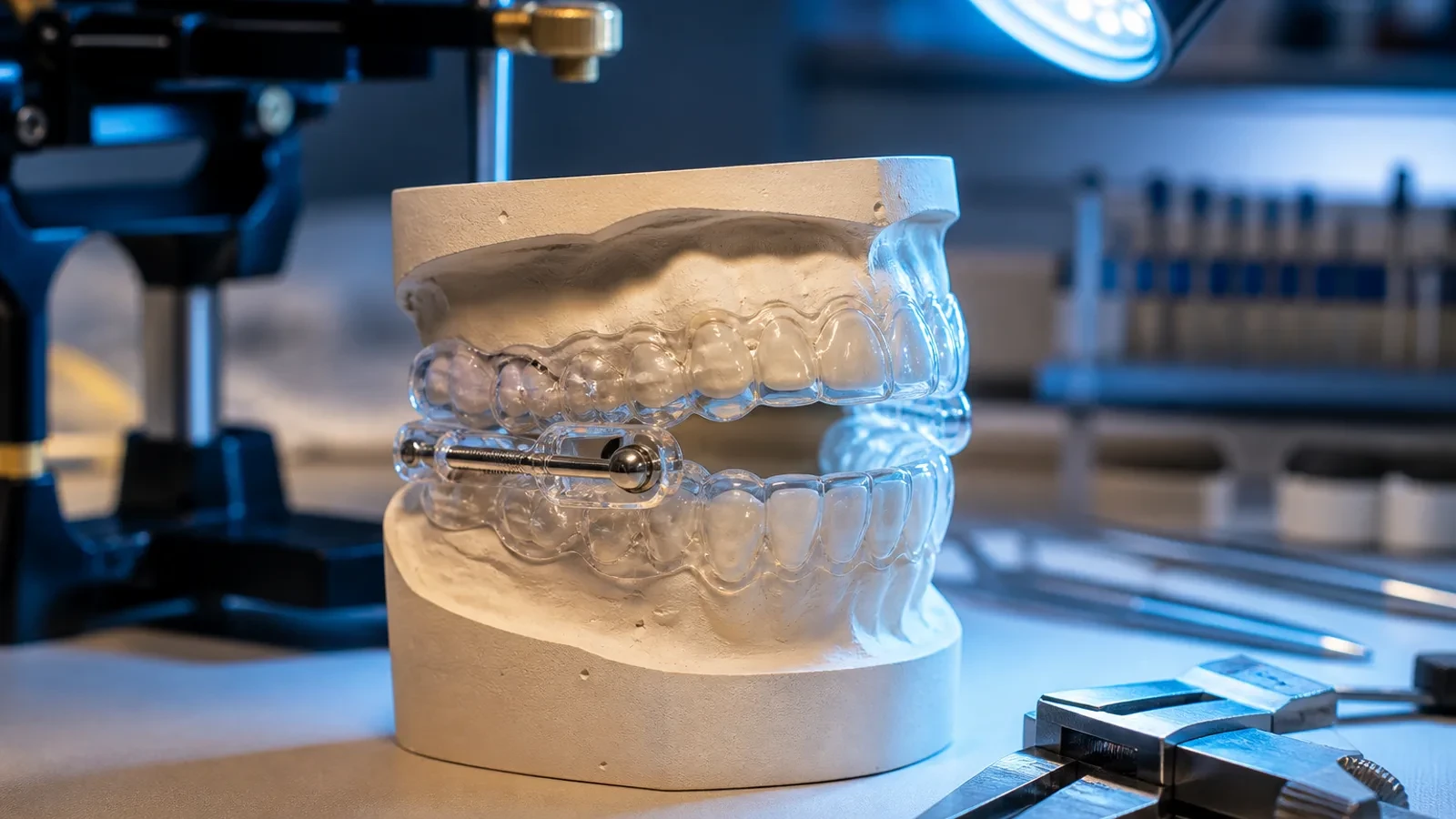
What Is A Mandibular Advancement Device?
A mandibular advancement device is a custom oral appliance that holds the lower jaw slightly forward during sleep to reduce airway collapse in selected people with snoring or obstructive sleep apnea.
Read article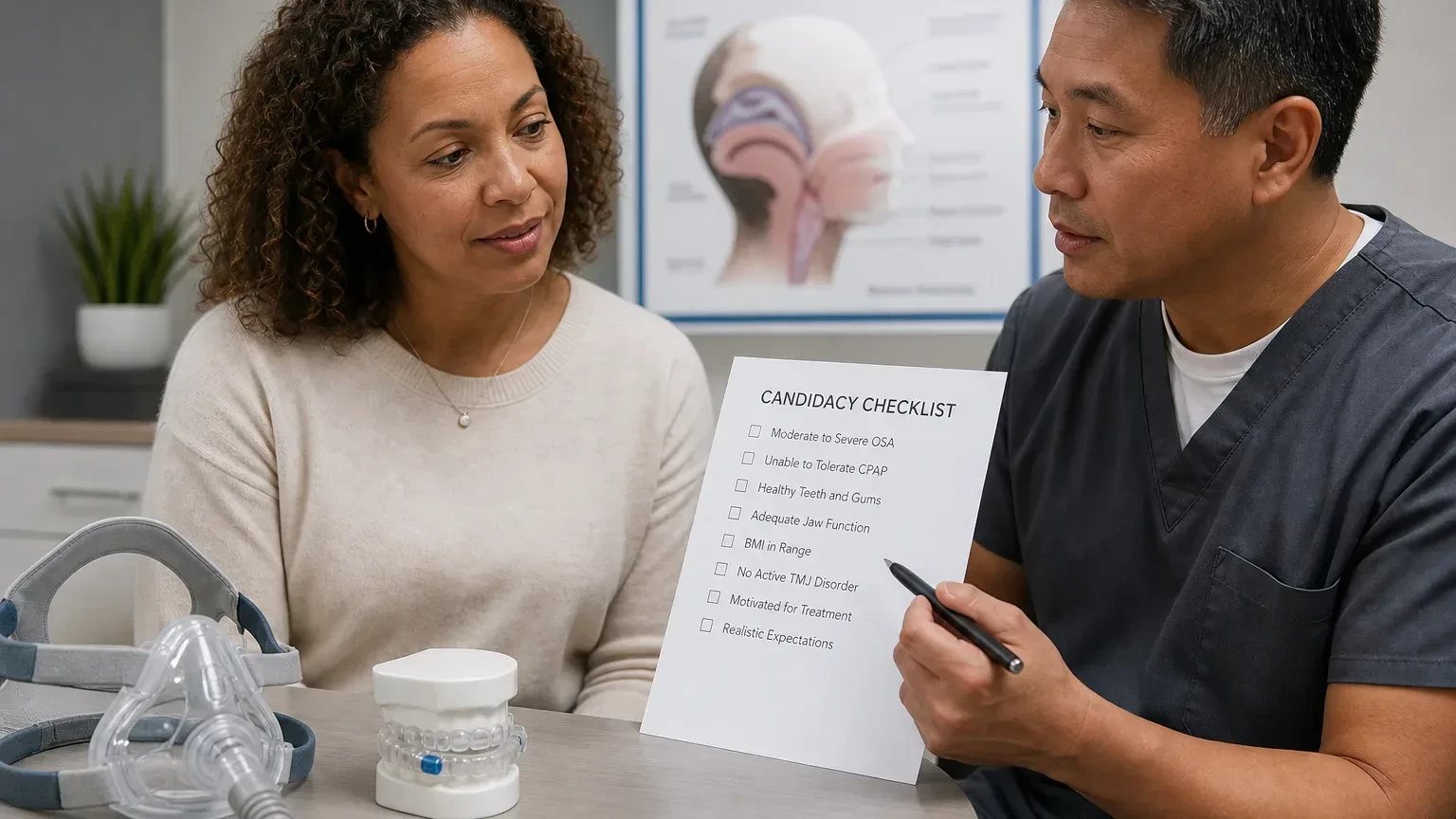
Who Is A Candidate For A Sleep Apnea Oral Appliance?
Strong oral-appliance candidates usually have a confirmed OSA or snoring diagnosis, enough healthy teeth, manageable jaw joints, and a physician plan that supports appliance therapy—especially when CPAP is poorly tolerated.
Read article