
How Do You Clean Clear Aligners?
Clean clear aligners each day with gentle brushing and clinician-approved soaks. Skip hot water and abrasive pastes that scratch or warp precise trays.

Reviewed by Dr. Sean Myran, DMDDoctor of Dental Medicine, University of Pennsylvania
Clear aligners need a simple, consistent cleaning routine so plaque and odors do not ride back onto your teeth. Rinse trays when you remove them, brush them gently with a soft brush, and follow any soak crystals or solutions your clinician recommends. Clean your teeth before trays return so sugars and acids are not sealed against enamel. AAO guidance frames clear aligner therapy as professionally supervised care; home cleaning is how you protect that investment between visits.
Meal rules pair with hygiene—see why trays come out for food—and comfort tips in when soreness is normal.
Daily And Weekly Cleaning Routine
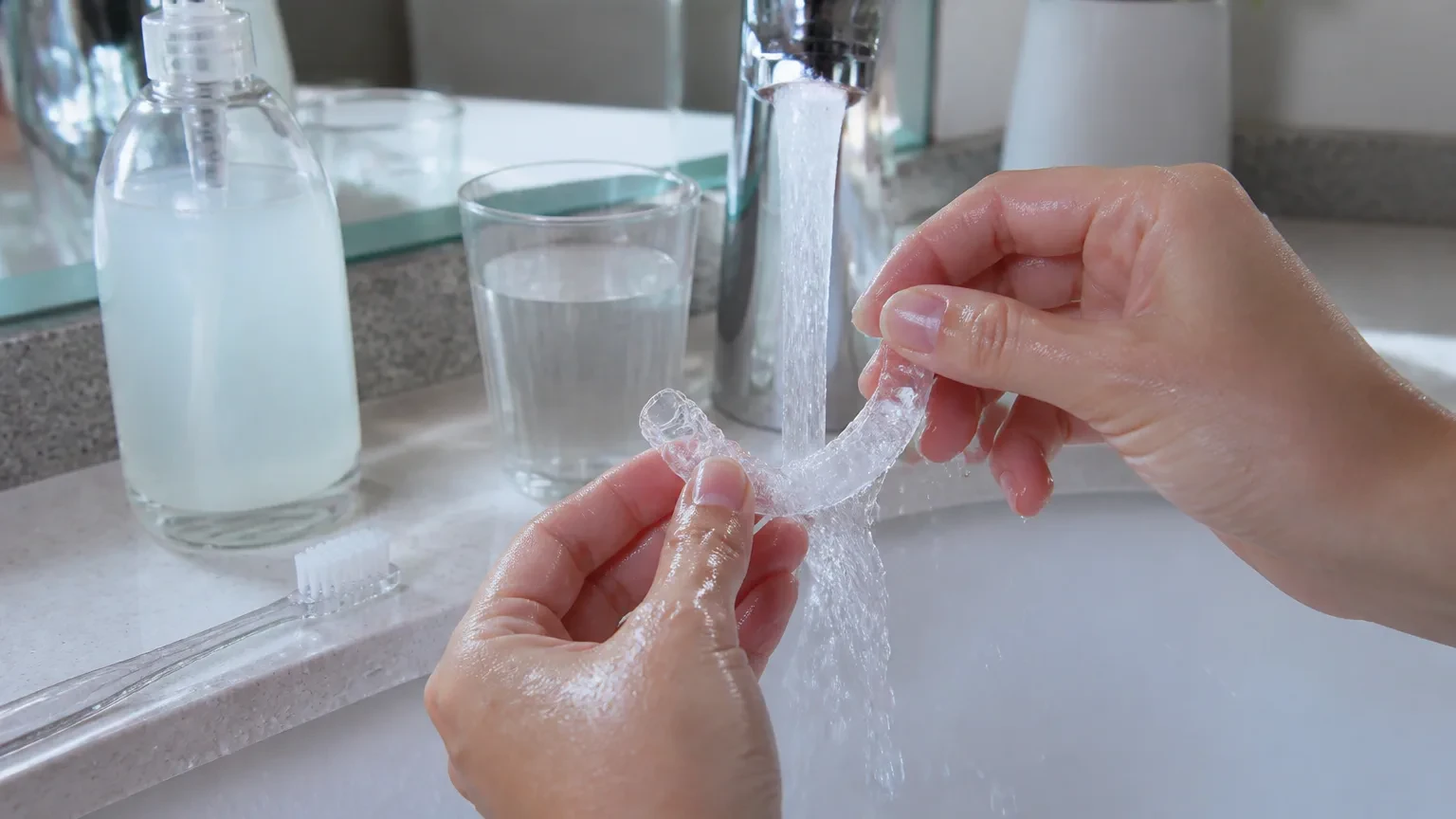
- On removal: rinse under lukewarm water—never hot.
- Brush trays: soft brush, light pressure; ask before using toothpaste (some pastes scratch).
- Brush and floss teeth: especially after meals, before reseating.
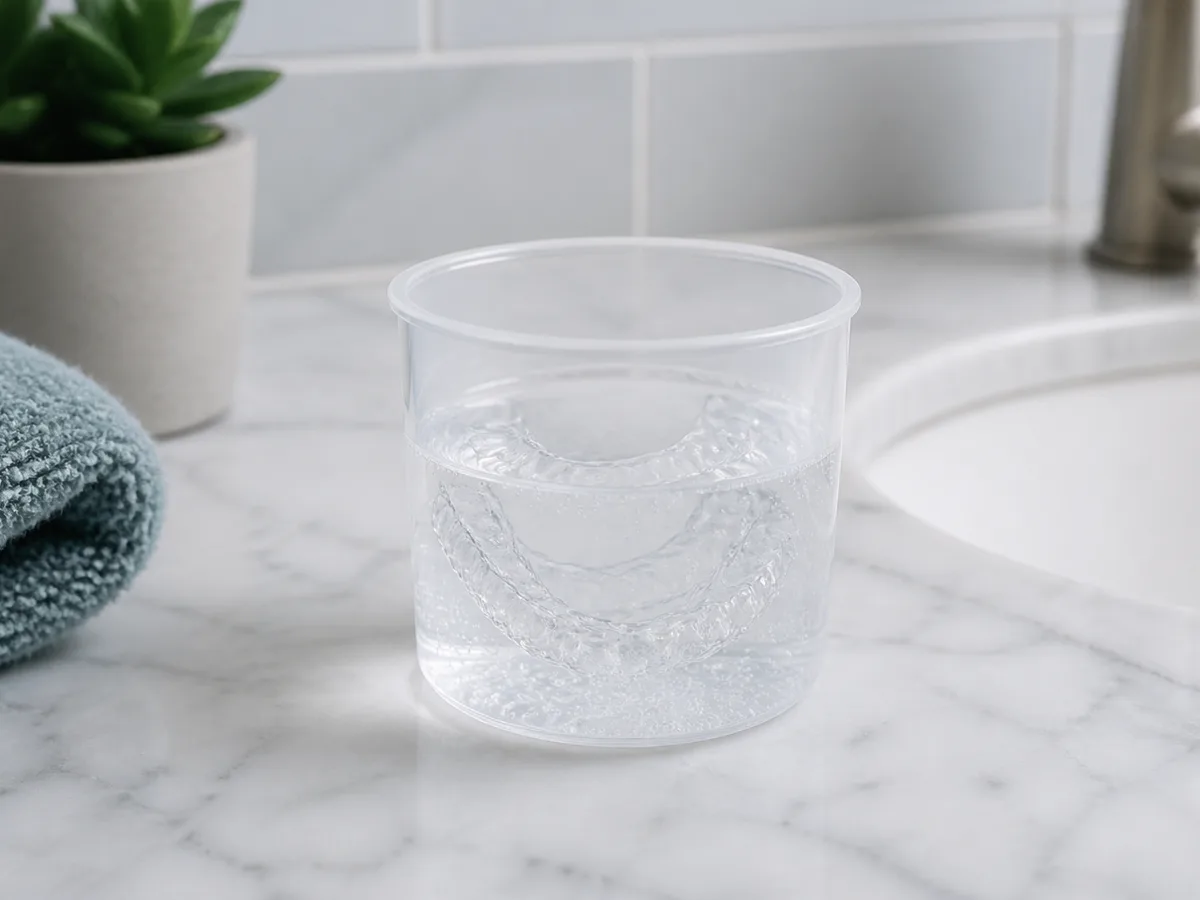
- Approved soaks: use aligner-cleaning products or methods your office lists; skip mystery internet hacks.
- Case hygiene: rinse and air-dry the case so it is not a bacteria box.
- Weekly check: look for haze, cracks, or odor that cleaning does not fix—call if fit changes.
Colored drinks sipped with trays in can stain plastic and bathe teeth in sugar or acid. Water is the usual exception. If you must drink something else, follow your office’s remove-and-rinse advice rather than improvising.
Morning breath and tray odor often mean overnight plaque. A quick clean at bedtime and again in the morning keeps both mouth and plastic fresher. Cloudy trays are not only cosmetic—they can irritate gums and signal a routine that needs tightening.
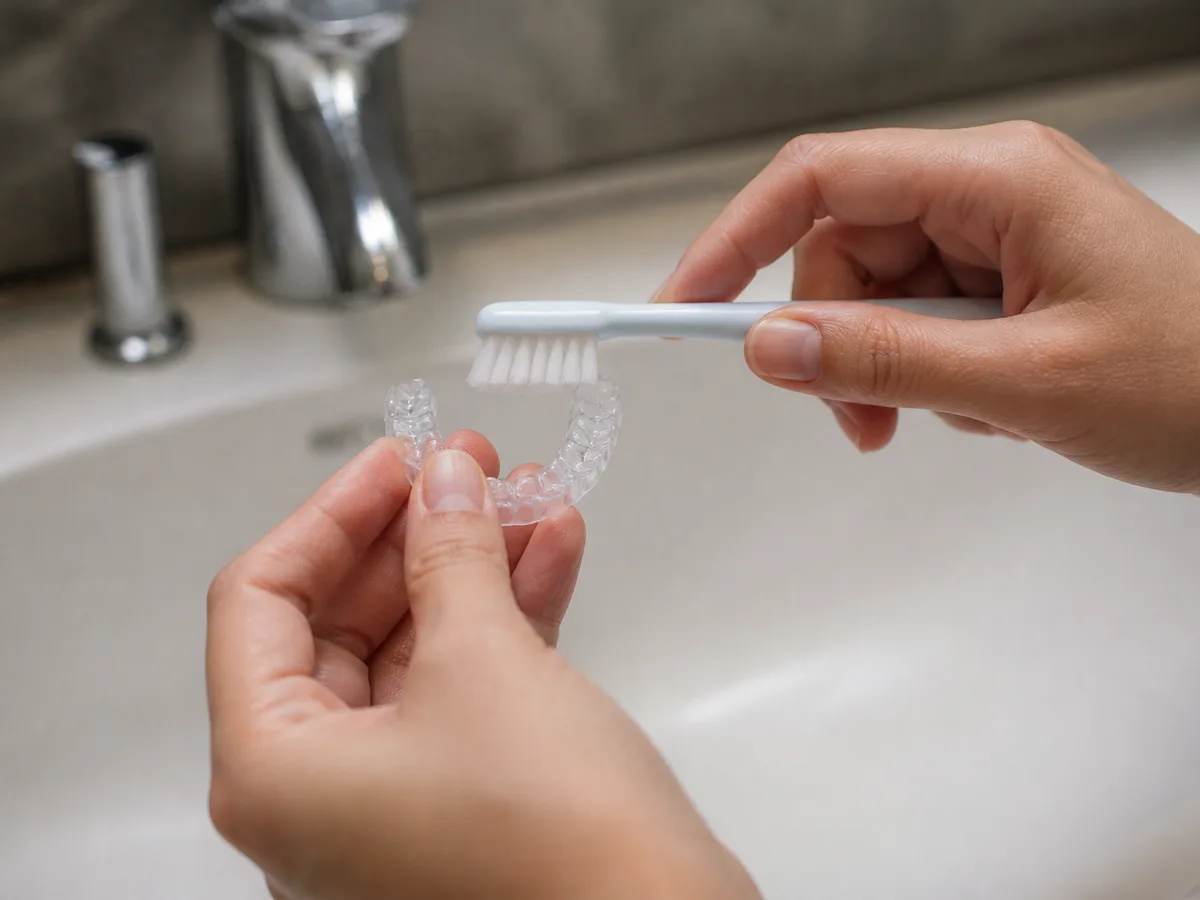 Protect fit while you clean.
Gentle beats aggressive
Hard scrubbing, whitening pastes, and denture tablets not cleared by your clinician can roughen trays so they stain faster and fit worse. Boiling or dishwashing warps plastic and can ruin a stage. If a tray smells after normal cleaning, ask whether a different soak is appropriate or whether mineral buildup needs an in-office look. Attachments on teeth need careful brushing too—plaque loves the edges where composite meets enamel.
Habits That Undermine Clean Trays
- Wrapping trays in a napkin at restaurants (loss risk plus dirty surfaces).
- Reinserting over leftover snacks “for just an hour.”
- Using scented mouthwash as a soak without approval.
- Ignoring a cracked tray that collects debris in the fracture line.
Lost-tray chaos is easier to avoid with a clean case habit—see what happens if you lose an aligner.
 Follow the team’s method.
Ask for your office’s written list
Product preferences differ by brand and clinician. Leave with a short approved list rather than a drawer of conflicting tips. For supervised aligner care that includes hygiene coaching, use Find a Dentist and ask how they want trays and attachments cleaned day to day. Bring your current products to a checkup if haze or irritation continues. Clean plastic and clean teeth are one system.
Cleaning clear aligners is mostly rinse, gentle brush, approved soaks, and tooth cleaning before reseating. Skip heat and harsh abrasives. Consistency keeps trays clear, breath better, and enamel safer under plastic.
MedlinePlus describes orthodontic care as planned tooth and jaw positioning with appliances. Hygiene is how daily life supports that plan—not a separate vanity chore.
Travel kits help: a soft brush, travel-size approved cleanser if you use one, a spare case, and floss. Hotel bathroom glasses and hot spa water are not cleaning tools. If your water is very hard, mineral film can build on trays—ask whether a clarifying soak is appropriate. Never share trays or cases. If you notice white spots on teeth during treatment, that is an enamel warning, not a tray-brand issue; tighten cleaning and call for a checkup. Clear plastic should stay clear enough that you can see clean tooth surfaces through it when it is seated.
Replace your soft tray brush when bristles fray, just as you would a toothbrush. Worn brushes scratch more and clean less—quiet details that show up as haze months into treatment.
Related articles
Keep exploring related topics from Dental Country.
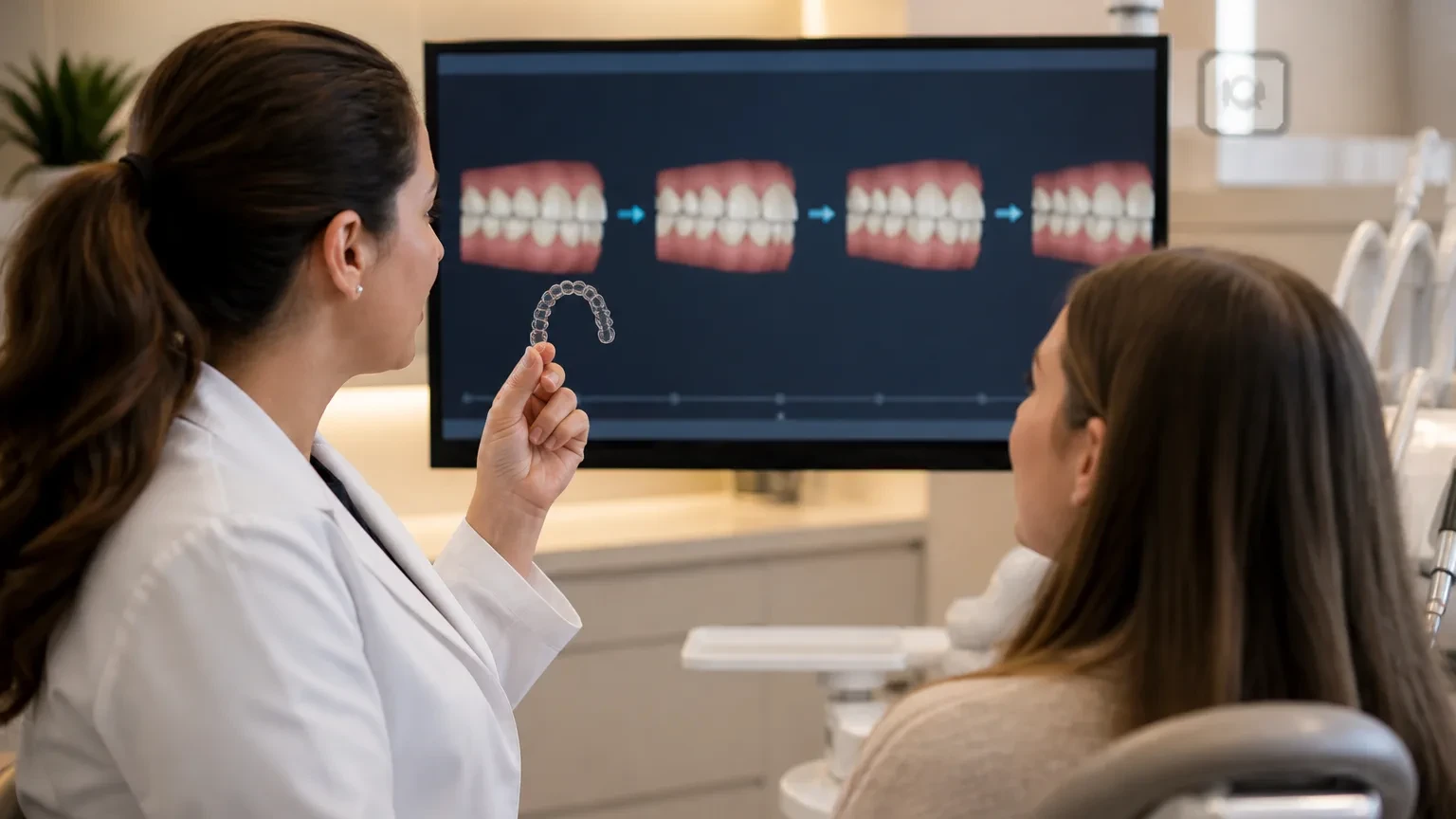
How Do Clear Aligners Work?
Clear aligners work by delivering programmed pressure through a series of custom trays you wear nearly full-time. Results depend on a sound plan, healthy gums, and honest wear—not on plastic looking “invisible.”
Read article
How Much Do Clear Aligners Cost?
Clear aligner fees usually reflect case complexity, clinical time, lab work, refinements, and retainers—not just a tray sticker price. Compare full pathways, including what happens if tracking stalls.
Read article
Are Clear Aligners Painful?
Clear aligners usually feel like firm pressure for a day or two after each new tray—not sharp ongoing pain. Persistent one-sided pain, sores that worsen, or trays that will not seat deserve a call, not toughing it out.
Read article
Can Clear Aligners Fix Crowded Teeth?
Clear aligners can fix many mild-to-moderate crowding cases when space is created thoughtfully and wear stays consistent. Severe crowding, impacted teeth, or complex bites may still need braces or a combined plan.
Read article