
How Do Clear Aligners Work?
Clear aligners move teeth with sequential trays worn most of the day. Learn the biology, attachments, wear rules, and who is a careful candidate.

Reviewed by Dr. Sean Myran, DMDDoctor of Dental Medicine, University of Pennsylvania
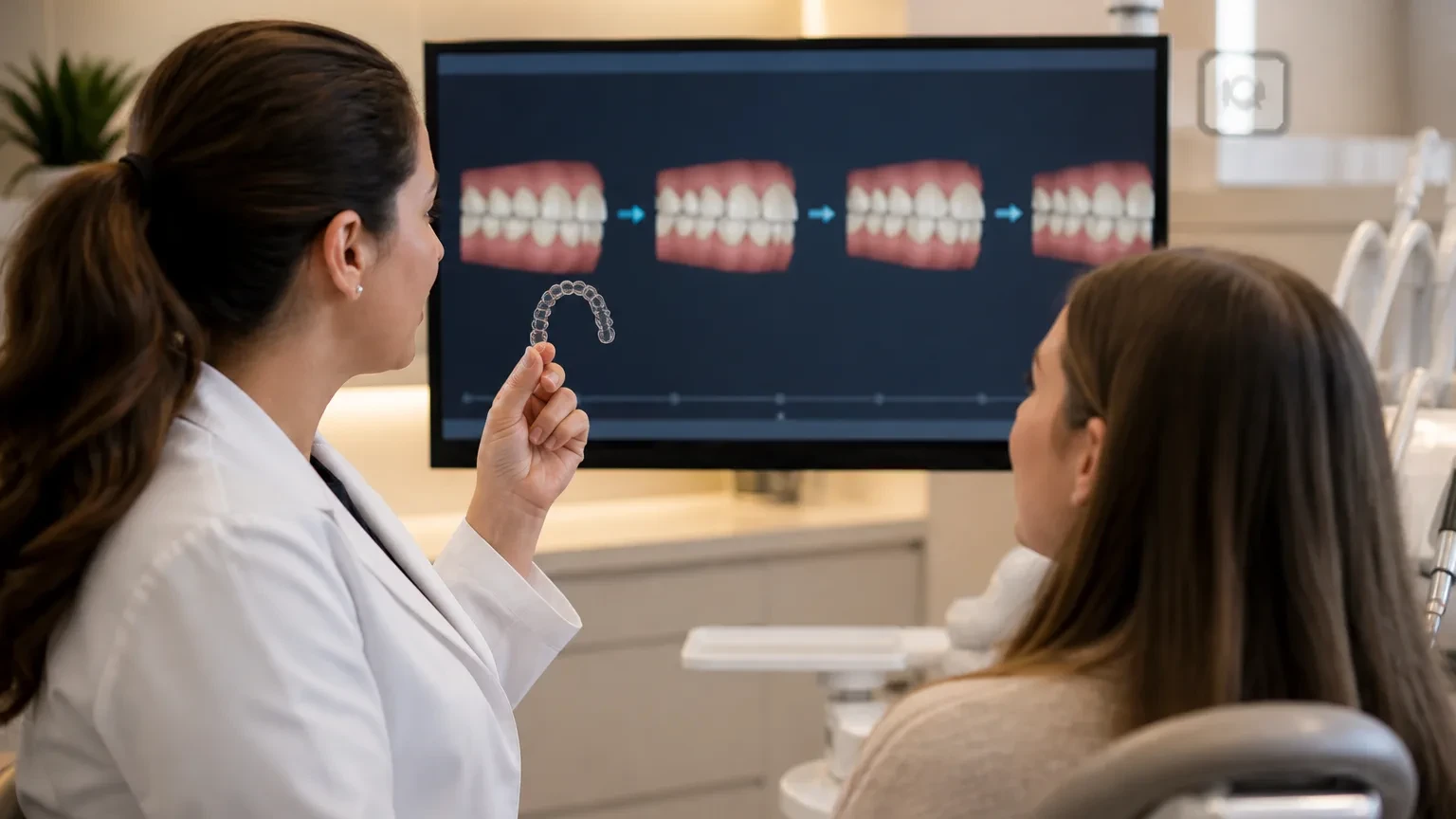
Clear aligners work by applying controlled force through a sequence of custom plastic trays. Each tray is shaped slightly ahead of your current tooth positions, so wearing it nudges teeth into the next planned step. Over weeks and months, that staged pressure guides roots through bone remodeling. The American Association of Orthodontists describes clear aligners as custom trays worn many hours a day and selected based on unique needs. Removability for meals and brushing is part of the system—not a free pass to leave trays out for long stretches.
Brand names differ, yet the biology is shared: force, time, and healthy supporting tissues. If you are weighing daily habits next, see whether you can eat with trays in and what attachments do during movement.
How The Force System Actually Moves Teeth
- Digital setup: scans or impressions become a staged plan for each tooth.
- Sequential trays: you change trays on a schedule your clinician sets.
- Attachments and elastics: tooth-colored bumps or rubber bands can add grip and bite control when the plan needs them.
- Wear hours: most plans expect roughly 20–22 hours a day unless told otherwise.
- Monitoring: checkups confirm tracking before small misses become big delays.
Think of each tray as a short chapter, not the whole novel. A tray that feels loose early may mean the tooth already reached that step—or that you are behind and the plastic is not seating. Chewies or seating tools, when recommended, help trays engage attachments. Skipping those details can make a perfect software animation fail in a real mouth.
IPR—tiny polishing between teeth—sometimes creates space so crowded teeth can align without expanding the arch too far. Extractions or temporary anchorage are less common in mild cases but remain on the table for severe crowding. Clear aligners do not invent space; they use whatever space strategy your clinician builds into the plan.
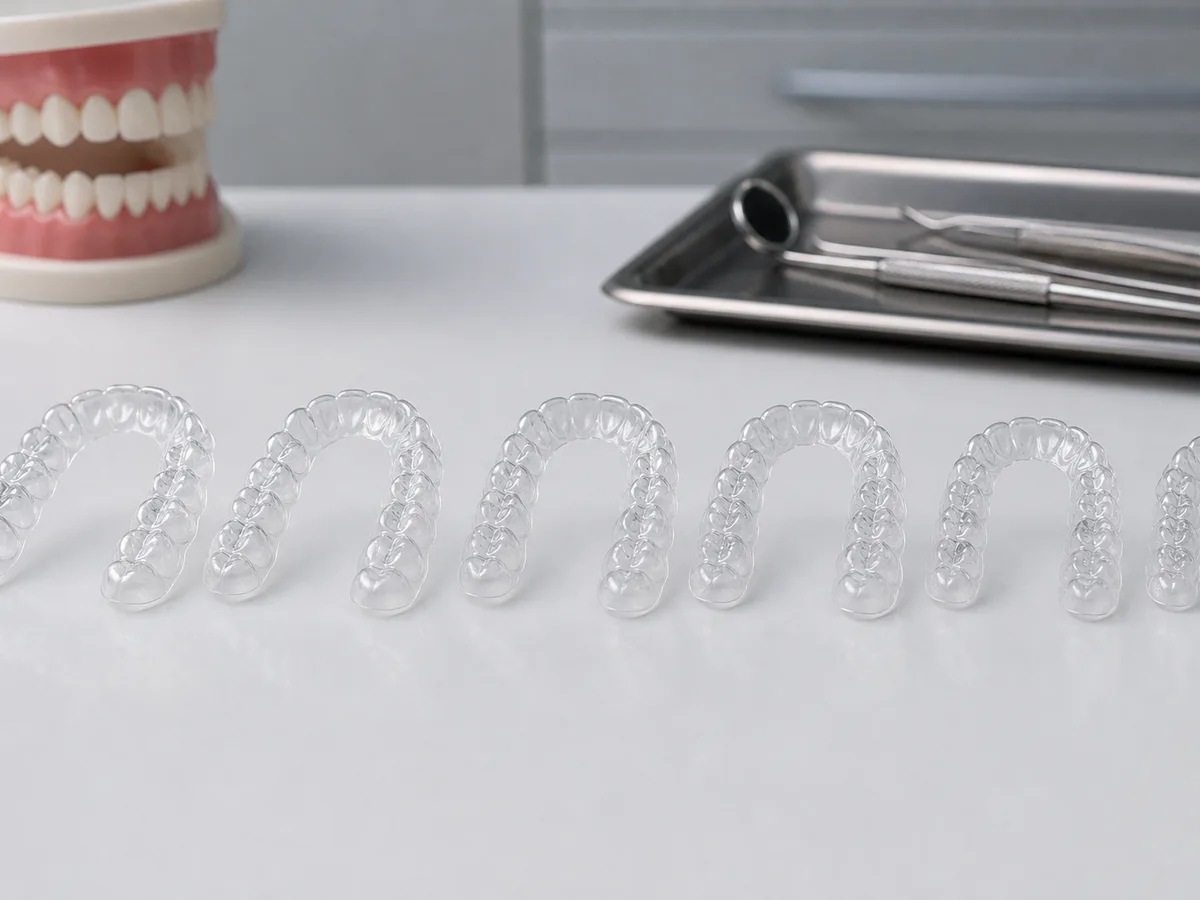 Diagnosis decides the appliance.
Candidacy notes before trays start
Aligners suit many mild-to-moderate alignment and bite goals when gum health is stable and wear will be consistent. Complex rotations, large vertical moves, or skeletal bite problems may need braces, hybrids, or specialty referral. Untreated decay, active gum disease, or short roots can pause any orthodontic force. Ask which movements in your chart are aligner-friendly and which are borderline before you pay a deposit. A brand logo does not override those limits.
What Changes Mid-Treatment
- Teeth may lag; refinements or slowed tray changes can follow.
- Attachments may be added, reshaped, or removed as goals shift.
- Hygiene under plastic becomes a daily risk if sugar sits against enamel.
- Lost trays interrupt the sequence—see what to do if you lose an aligner.
AAO consumer guidance stresses that tooth movement is biologically complex and that clear aligner therapy should follow professional evaluation. That caution applies whether your trays come from a well-known brand or a quieter office system.
 Hours worn equal progress.
Wear is the engine
Trays only move teeth while they are seated and clean. Long lunches, forgotten nights, and “just this weekend” gaps stall biology even when the software looked perfect. For supervised planning that explains attachments, hours, and backups in plain language, use Find a Dentist and ask how progress is checked in person. Bring questions about sports, speeches, and travel so the wear plan matches your real week.
Clear aligners work when a clinician-directed plan, healthy tissues, and disciplined wear line up. Treat the plastic as a delivery tool for force—not as a cosmetic filter that straightens teeth by itself. Retention after the last tray still matters; alignment without a retainer plan is unfinished care.
Speech and sports deserve a mention in the same “how it works” conversation. Many people adapt to a slight lisp within days; wind instruments and contact sports may need custom timing for tray removal and mouthguards. Ask how your office wants you to protect teeth during games so the force system is not casually interrupted. Small practical rules—case in the bag, water bottle nearby, calendar reminders for tray changes—are what turn a digital plan into tooth movement you can feel in a tighter bite and flatter contacts over time.
Related articles
Keep exploring related topics from Dental Country.

How Much Do Clear Aligners Cost?
Clear aligner fees usually reflect case complexity, clinical time, lab work, refinements, and retainers—not just a tray sticker price. Compare full pathways, including what happens if tracking stalls.
Read article
Are Clear Aligners Painful?
Clear aligners usually feel like firm pressure for a day or two after each new tray—not sharp ongoing pain. Persistent one-sided pain, sores that worsen, or trays that will not seat deserve a call, not toughing it out.
Read article
Can Clear Aligners Fix Crowded Teeth?
Clear aligners can fix many mild-to-moderate crowding cases when space is created thoughtfully and wear stays consistent. Severe crowding, impacted teeth, or complex bites may still need braces or a combined plan.
Read article
What Happens If You Lose A Clear Aligner?
If you lose a clear aligner, call your dental office promptly—do not guess for days. Many plans have you wear the prior tray, move ahead carefully, or order a replacement so teeth do not drift off track.
Read article