
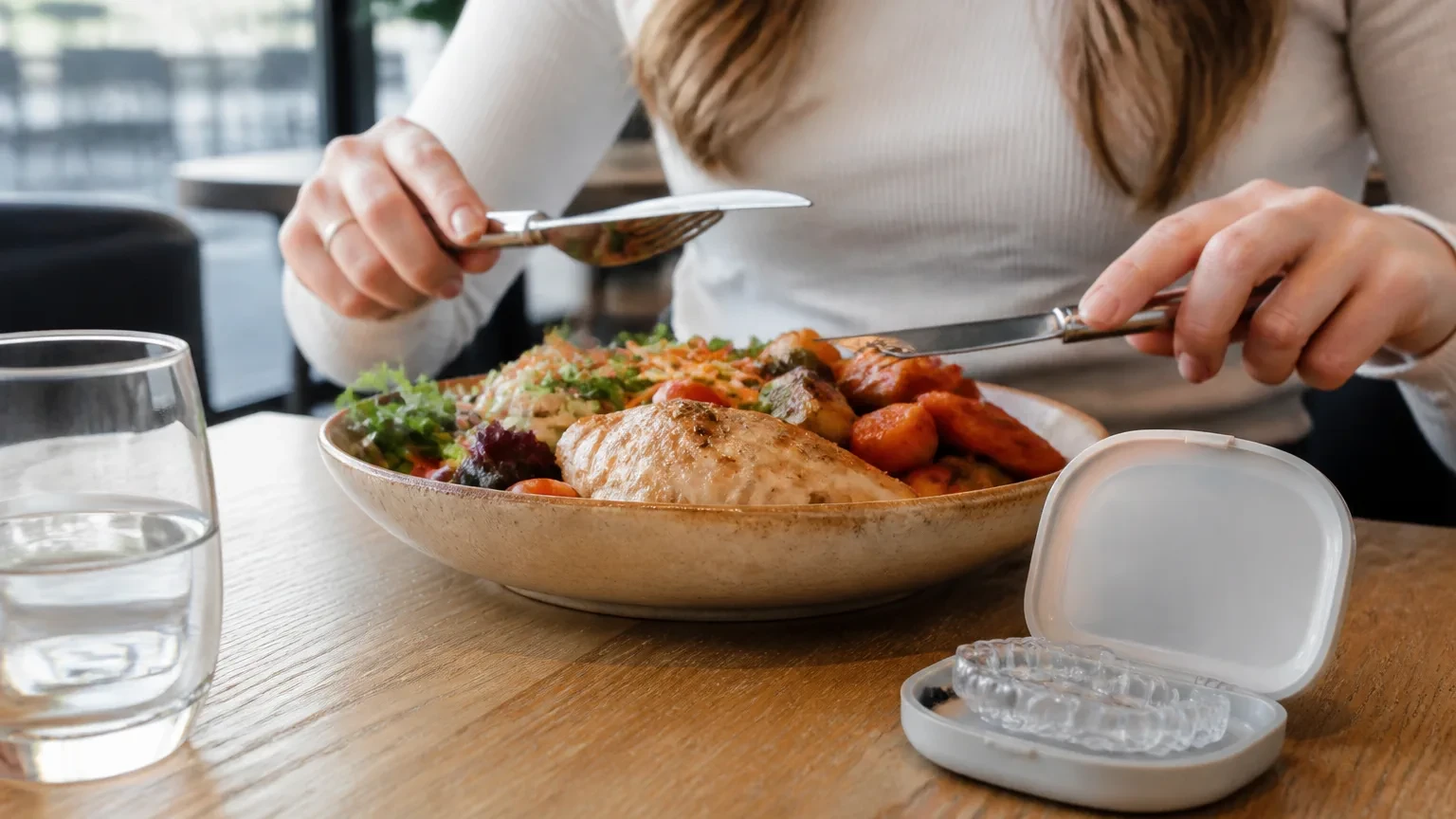
Can You Eat With Clear Aligners In?
Remove clear aligners before eating and before most drinks. Learn why chewing in trays risks cracks, stains, and cavities under the plastic.

Reviewed by Dr. Sean Myran, DMDDoctor of Dental Medicine, University of Pennsylvania
No—clear aligners are not chewing gear. Remove them before meals and snacks, and before coffee, tea, soda, wine, or sports drinks. Plain water is the usual exception while trays stay in. Food can crack or warp plastic; pigments can stain it; sugars and acids trapped under trays raise cavity and enamel-risk. The AAO emphasizes that clear aligner therapy should be guided by a qualified professional after examination; day-to-day food rules are part of making that therapy succeed.
Cleaning after meals matters as much as removal—see how to clean clear aligners—and pressure after tray changes is covered in whether clear aligners hurt.
Myths Vs Facts
- Myth: Soft foods are fine with trays in.
Fact: Even soft meals smear sugars and oils against enamel under plastic. - Myth: A quick sip of coffee will not matter.
Fact: Repeated sips bathe teeth in acid and stain while trays hold liquid close. - Myth: Chewing gum seats trays better.
Fact: Gum can stick, pull at attachments, and is rarely an approved seating tool—ask before you try. - Myth: Restaurant napkins are safe temporary storage.
Fact: Napkins get trashed; use a case every time.
Another myth is that “dentist-approved aligners” somehow tolerate chewing. Supervision improves diagnosis and monitoring; it does not make plastic bite-proof. If a tray cracks on a carrot, you still need a replacement path.
Red flags include influencers eating with trays in for content, or sales scripts that shrug at staining. Healthy skepticism is appropriate when lifestyle demos ignore enamel. Your teeth are not a prop.
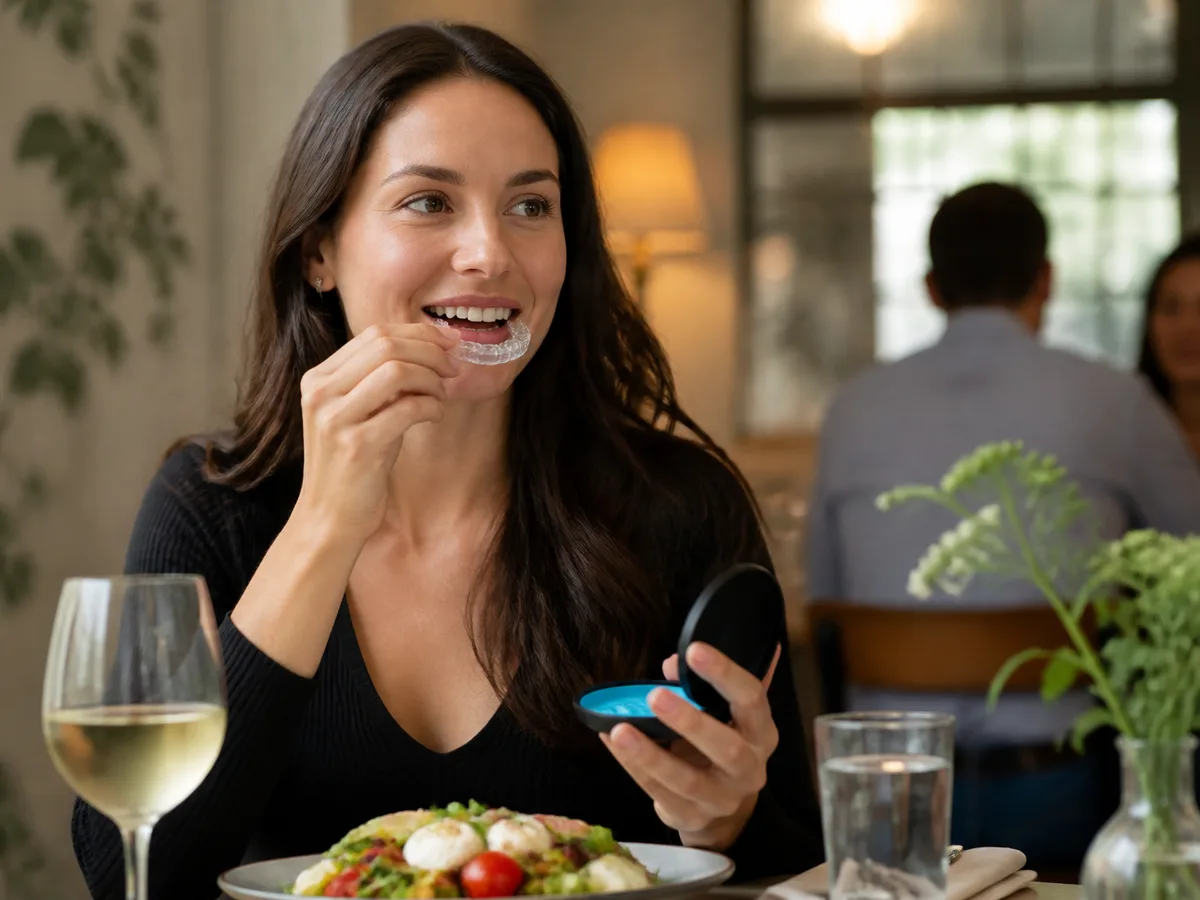 Out for food, in for hours.
Case discipline protects the plan
Build a remove–case–eat–clean–reseating loop until it is automatic. Long business lunches are the danger zone: trays cool in a pocket, hours vanish, and tracking slips. Set a phone reminder if needed. Attachments can feel odd when reseating after a big meal; chewies help only if your clinician recommended them. Lost-tray panic often starts at restaurants—see what to do if a tray disappears.
When A Drink Exception Might Apply
- Plain water with trays in, unless your clinician says otherwise.
- Special medical needs—ask for a written exception rather than guessing.
- Never assume “diet” or “sugar-free” drinks are safe under plastic; acidity still matters.
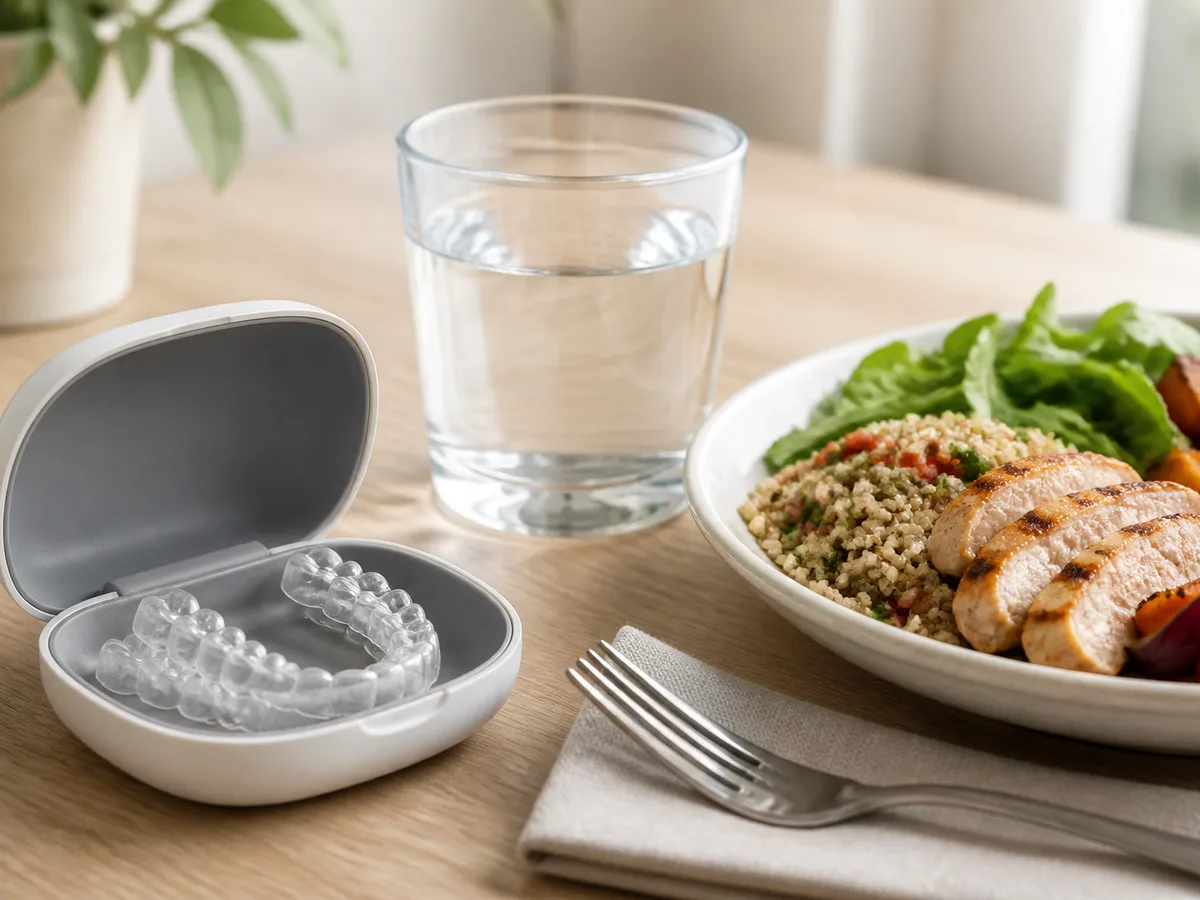 Rules protect enamel and trays.
Ask for your office’s food rules
Some clinicians allow brief exceptions with strict rinse-and-clean steps; others keep a hard water-only line. Get the rule in plain language for your brand and attachments. For supervised aligner practices that coach real-life meal routines, use Find a Dentist and mention dining and coffee habits up front. Wear-time honesty after meals predicts results more than any snack hack online.
Eating with clear aligners in risks cracked plastic, stains, and cavities. Remove trays, use a case, clean, then reseat. The inconvenience is the system working as designed.
MedlinePlus explains that orthodontic treatment uses appliances to improve tooth and jaw position. Food discipline is how removable appliances keep delivering that plan.
Snacking culture is the hidden enemy of aligner hours. Five “little” remove-and-replace cycles can still work if cleaning is solid; grazing all afternoon usually means trays spend the day in a case. Plan meals when you can, keep water handy, and treat dessert as a tray-out event with a brush afterward. Spicy oils and strongly pigmented sauces stain faster than patients expect. If you grind ice or bite pens, trays will not survive that hobby. Eating rules sound strict because enamel under plastic has fewer second chances than enamel in open air.
After spicy or acidic meals, waiting a short time before brushing can be kinder to softened enamel—ask your clinician for their preferred sequence so cleaning stays thorough without being harsh.
Keep a spare case at work so the “I will wrap them in foil” moment never happens. Small logistics prevent both lost trays and accidental chewing with plastic still in.
Related articles
Keep exploring related topics from Dental Country.
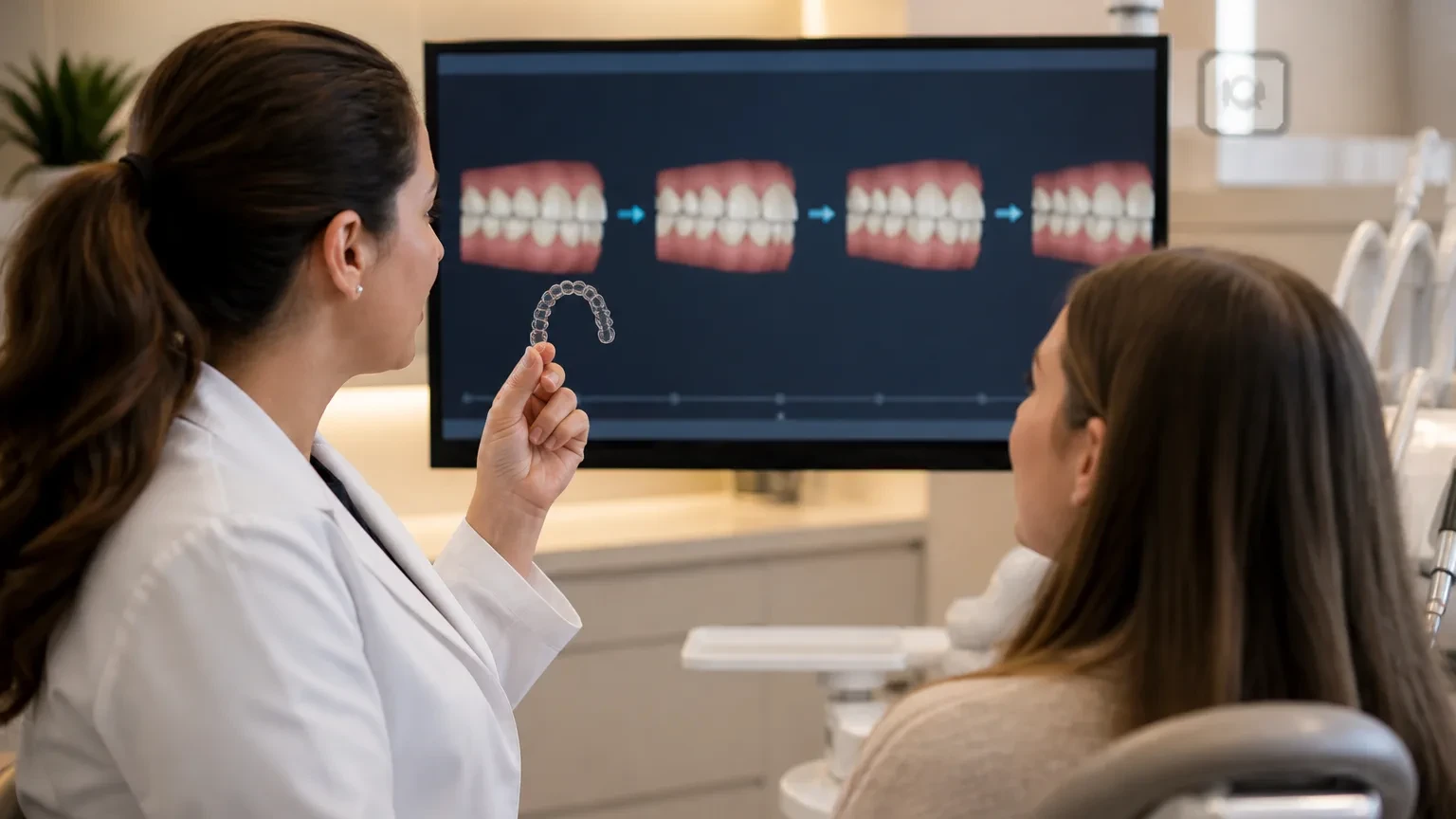
How Do Clear Aligners Work?
Clear aligners work by delivering programmed pressure through a series of custom trays you wear nearly full-time. Results depend on a sound plan, healthy gums, and honest wear—not on plastic looking “invisible.”
Read article
How Much Do Clear Aligners Cost?
Clear aligner fees usually reflect case complexity, clinical time, lab work, refinements, and retainers—not just a tray sticker price. Compare full pathways, including what happens if tracking stalls.
Read article
Are Clear Aligners Painful?
Clear aligners usually feel like firm pressure for a day or two after each new tray—not sharp ongoing pain. Persistent one-sided pain, sores that worsen, or trays that will not seat deserve a call, not toughing it out.
Read article
Can Clear Aligners Fix Crowded Teeth?
Clear aligners can fix many mild-to-moderate crowding cases when space is created thoughtfully and wear stays consistent. Severe crowding, impacted teeth, or complex bites may still need braces or a combined plan.
Read article