
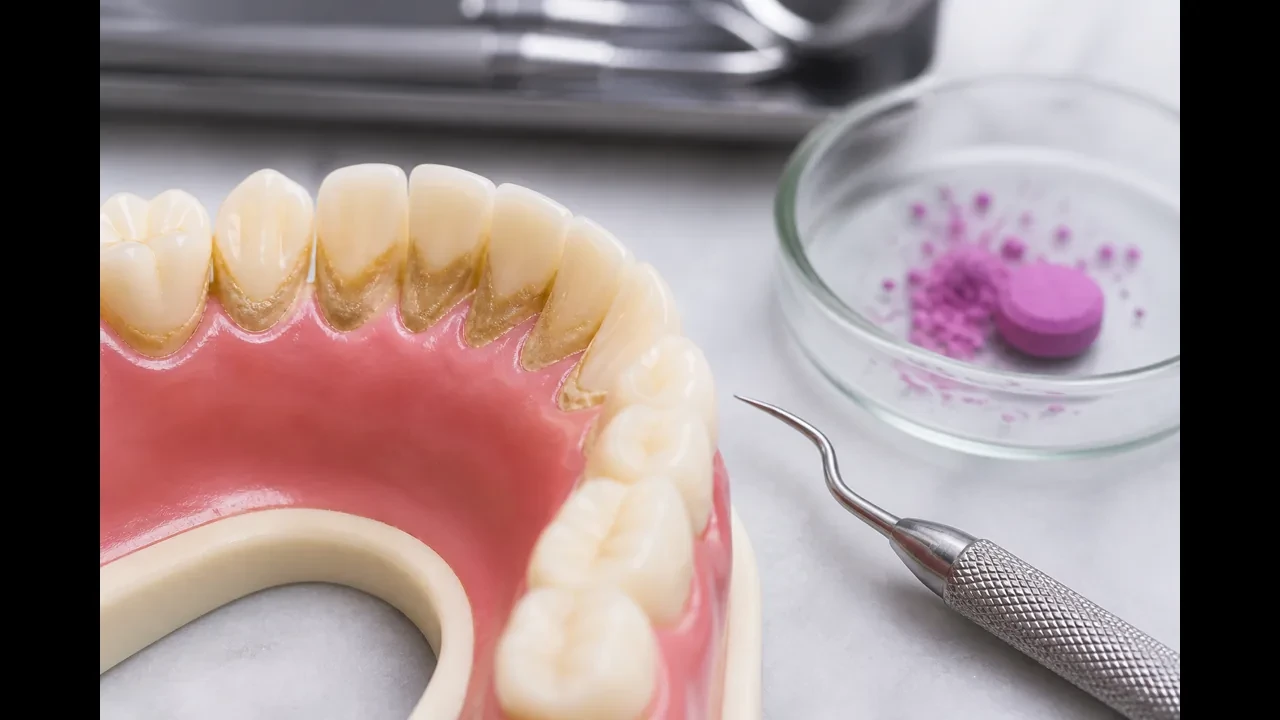
What Is Dental Calculus?
Dental calculus is hardened plaque that brushing alone cannot remove. Learn how tartar forms, why it irritates gums, and how professional cleaning clears it.

Reviewed by Dr. Sean Myran, DMDDoctor of Dental Medicine, University of Pennsylvania
Dental calculus—commonly called tartar—is plaque that has hardened after minerals from saliva soak into the sticky bacterial film on teeth. Once soft plaque mineralizes, a toothbrush and floss cannot dissolve it; professional scaling is required. MouthHealthy explains that plaque can harden into tartar if not removed, and tartar makes plaque harder to clear. Calculus itself is a rough landing pad that invites more plaque and irritates nearby gums.
The formation story usually starts after a meal. Bacteria feed on sugars and starches, building a colorless film along the gumline and between teeth. If that film stays, calcium and phosphate from saliva crystallize inside it—often within days in heavy formers. Lower front teeth and upper molars near saliva ducts are classic early sites. Crowded contacts and skipped flossing speed the plot. By the time you feel a chalky ridge with your tongue, the soft stage has already passed.
From Soft Film To Hard Deposit
- Pellicle and plaque: a protein film coats enamel; bacteria colonize it.
- Mineral uptake: saliva minerals lock the matrix into calculus.
- Surface roughness: more plaque sticks; stain from coffee or tobacco often follows.
- Gum reaction: margins redden and bleed more easily when brushed.
- Subgingival spread: deposits creep under the gum, feeding the path toward deep cleaning needs.
Color ranges from pale yellow to brown or black depending on stain and location. Subgingival calculus can look darker and is only fully visible once a clinician retracts tissue or scales. Home “tartar control” toothpastes can slow new mineralization for some people, but they do not chisel off established ledges. That is central to why brushing is not a full substitute for cleanings.
Genetics, saliva chemistry, and crowding influence how fast the story runs. Two people with similar brushing habits can leave a cleaning with very different amounts of new tartar three months later. Mouth breathers and those with reduced saliva often tip toward faster buildup because the film dries and sticks. Smoking stains calculus so it shows earlier, which can be a useful visual cue even though stain itself is not the same as disease.
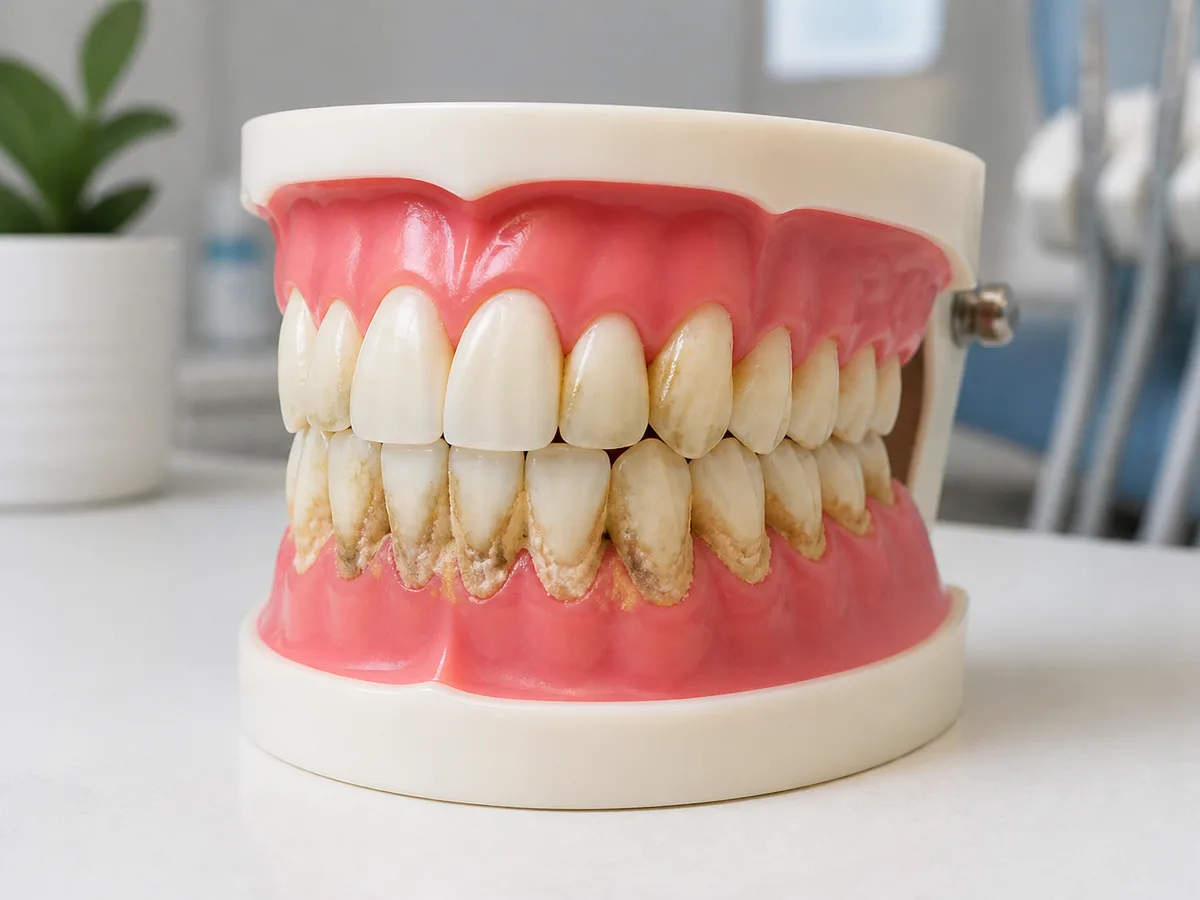 Smooth roots start after scaling.
Hard deposits need clinical tools
Scalers and ultrasonic tips vibrate or hand-scrape calculus off enamel and roots without “drilling” the tooth the way a cavity filling does. You may hear scraping sounds and feel pressure. If deposits sit under inflamed tissue, numbing may be offered. Afterward, teeth can feel smoother and temporarily sensitive as clean surfaces meet air and cold water. Ask for a mirror tour of before-and-after roughness so the formation story becomes tangible rather than abstract.
What You Can Influence At Home
- Disrupt plaque daily before it mineralizes—especially overnight.
- Clean between teeth where calculus loves to nucleate.
- Stay consistent after cleanings so the clock restarts on soft film only.
- Mention rapid buildup so cleaning frequency can shorten.
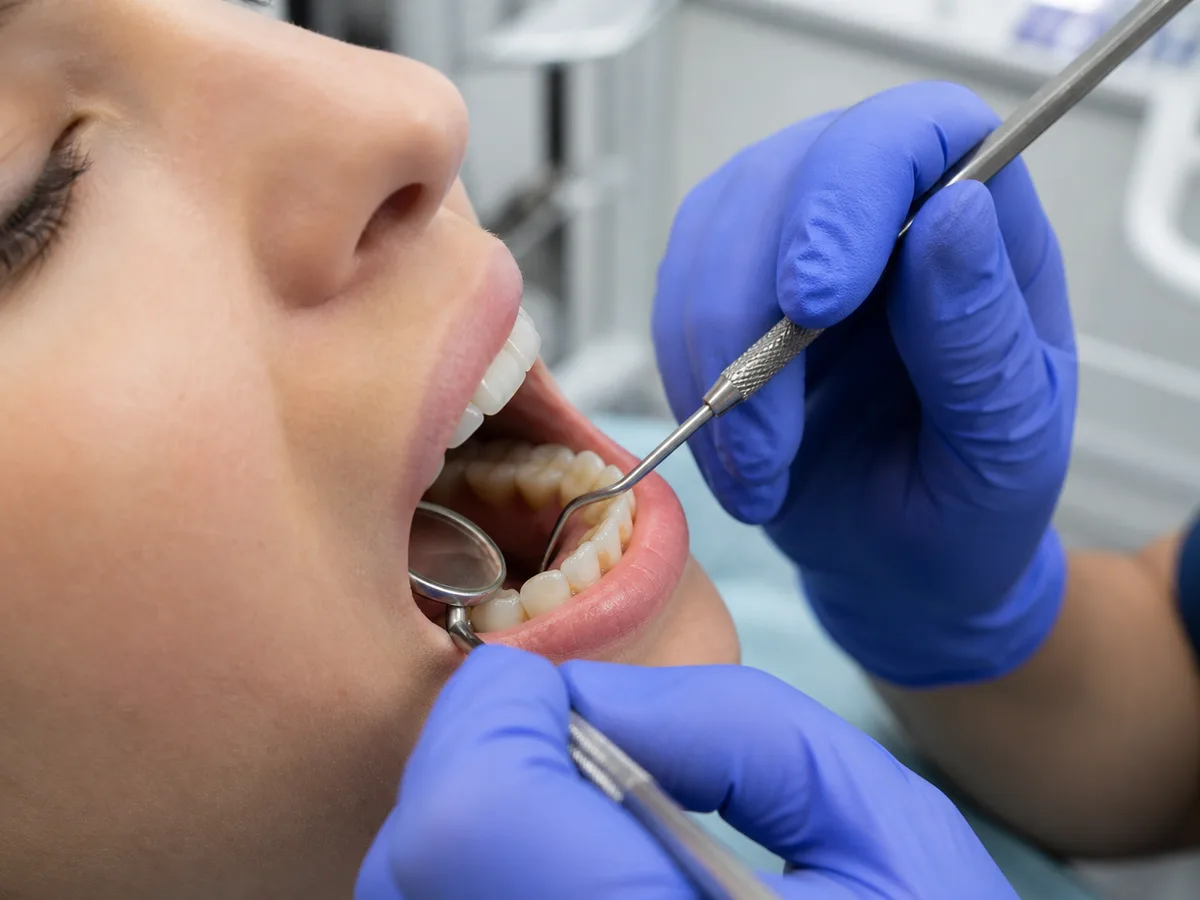 Rough means mineralized—call sooner.
Your tongue is an early warning sensor
If a familiar rough patch returns weeks after a cleaning, do not scrape it with metal tools at home—you can gouge enamel or injure gums. Book an earlier hygiene visit instead. For help finding preventive care that includes thorough scaling, use Find a Dentist and ask whether your last films and gum chart suggest above-gum cleaning only or deeper therapy. Mention how quickly roughness returns so recall timing can tighten.
After scaling, your tongue may notice valleys and grooves you forgot existed. That smoother landscape is easier to keep clean for a while—use the fresh start to rebuild flossing around the sites that always collect first. If bleeding was common before, give daily cleaning a consistent two-week trial before deciding “floss makes it worse”; inflamed gums often quiet once the calculus irritant is gone and plaque stays thin.
Dental calculus is the hardened chapter of the plaque story. Soft film is yours to disrupt each day; hard tartar is the office’s to remove. Understanding that handoff keeps expectations honest and gums calmer between visits.
Related articles
Keep exploring related topics from Dental Country.
How Often Should You Get A Dental Cleaning?
Cleaning frequency follows risk: stable gums and low decay may fit a six-month rhythm, while bleeding, dry mouth, or rapid tartar often need closer recalls.
Read article
Are Dental X-Rays Safe?
Dental radiographs are low-dose tools used when the benefit of seeing hidden decay or bone loss outweighs the small radiation exposure of modern imaging.
Read article
What Is A Deep Cleaning At The Dentist?
Deep cleaning reaches plaque and calculus under inflamed gums and along root surfaces, aiming to calm periodontal pockets that a polish alone cannot treat.
Read article
Do You Need Fluoride Treatments As An Adult?
Adult fluoride is about risk, not age: exposed roots, dry mouth, orthodontic scars, and recurring decay are common reasons in-office treatments still help.
Read article