

What Are TMJ Disorder Symptoms?
TMJ disorder symptoms can include jaw pain, clicking, headaches, locking, and ear-area ache. Learn which signs matter and when to seek dental care.

Reviewed by Dr. Sean Myran, DMDDoctor of Dental Medicine, University of Pennsylvania
TMJ disorder symptoms often show up as pain or tenderness in the jaw joint or chewing muscles, stiffness, limited opening, locking, headaches, and aching near the ear. Some people also notice facial fatigue after meals, a bite that suddenly feels “off,” or neck tightness on the same side as the sore joint. NIDCR lists pain in the chewing muscles or jaw joint as the most common symptom of temporomandibular disorders. Clicking or popping without pain is common and often needs no treatment; painful sounds plus limited motion deserve more attention.
Symptoms can come from the joint itself, the muscles that move the jaw, or both. That is why two people with “TMJ trouble” can feel very different—one mostly sore in the cheek muscles after clenching, another locked open after a wide yawn. Sorting the pattern helps you decide whether short-term home care is reasonable or whether you should book sooner.
Symptom Checklist Worth Noting
- Jaw joint or muscle pain at rest, with chewing, or when you wake up.
- Stiffness or limited opening that makes a sandwich or dental visit hard.
- Painful clicking, popping, or grating when you open, close, or chew.
- Locking open or closed, even briefly.
- Headaches or facial ache that track with jaw use or stress days.
- Ear-area discomfort without a clear ear infection—related to whether TMJ can cause ear pain.
- A sudden change in how upper and lower teeth meet.
Mayo Clinic describes jaw pain, ear-area aching, chewing difficulty, facial pain, and joint locking among TMJ disorder symptoms. Toothache, sinus pressure, and neck problems can mimic some of these signs, so a checklist is a starting map—not a self-diagnosis.
Keep a short symptom diary for a week: when pain spikes, what you ate, whether you clench at screens, and whether mornings are worse. Patterns help a dentist separate muscle overload from joint irritation and from dental sources that need different care. Note if stress-related jaw tension lines up with deadlines or poor sleep.
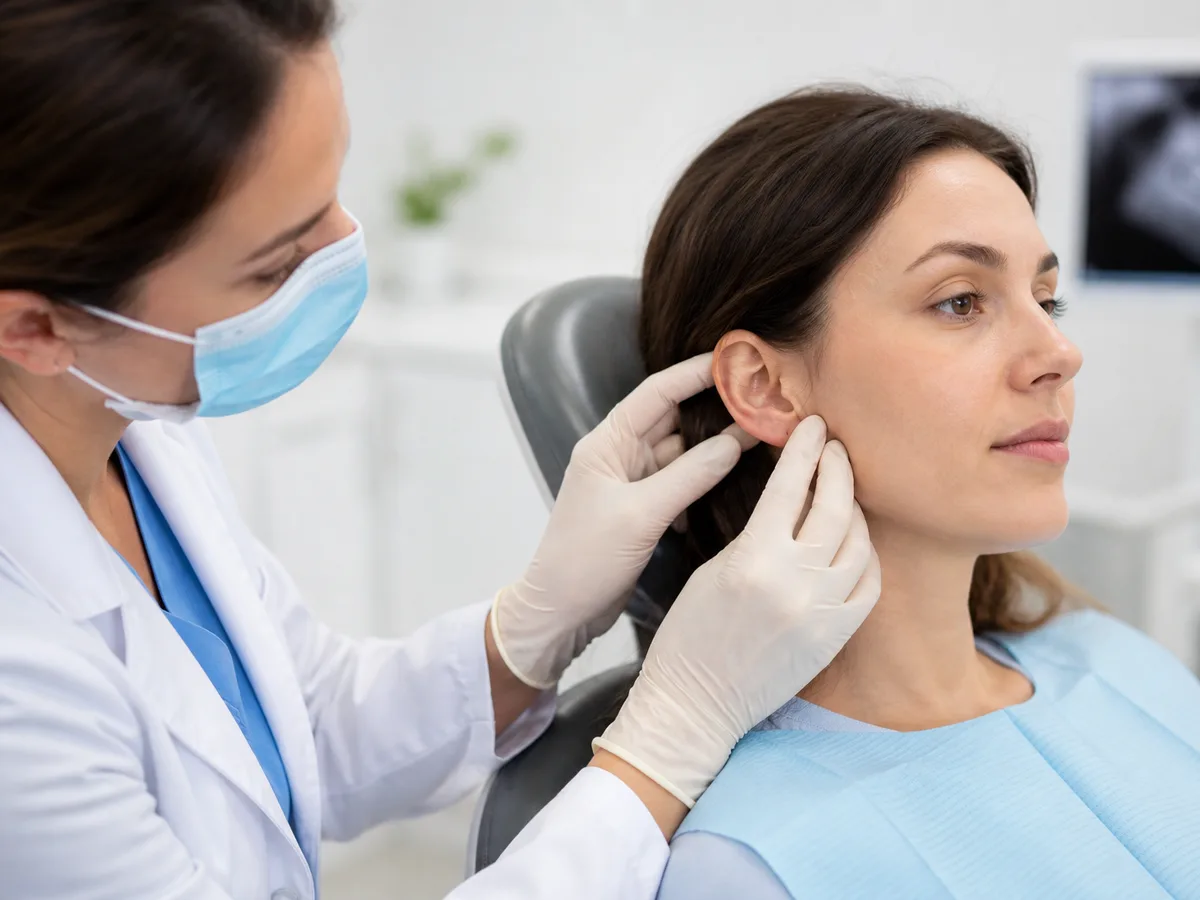 Gentle observation beats forceful testing.
Feel the joint, then notice the muscles
Place fingertips gently just in front of each ear and open slowly. A painless click can be a disc sliding; tenderness in the cheek or temple often points more to muscle strain. Avoid forcing a wide stretch to “test” yourself—that can irritate an already sore system. If one side opens farther, or you deviate toward one side, bring that observation to your visit. Pair the self-check with rest habits rather than aggressive stretching unless a clinician coaches you.
When To Seek Care
- Pain lasts more than a couple of weeks or keeps interrupting sleep and meals.
- Your jaw locks, or opening shrinks enough that eating feels unsafe.
- Swelling, fever, trauma, or sudden bite change appears.
- Ear pain, dizziness, or hearing changes need medical ruling-out alongside a dental exam.
- Over-the-counter pain relief and soft foods are not calming a flare.
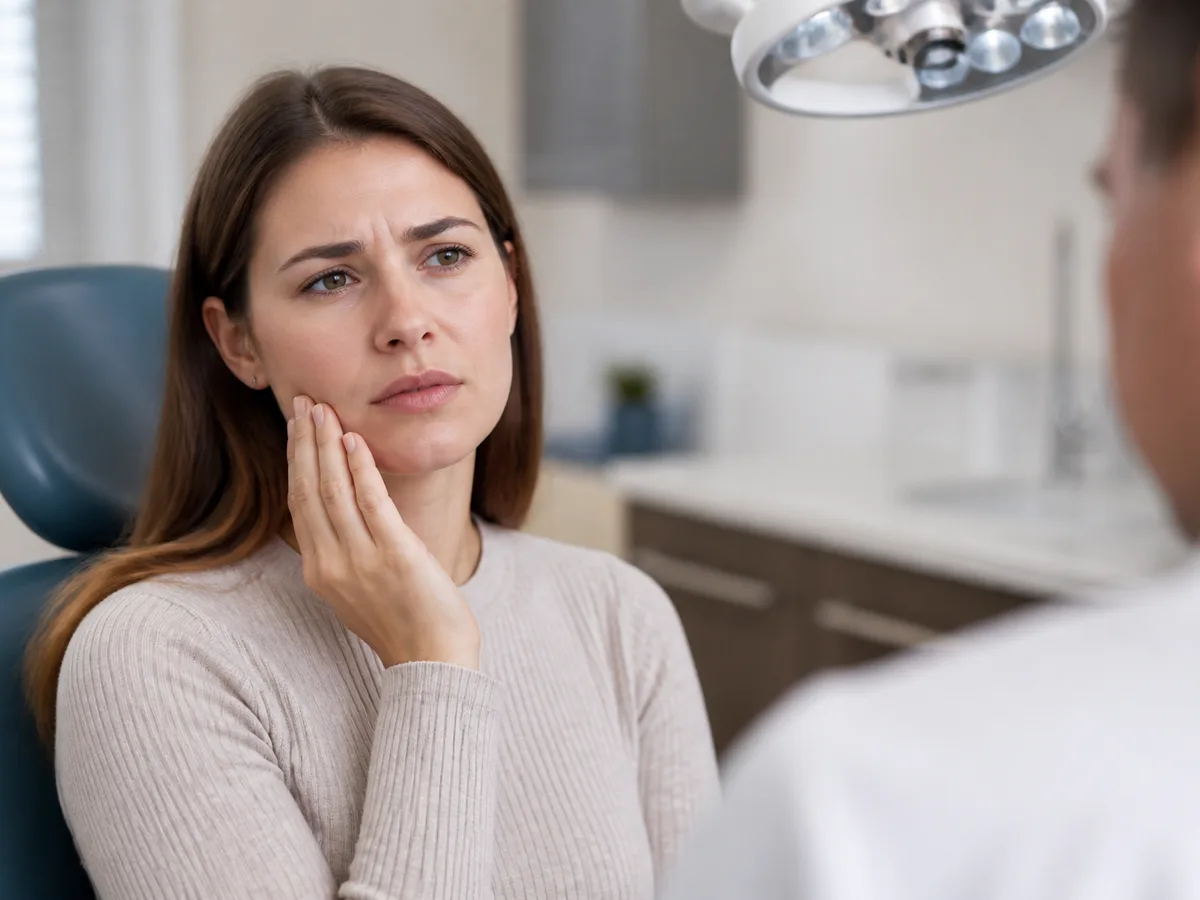 Clear history shortens the path to relief.
History plus exam beats guessing
Expect questions about clenching, recent dental work, injury, stress, and sleep, plus a look at teeth wear, muscle tenderness, and how the joints move. Imaging is not automatic for every mild flare; it is considered when the story or exam suggests a structural concern. For a clinician who will sort symptoms without rushing to irreversible bite changes, use Find a Dentist and mention locking, morning pain, or ear-area ache when you schedule. Bring your symptom notes so the visit stays focused.
TMJ disorder symptoms are varied, but pain, limited function, and painful joint noises are the usual reasons to get checked. Use the checklist to organize what you feel, then let an exam decide whether rest, an appliance, or a broader plan fits—especially if you are unsure whether a mild flare will settle with time or needs a tighter follow-up schedule.
Share enough detail that your dentist can separate a weekend of chewing fatigue from a progressive joint problem. Mention prior injuries, arthritis, new dental work, and whether mornings are consistently the worst hour of the day. Those specifics shape whether imaging, an appliance, or simple habit coaching is the proportional next step—and they keep you from bouncing between unrelated quick fixes.
Related articles
Keep exploring related topics from Dental Country.
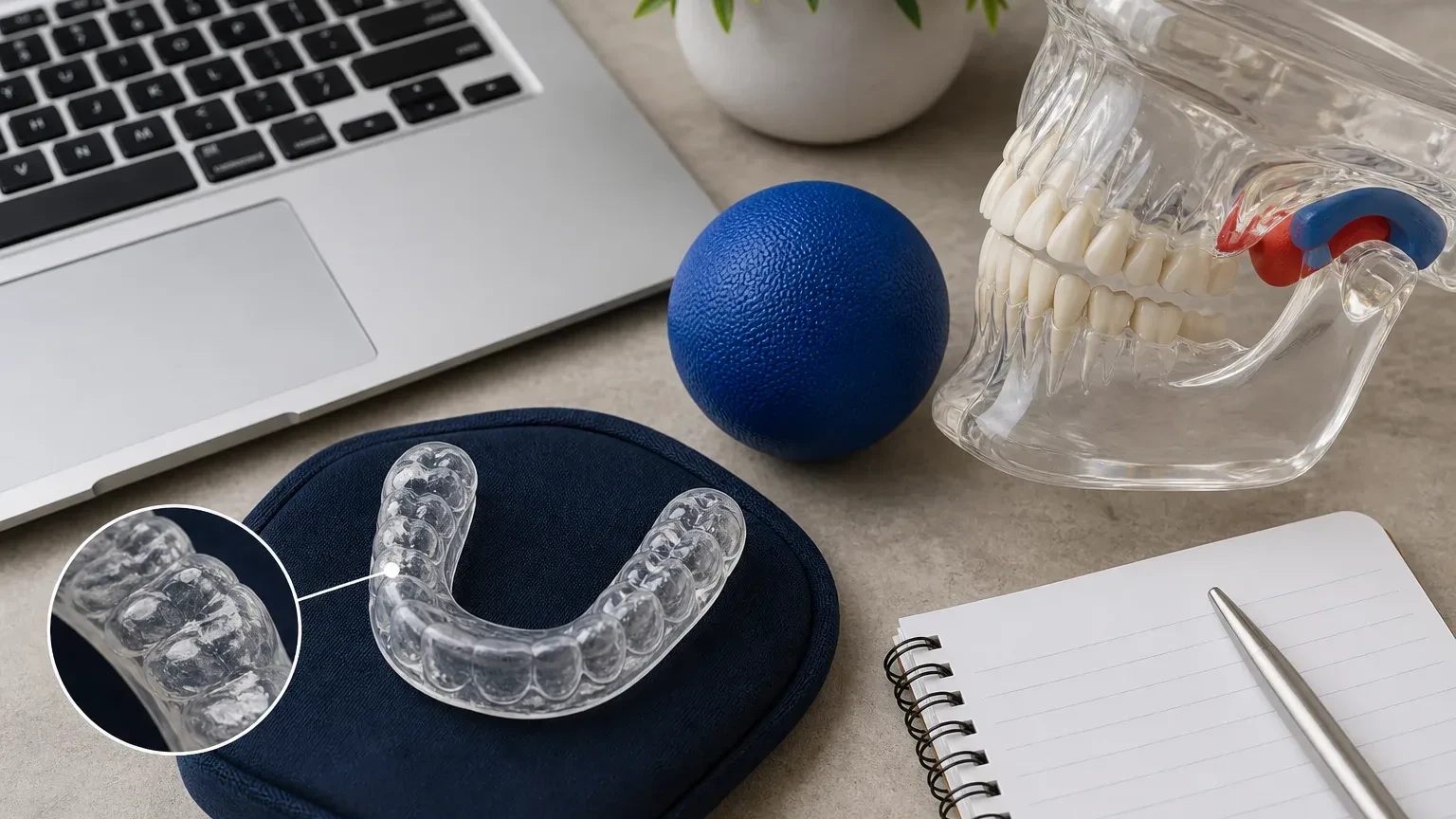
What Causes TMJ Pain?
TMJ pain usually comes from overloaded chewing muscles, irritation inside the jaw joint, or both—often layered with clenching, strain, arthritis, or stress rather than one single villain.
Read article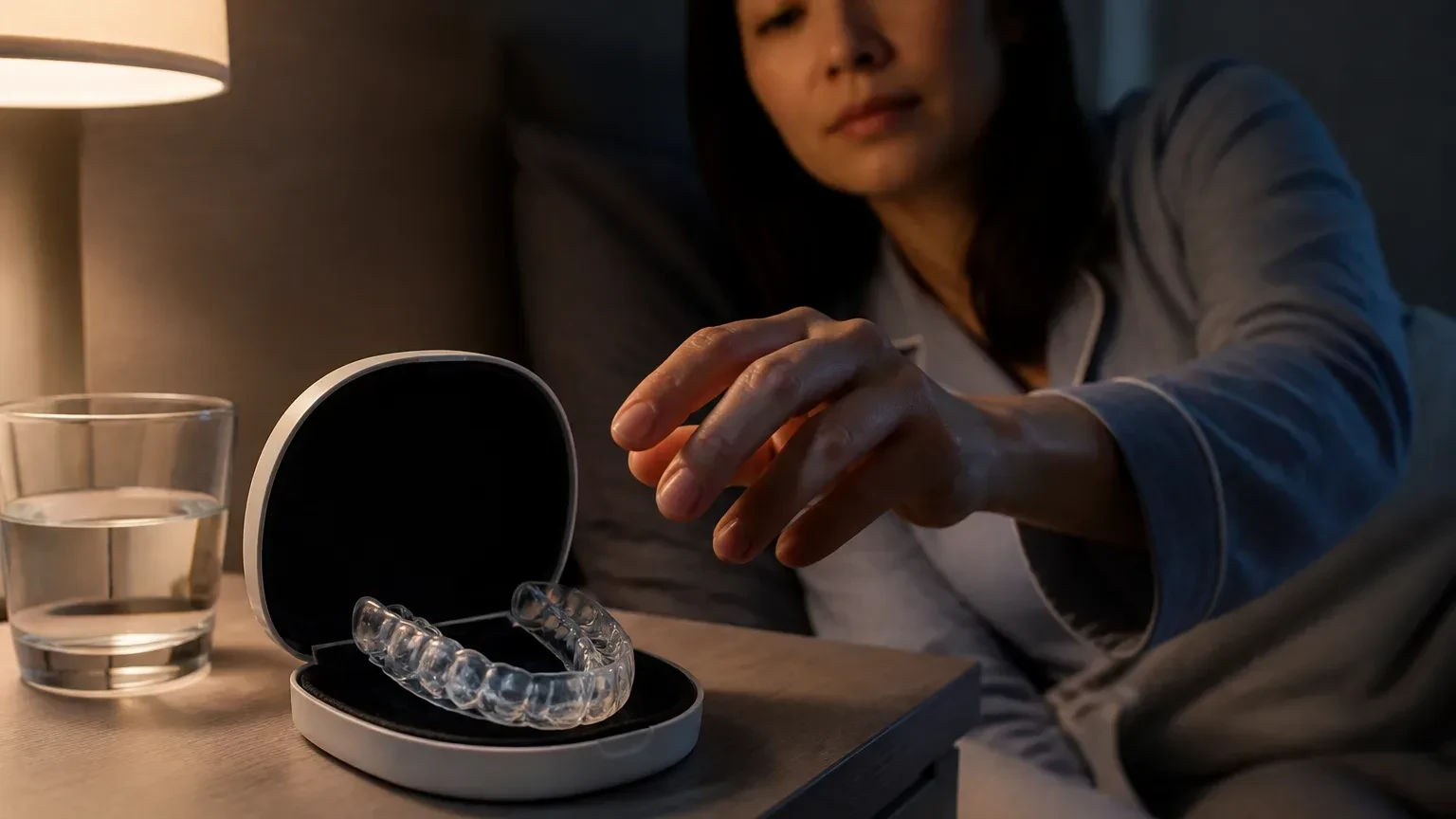
Does A Night Guard Help TMJ?
A well-fitted night guard can reduce tooth wear and ease some clenching-related TMJ muscle pain, yet it will not fix every joint problem and poorly fitted guards can worsen symptoms.
Read article
Can Stress Cause Jaw Pain?
Yes—stress often shows up in the jaw as clenching, grinding, and muscle guarding that leave the face sore, especially through busy weeks and restless nights.
Read article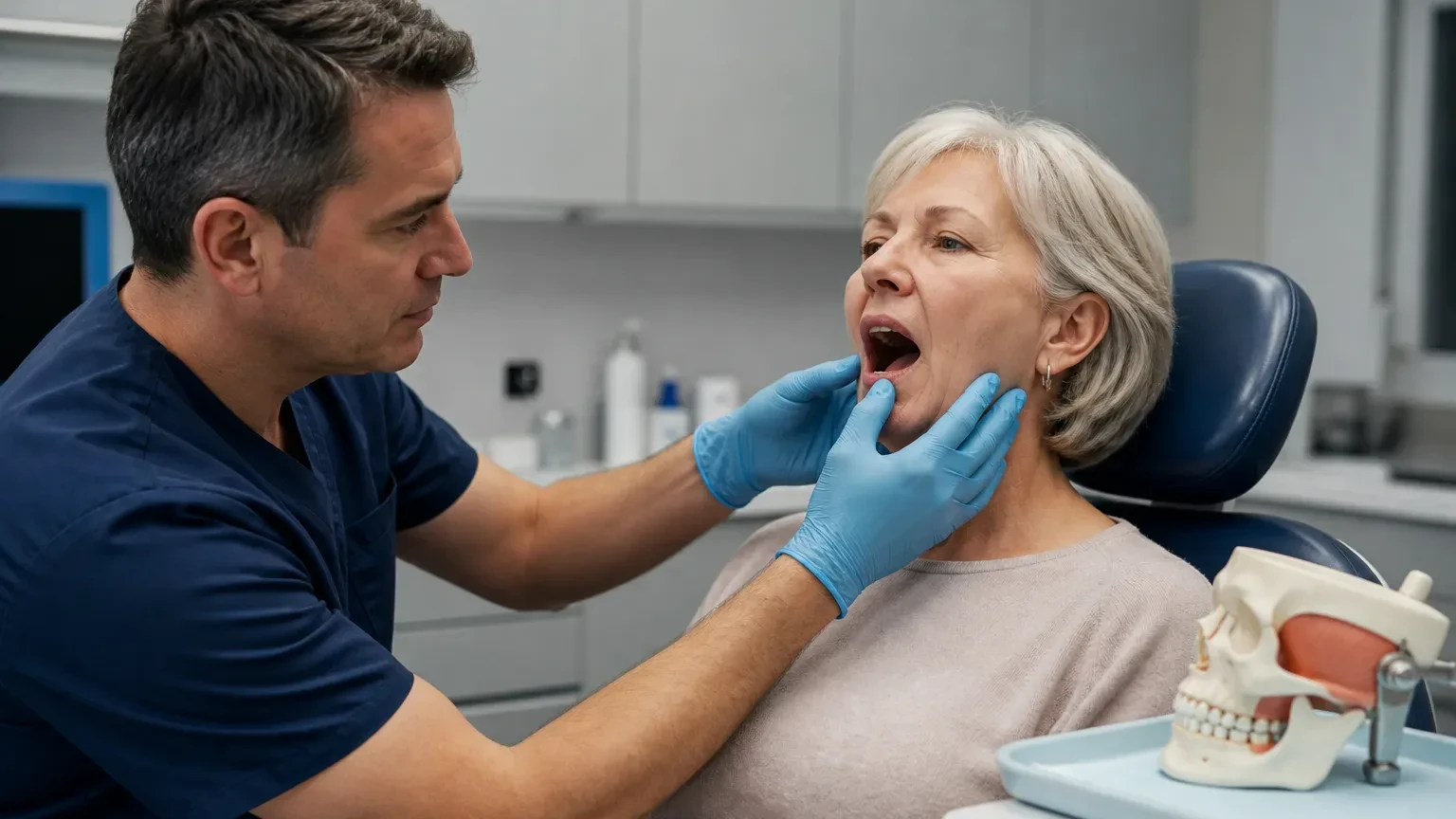
When Should You See A Dentist For Jaw Clicking?
See a dentist for jaw clicking when it comes with pain, locking, limited opening, swelling, or a changing bite—while painless occasional clicks are often monitored.
Read article