
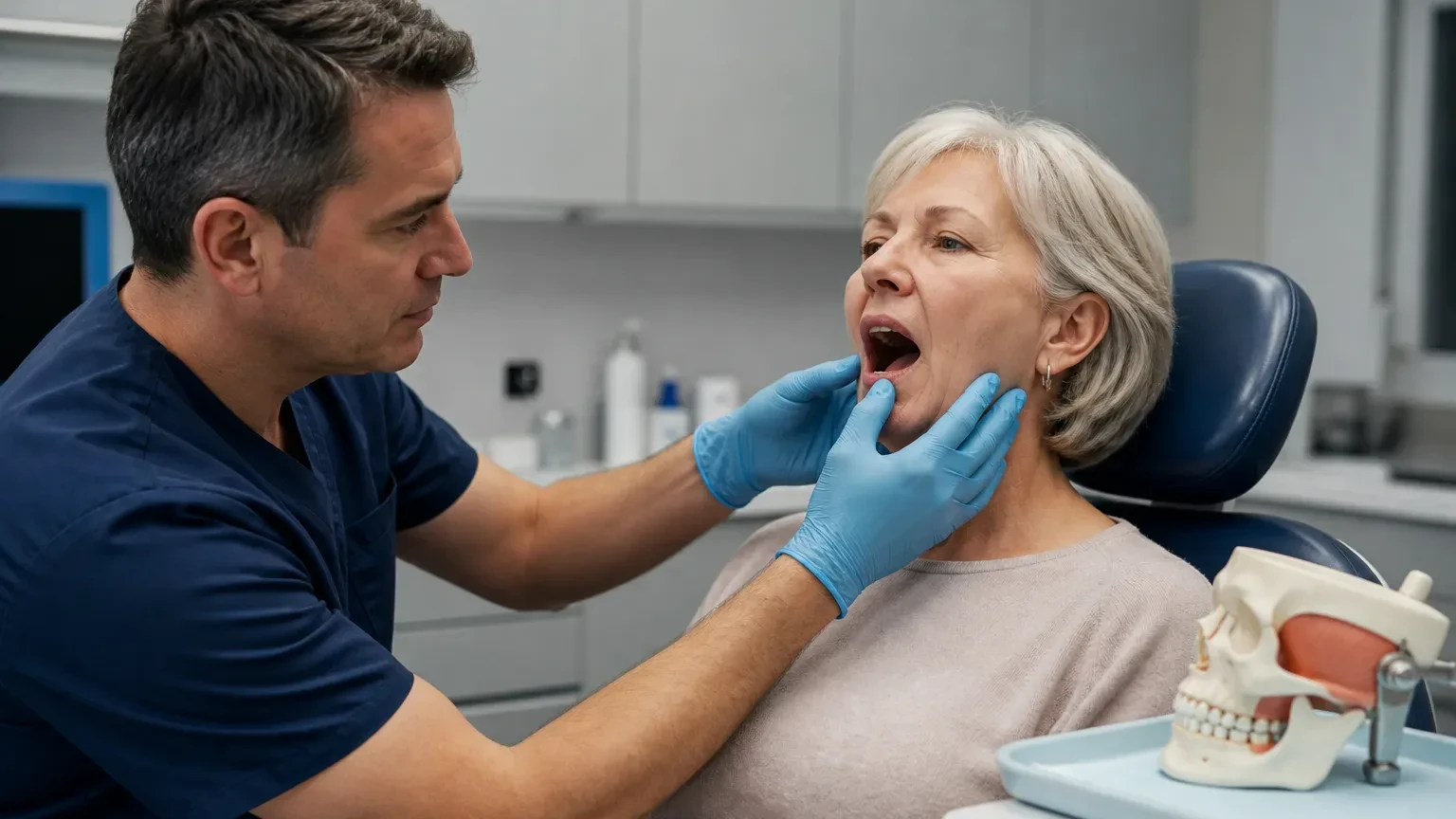
When Should You See A Dentist For Jaw Clicking?
Painless jaw clicking is often harmless, but pain, locking, swelling, or limited opening deserve a dental look. Learn when to book sooner rather than later.

Reviewed by Dr. Sean Myran, DMDDoctor of Dental Medicine, University of Pennsylvania
You should see a dentist for jaw clicking when the sound comes with pain, catching, locking, limited opening, swelling, headaches that track with jaw use, or a bite that suddenly feels different. Painless clicking or popping without functional limits is common and often does not need treatment. NIDCR notes that sounds without pain in the jaw joints are common, considered normal, and do not need treatment. Risk framing helps you avoid both panic and neglect.
Who is affected varies widely. Teens may notice clicks during growth; adults may hear them for years without trouble; others develop painful catching after a wide yawn or dental visit. What changes the plan is not the noise alone—it is pain, progressive stiffness, or interference with chewing and speaking. Compare your pattern with the broader TMJ symptom list.
Lower Risk Versus Higher Risk Clicking
- Lower risk: soft occasional click, full opening, no pain, stable for months.
- Watch closely: louder pops with brief catching that still self-reduces.
- Higher risk: painful clicks, locking open or closed, shrinking opening, or swelling.
- Urgent overlays: trauma, fever, facial swelling, or inability to close after a dental procedure.
Mayo Clinic advises seeking care for constant jaw pain or tenderness or if you cannot open or close your jaw completely. Clicking plus ear symptoms still deserves sorting—see TMJ-related ear pain—because ear infections and jaw issues can overlap in location.
A safer path forward for mild, painless clicks is usually observation, avoiding gum and nail biting, and not forcing the jaw to “pop on purpose.” For painful or limiting clicks, early conservative evaluation beats waiting until you are living on smoothies. Ask whether muscle therapy, an appliance, or imaging is appropriate rather than jumping to irreversible bite changes sold as quick mechanical cures.
Parents sometimes notice clicking in teens during growth spurts. Reassurance is reasonable when opening is free and painless, but sports injuries, wisdom-tooth soreness, and orthodontic adjustments can confuse the picture. Adults returning to the gym may flare after heavy chewing of protein bars or after holding the jaw braced during intense lifts. Context like that belongs in your history because it changes how urgently the click should be examined.
If a click has been stable for years and suddenly becomes painful after a wide yawn, treat the change—not the old soundtrack—as the reason to book. Sudden shifts deserve more respect than lifelong soft pops that never limited lunch.
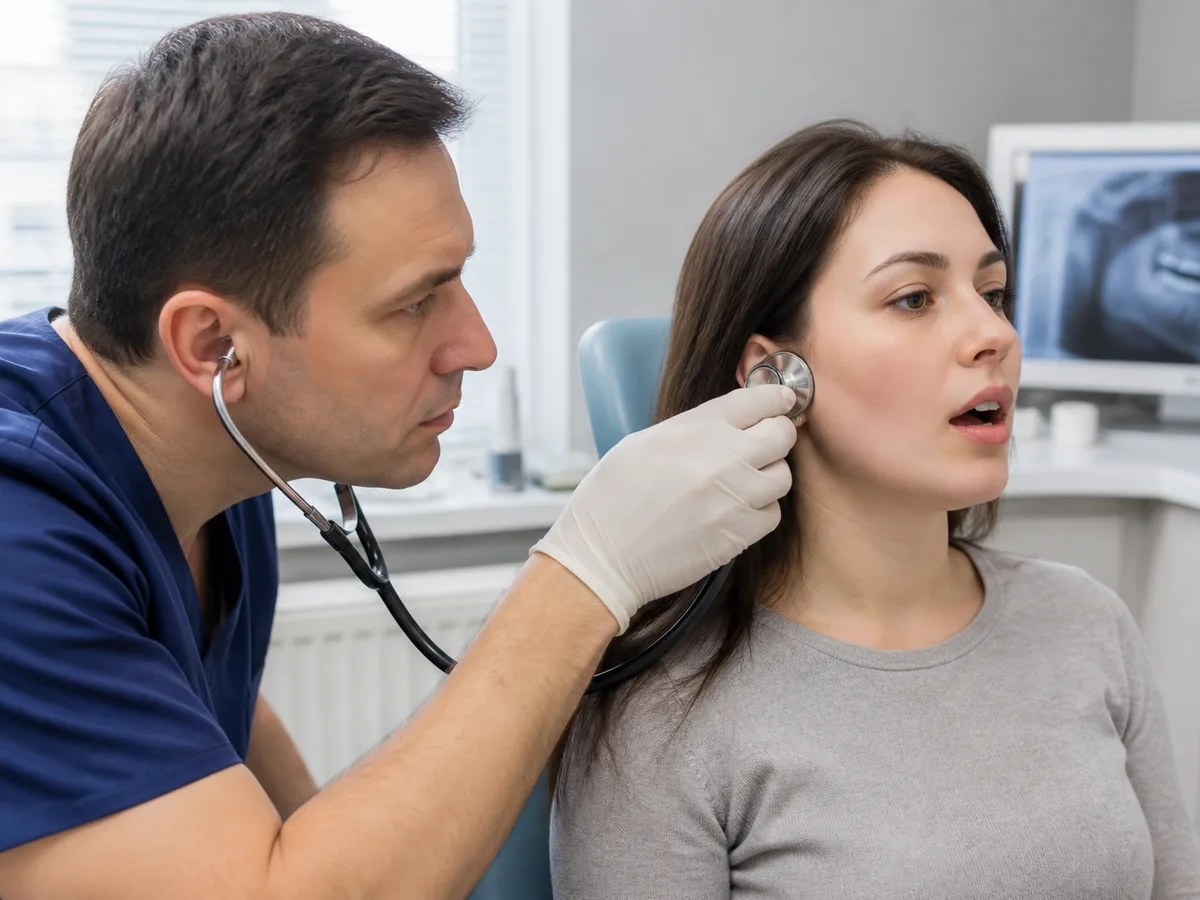 Track opening and pain, not just noise.
Function matters more than the soundtrack
Once a week, note how many finger-widths you can open without pain and whether food textures are getting harder. Shrinking range, new deviation to one side, or fear of yawning are stronger reasons to book than a soft click you have had for years. Avoid prying the jaw with devices sold online. If a click suddenly becomes painful after chewing bagels or opening wide at a concert, give soft foods a few days—and schedule care if limits remain.
What Changes The Plan At The Visit
- History of locking or prior joint injury.
- Heavy wear suggesting grinding—possibly linking to night guard discussions.
- Arthritis or inflammatory disease that needs medical coordination.
- Dental sources of pain that mimic joint clicks when you chew.
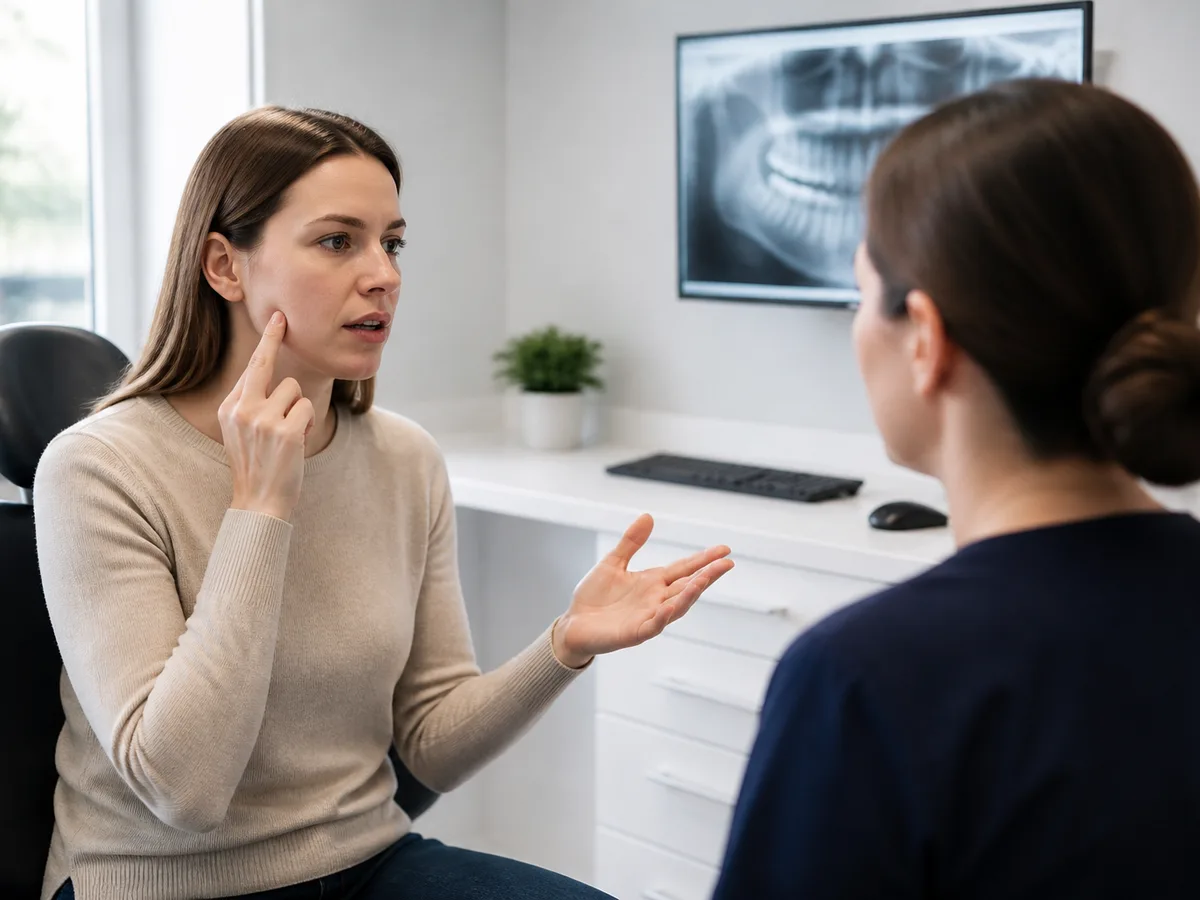 Painful limits deserve a calendar date.
Exam decides monitoring versus treatment
Describe when the click started, whether it is new or old, and what—if anything—makes the jaw catch. A good exam watches the opening path, palpates muscles and joints, and decides whether reassurance, conservative therapy, or further study fits. For help deciding whether your click is a watch-item or a treat-now problem, use Find a Dentist and mention pain, locking, or limited opening in the booking notes. Early clarity prevents both overtreatment and long avoidable flares.
See a dentist for jaw clicking when pain or function joins the sound. Painless, free-moving clicks can often be monitored; painful, locking, or progressive patterns should not wait on hope alone.
Related articles
Keep exploring related topics from Dental Country.
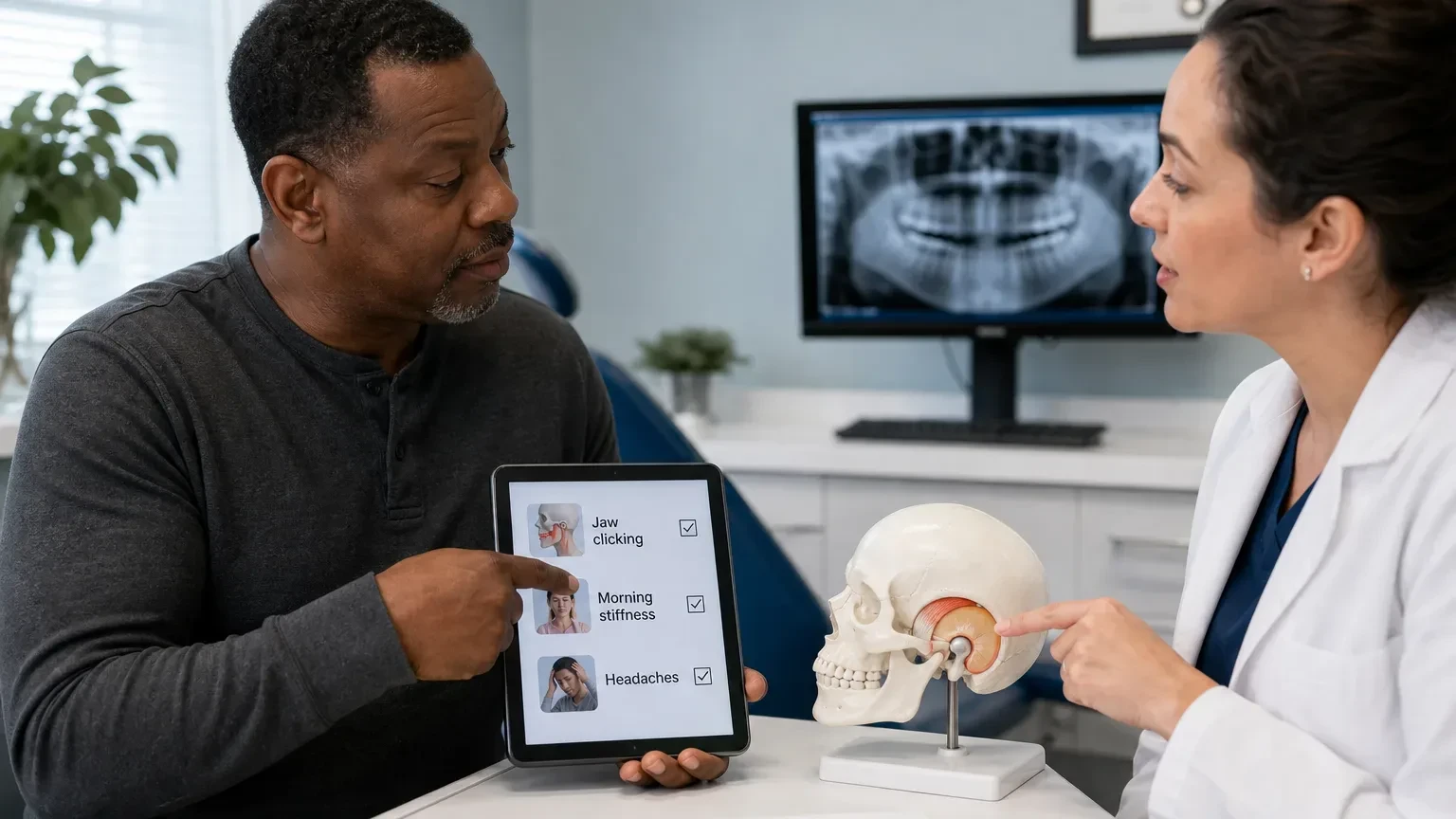
What Are TMJ Disorder Symptoms?
Common TMJ disorder symptoms include jaw pain or stiffness, clicking or popping with discomfort, headaches, limited opening, and ache near the ear—patterns that deserve a careful exam when they persist.
Read article
What Causes TMJ Pain?
TMJ pain usually comes from overloaded chewing muscles, irritation inside the jaw joint, or both—often layered with clenching, strain, arthritis, or stress rather than one single villain.
Read article
Does A Night Guard Help TMJ?
A well-fitted night guard can reduce tooth wear and ease some clenching-related TMJ muscle pain, yet it will not fix every joint problem and poorly fitted guards can worsen symptoms.
Read article
Can Stress Cause Jaw Pain?
Yes—stress often shows up in the jaw as clenching, grinding, and muscle guarding that leave the face sore, especially through busy weeks and restless nights.
Read article