

Can Stress Cause Jaw Pain?
Stress can tighten jaw muscles and fuel clenching that leads to facial pain. Learn how the stress-jaw link works and what calms a flare without guesswork.

Reviewed by Dr. Sean Myran, DMDDoctor of Dental Medicine, University of Pennsylvania
Yes—stress can cause or worsen jaw pain by driving daytime clenching, nighttime grinding, and chronic muscle guarding around the TMJs. The joint may be structurally fine while the chewing muscles stay braced as if you were about to speak or bite all day. Mayo Clinic includes stress among factors that can contribute to TMJ disorders, along with habits such as teeth clenching. Stress is rarely the only chapter in the story, but it is a common accelerant.
Picture a familiar scenario. A deadline week arrives; you work with teeth set; sleep shortens; you wake with temple ache and a tired jaw. Coffee replaces water; gum becomes a fidget. By Friday, sandwiches hurt. That narrative does not mean the pain is “all in your head”—muscle overload is physical. It does mean relief plans should address both tissue load and the stress pattern, alongside checks for other causes of TMJ pain.
Decision Factors That Shape Your Next Move
- Timing: pain that spikes with stressful seasons and eases on vacations often has a strong muscle-habit component.
- Tooth clues: new wear, chipped enamel, or a scalloped tongue edge suggest clenching load.
- Sleep: restless nights and snoring partners may point to nocturnal bruxism worth evaluating.
- Other symptoms: locking or swollen joints need joint-focused assessment, not stress tips alone—see TMJ disorder symptoms.
- Mood and pain sensitivity: anxiety can amplify how strongly you notice facial ache.
MouthHealthy links teeth grinding with stress and notes that grinding can contribute to jaw pain and TMJ problems. Relaxation skills and a protective guard can complement each other when grinding is confirmed; neither replaces an exam if pain is severe or one-sided with dental infection signs.
Simple awareness drills help many adults: sticky-note reminders to separate teeth, short breathing breaks that drop shoulder and jaw tension, and swapping gum for a soft sugar-free mint if you must fidget. If evenings are when you clench hardest, build a wind-down that does not involve jaw-heavy snacks. Pair stress work with soft foods and brief compresses so tissues get a real rest while your nervous system downshifts.
Work-from-home setups can quietly worsen the pattern: laptop too low, shoulders shrugged, coffee cooling beside endless messages. Raising the screen, standing for short breaks, and sipping water instead of grazing on crunchy snacks all reduce incidental jaw load. None of that replaces care for true locking or tooth cracks, but it often trims the daily fuel that keeps a stress flare burning.
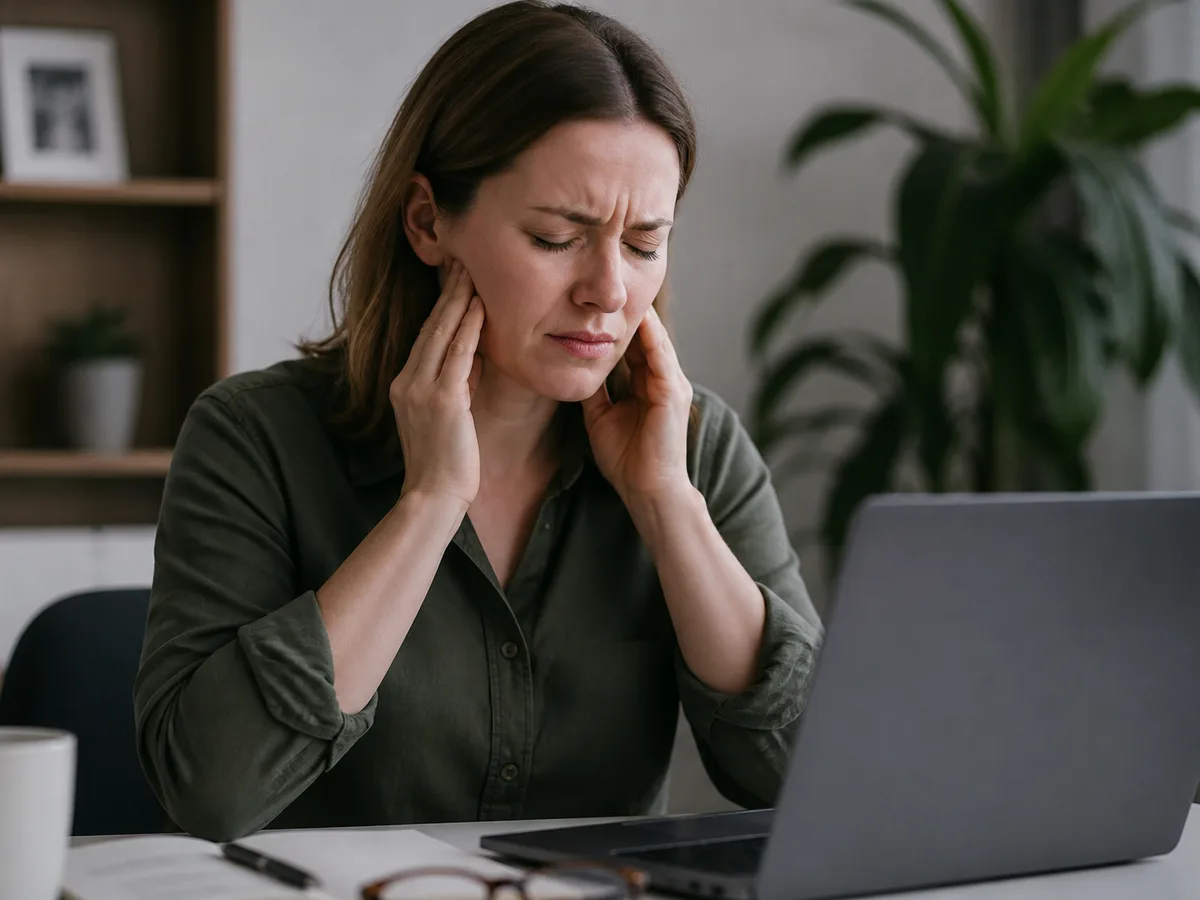 Calm input helps overloaded chewing muscles.
Downshift the nervous system and the muscles
A warm, moist compress on sore cheeks for ten to fifteen minutes can ease muscle tightness after a high-stress day—unless heat aggravates an acute injury, in which case ask about cold instead. Combine heat with slow nasal breathing and a resting posture: tongue up, teeth apart, lips soft. Skip aggressive jaw stretching videos that promise instant cures; overstretching irritated muscles can prolong the flare. If headaches accompany the jaw ache, track whether they fade when clenching drops.
Next Steps That Usually Make Sense
- Reduce obvious jaw loads for one to two weeks: soft foods, no gum, smaller bites.
- Practice daytime teeth-apart posture during screen work.
- Discuss sleep, grinding, and whether a night guard fits your exam.
- Ask a physician or counselor about broader stress supports if anxiety is constant.
- Seek prompt dental care for locking, swelling, or pain that blocks eating.
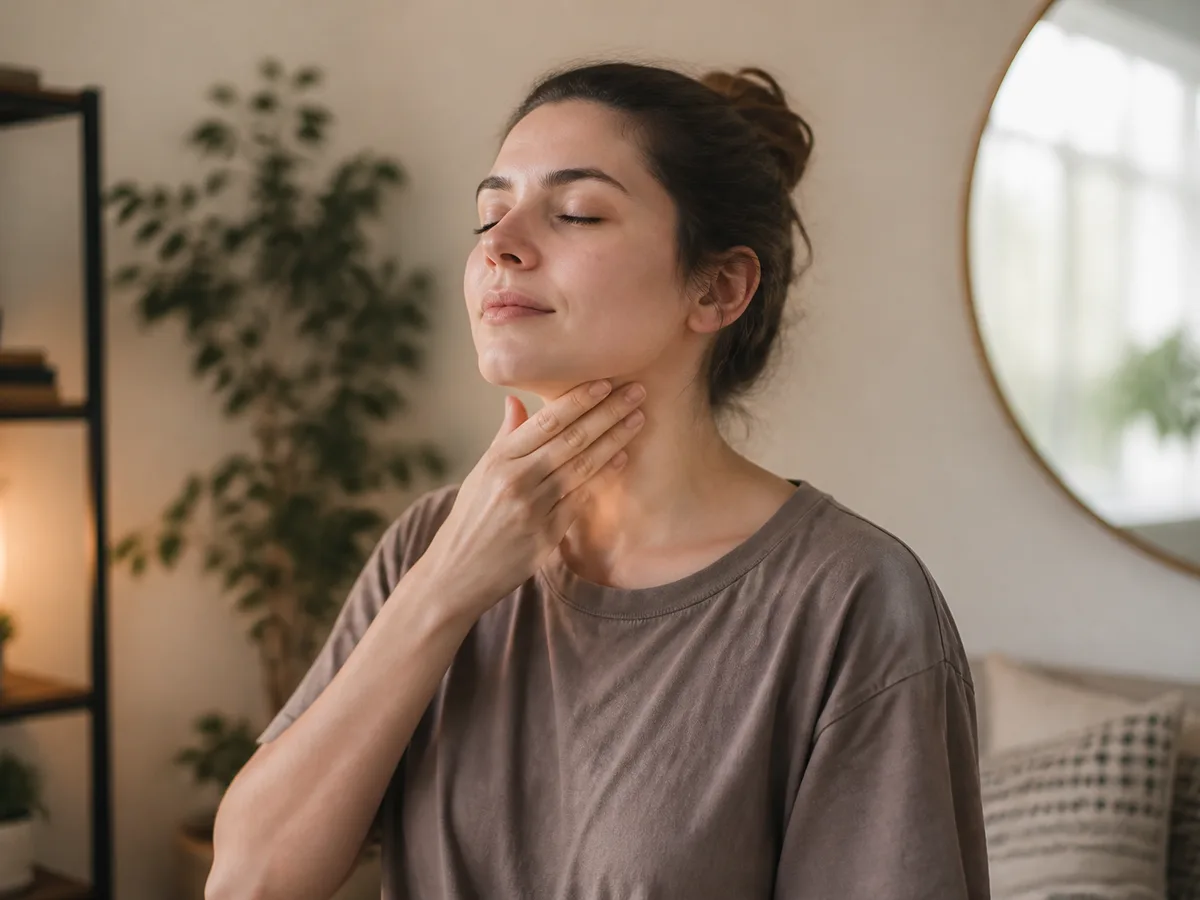 Validation plus exam beats either alone.
Name the habit without blame
Clinicians hear stress-and-jaw stories every week; honest detail helps them choose conservative tools instead of irreversible bite experiments. Mention medicines, sleep changes, and whether pain began after a hard life month. For a practice that will examine joints and muscles and coach habit change, use Find a Dentist and note morning soreness or grinding sounds when you schedule. Stress may light the fuse—professional care still checks that nothing else is burning.
Stress can cause real jaw pain through clenching and muscle guarding. Treat the tissues kindly, lower the daily brace habit, and get an exam when pain, locking, or tooth damage says the story is bigger than a busy week.
Related articles
Keep exploring related topics from Dental Country.

What Are TMJ Disorder Symptoms?
Common TMJ disorder symptoms include jaw pain or stiffness, clicking or popping with discomfort, headaches, limited opening, and ache near the ear—patterns that deserve a careful exam when they persist.
Read article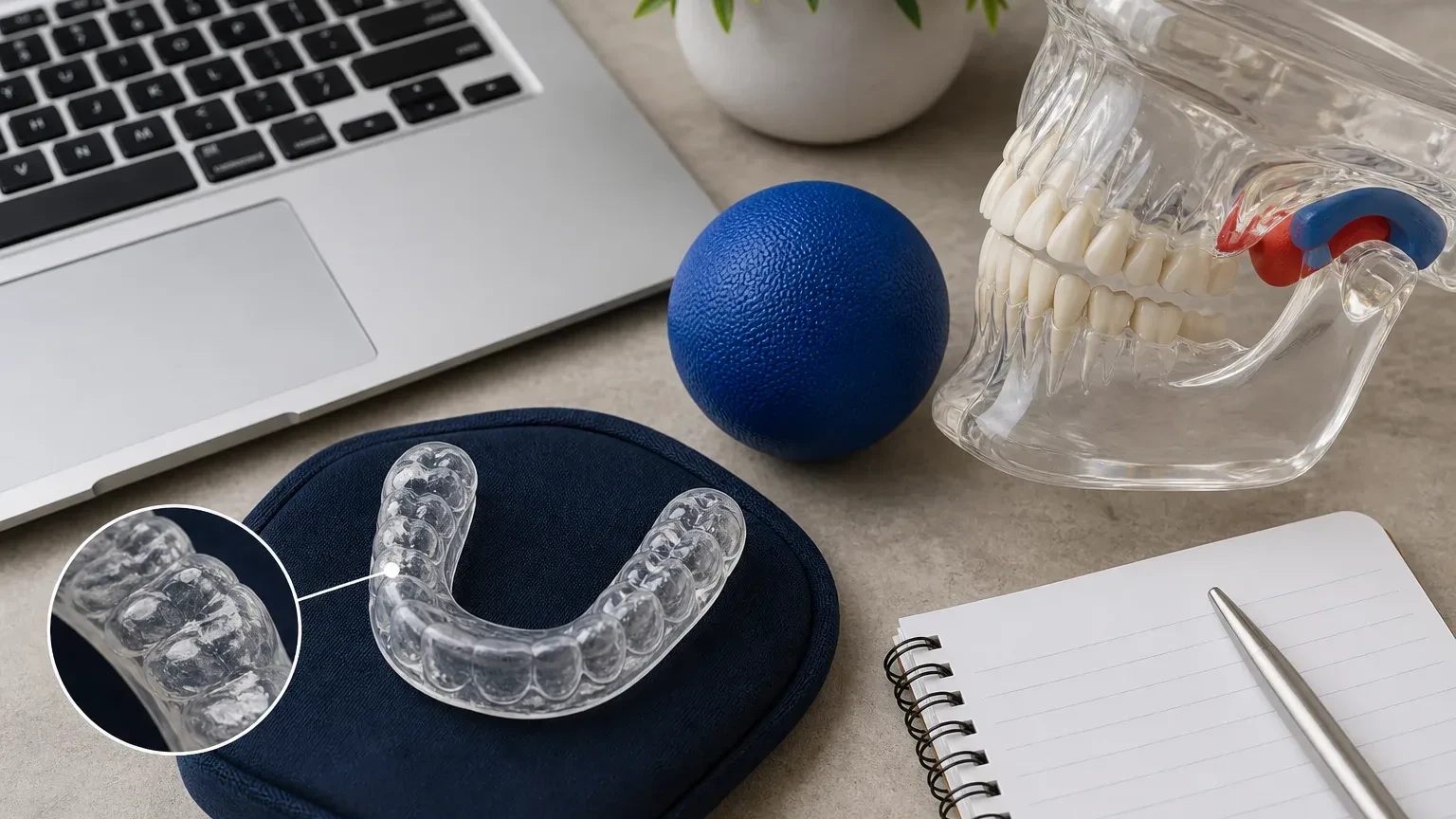
What Causes TMJ Pain?
TMJ pain usually comes from overloaded chewing muscles, irritation inside the jaw joint, or both—often layered with clenching, strain, arthritis, or stress rather than one single villain.
Read article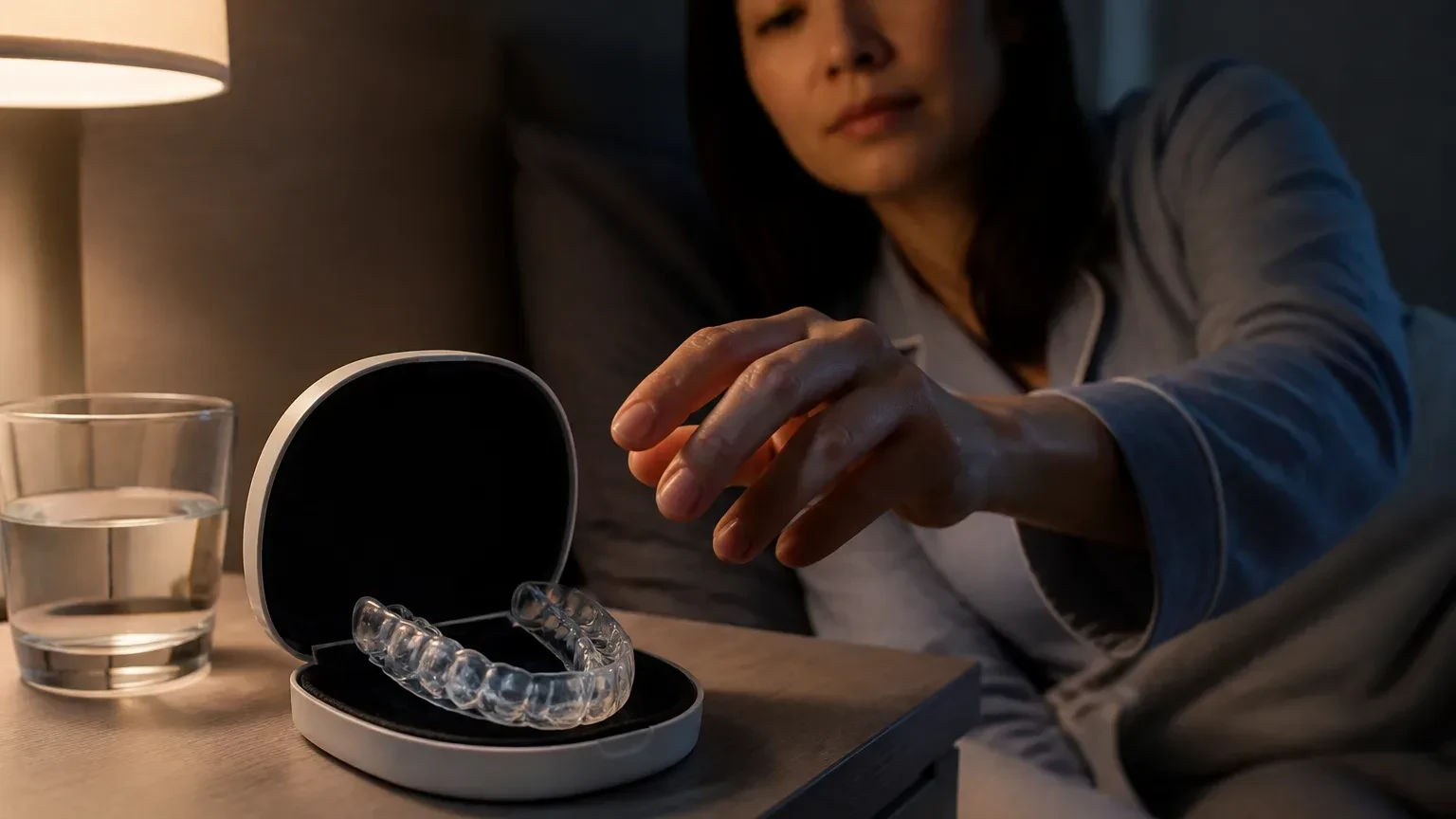
Does A Night Guard Help TMJ?
A well-fitted night guard can reduce tooth wear and ease some clenching-related TMJ muscle pain, yet it will not fix every joint problem and poorly fitted guards can worsen symptoms.
Read article
When Should You See A Dentist For Jaw Clicking?
See a dentist for jaw clicking when it comes with pain, locking, limited opening, swelling, or a changing bite—while painless occasional clicks are often monitored.
Read article