
When Do Stitches Come Out After An Extraction?
Dissolving extraction stitches often loosen in about a week; non-dissolving sutures are usually removed on a scheduled visit. Learn stitch care steps.

Reviewed by Dr. Sean Myran, DMDDoctor of Dental Medicine, University of Pennsylvania
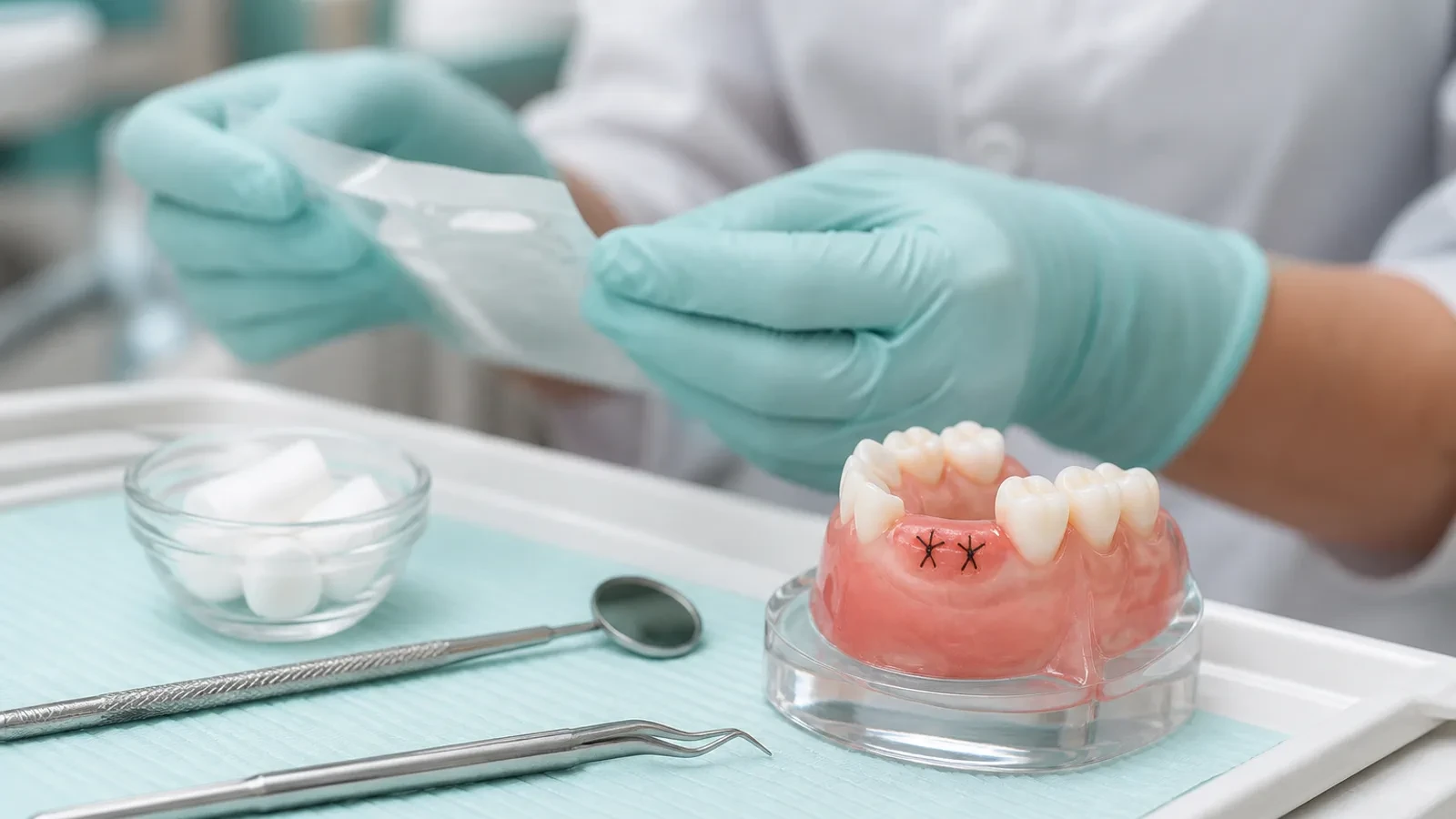
Dissolving stitches after a tooth extraction often loosen and come free within about a week as the gum edges stabilize, while non-dissolving sutures are typically removed at a scheduled visit—commonly around five to ten days, depending on the surgery. Mayo Clinic notes that stitches may be used to close the wound after wisdom tooth removal, though they are not always required. Your post-op sheet should say which type you received and whether a removal appointment is required.
Not every extraction needs sutures. When they are placed, they help hold soft tissue in a position that protects the clot and shapes healing. Feeling a loose tag with your tongue can be normal as dissolving material softens; cutting or pulling stitches yourself is not.
Suture material and knot style vary. Some threads are designed to fall away quietly; others feel like fishing line until a clinician snips them. Color can be white, blue, or dark depending on the product. None of those cosmetic details change the core rule: do not tug loops for entertainment or to “help them dissolve faster.”
If a stitch catches on food, gently rinse as directed rather than yanking. Persistent snagging on a sharp knot is a valid reason for a short chairside trim even before the official removal date. Keep the rest of your mouth clean so food does not cement itself to the suture wings.
Children and teens sometimes play with stitches out of curiosity. A calm reminder and soft foods reduce that habit more effectively than scolding after a loop is already frayed. Adults with retainers or night guards should ask when those appliances may rest near a sutured area again.
Step-By-Step Stitch Care
- Know your suture type: ask before you leave whether stitches dissolve and the exact return date if they do not.
- Protect the first days: avoid playing with stitches using fingers or tongue piercings; skip foods that shred into threads.
- Clean around, not through: follow guidance in brushing after extraction so bristles do not yank loops.
- Rinse only as directed: gentle saltwater when cleared—never forceful swishing aimed at the stitches.
- Attend removal or check visits: non-dissolving sutures need professional snipping; dissolving ones still deserve a look if tissue looks uneven.
- Report problems early: uncontrolled bleeding, pus, or stitches that tear out with a gaping wound need a call.
 Office trims are safer than home cuts.
Loose threads are not DIY projects
A dangling dissolving stitch can feel long before it releases. Resist the urge to cut it with nail clippers at home; you can trim the wrong loop or leave fragments under the tissue. If a sharp end pokes the tongue or cheek, call for a quick trim appointment. Keep the rest of recovery timing on track so you are not chewing tough foods while sutures still brace the flap.
Scenario: A Stitch Feels Different On Day Five
Imagine day five after lower wisdom teeth removal: swelling is down, but your tongue finds a slippery loop. Decision factors include whether the gum edges still look closed, whether pain is improving, and whether your sheet said dissolving sutures. Next steps are usually gentle cleaning, soft foods from the post-extraction diet guide, and a call if the flap looks open, bleeds freely, or tastes foul—possible early infection signs.
 Clarity prevents anxious tugging.
Written instructions beat memory after anesthesia
Sedation and stress make details fuzzy. Photograph the instruction page or ask the office to text the suture plan. Note whether mouthwash is allowed, when irrigation syringes start, and which symptoms mean same-day care. If you travel between surgery and suture removal, ask whether a different dentist can remove non-dissolving stitches using your records.
Stitches are a temporary scaffold, not a permanent fixture. Healing tissue should look progressively calmer even if a suture end remains. For help with post-surgical follow-up, use Find a Dentist and mention that you need suture evaluation after a recent extraction.
Related articles
Keep exploring related topics from Dental Country.
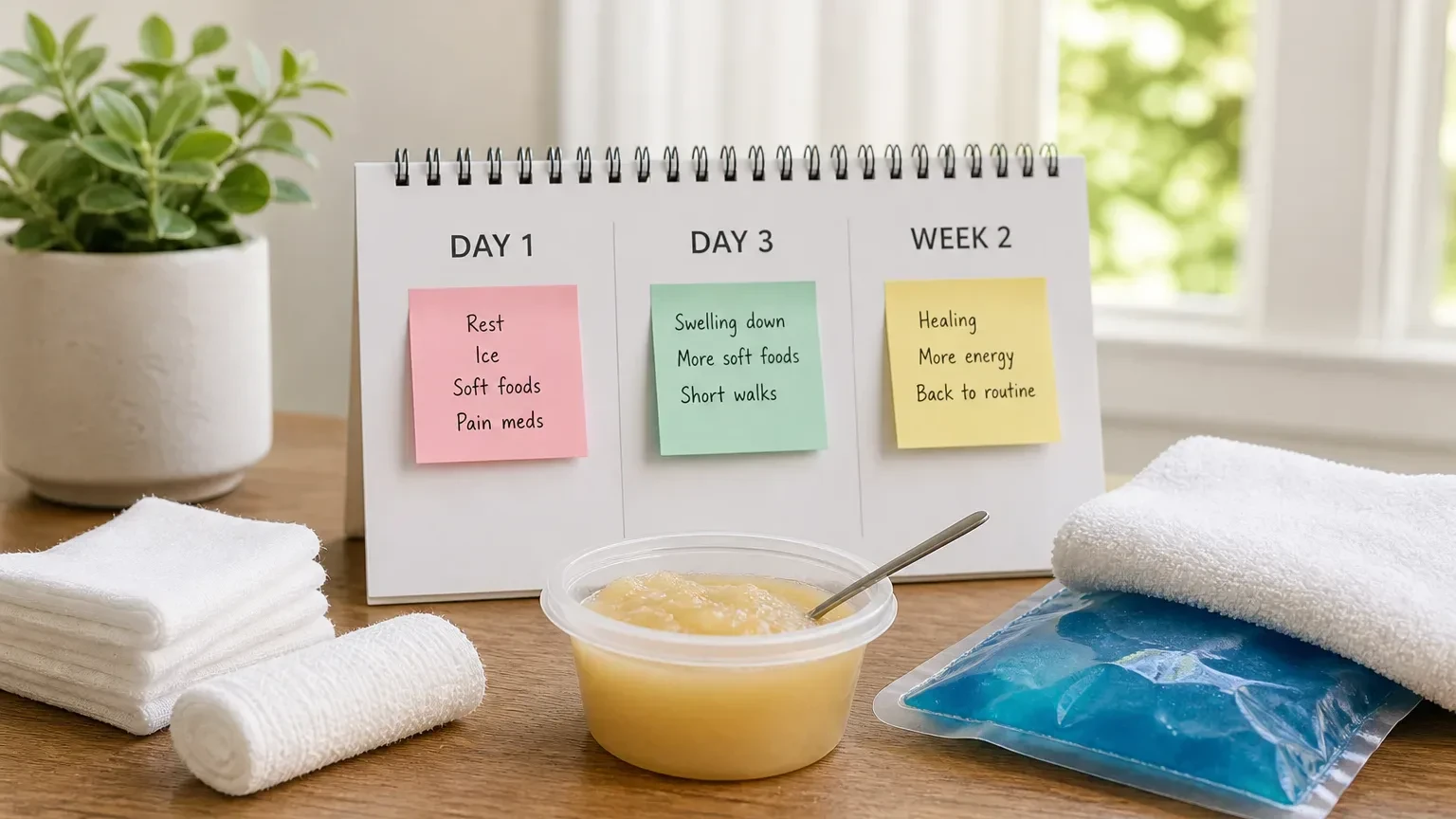
How Long Does It Take To Recover From A Tooth Extraction?
Extraction recovery is staged: clot protection first, then softer chewing, with full comfort arriving on a schedule that depends on surgery complexity.
Read article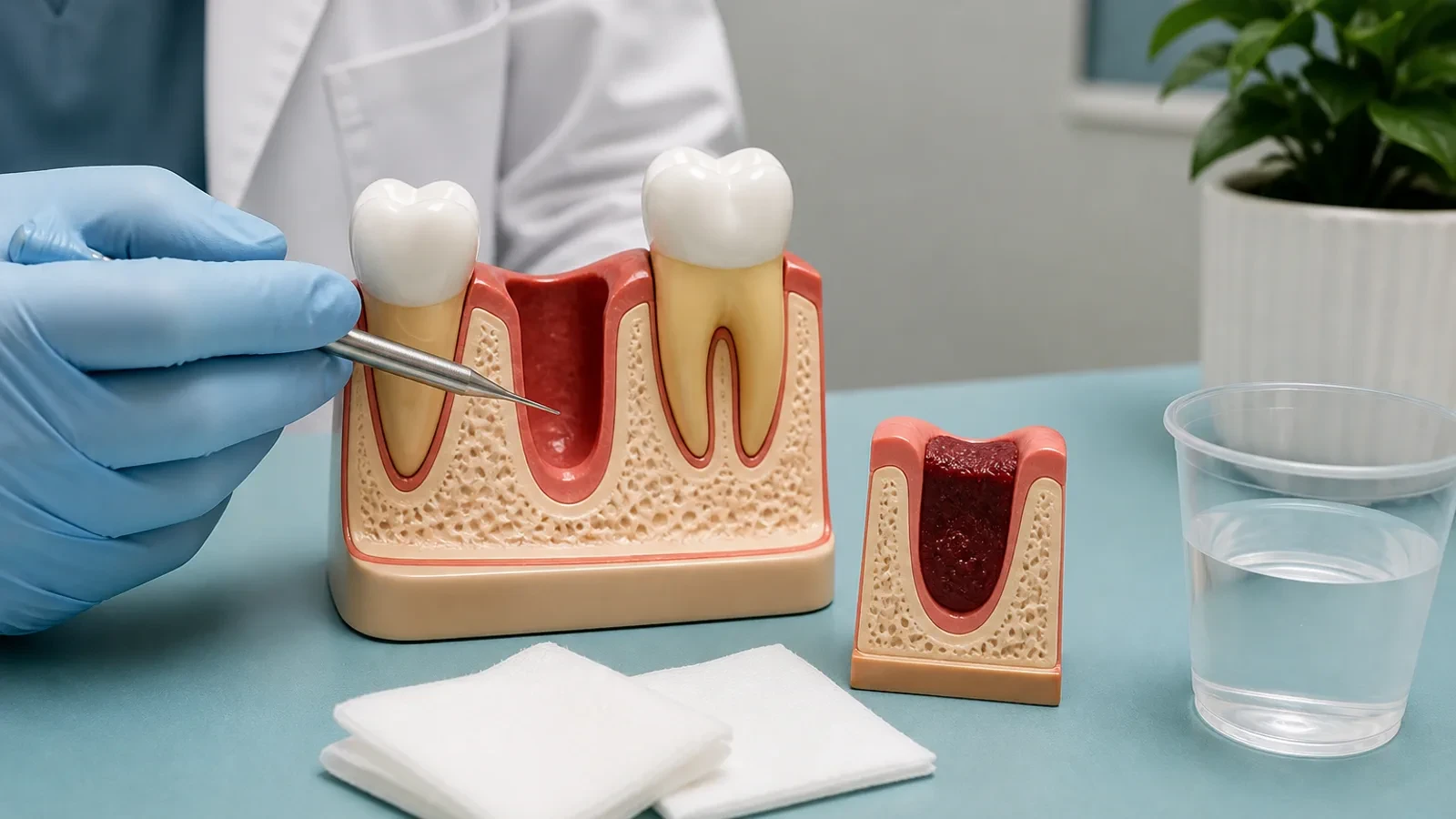
What Is Dry Socket?
Dry socket means the clot that should shield the extraction site is gone or never formed well, leaving bone exposed and pain often sharper after day one.
Read article
When Should Wisdom Teeth Be Removed?
Removal timing follows risk and imaging, not a birthday alone: pain, infection, pathology, or a tooth that cannot be kept clean often tip the decision.
Read article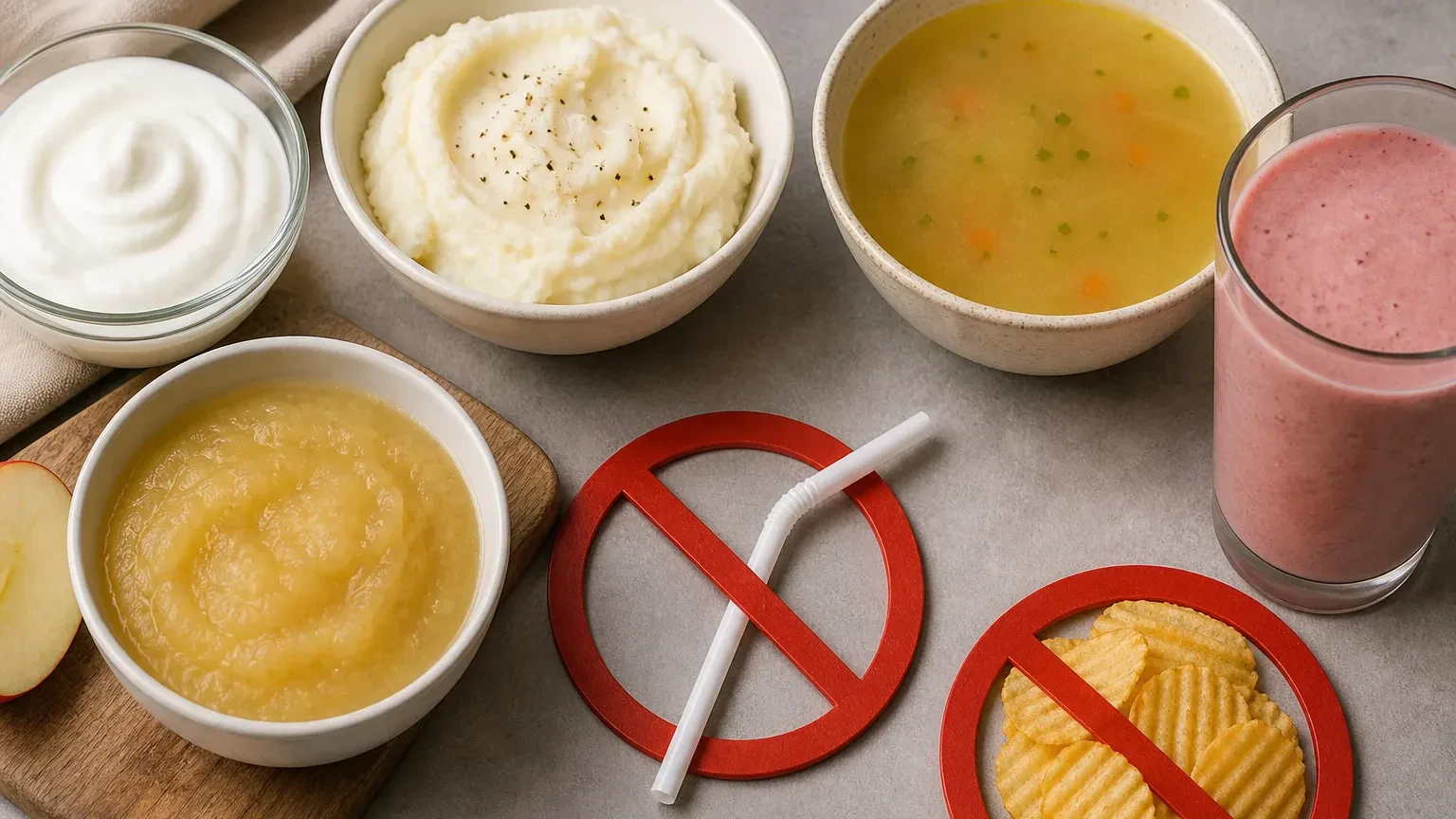
What Can You Eat After A Tooth Extraction?
Post-extraction eating is a staged routine: cool soft foods first, then tender chewables, while skipping straws and sharp crumbs that disturb the clot.
Read article