
What Can You Eat After A Tooth Extraction?
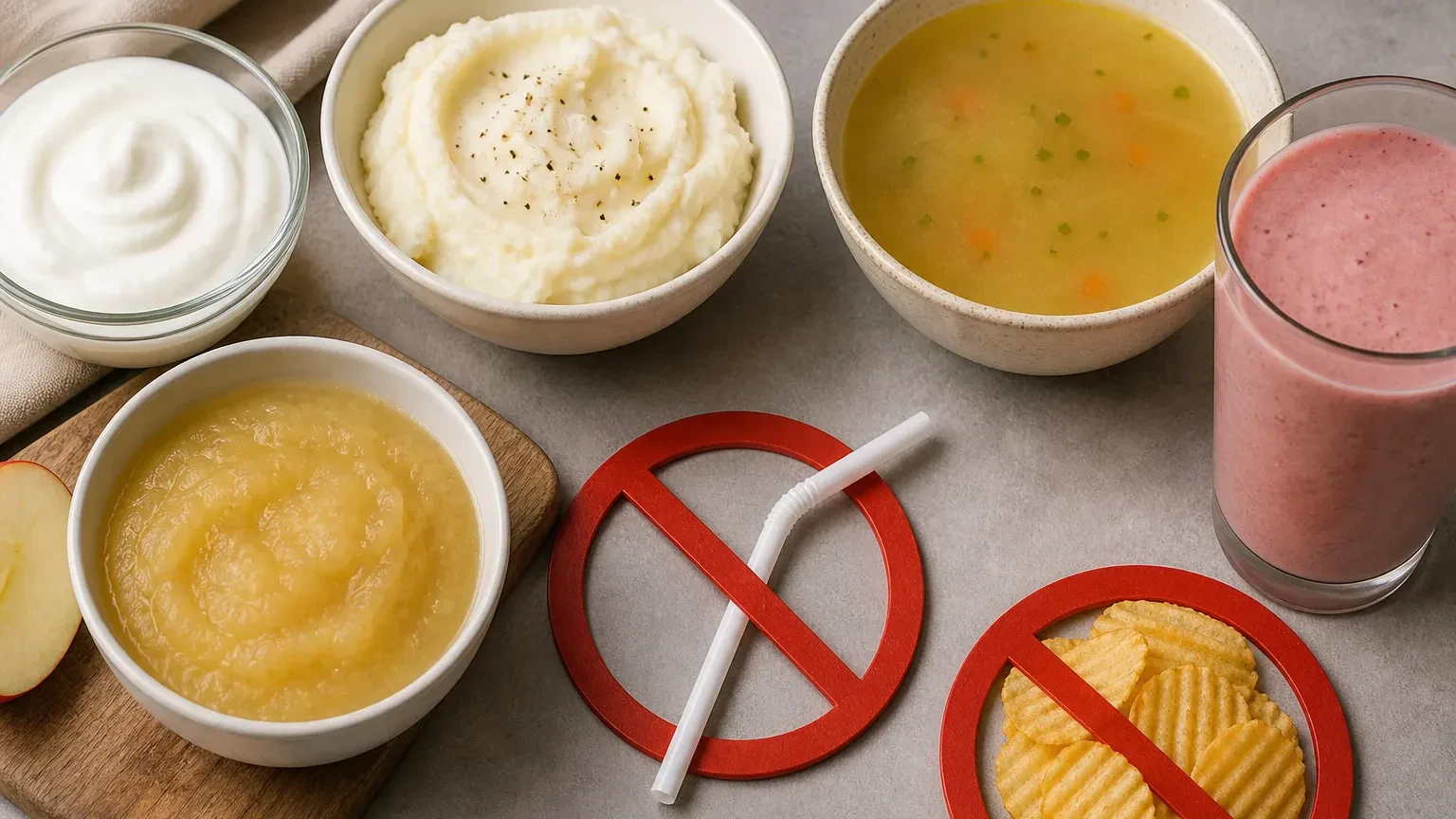
Start with cool soft foods after a tooth extraction, then advance textures as comfort allows. Learn a staged diet that protects the healing socket.

Reviewed by Dr. Sean Myran, DMDDoctor of Dental Medicine, University of Pennsylvania
After a tooth extraction, start with cool or room-temperature soft foods that need little chewing, then advance to tender textures as pain and swelling allow—usually over several days for simple sites and longer after surgical removals. MouthHealthy advises following the diet your dentist suggests and avoiding habits that prevent normal healing. The goal is nutrition without dislodging the blood clot or packing sharp particles into the socket.
Hunger after anesthesia wears off is normal. Plan groceries before surgery day so you are not shopping while numb or swollen. Think protein plus soft carbohydrates plus fluids, not only pudding. If you take diabetes medication or other timed drugs with food, ask how to adapt doses when intake is light.
Portion size matters as much as texture. Smaller, more frequent soft meals are often easier than three large plates while your jaw is stiff. Keep a water bottle nearby; dehydration makes pain medicine harder to tolerate and can worsen fatigue after surgery. If nausea follows anesthesia, start with tiny sips and bland spoonsful before returning to a fuller soft menu.
Label a “surgery shelf” in the fridge with yogurt cups, eggs, mashed sides, and broth boxes so family helpers know what is safe to offer. Avoid surprise crunchy garnishes—toast crumbs, tortilla strips, and raw vegetable sticks are common early pitfalls even when the main dish is soft.
A Staged Eating Routine
- First hours: yogurt, applesauce, lukewarm broth (not hot), smoothies eaten with a spoon—not sucked through a straw.
- Day one to two: scrambled eggs, mashed potatoes, ripe banana, cottage cheese, well-cooked oatmeal cooled to a safe temperature.
- Mid-week: soft fish, finely minced tender chicken, well-cooked pasta, soft steamed vegetables if chewing feels controlled.
- Later recovery: gradually reintroduce firmer foods while still avoiding the surgical side for biting when tender.
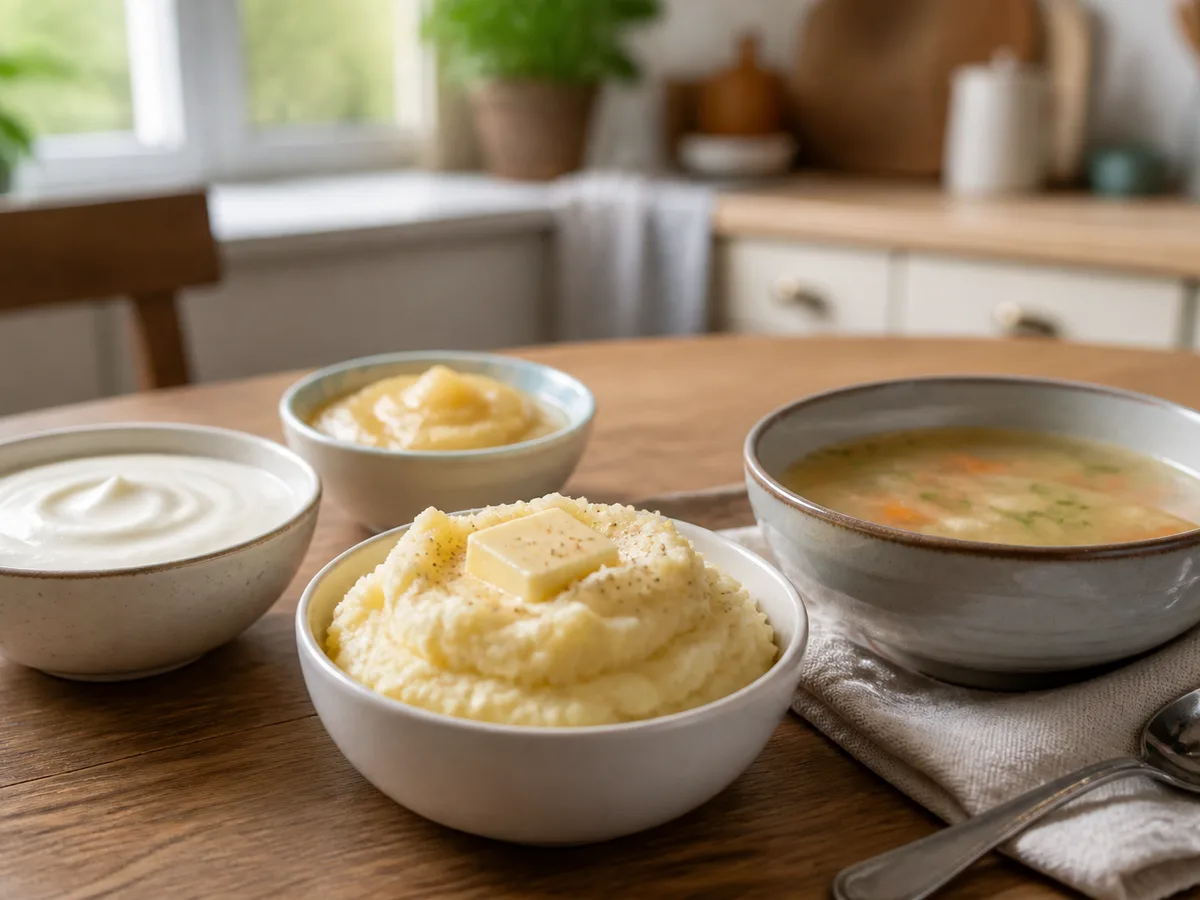 Soft, cool, and spoon-friendly first.
Temperature and texture both matter
Very hot soups and coffee can increase throbbing and may encourage bleeding in sensitive sockets. Cool or tepid options are usually kinder in the first day. Avoid crunchy seeds, chips, popcorn, nuts, and crusty bread crumbs that lodge in the site. Sticky candies pull on tender tissue and are poor early choices even if they seem soft.
Habits That Protect Meals And The Socket
- No straws early: suction can disturb the clot and raise dry socket risk.
- Chew away from the site: use the opposite side until tenderness fades.
- Rinse gently only when cleared: forceful swishing after meals can undo careful eating.
- Stay hydrated: water between soft meals supports comfort and medicine tolerance.
- Watch debris: if rice or lettuce shreds collect, ask how to irrigate once your dentist says it is safe.
Diet staging works best alongside the rest of recovery timing and realistic expectations for how long swelling lasts. Spicy foods and acidic juices can sting raw tissue even when texture is soft—reintroduce them later if they burn. Alcohol can interact with pain medicines and dehydrate you; ask when it is safe rather than guessing.
 Progress is stepwise, not a contest.
Advance one texture at a time
Jumping from yogurt to steak in one meal is how people discover the socket is still fragile. Add one firmer food per meal and stop if sharp pain appears. Keep a short list of foods that bothered you to share at follow-up—pattern recognition helps your dentist coach irrigation and chewing strategy. Smoothies should be thick enough for a spoon; thin drinks tempt straw use.
If pain prevents even soft intake, or you cannot keep fluids down, call the office—nutrition problems after surgery deserve the same attention as bleeding. For personalized post-op diet advice tied to your procedure, connect with a local clinician through Find a Dentist and ask for written food guidelines before surgery day.
Related articles
Keep exploring related topics from Dental Country.
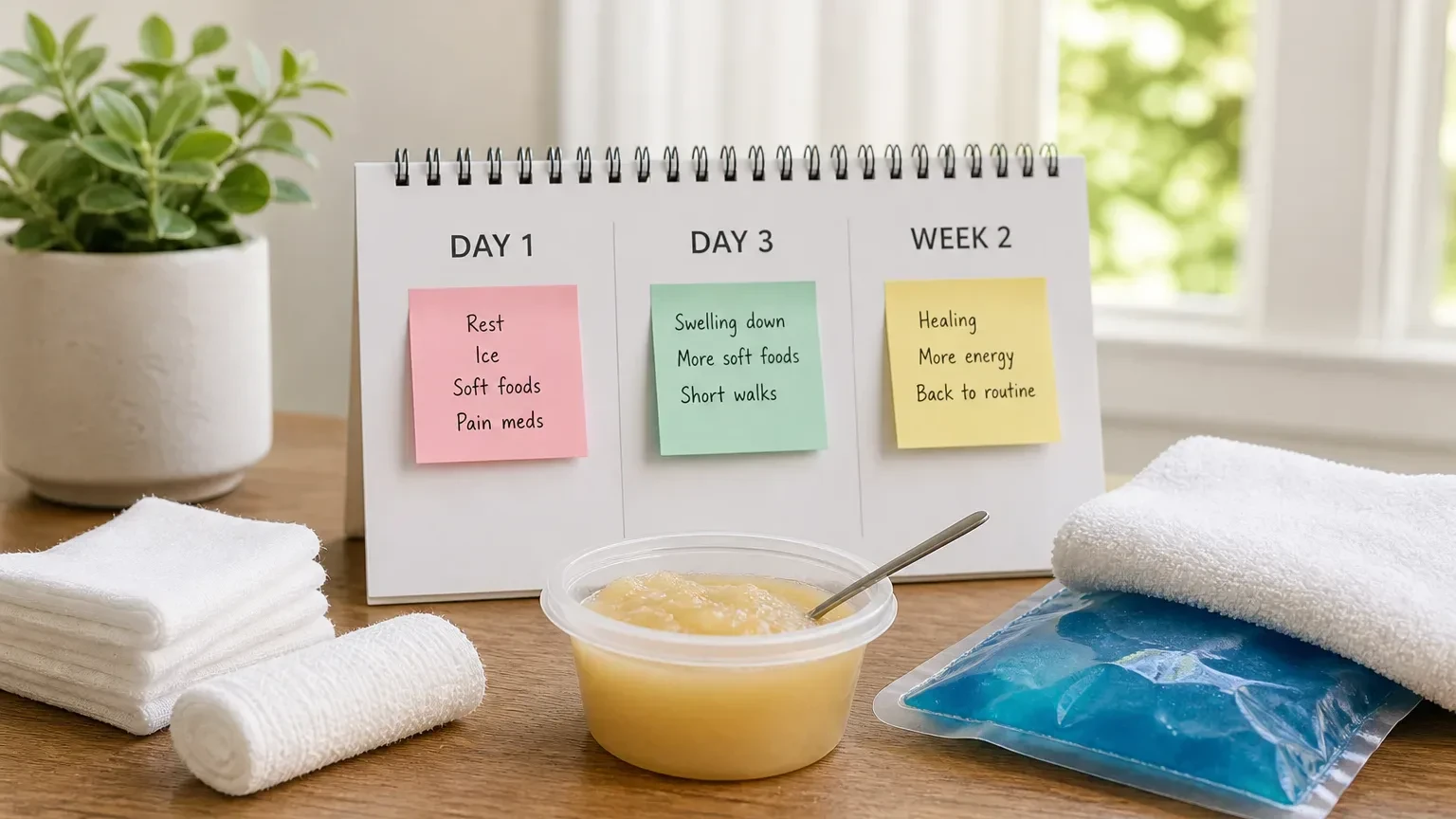
How Long Does It Take To Recover From A Tooth Extraction?
Extraction recovery is staged: clot protection first, then softer chewing, with full comfort arriving on a schedule that depends on surgery complexity.
Read article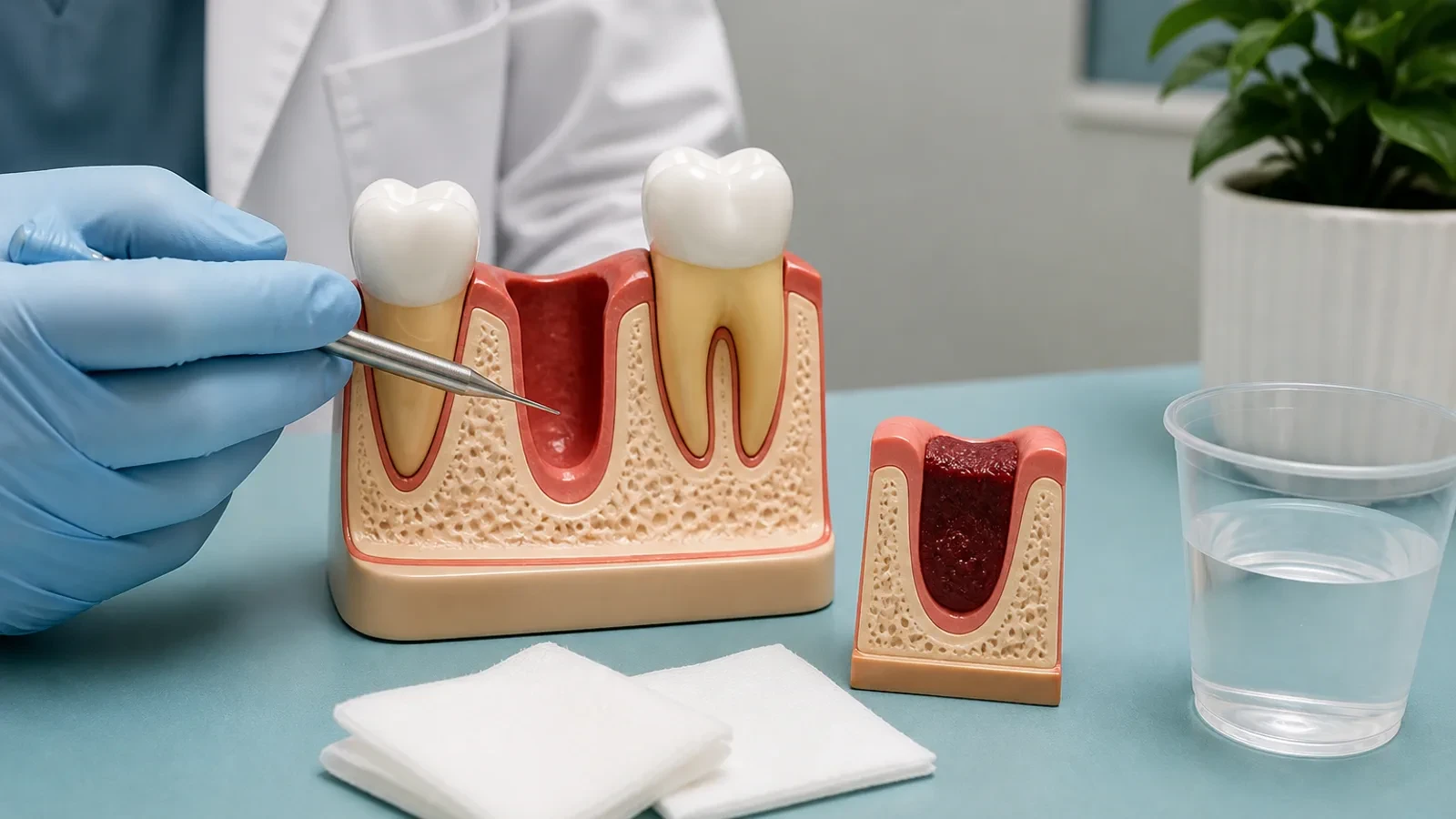
What Is Dry Socket?
Dry socket means the clot that should shield the extraction site is gone or never formed well, leaving bone exposed and pain often sharper after day one.
Read article
When Should Wisdom Teeth Be Removed?
Removal timing follows risk and imaging, not a birthday alone: pain, infection, pathology, or a tooth that cannot be kept clean often tip the decision.
Read article
Do Wisdom Teeth Removals Hurt?
During removal you should be numb or sedated; afterward, manageable soreness is common. Fear often comes from myths about feeling the surgery itself.
Read article