
What Are Signs Of Infection After An Extraction?
Infection after a tooth extraction may bring worsening pain, fever, foul taste, or spreading swelling. Learn warning signs and when to seek care promptly.

Reviewed by Dr. Sean Myran, DMDDoctor of Dental Medicine, University of Pennsylvania
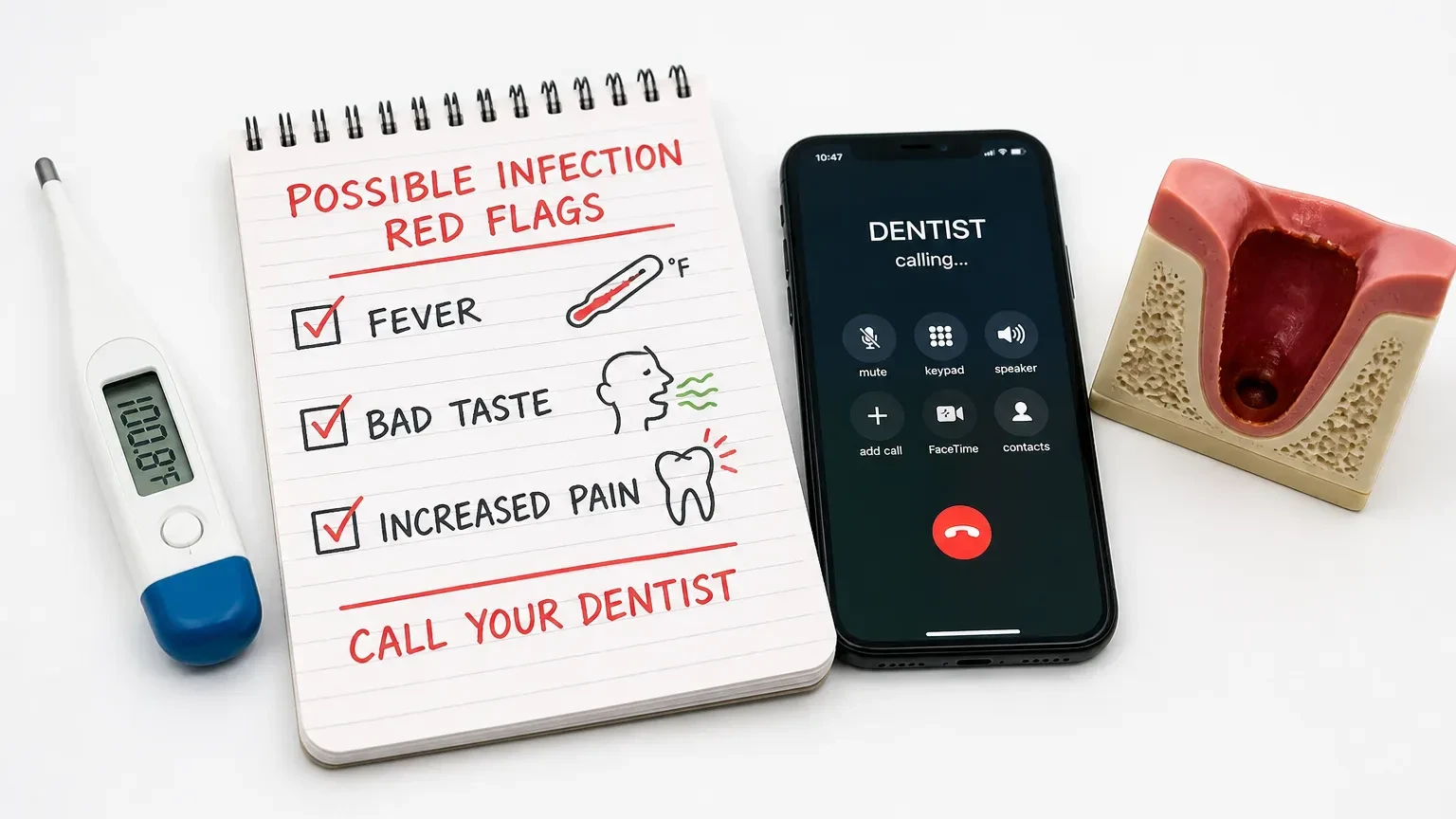
Signs of infection after a tooth extraction can include pain that worsens after it had been improving, fever, foul taste or pus-like drainage, swollen gums that feel hot, and facial swelling that spreads or returns. Ordinary healing is sore and sometimes puffy; infection usually adds a second-wave pattern or systemic symptoms. MedlinePlus advises contacting a dentist for increased pain, worse breath or taste, or suspected complications after extraction. Early calls are safer than waiting for a weekend crisis.
Not every bad taste means bacteria invaded deep tissue—food trapped in a socket can smell unpleasant too. Distinguishing debris, dry socket, and infection often needs an in-person look. When in doubt, describe timing and take a photo of external swelling under consistent lighting.
People with diabetes, immune suppression, or a history of slow healing should have a lower threshold to call. The same is true after difficult surgical extractions where bone was removed. Your dismissal paperwork may list after-hours numbers—save them in your phone before numbness and fatigue set in.
Antibiotics are not automatic for every extraction and are not a substitute for socket care. If they are prescribed, finish the course as directed unless a clinician tells you to stop for a reaction. New rash, facial swelling of allergic type, or breathing difficulty after a dose needs urgent care, not another wait-and-see night.
Caregivers should also watch for refusal to drink, unusual sleepiness with fever, or swelling that changes speech. Those cues matter in teens after multi-tooth surgery when they may underreport discomfort.
Warning Signs Checklist
- Pain that escalates after day three instead of easing along the expected recovery curve.
- Fever, chills, or feeling systemically ill after oral surgery.
- Spreading redness or swelling toward the eye, neck, or opposite side of the face.
- Pus, increasing foul drainage, or lymph nodes that become tender along the jaw or neck.
- Difficulty swallowing, trouble breathing, or severe trismus that rapidly worsens—seek urgent or emergency care.
- A bad taste that pairs with fever or progressive swelling, not only morning breath after soft foods.
 Patterns guide urgency better than panic.
Write down temperatures and timelines
A single warm cheek on peak swelling day is different from fever plus mounting pain. Log medicine times, temperature readings, and when swelling changed direction. That record helps after-hours clinicians decide between reassurance, an urgent slot, or emergency referral. Do not start leftover antibiotics from another illness without guidance—wrong drugs and incomplete courses create new problems.
How Infection Differs From Common Aftereffects
| Pattern | More typical of healing | More concerning for infection |
|---|---|---|
| Pain | Peaks early, then trends down | Second spike with fever or drainage |
| Swelling | Worst around days two to three, then fades | Spreads or rebounds later; see swelling timelines |
| Taste | Mild blood or food taste early | Foul pus-like taste with systemic signs |
| Energy | Tired from surgery and medicines | Feverish illness, escalating malaise |
Dry socket pain can be severe without being a classic spreading infection, and both conditions deserve professional care. Keep gentle hygiene habits so debris is not mistaken for neglect—and so real infection risk stays lower. Smoking and skipped rinses when rinses were prescribed both work against you.
 Escalate fast when breathing or swallowing changes.
Urgent symptoms override office hours anxiety
Difficulty breathing, rapidly closing airways sensations, or swelling that threatens the eye are emergency-level concerns. For less dramatic but clear infection signs, call the treating dentist or oral surgeon first when possible—they know what was done surgically. If you cannot reach them, urgent care or an emergency department can start evaluation and coordinate dental follow-up.
MouthHealthy encourages following post-extraction instructions and contacting your dentist when swelling or other problems arise. If you need a local office to assess a worrisome socket, use Find a Dentist and state that you are concerned about post-extraction infection when you call.
Related articles
Keep exploring related topics from Dental Country.

How Long Does It Take To Recover From A Tooth Extraction?
Extraction recovery is staged: clot protection first, then softer chewing, with full comfort arriving on a schedule that depends on surgery complexity.
Read article
What Is Dry Socket?
Dry socket means the clot that should shield the extraction site is gone or never formed well, leaving bone exposed and pain often sharper after day one.
Read article
When Should Wisdom Teeth Be Removed?
Removal timing follows risk and imaging, not a birthday alone: pain, infection, pathology, or a tooth that cannot be kept clean often tip the decision.
Read article
What Can You Eat After A Tooth Extraction?
Post-extraction eating is a staged routine: cool soft foods first, then tender chewables, while skipping straws and sharp crumbs that disturb the clot.
Read article