
How Do You Calm Dental Anxiety?
Calm dental anxiety with speaking up, distraction, paced breathing, and a visit plan that protects control. Learn a simple routine that many patients use.

Reviewed by Dr. Sean Myran, DMDDoctor of Dental Medicine, University of Pennsylvania
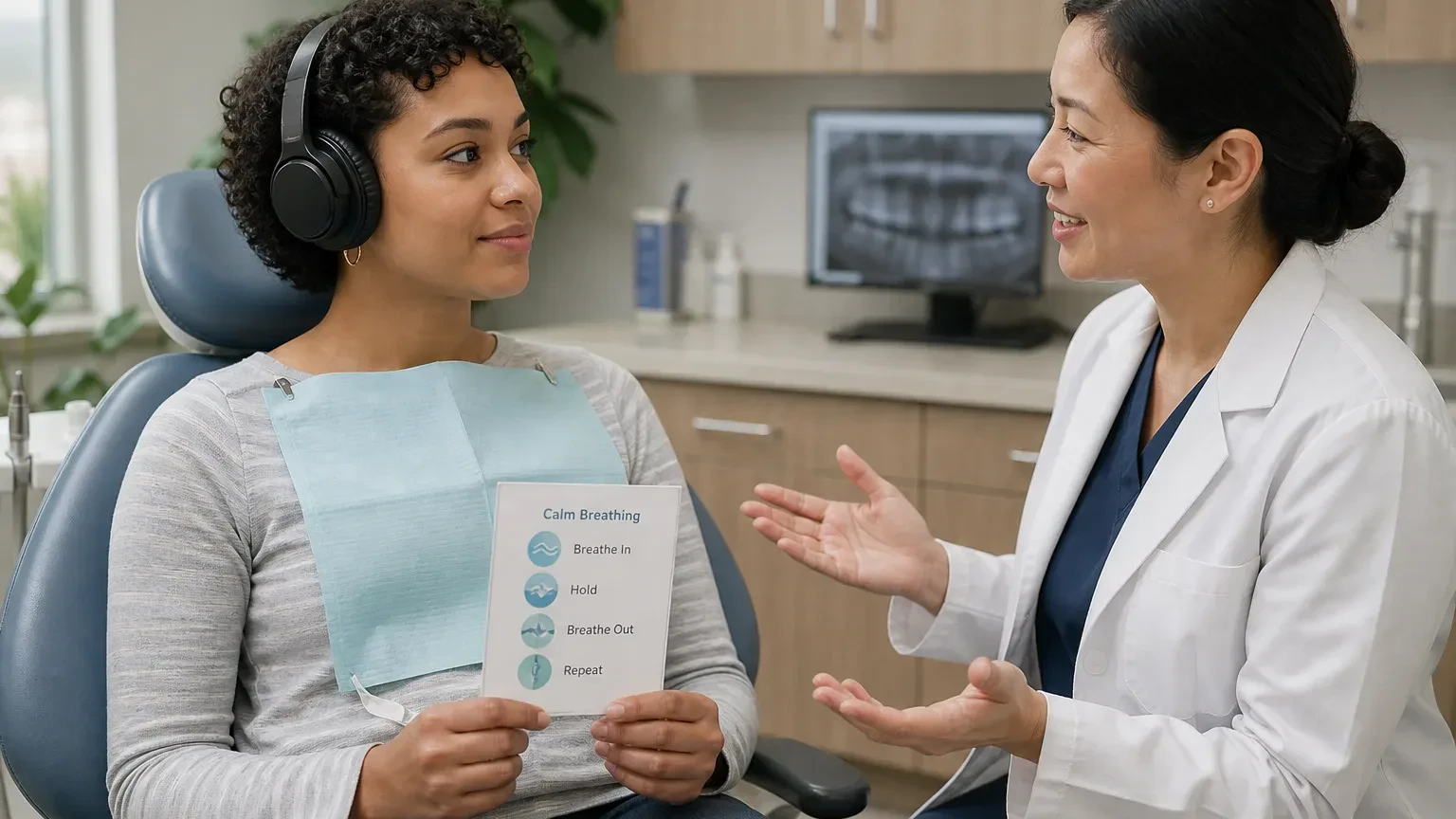
You calm dental anxiety by lowering the body’s alarm response and making the appointment more predictable—not by forcing yourself to “just relax.” Slow breathing, clear communication, planned breaks, and stepwise care help many people get through visits with less fear. MouthHealthy notes that speaking up, distraction, and mindfulness techniques can ease dental anxiety, and that regular care often becomes easier once visits feel safer. Think of calming as a routine you practice before and during the visit.
Start by writing what spikes fear most: needles, sounds, gagging, judgment, cost, or feeling trapped. Tell the office when you book. Pair that honesty with appointment prep if you are nervous and, when needed, asking about sedation without shame.
A Calm-Down Routine You Can Reuse
- Before booking: note your top two triggers and whether you want a talk-first visit.
- Day before: pack headphones, a stress ball, and a short list of questions; protect sleep if you can.
- Waiting room: count slow breaths—inhale, then exhale for the same count—five times.
- Chairside: agree on a hand-raise stop signal; ask for a brief “what happens next” before each step.
- After: write what helped so the next visit starts with a known toolkit.
Distraction is not avoidance when you still show up. Music, a fidget object, or a mental “safe place” can occupy attention while the team works. Body scans—releasing forehead, jaw, shoulders, then hands—often lower muscle bracing that worsens discomfort. If numbness feels incomplete, say so early; many people stay quiet longer than they need to.
Calming tools work best with pacing. A successful restart visit might be only an exam, X-rays, and a staged plan. That is still real care. Fear linked to past pain, embarrassment, or loss of control deserves a plan that restores choice, not a pep talk that dismisses it.
If panic, nausea, or freeze responses keep canceling care, add professional support. Some people benefit from therapy skills for specific fears alongside dental pacing. Medicine or sedation can be part of a plan when non-drug tools are not enough—ask what your office offers and what screening is required.
Keep expectations kind: a calmer visit can still include a racing heart. Success is finishing the step you planned, then noting which tool helped most. Over a few appointments, the routine often shortens because your body has safer memories to lean on. If one strategy fails, swap it—headphones instead of visualization, morning slots instead of evenings—rather than concluding that nothing works.
 Comfort aids are welcome.
Small tools, clearer attention
Bring what actually helps you: familiar music, a soft object for your hands, or a support person in the waiting room when the office allows. Ask whether the team can narrate softly or work in quieter stretches. If smells or drill sounds are the hardest part, headphones plus a stop signal often matter more than pretending those cues do not exist. Your job is not to impress the team with bravery; it is to stay present enough to finish a manageable step.
When The Routine Needs Extra Support
- Anxiety still blocks booking after several attempts—ask for a shorter first visit.
- Past trauma or panic attacks around medical care—mention that so pacing can slow.
- Children mirror adult stress—see how childhood dental anxiety shows up.
- You want deeper help for the visit—ask about nitrous or other options without apologizing.
 Pause rights reduce panic.
Control is a calming medicine
A stop signal turns “trapped” into “I can pause.” Practice raising your hand once before work starts so the reflex is ready. Ask the dentist to check numbness and explain the next instrument before it appears. For an office that welcomes anxious patients and explains pacing clearly, use Find a Dentist and mention dental anxiety when you book. A reusable calm routine beats hoping this time will magically feel easy.
Calming dental anxiety is a practiced routine: name the trigger, tell the team, breathe and distract on purpose, and protect control with breaks. Progress is finishing the next safe step—not erasing every nervous feeling overnight.
Related articles
Keep exploring related topics from Dental Country.
What Happens At A First Dental Visit?
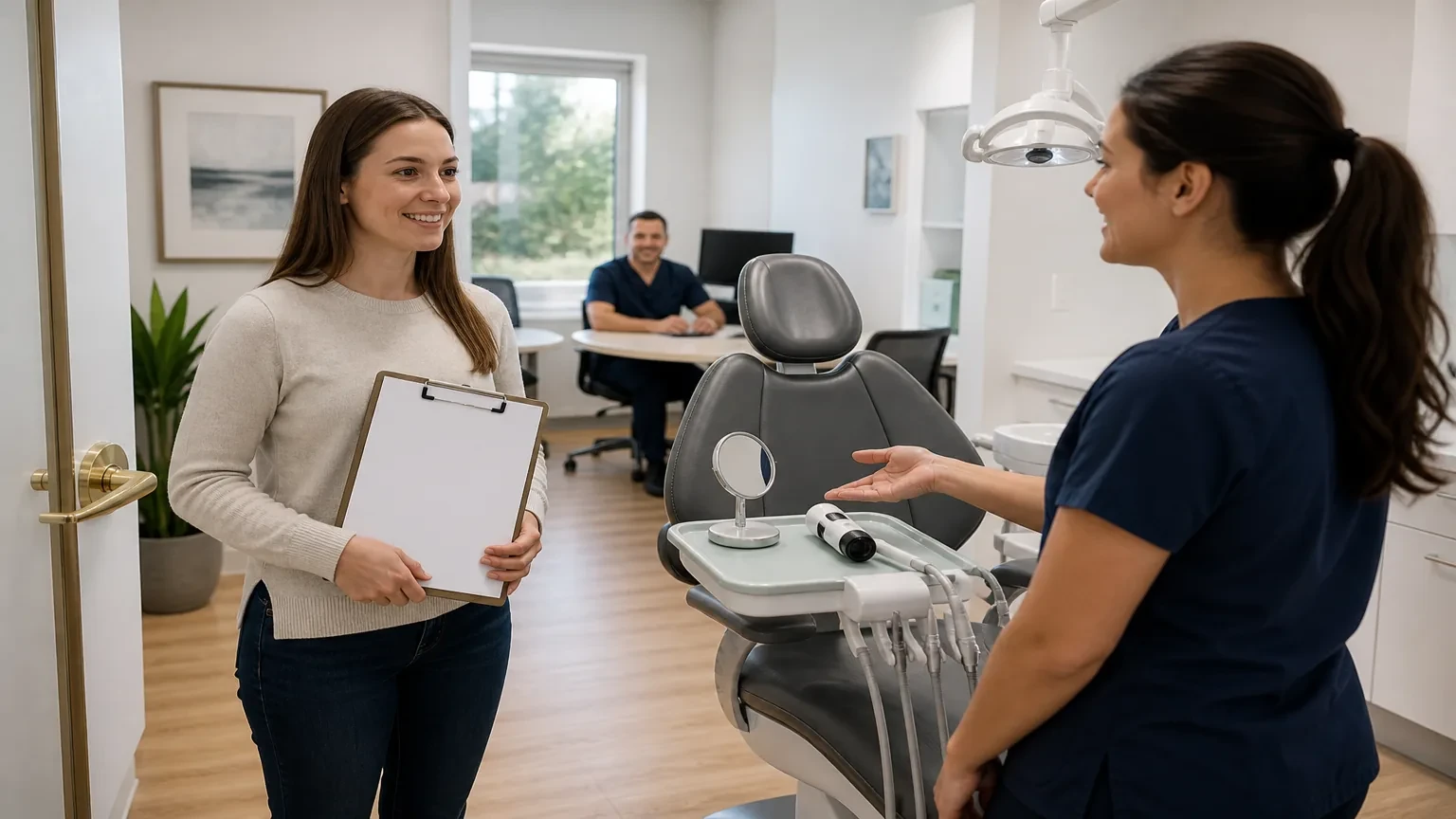
Most first dental visits move from paperwork and conversation to an exam, possible imaging, and a written plan—treatment can often wait until you understand options and feel ready.
Read article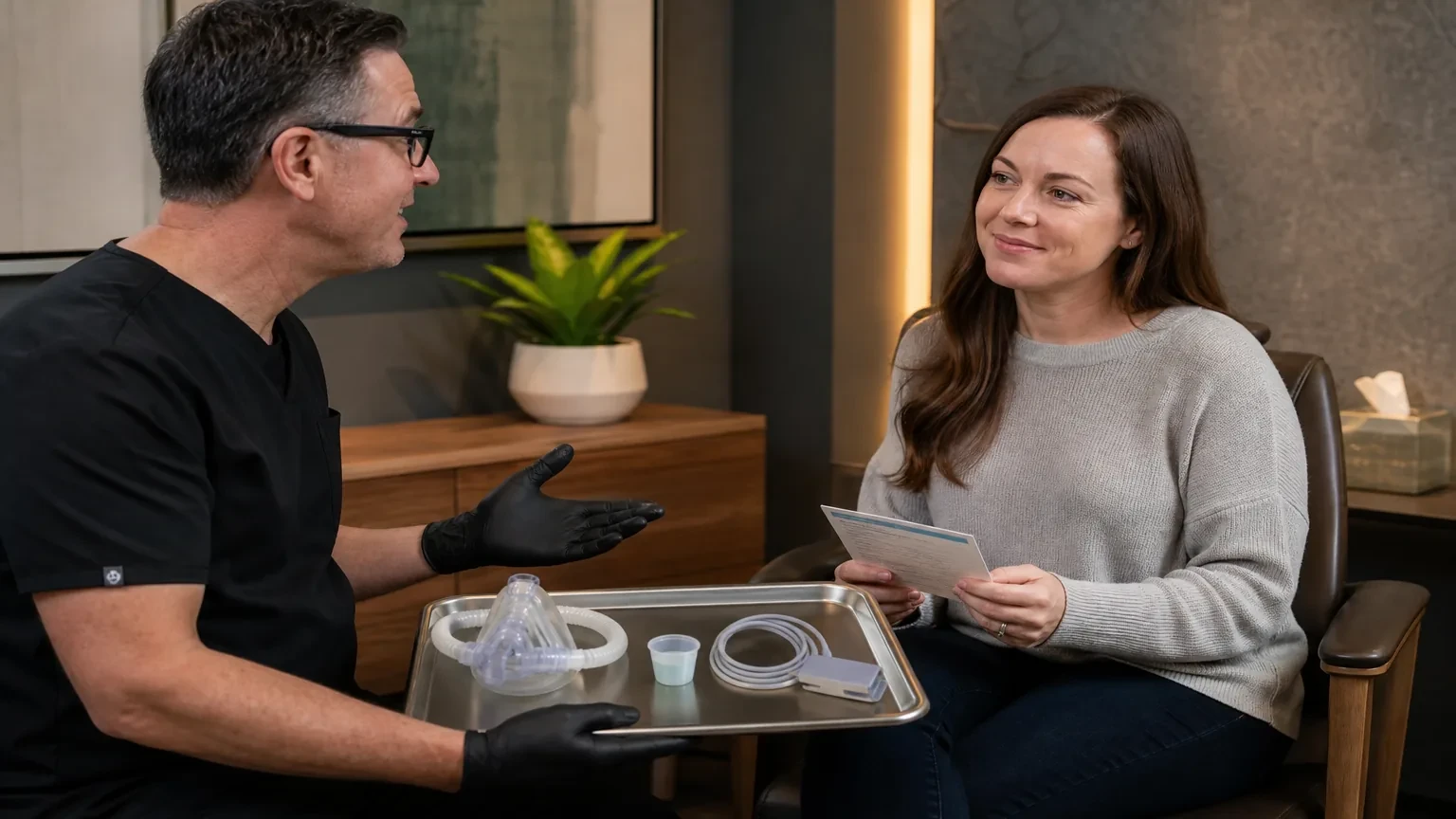
Can You Ask For Sedation If You Are Afraid Of The Dentist?
Asking for sedation when you fear the dentist is appropriate; offices may offer nitrous, oral medicine, or IV options after screening—sedation is a tool, not a character judgment.
Read article
How Do You Find A Dentist For Anxious Patients?
Finding a dentist for anxious patients means prioritizing how the office listens and paces care—comfort options matter, but respectful communication is the first filter.
Read article
Why Do People Fear The Dentist?
Dental fear usually comes from past pain, feeling powerless, embarrassment, cost stress, or intense sensory cues—understanding the cause helps you pick tools that fit instead of blaming yourself.
Read article