
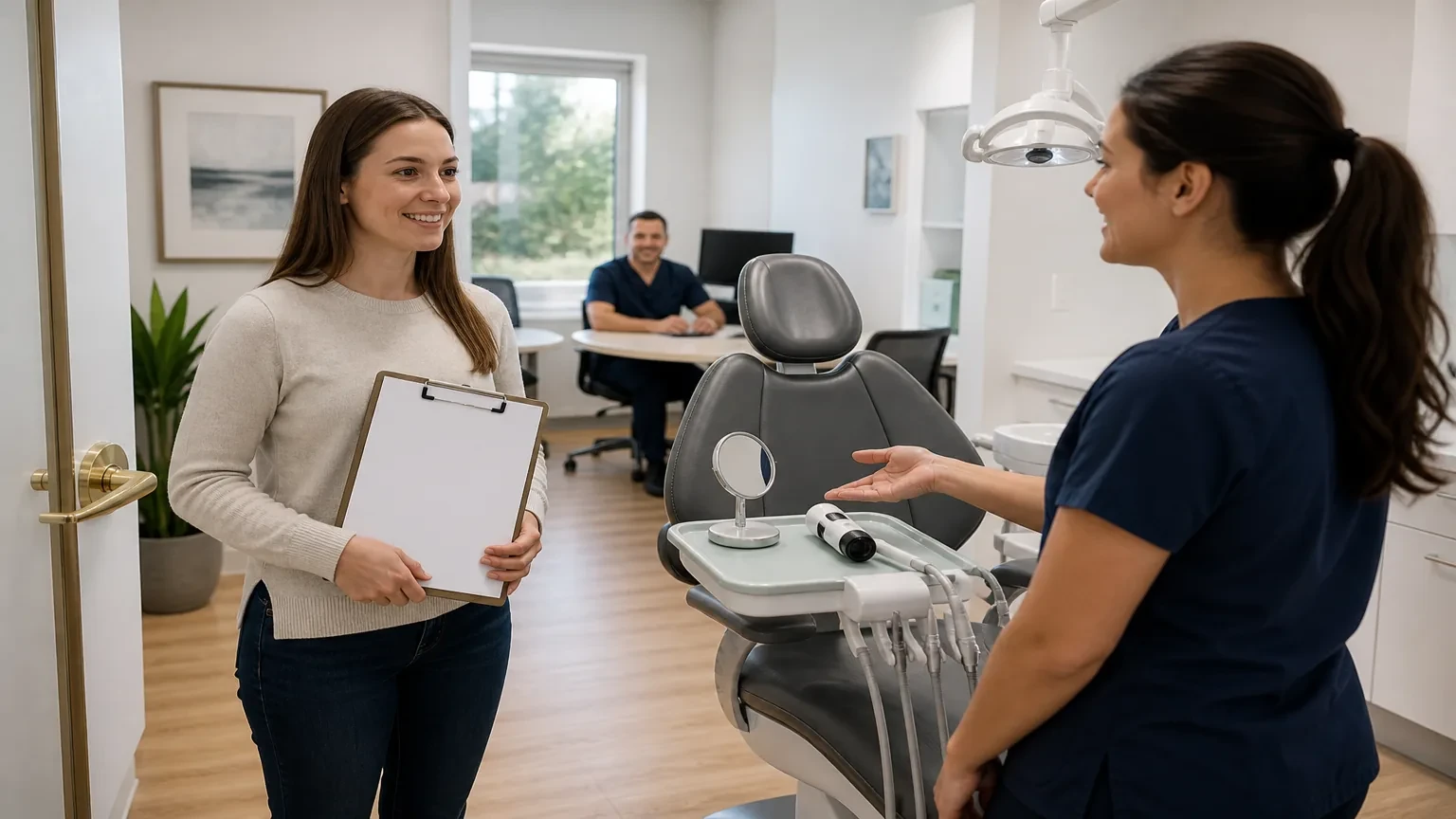
What Happens At A First Dental Visit?
A first dental visit usually covers history, exam, possible X-rays, and a staged plan. Walk the timeline so fewer surprises fuel anxiety today.

Reviewed by Dr. Sean Myran, DMDDoctor of Dental Medicine, University of Pennsylvania
A first dental visit usually follows a clear timeline: forms and medical history, a conversation about concerns, an exam of teeth and gums, possible X-rays when useful, and a plan that may include cleaning or staged treatment later. Knowing the sequence reduces the fear of the unknown. MedlinePlus explains that dental exams check teeth, gums, and mouth health, and that people who feel anxious should tell the dentist before the visit so the team can discuss ways to help them feel more relaxed. You can ask for a talk-first visit if jumping straight into procedures feels like too much.
Offices differ on same-day cleaning or treatment. Ask when you schedule. Cross-check questions worth asking a new dentist and ways to calm anxiety during the visit.
First-Visit Timeline, Step By Step
- Check-in (10–20 minutes): insurance or self-pay notes, health history, medicines, and allergies.
- Listen and map concerns: what hurts, what you fear, how long it has been since care.
- Exam: teeth, bite, gums, soft tissues; the dentist looks for decay, infection signs, and oral-cancer screening elements as appropriate.
- Imaging when needed: X-rays help see between teeth and under restorations; you can ask why each image is suggested.
- Plan and next steps: urgent needs first, then preventive or elective work; cleaning may be today or a follow-up.
You do not have to agree to every procedure the same day. A respectful office separates what is urgent from what can wait, explains costs before major work, and invites questions. If you have been away from care, the exam may feel emotionally heavy—ask the team to share findings with kindness and without lectures.
Children’s first visits often emphasize getting comfortable in the chair, a gentle look, and positive language; treatment may be deferred. Adults restarting care after years away often need the same pacing: information first, then a schedule that fits anxiety and budget.
Bring a medicine list, prior dental records if you have them, and notes about past hard experiences. Mention gagging, fainting, or panic so the team can adjust chair position, breaks, or instrument choice. If sedation might help later visits, ask what the office offers rather than waiting until pain is severe.
Photos or old X-rays from another office can reduce repeat imaging when clinically appropriate—ask whether transfer is useful. If English is not your first language, request interpretation early so consent is real, not guessed. Wear comfortable clothes and avoid heavy necklaces that interfere with a lead apron. Small logistics keep attention free for the parts that feel emotionally hard.
Before you leave, confirm how to reach the office with after-hours concerns and whether a written summary will be emailed or printed. Anxiety often spikes again at home when you try to remember numbers and timelines; a paper plan prevents that second wave. If you feel overwhelmed by findings, ask which one problem matters this month so your brain has a single next action.
 Explain-as-you-go helps.
Narration shrinks surprises
Ask for a running explanation: which tooth, which instrument, how long a step might take. If you prefer less detail, say “only warn me before anything sharp or noisy.” Either preference is valid. A first visit succeeds when you leave with clearer facts and a plan you can live with—not when every possible filling is finished under pressure. If something hurts, speak up immediately so numbness or technique can be adjusted.
What Usually Is Optional On Day One
- Elective cosmetic work or extensive reconstruction.
- Non-urgent treatment you want a second opinion on.
- Deep cleaning phases that can be scheduled with breaks—ask about staging.
- Sedation for future visits—preview options now; see asking for sedation when fear is high.
 Plans beat mystery lists.
A written order lowers overwhelm
Leave with priorities in writing: what needs attention soon, what can wait, and what preventive steps protect you between visits. Ask which problems cause pain or infection risk versus appearance concerns. For a practice that explains first visits without rushing, use Find a Dentist and say you want a gentle new-patient appointment focused on exam and planning. Predictability is the first treatment for visit anxiety.
A first dental visit is mostly history, exam, possible X-rays, and a staged plan. Ask what will happen that day, keep optional work optional, and use the timeline so fewer unknowns drive fear.
Related articles
Keep exploring related topics from Dental Country.
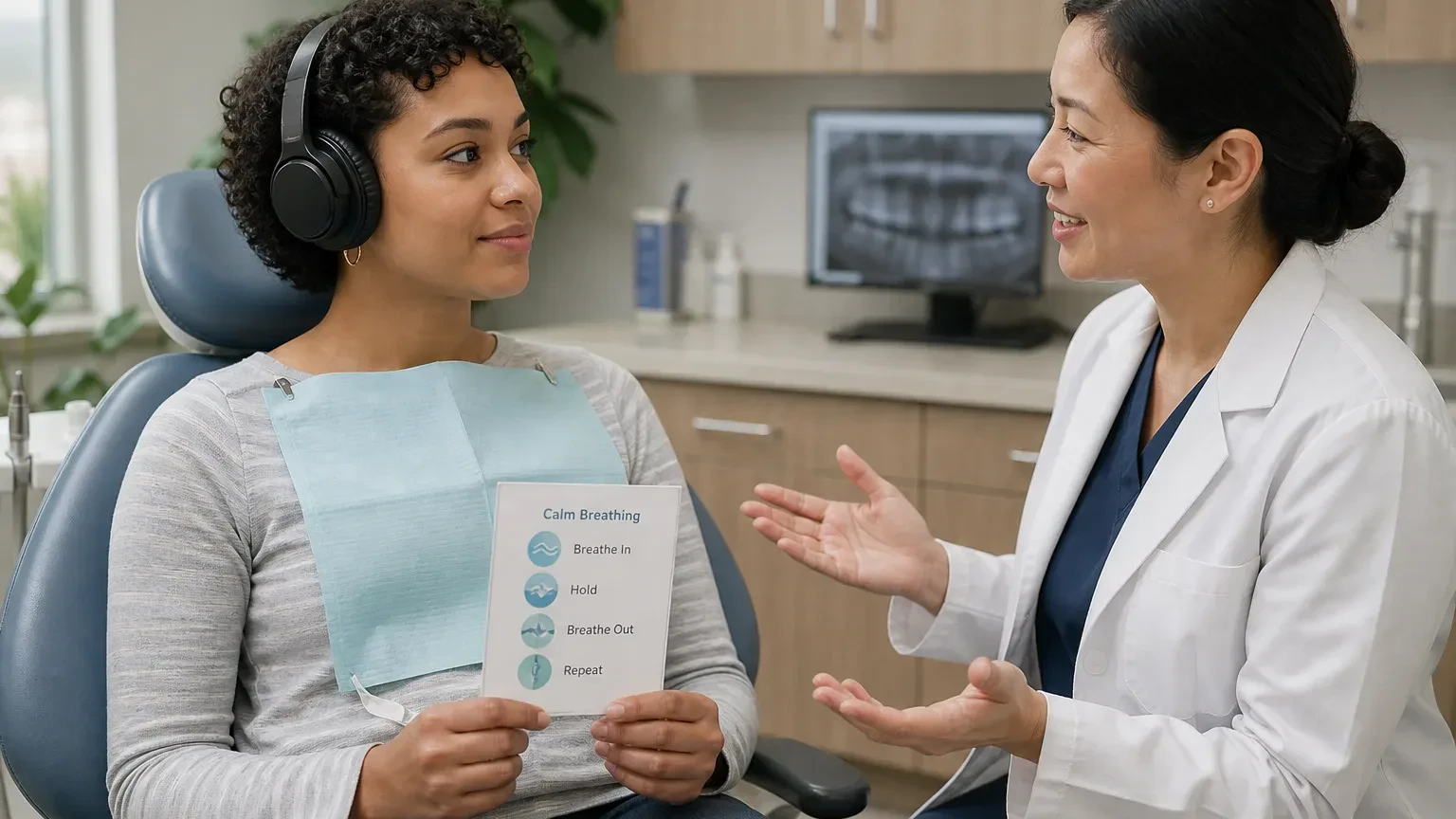
How Do You Calm Dental Anxiety?
You calm dental anxiety by naming triggers, telling the dental team early, pacing the visit with a stop signal, and pairing breathing or distraction with honest pain-control questions—progress counts more than feeling perfectly calm.
Read article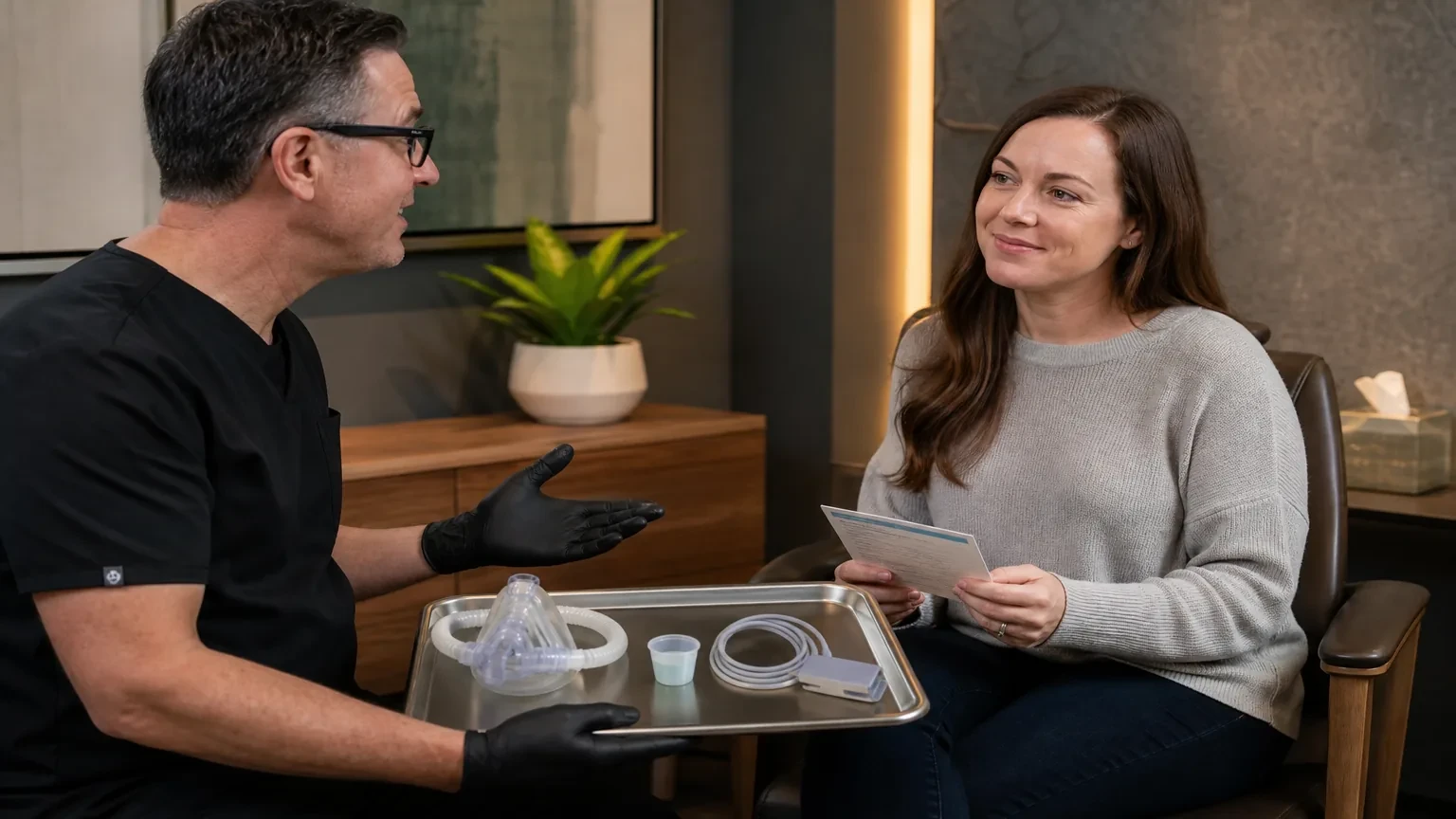
Can You Ask For Sedation If You Are Afraid Of The Dentist?
Asking for sedation when you fear the dentist is appropriate; offices may offer nitrous, oral medicine, or IV options after screening—sedation is a tool, not a character judgment.
Read article
How Do You Find A Dentist For Anxious Patients?
Finding a dentist for anxious patients means prioritizing how the office listens and paces care—comfort options matter, but respectful communication is the first filter.
Read article
Why Do People Fear The Dentist?
Dental fear usually comes from past pain, feeling powerless, embarrassment, cost stress, or intense sensory cues—understanding the cause helps you pick tools that fit instead of blaming yourself.
Read article