
How Often Should You Get Dental X-Rays?
Bitewings are not on one fixed calendar for every adult. Learn how cavity risk, gum health, and prior films shape how often you need dental X-rays.

Reviewed by Dr. Sean Myran, DMDDoctor of Dental Medicine, University of Pennsylvania
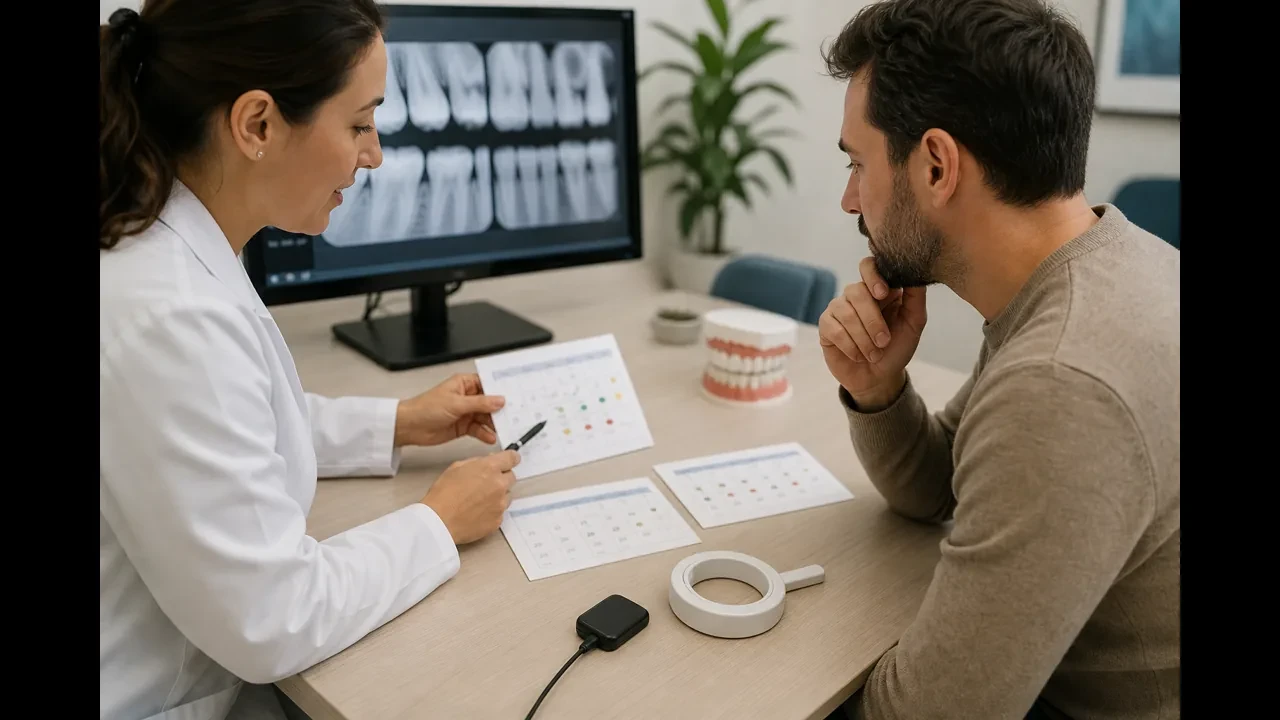
How often you need dental X-rays depends on your cavity risk, gum and bone status, age, symptoms, and how recent usable films already are—not on a single universal number. Many low-risk adults receive bitewings on a longer interval than teens with tight contacts and high decay rates. MouthHealthy notes that dentists recommend X-rays based on your individual needs. A decision guide beats memorizing a slogan like “every year no matter what.”
New patients often need a baseline set so the dentist can see between teeth and around roots. Returning patients with stable exams may only need selective bitewings when the last set is outdated relative to their risk. Pain, trauma, implant follow-up, or suspected infection can justify films outside the preventive rhythm. Safety questions are covered in whether dental X-rays are safe; this article focuses on timing.
Interval Decision Guide
- Higher risk (consider shorter gaps): recent cavities, deep grooves, orthodontics, dry mouth, sticky snacks, prior root canals with symptoms, or advancing bone loss.
- Moderate risk: mixed findings—some stain or early lesions, fair hygiene, occasional bleeding.
- Lower risk (often longer gaps): years without new decay, excellent hygiene, healthy gums, and prior films that remain clinically adequate.
- Symptom-driven: toothache, swelling, or injury can override the calendar the same week.
MedlinePlus explains that dental X-rays help find cavities, bone loss, and other problems that may not show during a regular exam. Justification means the film answers a clinical question; optimization means the smallest useful set. Bring prior images on a disc or patient portal download when you change offices so intervals do not reset to zero without reason.
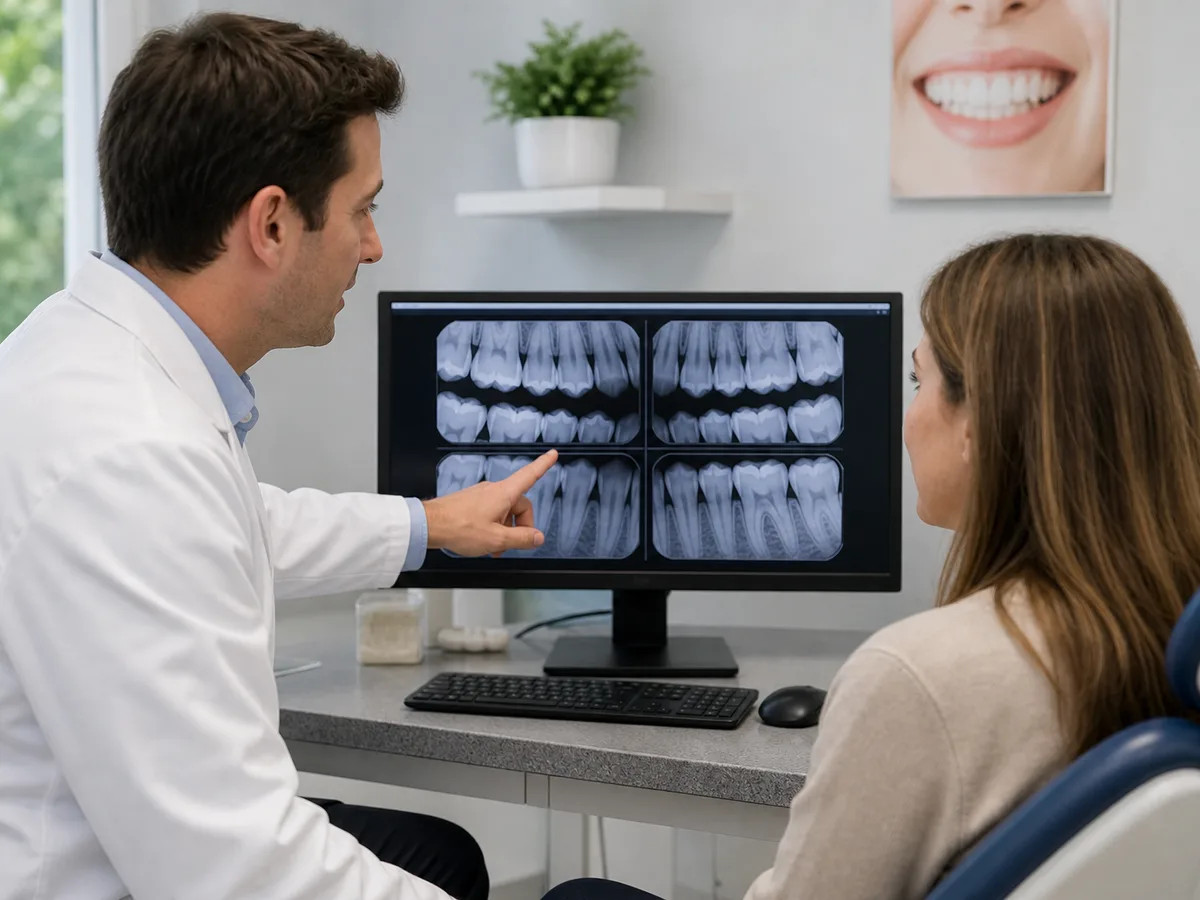
Full-mouth series, panoramic films, and cone-beam CT are not interchangeable with bitewings. A panoramic image maps wisdom teeth and jaw relationships but can miss tiny contact decay that bitewings show clearly. Cone-beam scans deliver more detail—and more dose—so they are reserved for implant planning, complex surgery, or specific pathology rather than every cleaning visit. Matching the tool to the question is part of interval judgment.
 Two facts drive the schedule.
Risk plus last film date equals timing
Ask your dentist to state both pieces aloud: your risk category and the date of the last bitewings or full mouth series. If those films are recent and your exam is quiet, declining a duplicate set can be reasonable. If your last films are several years old and you have new staining between molars, updating images may catch decay while a small filling still works. Pregnancy, recent medical CT, or radiation therapy belong in the same timing talk.
How Checkups And Films Work Together
- Visual exam and gum charting flag what the eye can see—part of a routine checkup.
- Radiographs reveal contacts, bone levels, and root tips the mirror misses.
- Together they decide whether you need fillings, fluoride support, or only monitoring.
 Spacing is flexible; indication is not.
You can negotiate sequence, not silence
If sitting through a full series feels overwhelming, ask whether urgent views can come first and remaining films at the next preventive visit when clinically acceptable. Refusing all radiographs long-term leaves hidden decay and bone loss untracked. For a dentist who will personalize imaging intervals, use Find a Dentist and request that prior films be reviewed before new ones are taken. Keep a note of each imaging date in your phone health file.
Teens in orthodontics, adults with many crowns, and patients on dry-mouth medicines often sit on the shorter end of the range even when they feel fine. Conversely, someone with spaced teeth, strong saliva, and a quiet ten-year chart may honestly wait longer between bitewing sets. Document the rationale so a future dentist understands why your last films are three years old rather than assuming neglect.
Dental X-ray frequency is a shared decision guided by risk, prior images, and today’s symptoms. Use the interval guide above as a conversation script, then follow the plan your dentist documents for your mouth—not a social-media average.
Related articles
Keep exploring related topics from Dental Country.
How Often Should You Get A Dental Cleaning?
Cleaning frequency follows risk: stable gums and low decay may fit a six-month rhythm, while bleeding, dry mouth, or rapid tartar often need closer recalls.
Read article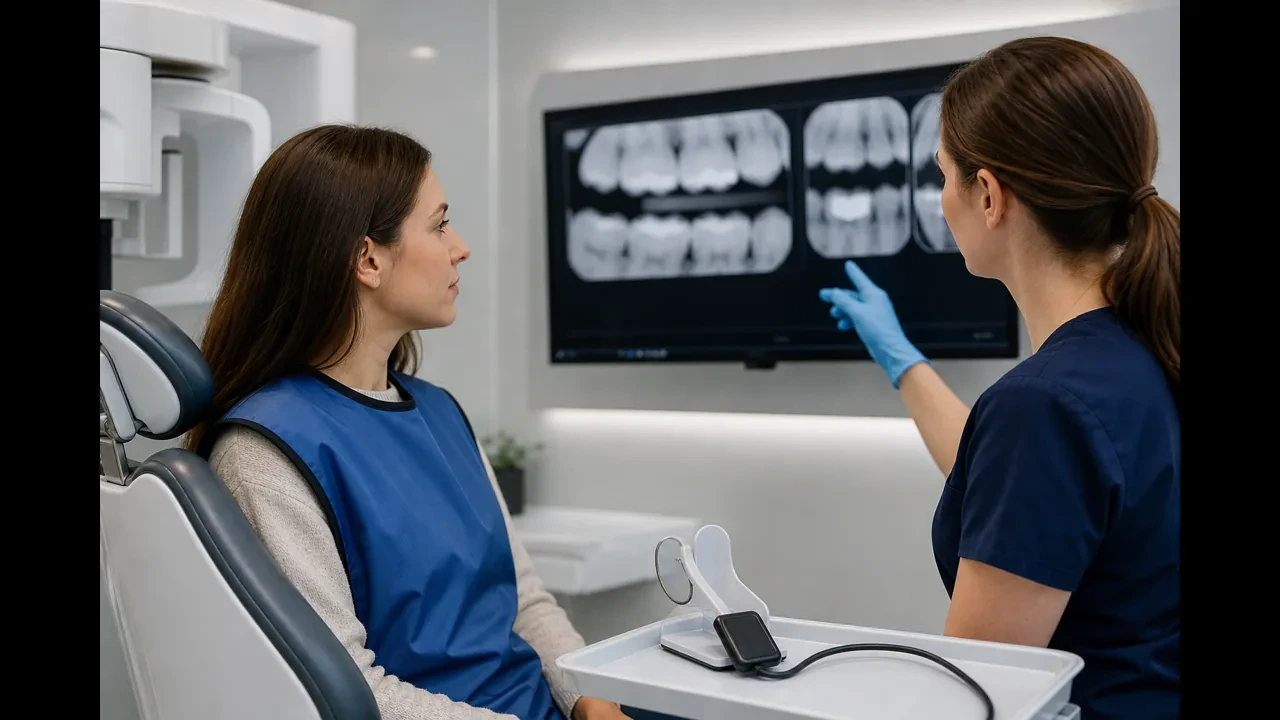
Are Dental X-Rays Safe?
Dental radiographs are low-dose tools used when the benefit of seeing hidden decay or bone loss outweighs the small radiation exposure of modern imaging.
Read article
What Is A Deep Cleaning At The Dentist?
Deep cleaning reaches plaque and calculus under inflamed gums and along root surfaces, aiming to calm periodontal pockets that a polish alone cannot treat.
Read article
Do You Need Fluoride Treatments As An Adult?
Adult fluoride is about risk, not age: exposed roots, dry mouth, orthodontic scars, and recurring decay are common reasons in-office treatments still help.
Read article