
Does My Child Need A Mouthguard For Sports?
A child may need a mouthguard for contact and collision sports. Learn guard types, fit, braces concerns, replacement timing, and injury prevention.

Reviewed by Dr. Sean Myran, DMDDoctor of Dental Medicine, University of Pennsylvania
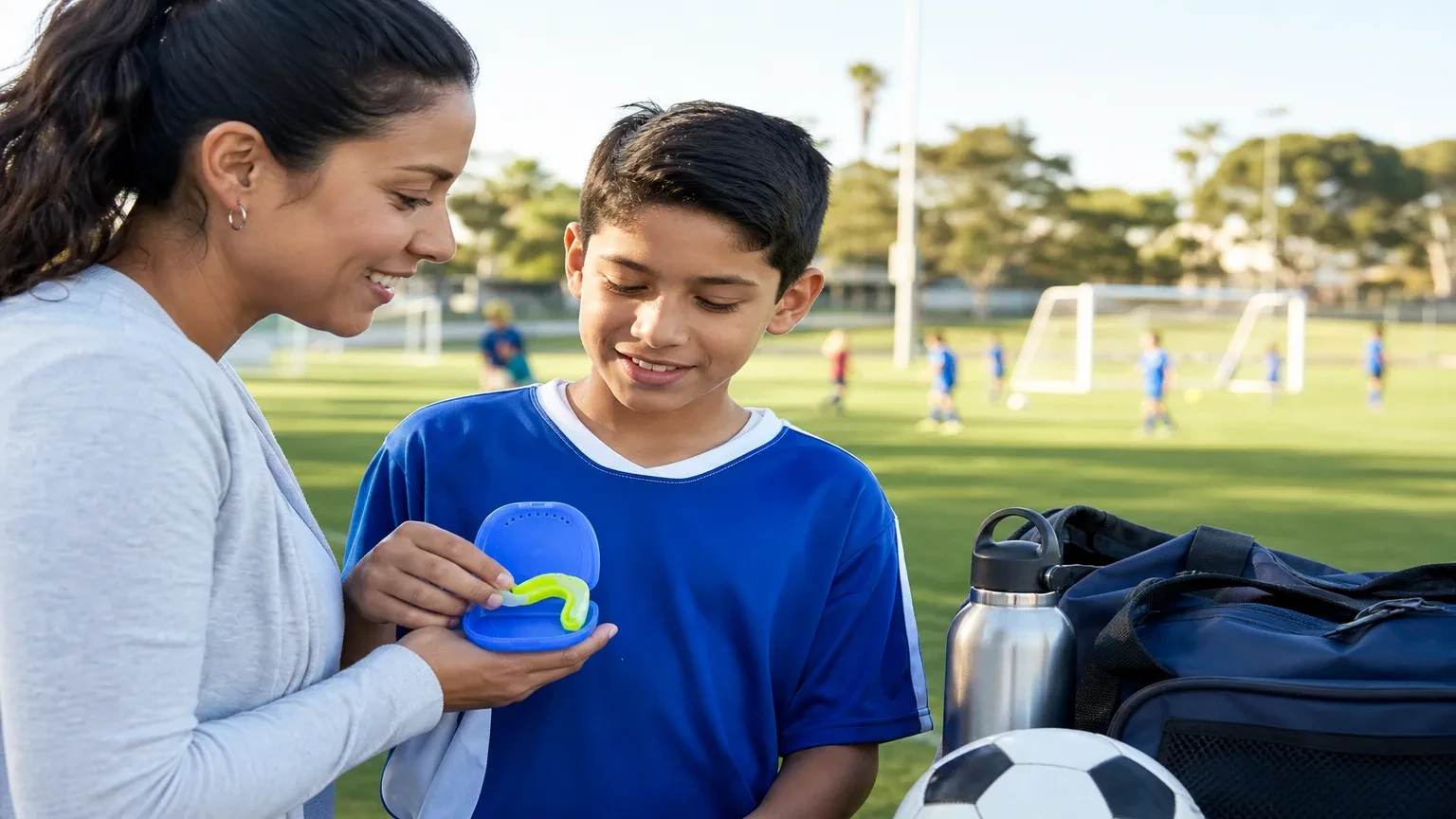
A child may need a mouthguard for sports that involve contact, collision, falls, sticks, balls, or fast movement near other players. Football, hockey, lacrosse, boxing, martial arts, basketball, soccer, baseball, skateboarding, and gymnastics can all create dental injury risk. MouthHealthy explains that mouthguards help cushion blows that could cause broken teeth and injuries. A good guard cannot prevent every injury, but it can reduce the force that reaches teeth and soft tissue.
Sports Mouthguard Guide
- Stock guards: inexpensive but often bulky and loose.
- Boil-and-bite guards: molded at home, better than stock when shaped well.
- Custom guards: made from a dental impression or scan for fit and comfort.
- Braces guards: designed with orthodontic hardware and tooth movement in mind.
- Replacement: needed when a guard tears, thins, feels loose, or the child grows.
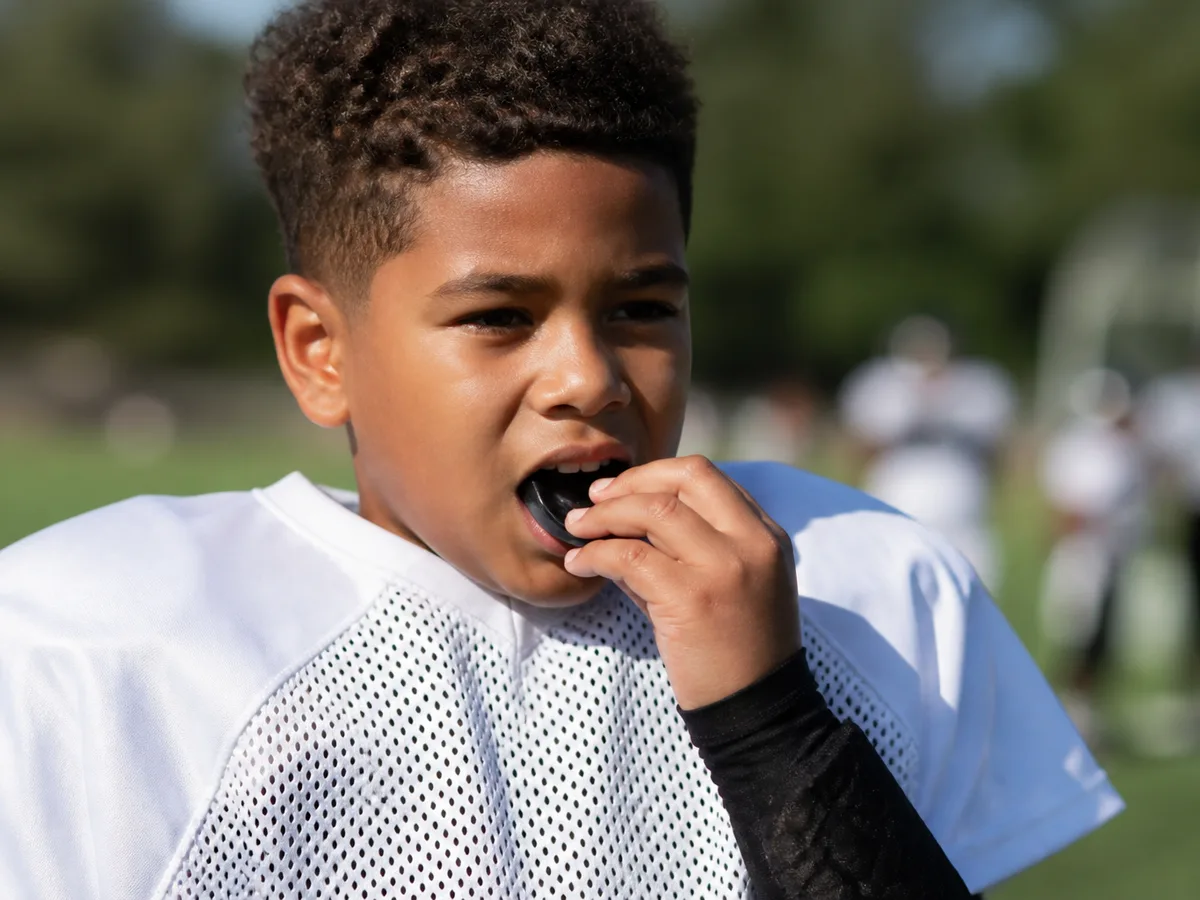 Comfort supports compliance.
Fit decides whether it gets worn
A guard that blocks breathing, speech, or comfort may stay in the gym bag. The best protective device is one the child will actually wear during practices and games.
How To Choose
For low-cost entry, a properly molded boil-and-bite guard may be reasonable. Follow instructions carefully and supervise heating so the child is not burned. A custom guard may be worth discussing for collision sports, children with dental injury history, braces, missing teeth, large overjet, or a guard that never stays in place. The dentist can also check whether the guard protects the upper teeth, lower teeth, or both depending on the sport and bite.
Children in braces need special caution. Teeth move during orthodontic treatment, so a tight boil-and-bite guard may not fit for long and can press against brackets. Orthodontic guards are made to cover hardware and allow movement. Ask the orthodontist or dentist before molding anything over braces. A child with a habit of chewing the guard may need a tougher design or more frequent replacement.
Mouthguards should be rinsed after use, brushed gently, air dried, and stored in a ventilated case. Heat can warp them, so they should not sit in a hot car or direct sun. Bring the guard to dental visits so the team can check wear, fit, and bite changes. A cracked, thin, smelly, or loose guard is not doing its job well.
Teams sometimes require guards only for games, but injuries happen during drills too. Children should practice with the same guard they will wear in competition so talking, drinking water, and breathing feel familiar. A coach may be more supportive when the guard fits well and does not keep falling out during instructions.
Label the case with the child's name and team. Lost guards are common, and a backup can save a tournament weekend.
A mouthguard is also part of a response plan. Parents and coaches should know what to do if a tooth breaks, moves, or comes out. Keep the dentist's number available during travel tournaments. If an injury happens, the first-aid steps in What Should You Do If A Child Knocks Out A Tooth? can matter more than the ride home.
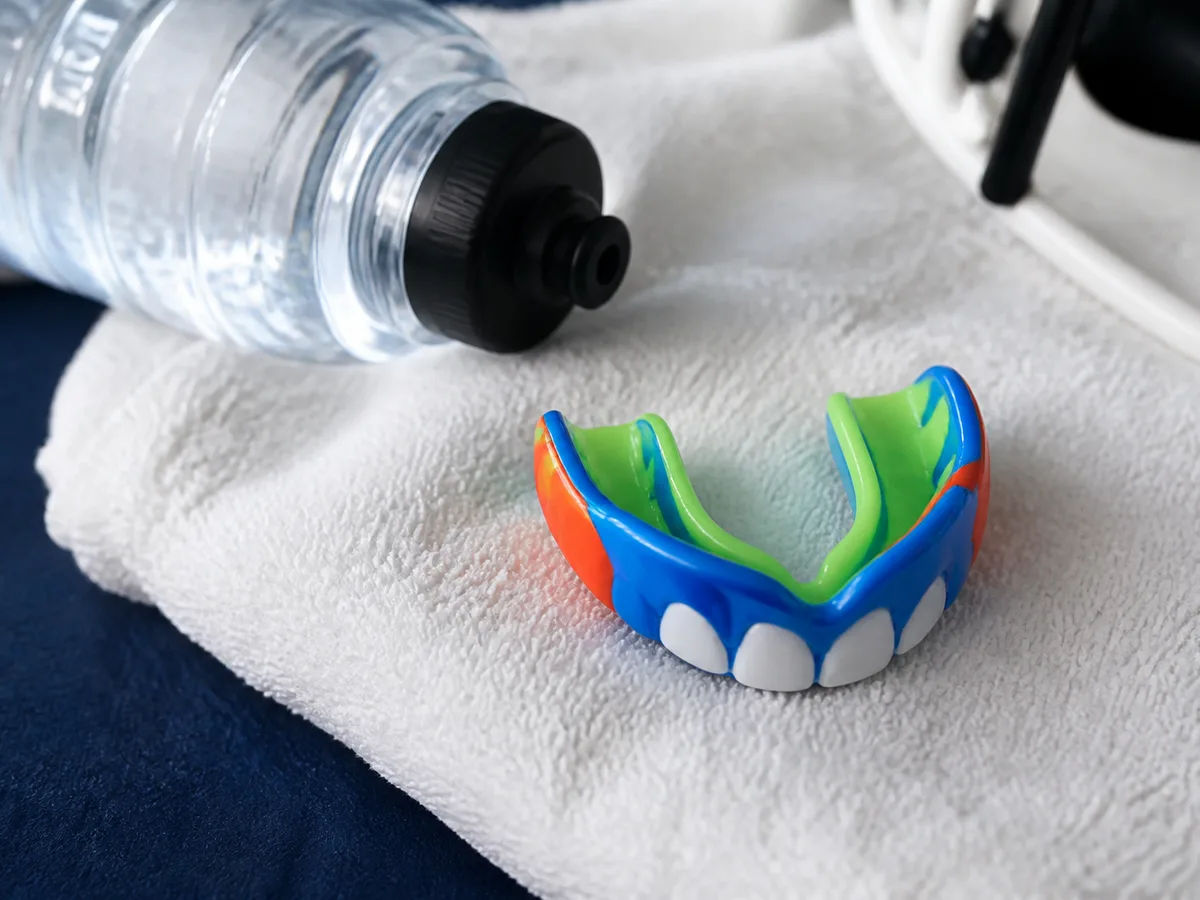 A damaged guard is a weak guard.
Protect the guard between games
Replace a mouthguard that is chewed through, warped, loose, or outgrown. To ask about a custom sports guard, use find a dentist and mention the sport, age, braces, and injury history.
When It Is Strongly Worth Discussing
Talk with a dentist if your child plays a collision sport, has braces, has chipped a tooth before, has front teeth that stick out, or refuses store guards because they gag or fall out. For regular checks around sports seasons, see How Often Should Kids See The Dentist? and for tooth development context see When Do Baby Teeth Fall Out?.
Related articles
Keep exploring related topics from Dental Country.

When Should A Child First See The Dentist?
The first dental visit is less about drilling and more about timing, risk, comfort, feeding habits, brushing help, and giving parents a roadmap.
Read article
What Are Dental Sealants?
Sealants work like a raincoat for deep molar grooves. They reduce risk where toothbrush bristles often cannot clean well enough on their own.
Read article
Is Fluoride Safe For Kids?
Fluoride safety is mostly about dose, age, and supervision. The same mineral that strengthens enamel should be used thoughtfully with children.
Read article
How Do You Stop Thumb Sucking?
Thumb sucking often fades on its own, but timing matters when permanent teeth, bite shape, speech, or social stress enter the picture.
Read article