

What Should You Do If A Child Knocks Out A Tooth?
If a child knocks out a tooth, first aid depends on whether it is baby or permanent. Learn what to save, avoid, and do before urgent dental care.

Reviewed by Dr. Sean Myran, DMDDoctor of Dental Medicine, University of Pennsylvania
If a child knocks out a tooth, first figure out whether it is a baby tooth or a permanent tooth. A knocked-out baby tooth is usually not replanted because it could damage the developing adult tooth. A knocked-out permanent tooth is a true dental emergency and may have the best chance if handled quickly. MouthHealthy lists knocked-out teeth among dental emergencies that need prompt action. When in doubt, call a dentist immediately.
First Aid Steps
- Stay calm and check the child: look for head injury, heavy bleeding, or breathing trouble first.
- Find the tooth: hold it by the crown, not the root.
- Do not scrub: if dirty, rinse gently with milk or saline for a few seconds.
- Know the tooth type: do not replant a baby tooth; ask urgent advice for a permanent tooth.
- Keep it moist: use tooth-saving solution, milk, or saliva if advised and safe.
- Get dental care fast: minutes can matter for permanent teeth.
 Moist and gentle is the goal.
Handle the tooth by the crown
The root surface carries delicate cells that can help a permanent tooth survive replantation. Scrubbing, drying, or wrapping the tooth in a tissue can reduce that chance.
Baby Tooth Or Permanent Tooth?
Age and location offer clues. Front baby teeth are common injury victims in toddlers and preschoolers. Permanent front teeth usually erupt around age six to eight. If the child is older and the tooth is large with a longer root, treat it as possibly permanent until a dentist tells you otherwise. Photos sent to the dental office may help triage, but they do not replace an exam.
If several teeth look different after the injury, describe all of them. A tooth can be pushed into the gum, moved sideways, loosened, cracked, or fractured without coming all the way out. Gum cuts and lip swelling can hide tooth fragments, so a dental exam may include X-rays of the teeth and soft tissue.
Do not push a baby tooth back into the socket. The adult tooth bud sits nearby, and replanting can cause harm. The dentist will check for fragments, socket injury, bite problems, and damage to neighboring teeth. Follow-up visits may be needed because injured baby teeth can darken, abscess, or affect eruption later.
For a permanent tooth, urgent care is different. Some instructions advise placing the tooth back in the socket if the child is old enough, cooperative, and there is no choking risk. Other times the tooth should be transported in an appropriate liquid. Because the details depend on age, injury, and comfort, call the dental office or emergency service while someone else helps keep the tooth moist.
Watch for signs that the injury is bigger than the tooth: loss of consciousness, vomiting, severe headache, jaw fracture signs, uncontrolled bleeding, or a deep lip cut. Those may need emergency medical care. A dentist still needs to evaluate the teeth afterward. A sports mouthguard can reduce future risk; see Does My Child Need A Mouthguard For Sports?.
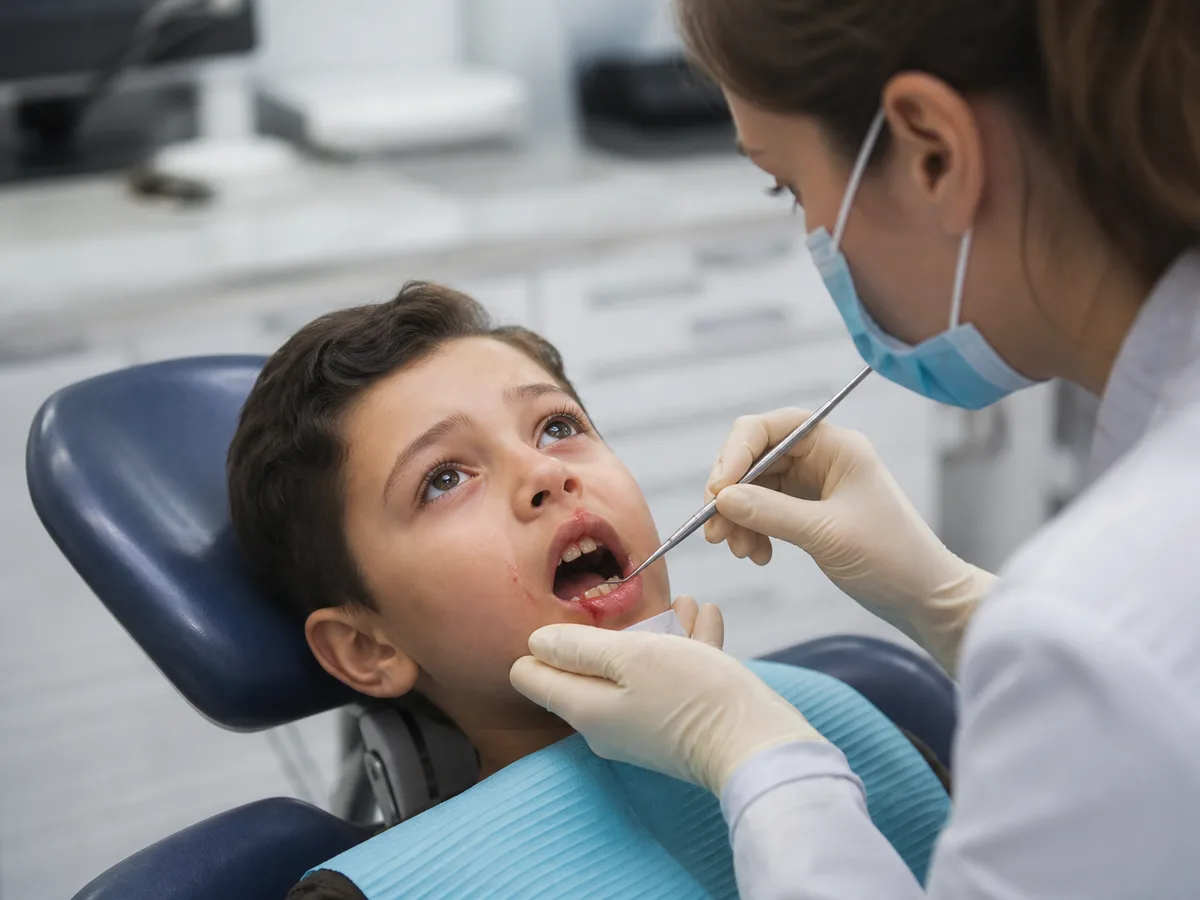 Fast details help fast triage.
Call while the tooth stays moist
Tell the office the child's age, which tooth came out, when it happened, and how the tooth is being stored. For urgent local help, use find a dentist and say a child knocked out a tooth.
After The Emergency Visit
Follow-up can include X-rays, bite checks, soft diet instructions, hygiene guidance, and monitoring for color change, infection, or root problems. If the tooth was a baby tooth lost early, ask whether spacing needs to be watched; Does My Child Need A Space Maintainer? explains that decision. For eruption timing after an injury, compare When Do Baby Teeth Fall Out?.
Related articles
Keep exploring related topics from Dental Country.

When Should A Child First See The Dentist?
The first dental visit is less about drilling and more about timing, risk, comfort, feeding habits, brushing help, and giving parents a roadmap.
Read article
What Are Dental Sealants?
Sealants work like a raincoat for deep molar grooves. They reduce risk where toothbrush bristles often cannot clean well enough on their own.
Read article
Is Fluoride Safe For Kids?
Fluoride safety is mostly about dose, age, and supervision. The same mineral that strengthens enamel should be used thoughtfully with children.
Read article
How Do You Stop Thumb Sucking?
Thumb sucking often fades on its own, but timing matters when permanent teeth, bite shape, speech, or social stress enter the picture.
Read article