

Does My Child Need A Space Maintainer?
A child may need a space maintainer after early baby tooth loss. Learn when space can close, how appliances work, care needs, and questions.

Reviewed by Dr. Sean Myran, DMDDoctor of Dental Medicine, University of Pennsylvania
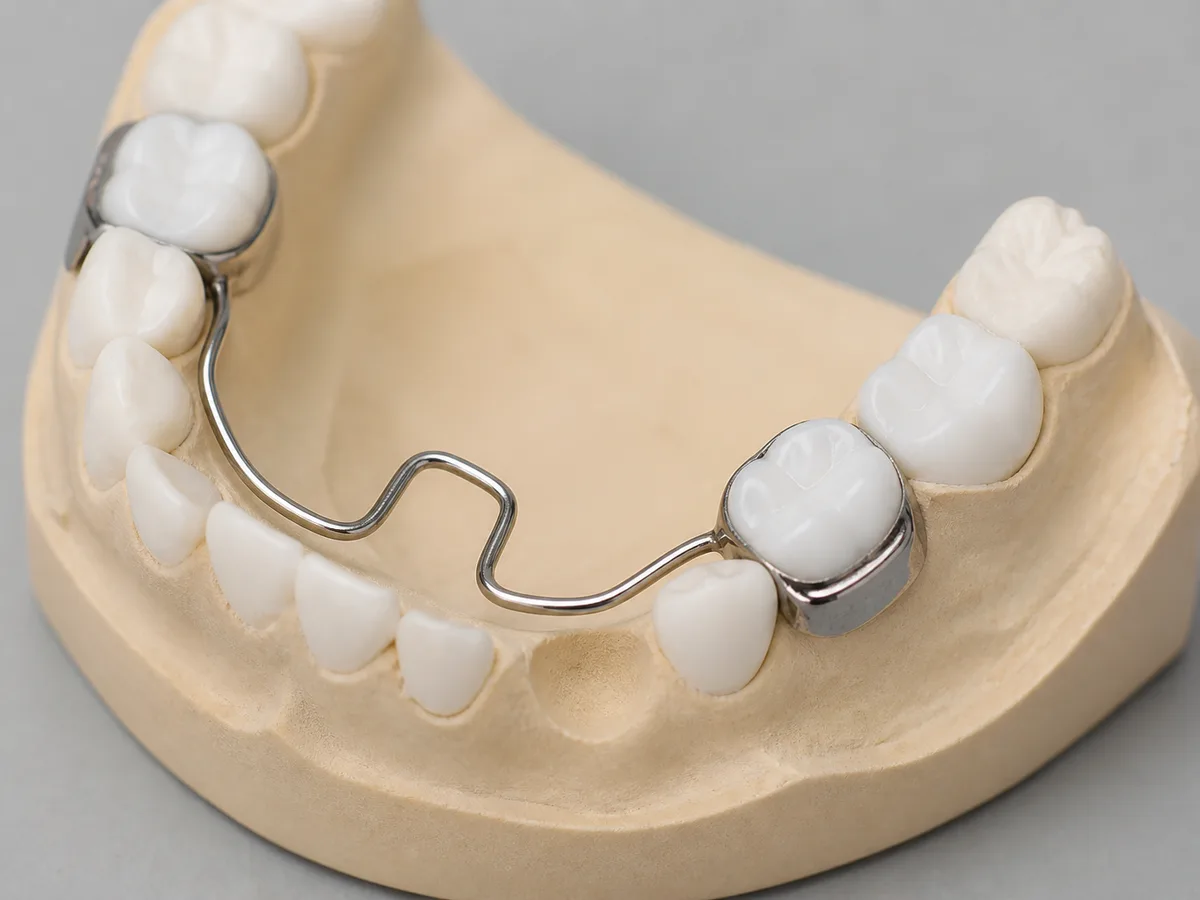
A child may need a space maintainer when a baby tooth is lost earlier than expected and nearby teeth could drift into the empty space. This is most common after early loss of a baby molar from decay, infection, or injury. MouthHealthy explains that space maintainers hold space for permanent teeth after early baby tooth loss. The appliance does not move teeth like braces. It helps preserve a path for the permanent tooth that is still developing.
The Space Maintainer Decision
- Which tooth was lost? early molar loss usually matters more than a front baby tooth.
- How old is the child? the longer the wait for the permanent tooth, the more time space has to close.
- How much space remains? crowding may make drifting more risky.
- What do X-rays show? the permanent tooth's position and development guide timing.
- Can the child keep it clean? appliance care affects gum and cavity risk.
 The empty spot is only one clue.
The X-ray answers the timing question
A space maintainer is most useful when the adult tooth is not close to eruption and neighboring teeth could tip forward. X-rays show whether holding space is likely to help.
When It Is Often Recommended
If a back baby tooth is removed years early, the permanent first molar behind it can drift forward and reduce room for a premolar. That can create crowding, blocked eruption, or a future orthodontic problem. A fixed space maintainer may be cemented to a nearby tooth so the child does not have to remember to wear it.
Not every missing baby tooth needs one. A front baby tooth lost close to normal shedding time may not require treatment. A baby tooth lost when the permanent tooth is already erupting may need only observation. Sometimes the best choice is to monitor because the space is stable, the child is close to the expected eruption window, or the appliance would create more problems than it solves.
Space maintainers come in different designs, including band-and-loop appliances and lower lingual holding arches. The design depends on the tooth lost, which teeth have erupted, and whether one side or both sides need support. The dentist should explain what the appliance touches, how long it may stay, and what would trigger removal.
The appliance is usually planned after the painful or infected tooth is treated. If an extraction is needed, the dentist may take an impression or scan once the area is comfortable enough. Some maintainers can be made quickly; others need a lab step. The child should still be able to eat, speak, and attend school normally after a short adjustment period.
Cleaning matters. Food can collect around bands and wires. Children need help brushing around the appliance and should avoid sticky candies that loosen cement. If the maintainer bends, loosens, rubs the gum, or traps food, call the dental office. Do not leave a loose appliance in a child's mouth because it can irritate tissue or become a swallowing risk. For the bigger tooth timeline, see When Do Baby Teeth Fall Out?.
 Holding space only works if it stays healthy.
Maintenance is part of the treatment
Ask the office to show brushing angles and foods to avoid. To get a second opinion about early baby tooth loss, use find a dentist and bring any recent X-rays if available.
Questions To Ask
Ask what could happen without the appliance, how long it may be needed, how often it should be checked, and whether orthodontic evaluation is recommended. If early tooth loss came from decay, review prevention in What Is Baby Bottle Tooth Decay? and protection habits in Is Fluoride Safe For Kids?.
Related articles
Keep exploring related topics from Dental Country.

When Should A Child First See The Dentist?
The first dental visit is less about drilling and more about timing, risk, comfort, feeding habits, brushing help, and giving parents a roadmap.
Read article
What Are Dental Sealants?
Sealants work like a raincoat for deep molar grooves. They reduce risk where toothbrush bristles often cannot clean well enough on their own.
Read article
Is Fluoride Safe For Kids?
Fluoride safety is mostly about dose, age, and supervision. The same mineral that strengthens enamel should be used thoughtfully with children.
Read article
How Do You Stop Thumb Sucking?
Thumb sucking often fades on its own, but timing matters when permanent teeth, bite shape, speech, or social stress enter the picture.
Read article