

Is Fluoride Safe For Kids?
Fluoride is safe for kids when used in age-appropriate amounts. Learn toothpaste dosing, varnish, swallowing concerns, benefits, and questions.

Reviewed by Dr. Sean Myran, DMDDoctor of Dental Medicine, University of Pennsylvania
Fluoride is safe for kids when it is used in age-appropriate amounts and supervised so children do not swallow large quantities of toothpaste. Fluoride helps enamel resist acid attacks and can reduce cavity risk. CDC describes community water fluoridation as a way to prevent tooth decay. The practical question is not whether fluoride is useful, but how much a child should use at each stage.
Myths And Facts About Fluoride
- Myth: Children should avoid fluoride until they are older.
- Fact: many children benefit from fluoride toothpaste as soon as teeth appear, using a tiny smear at first.
- Myth: More toothpaste means cleaner teeth.
- Fact: the amount should match age and swallowing ability.
- Myth: Fluoride varnish is the same as drinking toothpaste.
- Fact: varnish is painted on professionally and hardens on the teeth.
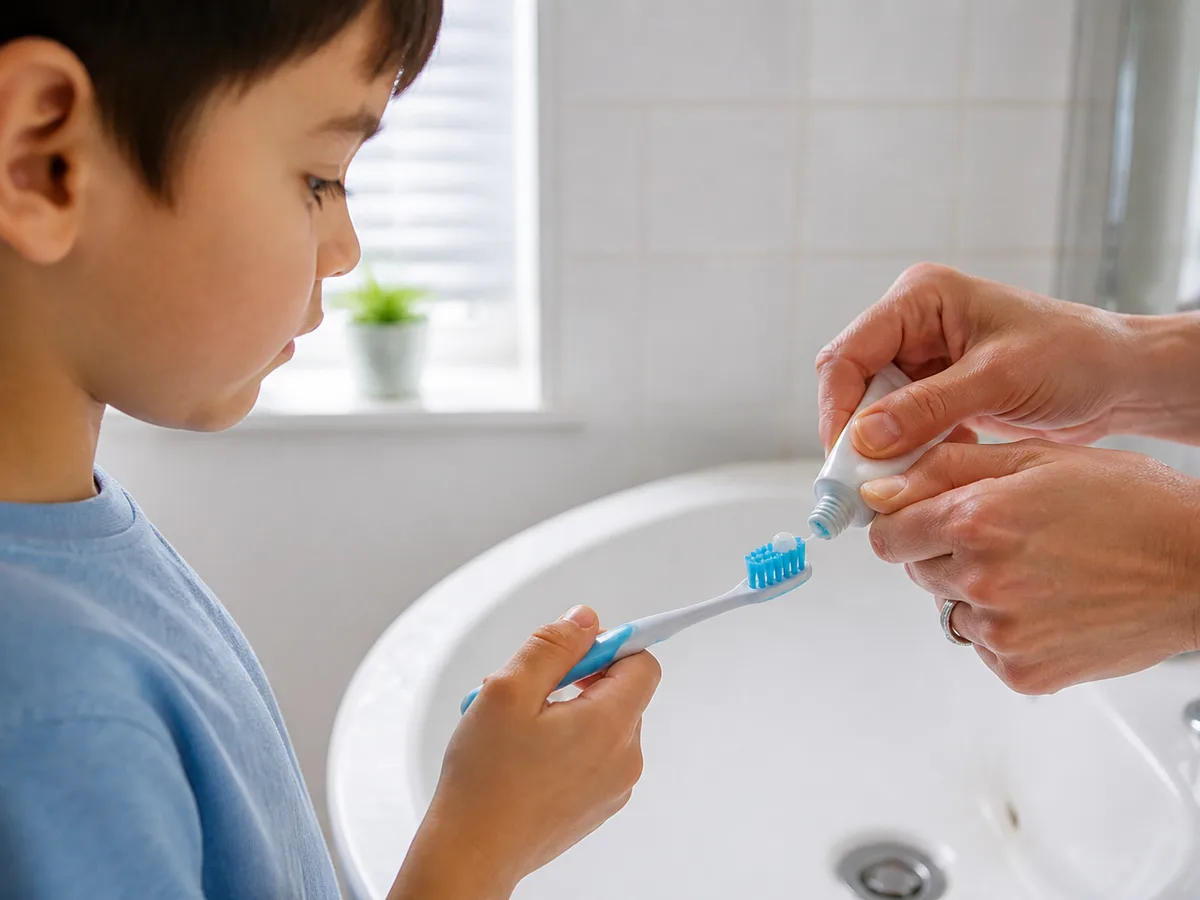 Small amounts can do meaningful work.
The dose changes with age
For very young children, the toothpaste amount is tiny because they cannot spit reliably. As brushing skills improve, the amount can usually increase under adult supervision.
How Parents Can Use It Wisely
For children under three, many dental and medical recommendations use a smear about the size of a grain of rice. For children three to six, a pea-sized amount is common when the child can spit better. Parents should place the toothpaste, brush the child's teeth or finish the job, and teach spitting without repeated rinsing that washes everything away immediately.
Swallowing a little foam during normal brushing is different from eating toothpaste from the tube. Store toothpaste out of reach, especially flavored kinds that taste like candy. If a child repeatedly swallows toothpaste or refuses to spit, ask the dentist for coaching rather than stopping brushing support entirely.
Fluoride varnish is another tool. It may be recommended for children at higher cavity risk or during routine preventive visits. The varnish is brushed onto teeth and sets quickly. A child may be told to avoid hard foods or brushing for a few hours after the visit, depending on the product and office instructions. For children whose molar grooves are the main risk, fluoride may be paired with What Are Dental Sealants?.
Water source matters too. Some homes use fluoridated public water. Others use well water, bottled water, filters, or reverse osmosis systems that change exposure. Tell the dentist what your child usually drinks. That helps avoid both underuse and unnecessary supplements. Fluorosis, faint white markings caused by too much fluoride while teeth develop, is usually cosmetic, but prevention still depends on correct amounts.
Parents who prefer a low-fluoride approach should still talk through the cavity tradeoffs. A child with deep grooves, frequent snacks, or early white spots may need stronger protection than a sibling with low risk. The dentist can help separate a personal preference from a medical risk profile, then choose the smallest effective plan.
That plan should be revisited as the child grows, learns to spit, starts school lunches, or begins orthodontic care.
 The right plan is specific.
Match fluoride to cavity risk
Ask whether your child is low, moderate, or high risk for cavities and what fluoride sources already count. To get individualized guidance, use find a dentist and bring your child's toothpaste and water questions.
When To Ask Extra Questions
Ask for guidance if your child has white spots, repeated cavities, braces, dry mouth, special health needs, well water, or a history of swallowing toothpaste. Fluoride decisions should fit the child, not family rumors. For early prevention with babies, see What Is Baby Bottle Tooth Decay? and for visit timing see When Should A Child First See The Dentist?.
Related articles
Keep exploring related topics from Dental Country.

When Should A Child First See The Dentist?
The first dental visit is less about drilling and more about timing, risk, comfort, feeding habits, brushing help, and giving parents a roadmap.
Read article
What Are Dental Sealants?
Sealants work like a raincoat for deep molar grooves. They reduce risk where toothbrush bristles often cannot clean well enough on their own.
Read article
How Do You Stop Thumb Sucking?
Thumb sucking often fades on its own, but timing matters when permanent teeth, bite shape, speech, or social stress enter the picture.
Read article
What Is Baby Bottle Tooth Decay?
Baby bottle tooth decay is not only a bottle problem. It is a pattern of frequent sugar exposure on small teeth that can progress quickly.
Read article