
What Are Dental Sealants?
Dental sealants are thin protective coatings for cavity-prone molars. Learn how they are placed, who benefits, how long they last, and limits.

Reviewed by Dr. Sean Myran, DMDDoctor of Dental Medicine, University of Pennsylvania
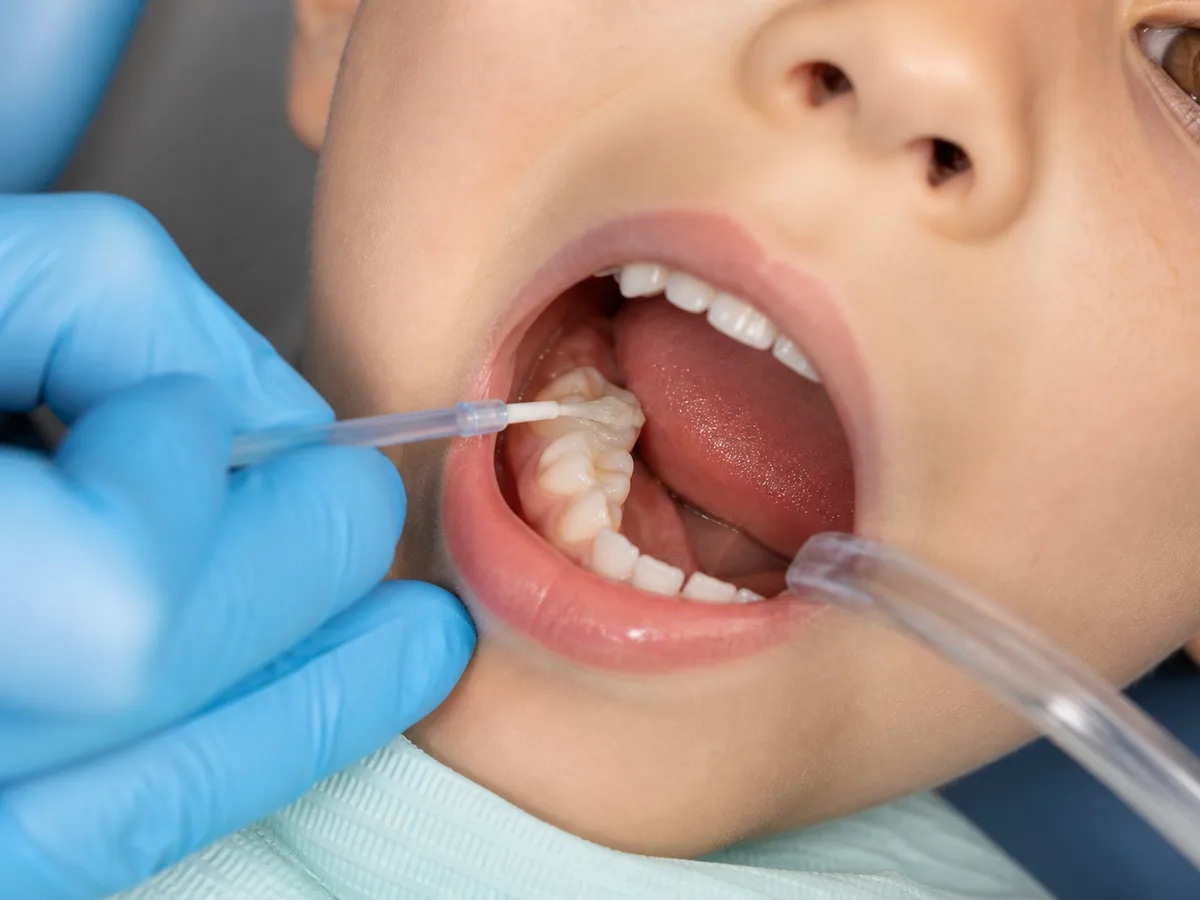
Dental sealants are thin protective coatings placed over the chewing grooves of back teeth, especially permanent molars. The material flows into pits and fissures, hardens, and creates a smoother surface that is easier to clean. MouthHealthy describes sealants as protective coatings that help keep cavities from forming in back teeth. Sealants do not replace brushing or fluoride, but they can lower risk in the exact places where childhood cavities often start.
How Sealants Work
- Target: deep grooves on molars and sometimes premolars.
- Preparation: the tooth is cleaned and kept dry.
- Bonding: the surface is conditioned so the coating can attach.
- Curing: a light hardens the sealant in seconds.
- Check: the dentist confirms the bite still feels normal.
 The groove pattern decides the benefit.
Sealants cover grooves, not whole teeth
The coating is placed on the chewing surface where narrow pits can trap plaque and food. Smooth sides and spaces between teeth still need brushing, flossing, and fluoride protection.
Who Often Benefits
Sealants are commonly recommended soon after the first permanent molars erupt around age six and again when second permanent molars arrive around age twelve. The best timing is after enough tooth has erupted to keep it dry during placement. Some children with deep grooves, early enamel defects, limited brushing ability, dry mouth, or a strong cavity history may benefit especially.
Baby teeth can sometimes receive sealants too, but the decision depends on groove depth, how long the tooth is expected to remain, and the child's cavity risk. A shallow groove on a low-risk child may not need coating. A deep, sticky groove in a child who has already had cavities may be a different story.
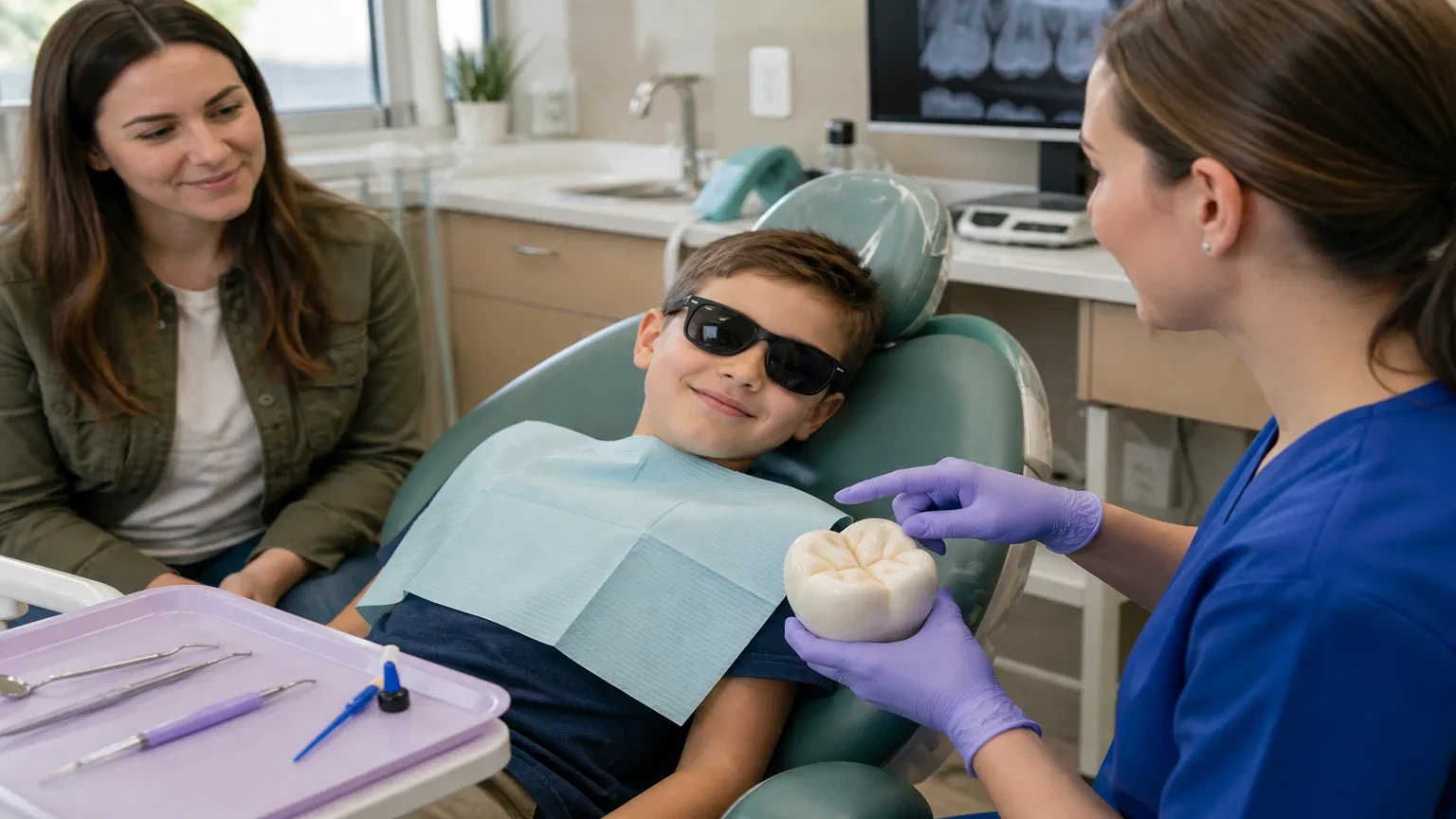
Placement is usually quick and does not require numbing. The child needs to stay open and avoid licking the tooth while it is dried and coated. If a child struggles with gagging, anxiety, or mouth opening, the team may seal fewer teeth per visit or use behavior guidance. If anxiety is a bigger concern for future care, see Is Dental Sedation Safe For Children?.
The appointment may feel more like painting than drilling. The tooth has to stay dry, so cotton rolls, suction, and gentle coaching matter. If saliva reaches the groove too soon, the sealant may not bond as well. That is why dentists sometimes wait until a partly erupted molar has enough surface visible to isolate reliably.
Parents can help by describing the visit as a coating or shield rather than a shot or filling. A calm explanation keeps expectations accurate and lowers worry.
Most children can eat normally afterward unless the dental team gives different instructions.
Sealants can wear, chip, or partly lift over time, so they should be checked at routine visits. A worn sealant can often be repaired or replaced. Parents should not assume that a sealed tooth is immune to decay forever. Sticky snacks, frequent sugary drinks, poor brushing, and missed visits can still cause cavities around or under a failing sealant.
 A sealant is maintained, not forgotten.
Sealants need follow-up checks
Ask which teeth are sealed, whether any are partly worn, and when the next molars should be evaluated. To find a local office for children's preventive care, use find a dentist and mention sealant timing.
What Sealants Cannot Do
Sealants do not treat a deep cavity, protect between teeth, or fix diet patterns that keep bathing teeth in sugar. They are one layer in a prevention plan that may also include fluoride, floss help, snack changes, and visit intervals. For fluoride context, read Is Fluoride Safe For Kids? and for recall timing compare How Often Should Kids See The Dentist?.
Related articles
Keep exploring related topics from Dental Country.

When Should A Child First See The Dentist?
The first dental visit is less about drilling and more about timing, risk, comfort, feeding habits, brushing help, and giving parents a roadmap.
Read article
Is Fluoride Safe For Kids?
Fluoride safety is mostly about dose, age, and supervision. The same mineral that strengthens enamel should be used thoughtfully with children.
Read article
How Do You Stop Thumb Sucking?
Thumb sucking often fades on its own, but timing matters when permanent teeth, bite shape, speech, or social stress enter the picture.
Read article
What Is Baby Bottle Tooth Decay?
Baby bottle tooth decay is not only a bottle problem. It is a pattern of frequent sugar exposure on small teeth that can progress quickly.
Read article