
When Should A Child First See The Dentist?
A child should first see the dentist by the first birthday or soon after the first tooth appears. Learn timing, visit goals, and preparation tips.

Reviewed by Dr. Sean Myran, DMDDoctor of Dental Medicine, University of Pennsylvania
A child should first see the dentist by the first birthday or within about six months after the first tooth appears. That can sound early if only one or two teeth are showing, but the visit is meant to prevent problems rather than wait for pain. MouthHealthy explains that baby teeth help children chew, speak, and hold space for permanent teeth. The dentist checks growth, feeding patterns, enamel, gums, and family risk, then gives parents a plan that fits the child's age.
First Visit Timing Guide
- First tooth: start brushing with a smear of fluoride toothpaste and plan the dental home.
- By age one: schedule the first exam even if the child has no symptoms.
- Earlier if needed: white spots, injuries, swelling, feeding pain, or enamel defects should be checked sooner.
- After the first visit: follow the dentist's recall recommendation instead of guessing by age alone.
 Small visits can prevent bigger ones.
Early visits are mostly preventive
A first birthday visit lets the dentist look for early enamel changes, review brushing, and answer feeding questions while habits are still easy to adjust.
What Usually Happens
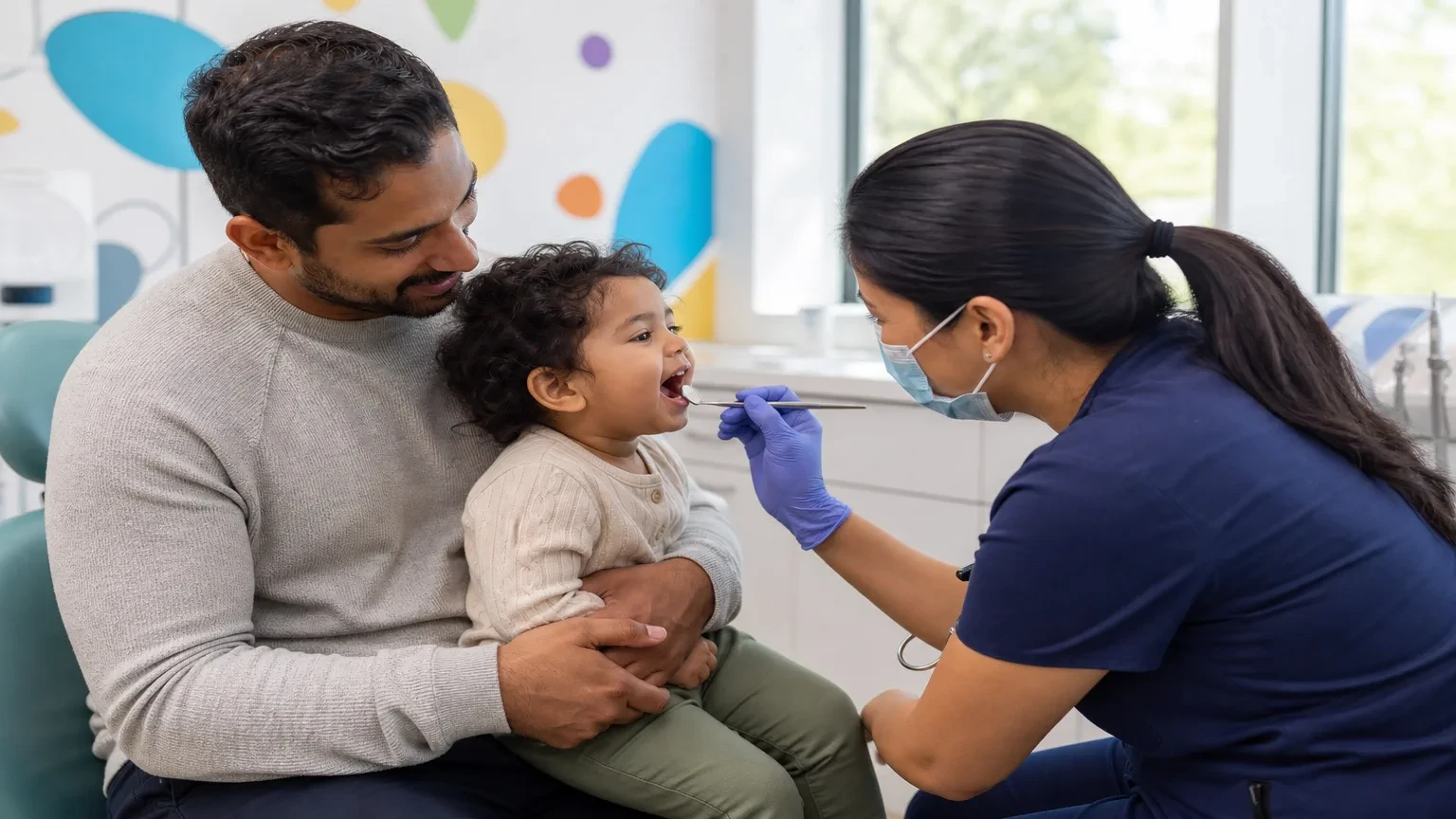
Many first visits are knee-to-knee exams: the child rests partly in the parent's lap while the dentist looks quickly with a mirror and light. The team may count teeth, check the bite, examine the gums, apply fluoride varnish if appropriate, and talk through brushing. The appointment is often short because toddlers have short patience. A calm, efficient visit is a success.
The biggest value is the conversation. The dentist may ask about bedtime bottles, nursing patterns, juice, snacks, medications, pacifiers, thumb sucking, fluoride exposure, and family cavity history. Those details help estimate risk. If decay risk is high, the child may need more frequent visits than a child with strong enamel, low sugar exposure, and confident home care.
Parents sometimes worry that a toddler will cry. Crying can happen, and pediatric teams are used to it. The goal is not to prove that a one-year-old can sit like an adult. The goal is to keep the child safe, gather information, and avoid turning dental care into a surprise during an emergency. A child who has already met the office may cope better when later visits involve cleaning, sealants, X-rays, or treatment.
Children with special health care needs may benefit from an even earlier planning conversation. Sensory sensitivities, feeding tubes, medications that dry the mouth, heart conditions, and developmental delays can all affect home care and appointment pacing. The first visit gives the family and dental team time to plan accommodations before a toothache forces rushed decisions.
You can prepare by choosing a time when the child is usually rested and fed, bringing a comfort item, and using simple language such as "the dentist will count your teeth." Avoid promises that nothing will happen, because a fluoride swab or toothbrush may still feel like something to a toddler. If your child already has habits that affect teeth, compare How Do You Stop Thumb Sucking? and What Is Baby Bottle Tooth Decay?.
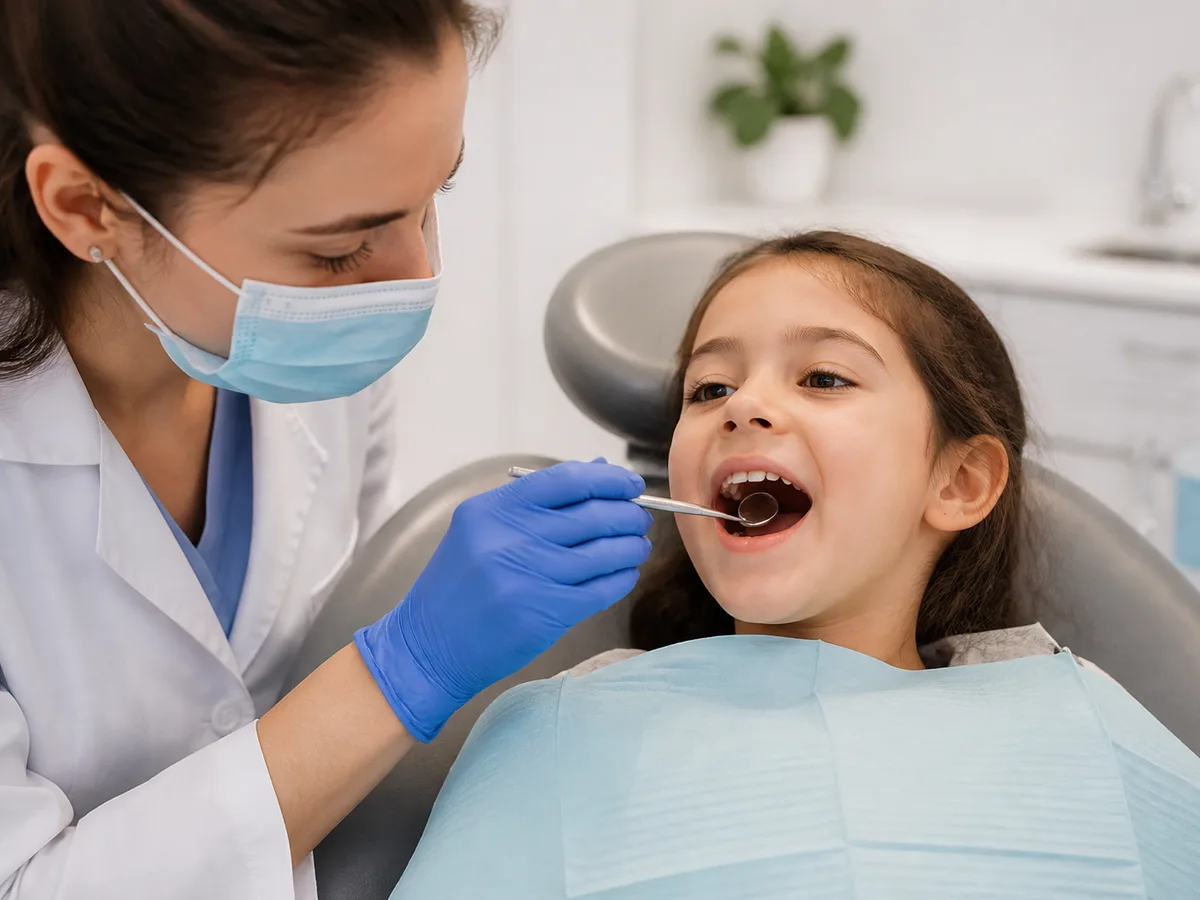 The plan should fit real family life.
Ask for a routine you can repeat
A useful first visit ends with clear brushing, toothpaste, snack, and follow-up instructions. To choose a nearby office for a child's first exam, use find a dentist and ask whether they see infants and toddlers.
When To Go Sooner
Do not wait for the first birthday if a tooth is chipped, a dark spot appears, the gums swell, the child avoids chewing, or white chalky areas show near the gumline. Those signs deserve a pediatric dental exam. For later planning, see How Often Should Kids See The Dentist?.
Related articles
Keep exploring related topics from Dental Country.
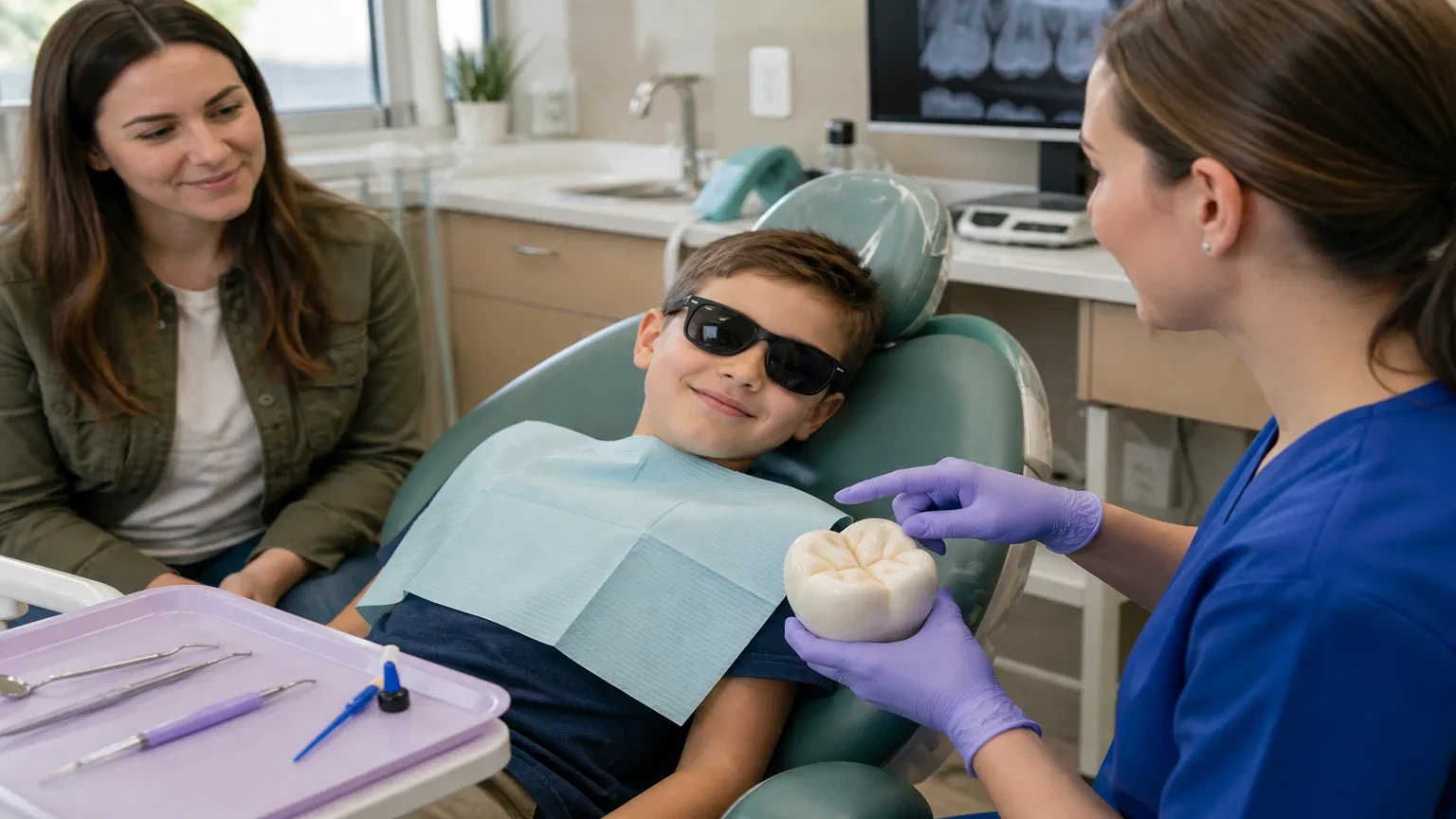
What Are Dental Sealants?
Sealants work like a raincoat for deep molar grooves. They reduce risk where toothbrush bristles often cannot clean well enough on their own.
Read article
Is Fluoride Safe For Kids?
Fluoride safety is mostly about dose, age, and supervision. The same mineral that strengthens enamel should be used thoughtfully with children.
Read article
How Do You Stop Thumb Sucking?
Thumb sucking often fades on its own, but timing matters when permanent teeth, bite shape, speech, or social stress enter the picture.
Read article
What Is Baby Bottle Tooth Decay?
Baby bottle tooth decay is not only a bottle problem. It is a pattern of frequent sugar exposure on small teeth that can progress quickly.
Read article