
How Often Should Kids See The Dentist?
Many kids see the dentist every six months, but risk can change the schedule. Learn when visits may be more or less frequent and how risk changes.

Reviewed by Dr. Sean Myran, DMDDoctor of Dental Medicine, University of Pennsylvania
Many kids see the dentist about every six months, but the best interval depends on cavity risk, gum health, tooth eruption, home care, diet, orthodontics, and medical history. A low-risk child may stay on a routine schedule. A child with active decay, new braces, enamel defects, dry mouth, or brushing challenges may need closer follow-up. CDC emphasizes brushing, fluoride, sealants, and dental care as parts of oral health prevention.
Visit Frequency Schedule
| Situation | Common interval | Why it may change |
|---|---|---|
| Low cavity risk | Often about every six months | Routine cleaning, growth checks, prevention |
| Recent cavities | May be every three to four months | Fluoride, behavior coaching, early repair |
| Braces or appliances | Often closer hygiene monitoring | Plaque traps around brackets, wires, or maintainers |
| New symptoms | As soon as needed | Pain, swelling, trauma, or loose restorations should not wait |
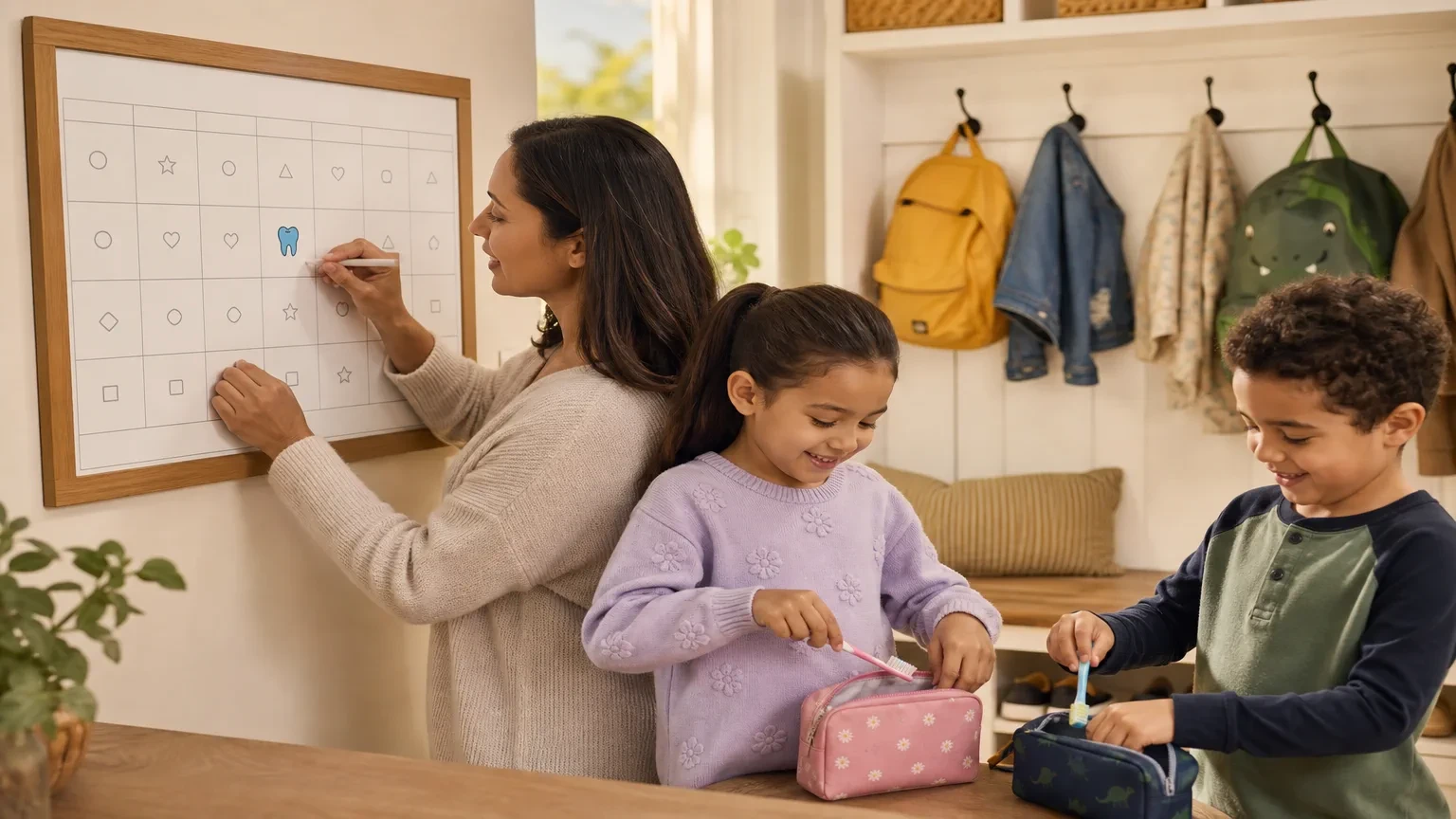
 The calendar follows the mouth.
Risk sets the recall interval
A recall schedule should explain why the child is being seen at that timing. Recent cavities, weak enamel, appliances, and diet patterns can all shorten the interval.
Why Six Months Is Common
Six-month visits give the dental team a chance to remove plaque and tartar, check brushing, apply preventive care, monitor eruption, and catch small problems before they become urgent. Children change quickly. A molar can erupt, a habit can shift the bite, or a snack routine can raise cavity risk between school breaks.
Some children need more frequent visits for a season, not forever. After several cavities, the dentist may want to see whether fluoride, sealants, brushing help, and diet changes are working. Once the mouth stabilizes, the interval may lengthen again. Families should ask what result would move the child back to a routine schedule.
Other visits are not tied to recall at all. A knocked tooth, facial swelling, toothache, broken appliance, or dental abscess needs prompt advice. A child with a mouthguard problem before a sports season may need a fit check even if the cleaning is months away. For sports protection, see Does My Child Need A Mouthguard For Sports?.
X-rays are also individualized. They may be taken more often when decay risk is high or when the dentist needs to monitor eruption, missing teeth, or early tooth loss. They may be taken less often when risk is low and the mouth is stable. Parents can ask why a particular image is needed and what decision it will guide.
The schedule should also fit school and family logistics. Booking during school breaks can help, but waiting only for breaks can backfire when a child has symptoms. Many families do best by scheduling the next preventive visit before leaving the office, then moving it only if sports, travel, or illness interferes.
Bring notes about new medicines, snacks, mouth breathing, braces, or injuries because those changes can shift the recall recommendation.
A hygienist may also adjust the cleaning plan as independence changes. Many children still need a parent to check nighttime brushing long after they can tie shoes, pack backpacks, and ask to brush alone.
 A schedule should be explainable.
Ask what would change the schedule
A helpful recall plan names the next visit timing and the reason for it. To set up a child's dental home, use find a dentist and ask how the office determines pediatric recall intervals.
When To Move The Visit Up
Call sooner for pain, swelling, trauma, a broken tooth, white or brown spots, bleeding gums, a loose space maintainer, or a permanent tooth erupting in an unusual place. For starting the dental home, read When Should A Child First See The Dentist? and for prevention tools compare What Are Dental Sealants?.
Related articles
Keep exploring related topics from Dental Country.
When Should A Child First See The Dentist?
The first dental visit is less about drilling and more about timing, risk, comfort, feeding habits, brushing help, and giving parents a roadmap.
Read article
What Are Dental Sealants?
Sealants work like a raincoat for deep molar grooves. They reduce risk where toothbrush bristles often cannot clean well enough on their own.
Read article
Is Fluoride Safe For Kids?
Fluoride safety is mostly about dose, age, and supervision. The same mineral that strengthens enamel should be used thoughtfully with children.
Read article
How Do You Stop Thumb Sucking?
Thumb sucking often fades on its own, but timing matters when permanent teeth, bite shape, speech, or social stress enter the picture.
Read article