

Is Dental Sedation Safe For Children?
Dental sedation can be safe for children when carefully planned, monitored, and matched to health history, anxiety, procedure needs, and provider training.

Reviewed by Dr. Sean Myran, DMDDoctor of Dental Medicine, University of Pennsylvania
Dental sedation can be safe for children when it is carefully planned, appropriately monitored, and matched to the child's health, age, anxiety, and treatment needs. Sedation is a spectrum, from nitrous oxide that wears off quickly to deeper levels used for complex care. MouthHealthy explains that dentists may use anesthesia and sedation options to help patients receive care. Safety depends on choosing the right level and following strict protocols.
How To Frame Sedation Safety
- Start with necessity: ask why sedation is recommended and what alternatives exist.
- Review health history: breathing issues, medications, allergies, and past anesthesia events matter.
- Match the level: nitrous, oral sedation, IV sedation, and general anesthesia are not the same.
- Confirm monitoring: oxygen, pulse, breathing, and recovery should be watched according to the sedation level.
- Plan recovery: parents need clear eating, activity, and emergency instructions.
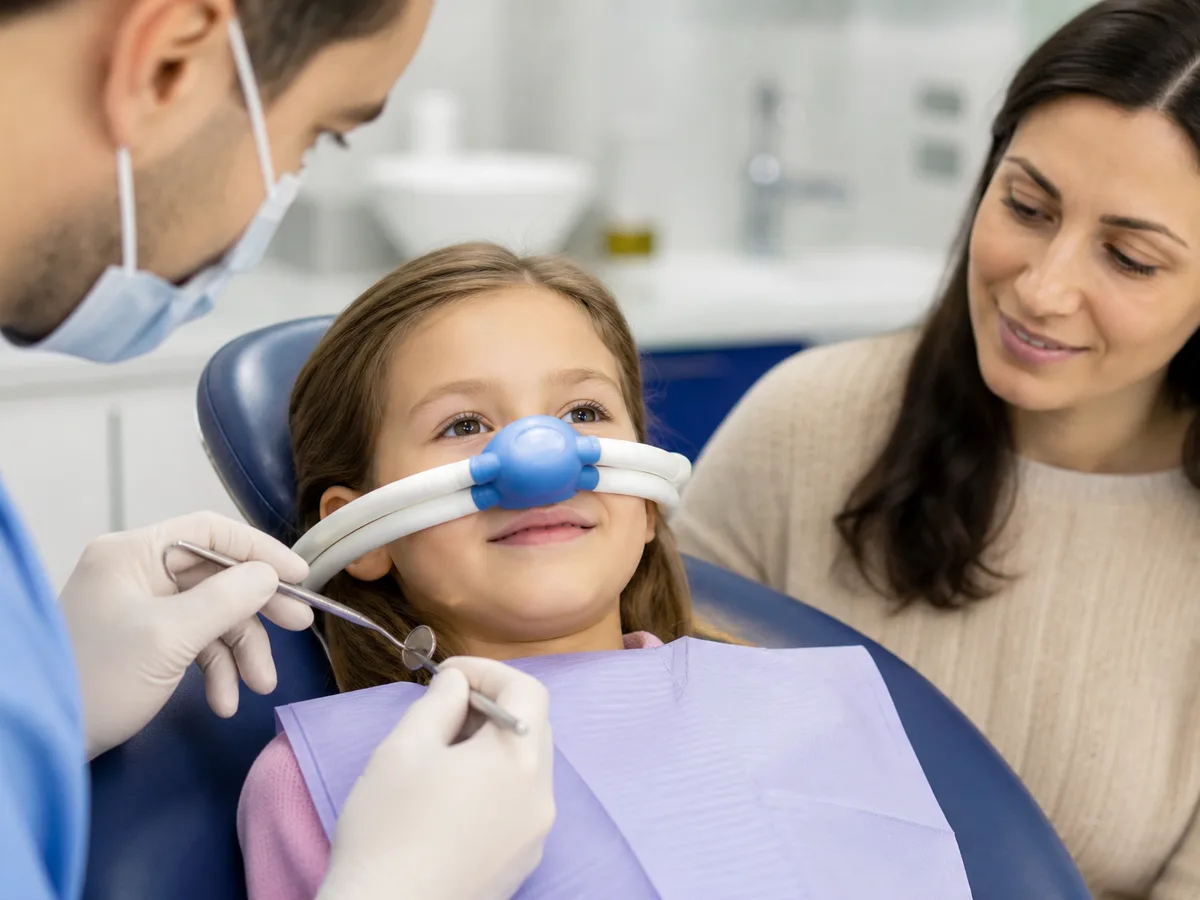 Preparation is part of the medicine.
The safety check starts before the visit
A careful sedation plan screens medical history, airway risk, medications, allergies, recent illness, and fasting instructions. Those details determine whether the appointment should proceed.
When Sedation May Be Considered
Sedation may be discussed when a child needs extensive treatment, cannot cooperate because of age or development, has severe anxiety, has special health care needs, or needs urgent care that cannot be completed safely with routine behavior guidance. It may also prevent repeated traumatic attempts when several teeth need treatment. The dentist should explain why the benefit outweighs the added steps.
Nitrous oxide, often called laughing gas, is commonly used for mild anxiety and short procedures. The child breathes it through a small mask and usually recovers quickly with oxygen afterward. Oral sedation uses medication taken by mouth and can be less predictable because children absorb medicine differently. IV sedation and general anesthesia involve deeper monitoring and may require specially trained providers or a hospital or surgery center setting.
The setting should match the risk. A healthy child needing a small filling may be very different from a toddler with extensive decay, a child with airway concerns, or a patient who needs many teeth treated at once. Parents can ask why the proposed setting is appropriate instead of assuming every sedation visit belongs in the same type of room.
Written consent should be plain enough for parents to repeat back: medicine type, intended depth, likely behavior, and recovery expectations.
Parents should tell the office about snoring, sleep apnea, asthma, recent cough or fever, reflux, seizures, heart conditions, developmental diagnoses, medications, supplements, and previous sedation experiences. A child who is sick on the day of treatment may need to reschedule. Fasting instructions should be followed exactly because food or liquid in the stomach can increase risk during deeper sedation.
Sedation does not replace good diagnosis. Ask which teeth need treatment, why they cannot wait, how long the appointment may take, and what happens if the child becomes more or less sedated than expected. If the need comes from early childhood decay, prevention after treatment matters. See What Is Baby Bottle Tooth Decay? for risk patterns that can return if habits do not change.
 The plan continues after treatment.
Recovery instructions should be specific
Ask whom to call after hours, what your child can eat, which symptoms are expected, and which are not. To discuss sedation options locally, use find a dentist and ask about pediatric sedation training and monitoring.
Questions Parents Should Ask
Ask what sedation level is planned, who administers it, who monitors the child, what equipment is used, what credentials the team has, and what emergency plan is in place. For less invasive prevention that may reduce future treatment needs, compare What Are Dental Sealants? and Is Fluoride Safe For Kids?.
Related articles
Keep exploring related topics from Dental Country.

When Should A Child First See The Dentist?
The first dental visit is less about drilling and more about timing, risk, comfort, feeding habits, brushing help, and giving parents a roadmap.
Read article
What Are Dental Sealants?
Sealants work like a raincoat for deep molar grooves. They reduce risk where toothbrush bristles often cannot clean well enough on their own.
Read article
Is Fluoride Safe For Kids?
Fluoride safety is mostly about dose, age, and supervision. The same mineral that strengthens enamel should be used thoughtfully with children.
Read article
How Do You Stop Thumb Sucking?
Thumb sucking often fades on its own, but timing matters when permanent teeth, bite shape, speech, or social stress enter the picture.
Read article