
Does Insurance Cover Oral Sleep Appliances?
Many medical plans cover custom oral sleep appliances for diagnosed OSA with prior authorization. Learn cost factors, timelines, and questions to ask.

Reviewed by Dr. Sean Myran, DMDDoctor of Dental Medicine, University of Pennsylvania
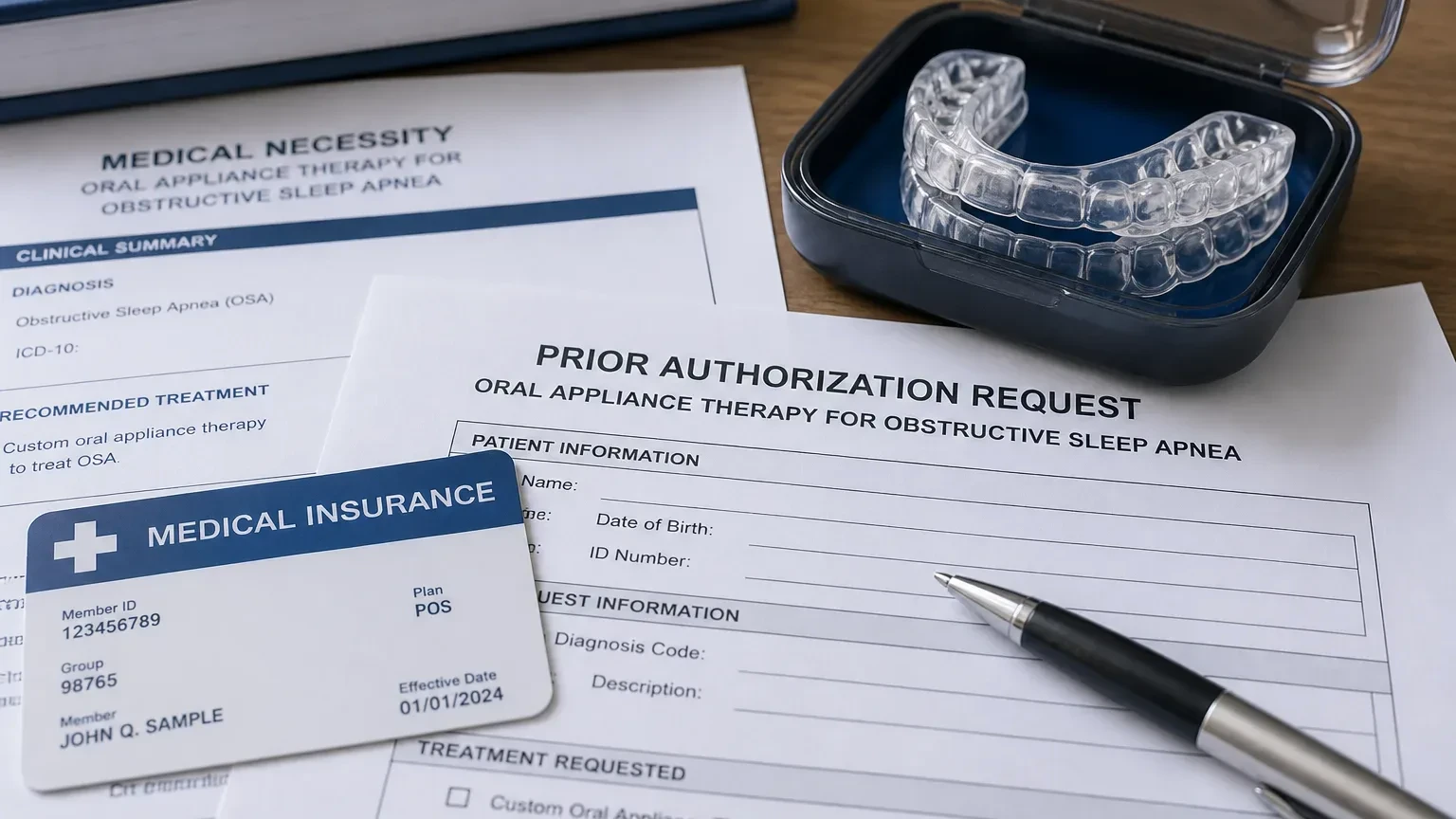
Often, yes—many medical insurance plans cover custom oral appliances for obstructive sleep apnea when you meet clinical criteria, but dental insurance alone may not, and every plan writes different rules. Coverage commonly hinges on a documented OSA diagnosis, sometimes a CPAP trial, and prior authorization. NHLBI describes oral devices as a prescribed option when CPAP is not wanted or not tolerated, typically involving a dentist for custom fitting. Treat benefits as a paperwork path, not a guarantee printed on a brochure.
MouthHealthy outlines oral appliances among sleep apnea treatment options used in appropriate cases. That clinical acceptance helps explain why medical benefits may apply, yet your Explanation of Benefits still decides dollars. Compare therapy choices in appliance versus CPAP before you assume the cheaper-feeling option is the covered one.
Cost And Timeline Breakdown
- Week 0–2: gather sleep-study reports, CPAP compliance data if required, physician prescription or referral, and dental exam notes.
- Week 2–6: prior authorization submitted; ask for written approval or denial reasons.
- After approval: impressions/scans, lab fabrication, delivery, and titration visits—each may carry separate charges.
- Patient share: deductibles, coinsurance, and non-covered upgrades (certain materials or features) vary.
- Hidden cost of delay: months untreated while paperwork stalls—ask about appeal timelines and self-pay options if medically urgent.
Medicare and commercial plans often treat oral appliances as durable medical equipment-style benefits with strict supplier and documentation rules. Snoring-only treatment without OSA may be excluded. Boil-and-bite retail trays are rarely covered and are not a coverage workaround for custom therapy. Ask whether follow-up sleep testing is separately authorized.
Get a pre-treatment estimate in writing: appliance fee, titration visits, relines, and replacement policy if you lose the device. Offices experienced in dental sleep medicine usually know which codes and letters insurers expect. If your plan denies for “lack of CPAP trial,” ask your physician whether a supervised trial note can be completed—or whether severity and intolerance documentation already suffice.
Flexible spending accounts sometimes help with uncovered balances; confirm eligibility before paying cash. Travelers should ask about warranty and repair fees if a clasp breaks out of state. None of these money details replace clinical fit—an unpaid excellent plan still beats a covered device you cannot wear.
 Complete packets move faster.
Paperwork is part of the therapy timeline
Create a single packet: diagnostic report with AHI or REI, physician notes, CPAP history, and dental candidacy letter. Label files clearly before the front desk uploads them. Incomplete packets are a top reason for preventable denials. If you changed insurers mid-year, verify the new plan’s oral-appliance policy rather than assuming continuity. Keep copies yourself—portals rotate and staff turnover happens.
Questions To Ask Your Dentist And Insurer
- Will this be billed to medical or dental benefits, and which codes?
- What documents do you need from my sleep physician?
- What is my estimated out-of-pocket after authorization?
- How many adjustment visits are included?
- What happens if authorization is denied—appeal, alternative device, or different therapy?
Also ask how the consultation visit is billed and whether candidacy findings could change coverage odds. Clarity up front prevents surprise statements after the lab has already started.
 Estimates beat surprises.
Authorize first when the plan requires it
Do not schedule irreversible lab work until authorization status is clear unless you accept self-pay. Ask for the insurer’s written criteria so your physician can address gaps. For a dental team accustomed to medical billing for sleep appliances, use Find a Dentist and mention that you need help with OSA appliance coverage documentation when you book. Coverage is navigable when clinical need and paperwork travel together.
Insurance often covers custom oral sleep appliances for diagnosed OSA—with conditions. Map the cost and timeline, ask precise benefit questions, and keep medical documentation complete so therapy is not stranded in billing limbo.
Related articles
Keep exploring related topics from Dental Country.
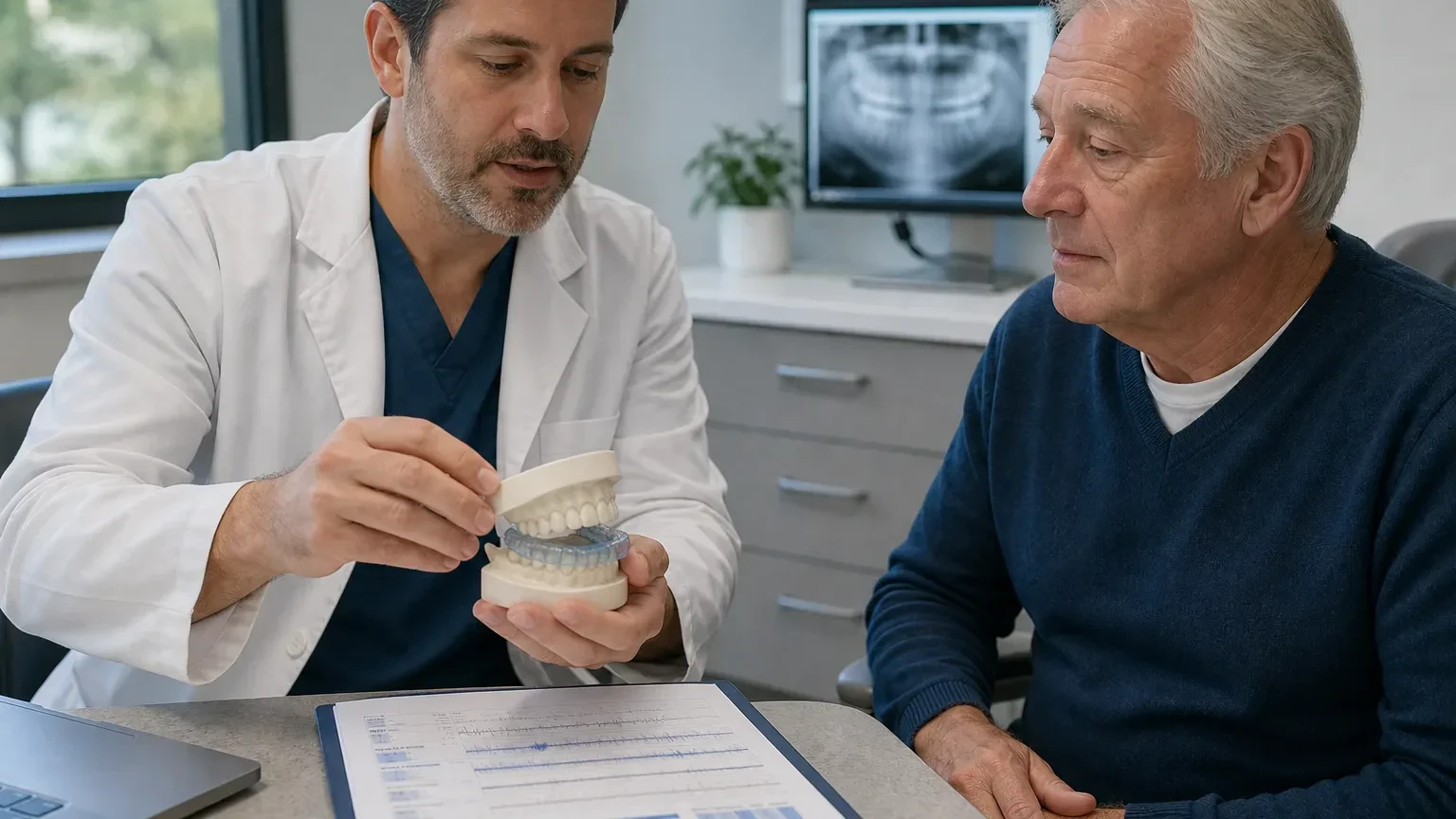
Can A Dentist Treat Sleep Apnea?
A dentist can often deliver a custom oral appliance for obstructive sleep apnea once a physician confirms the diagnosis—but dentists do not replace sleep-medicine evaluation or claim CPAP is unnecessary for every patient.
Read article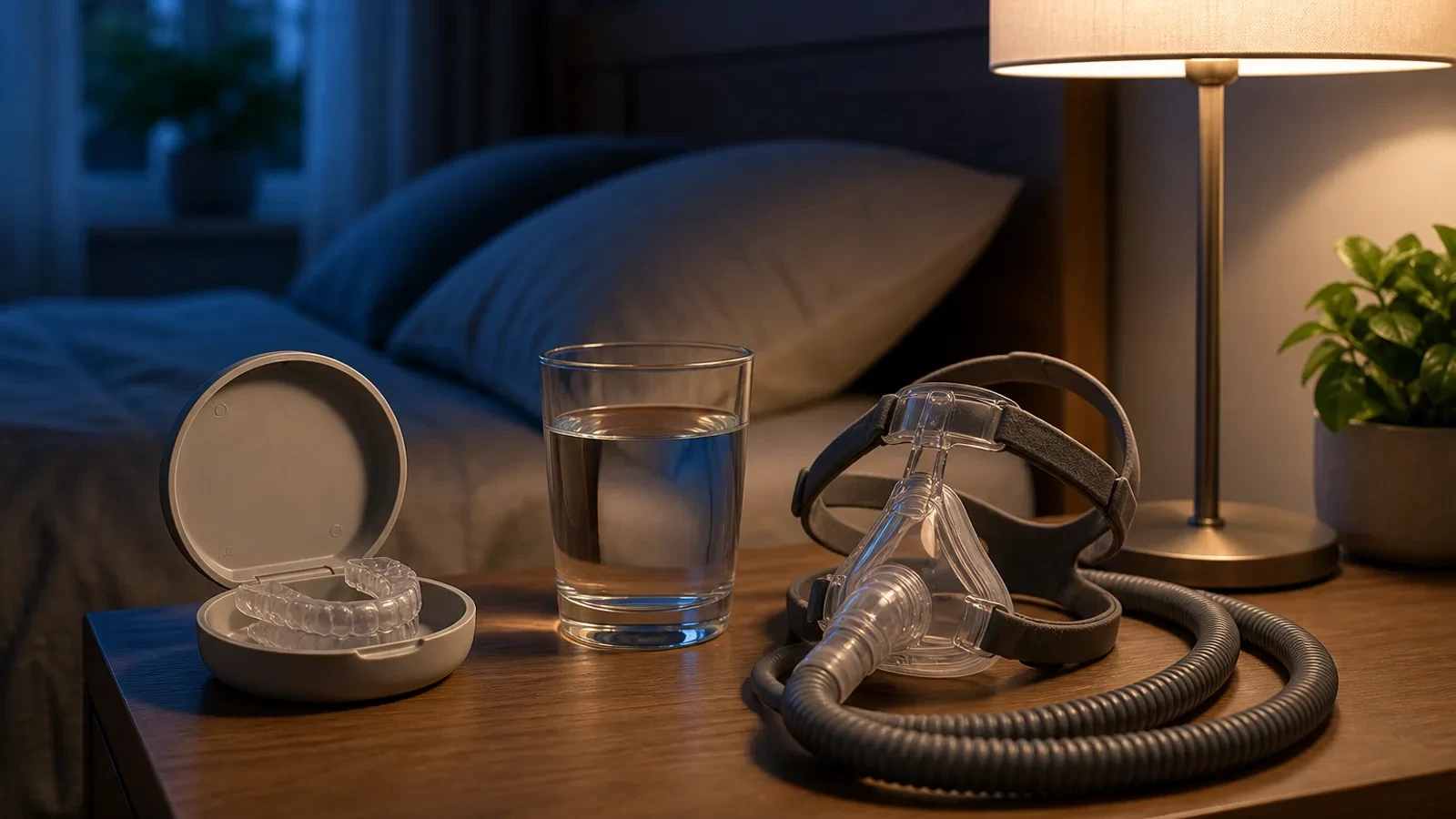
Oral Appliance Vs CPAP: Which Is Better?
CPAP usually opens the airway more reliably, while custom oral appliances can be simpler to travel with and tolerate—so “better” depends on severity, preference, and medical guidance rather than a single winner.
Read article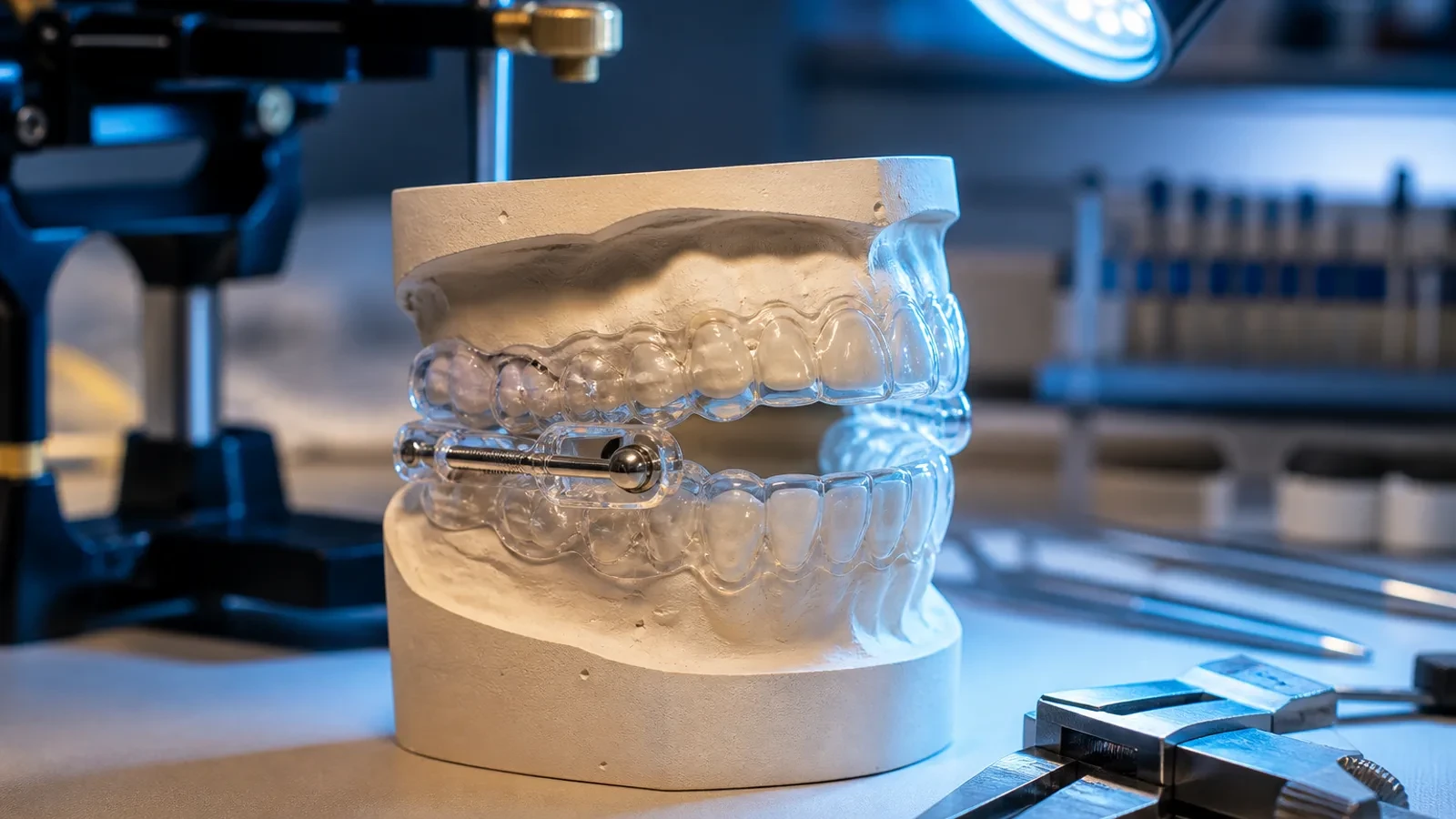
What Is A Mandibular Advancement Device?
A mandibular advancement device is a custom oral appliance that holds the lower jaw slightly forward during sleep to reduce airway collapse in selected people with snoring or obstructive sleep apnea.
Read article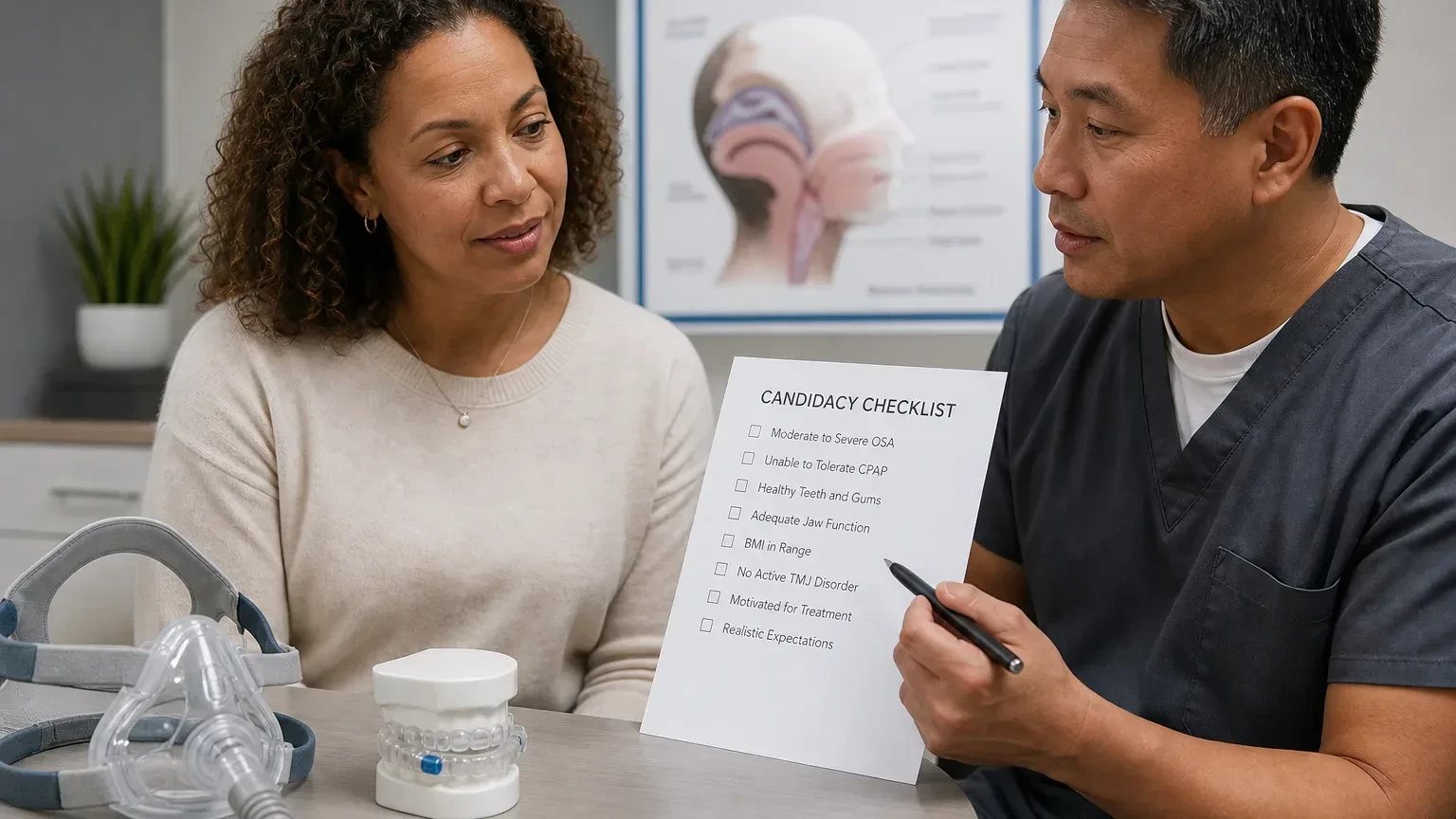
Who Is A Candidate For A Sleep Apnea Oral Appliance?
Strong oral-appliance candidates usually have a confirmed OSA or snoring diagnosis, enough healthy teeth, manageable jaw joints, and a physician plan that supports appliance therapy—especially when CPAP is poorly tolerated.
Read article