
Do Veneers Stain?
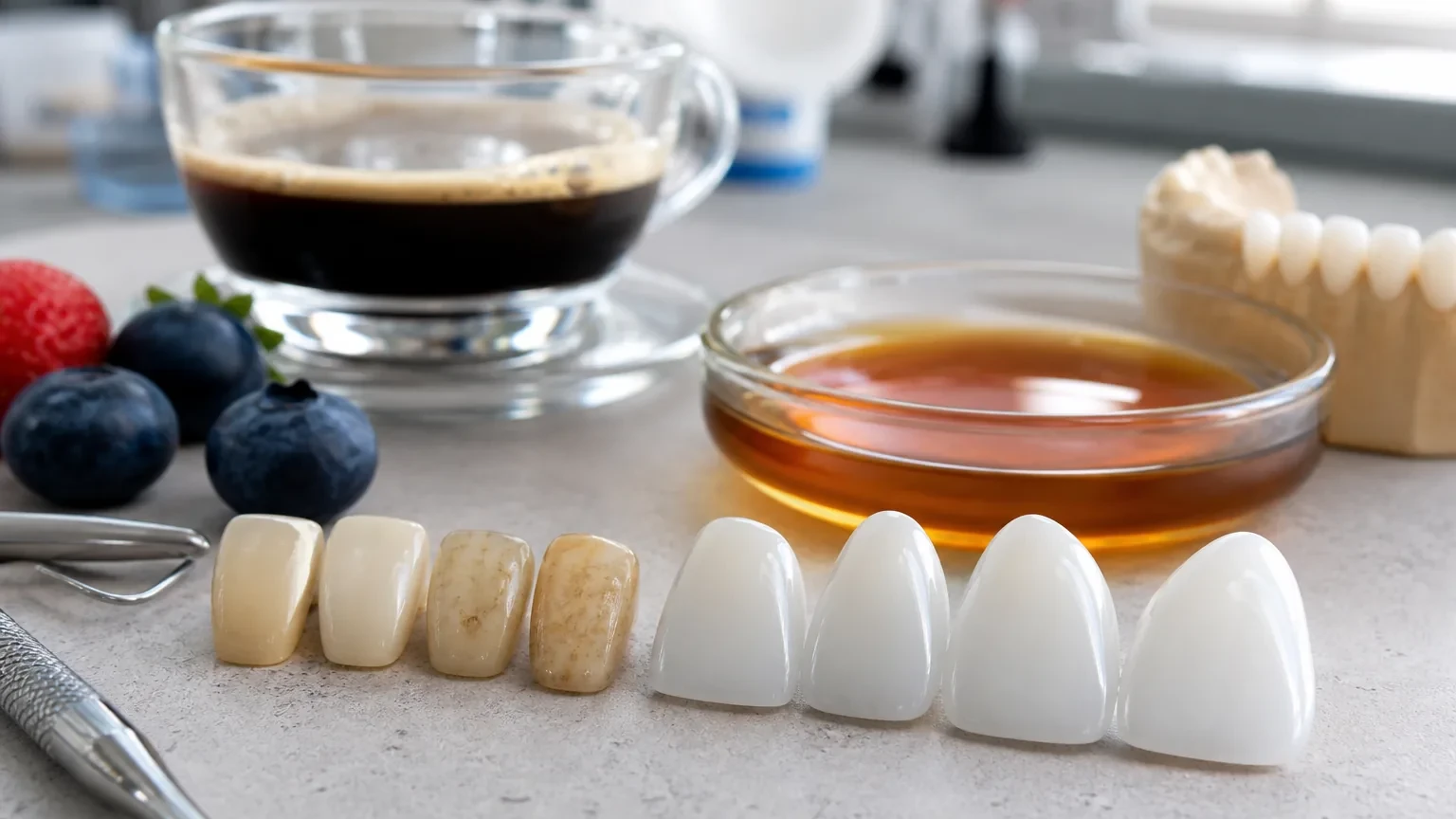
Porcelain veneers resist stains better than composite, but margins, bonding, scratches, coffee, tobacco, and aging can still affect color over time.

Reviewed by Dr. Sean Myran, DMDDoctor of Dental Medicine, University of Pennsylvania
Veneers can stain, but porcelain and composite behave differently. Porcelain veneers are glazed ceramic and usually resist coffee, tea, wine, and color changes better than composite. Composite resin is more porous and can dull or yellow sooner. Margins can also discolor if plaque, leakage, or aging cement collects where the veneer meets the tooth. MouthHealthy notes that veneers are bonded to the front of teeth; the bonded edge is often where stain questions become practical.
Habits That Affect Veneer Color
- Coffee, tea, red wine, and dark sauces: more likely to affect composite and rough margins.
- Tobacco: can stain edges, natural teeth, and surrounding restorations.
- Abrasive toothpaste: can scratch polished composite or dull surfaces.
- Delayed cleanings: plaque and tartar can make edges look darker.
- Old bonding: cement lines may discolor even when porcelain still looks bright.
 The location of the color change matters.
Edges stain before porcelain does
Patients often say a porcelain veneer stained when the ceramic surface is still stable. The darker area may be at the margin, on exposed root, on cement, or on neighboring natural enamel. A dental exam can tell whether polishing, repair, gum treatment, or replacement is the right answer.
Why Natural Teeth May Change First
Natural teeth can darken while porcelain veneers hold their original shade. That can make a once-even smile look mismatched. Whitening natural teeth may help surrounding teeth, but it will not lighten porcelain or composite in the same way. If shade mismatch is your main concern, Can You Whiten Veneers? explains what can and cannot be changed.
Composite veneers need special attention because surface polish is part of their appearance. A roughened resin surface collects stain more easily. Professional polishing can refresh some composite, but deep discoloration, chipping, or old repairs may require replacement. If you are still choosing materials, Porcelain Vs Composite Veneers: What’s The Difference? compares stain resistance directly.
Daily habits help, but they should be realistic. Rinse with water after staining drinks, avoid tobacco, brush with a nonabrasive toothpaste recommended by your dentist, floss the margins, and keep regular cleanings. Do not scrub hard with whitening powders or harsh pastes. Scratches can make future staining worse.
Ask whether the discoloration is truly stain before choosing treatment. A gray look under a veneer can come from a dark tooth stump, old trauma, or show-through from thin ceramic. Yellowing at one edge may be exposed tooth structure rather than the veneer itself. Different causes call for different fixes, so diagnosis prevents wasted whitening attempts.
Cleaning appointments can also reveal whether color is coming from habits or material age. If stain returns quickly after polishing, the surface may be rough, the composite may be aging, or the margin may be open. Repeated staining in the same spot is a clue, not just a cosmetic annoyance. Photographing the area before and after polishing can help track whether the change is superficial or structural.
Bring older smile photos if you have them; they can show whether the color shifted slowly or appeared after a specific repair.
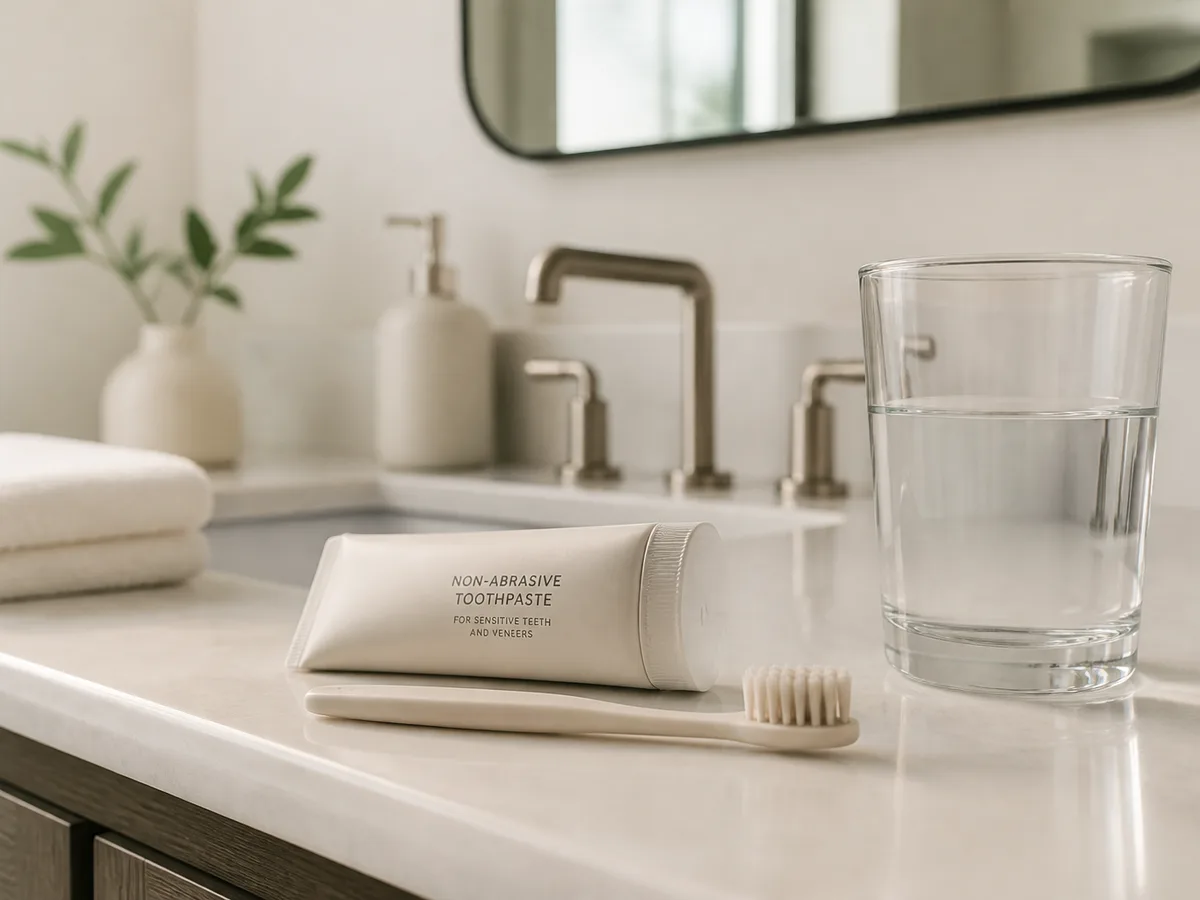 Gentle cleaning protects the finish.
Keep the surface smooth
A smooth veneer surface resists stain better than a scratched one. Ask which toothpaste, brush, and polishing schedule fit your material. If an edge is dark or rough, use find a dentist to schedule an exam rather than trying aggressive whitening products at home.
When Stain Means Replacement
Surface stain can sometimes be polished. Margin stain may need repair if there is leakage or decay. Color mismatch may require whitening natural teeth, replacing older veneers, or changing nearby restorations. The right answer depends on where the discoloration is and what material was used. For prevention routines, see How Do You Care For Veneers?.
Related articles
Keep exploring related topics from Dental Country.
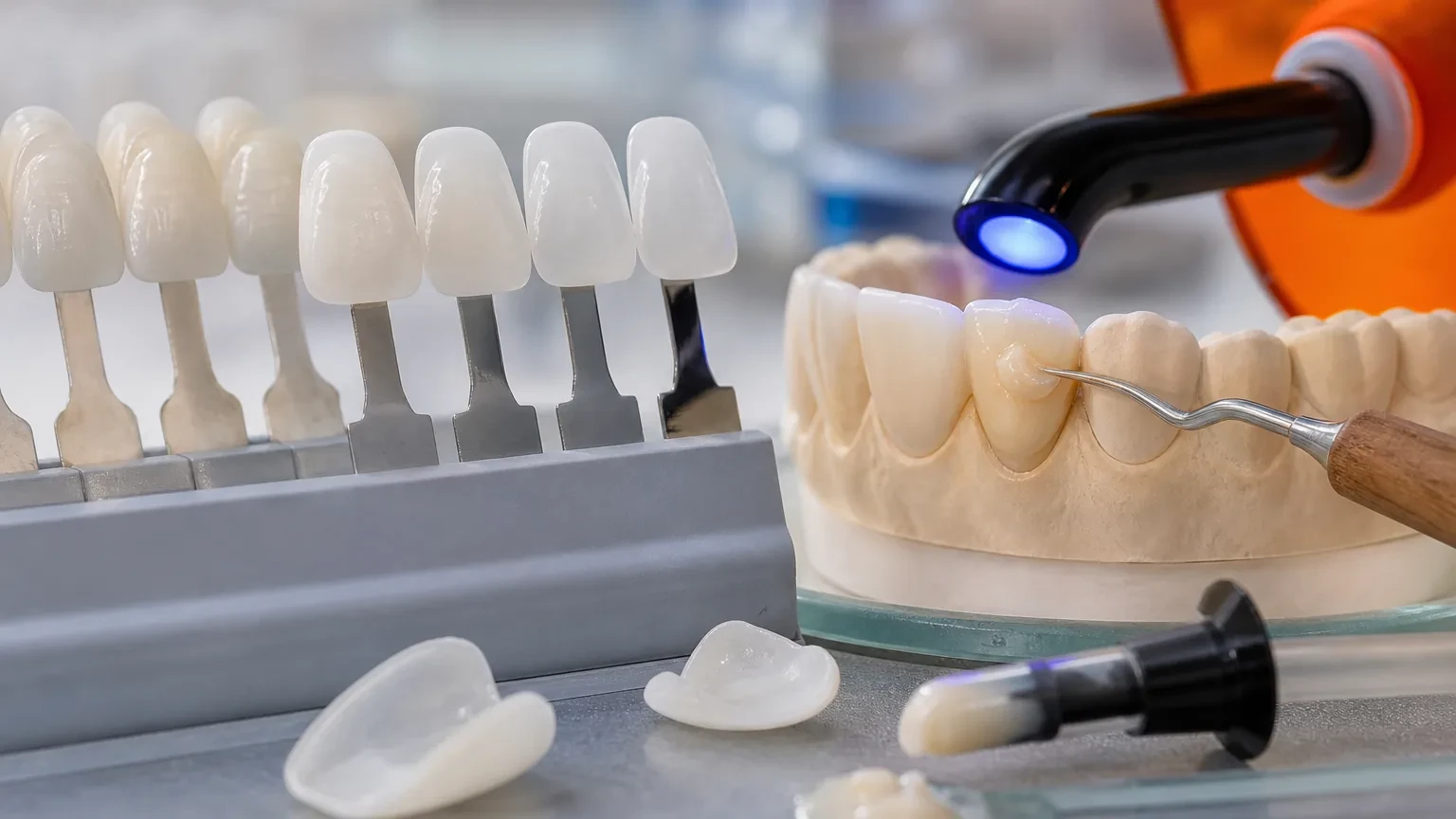
Porcelain Vs Composite Veneers: What’s The Difference?
Porcelain and composite veneers can change tooth shape and color, but they age, stain, repair, and cost differently.
Read article
How Long Do Veneers Last?
Veneer lifespan is not just a number on a brochure. The material, bite, enamel, and daily habits decide how long the result stays useful.
Read article
Do Veneers Ruin Your Teeth?
Veneers do not automatically ruin teeth, but they are not consequence-free. The safety question is preparation, bonding, hygiene, and case selection.
Read article
How Much Do Veneers Cost?
A veneer quote is more than a per-tooth price. Material, design, preparation, temporaries, and future maintenance all shape the real cost.
Read article