
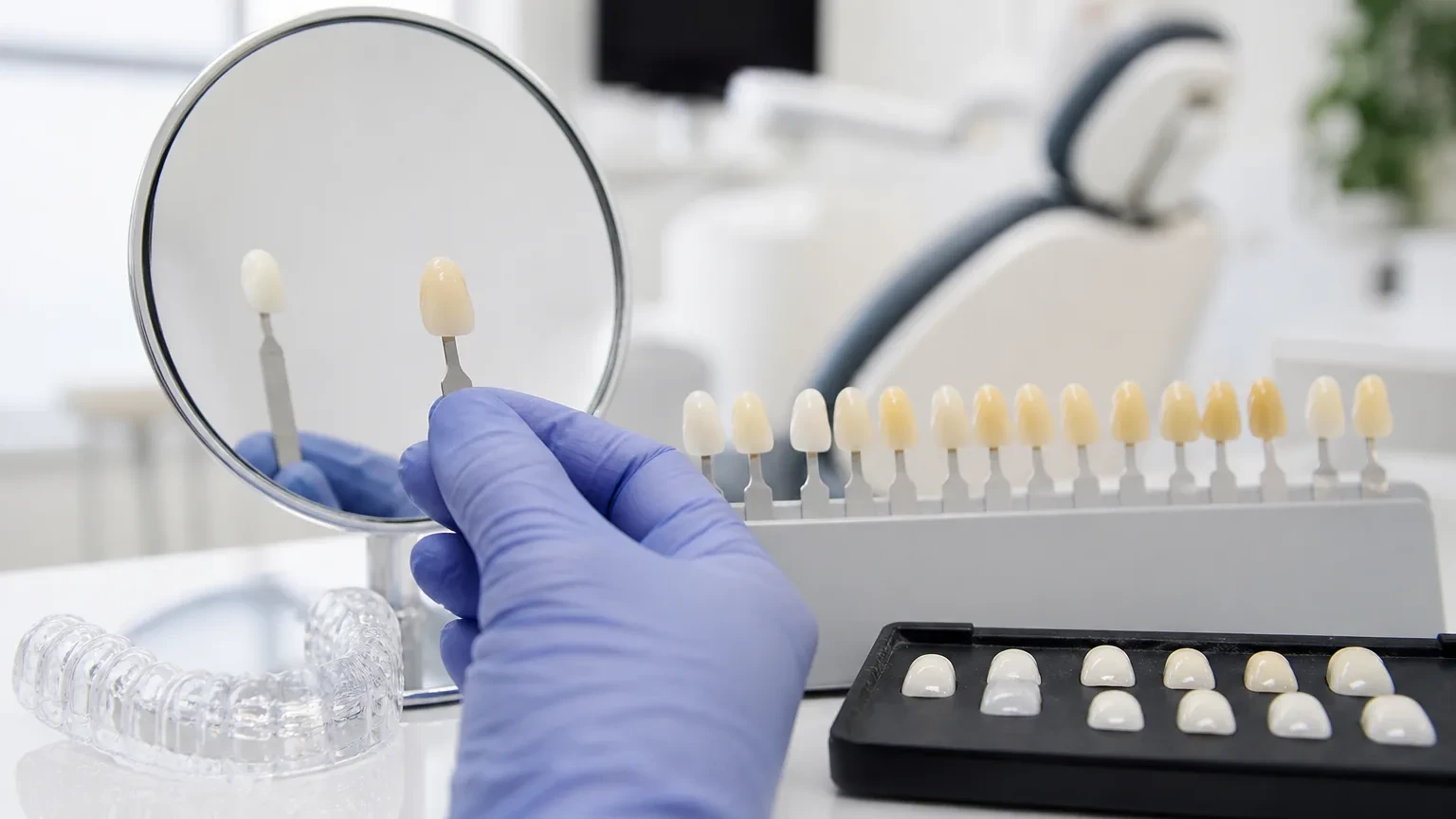
Can You Whiten Veneers?
Whitening products do not lighten porcelain or composite veneers like natural enamel. Learn shade limits, stain polishing, and replacement choices.

Reviewed by Dr. Sean Myran, DMDDoctor of Dental Medicine, University of Pennsylvania
You cannot whiten porcelain or composite veneers the same way you whiten natural enamel. Whitening gels work on tooth structure, not ceramic glaze or cured resin in the same predictable way. They may brighten neighboring teeth and make veneers look darker by comparison. MouthHealthy explains that whitening is used to lighten tooth color, which is why veneer shade planning usually happens after any desired whitening of natural teeth.
Why Veneers Do Not Bleach Lighter
A veneer has a manufactured shade. Porcelain color comes from ceramic layers and surface glaze. Composite color comes from resin and filler particles that were selected and cured at the appointment. Whitening chemicals may remove some surface stain on nearby enamel, but they do not redesign the restoration's internal shade. If a veneer is too dark, the durable fix is often replacement, not stronger bleach.
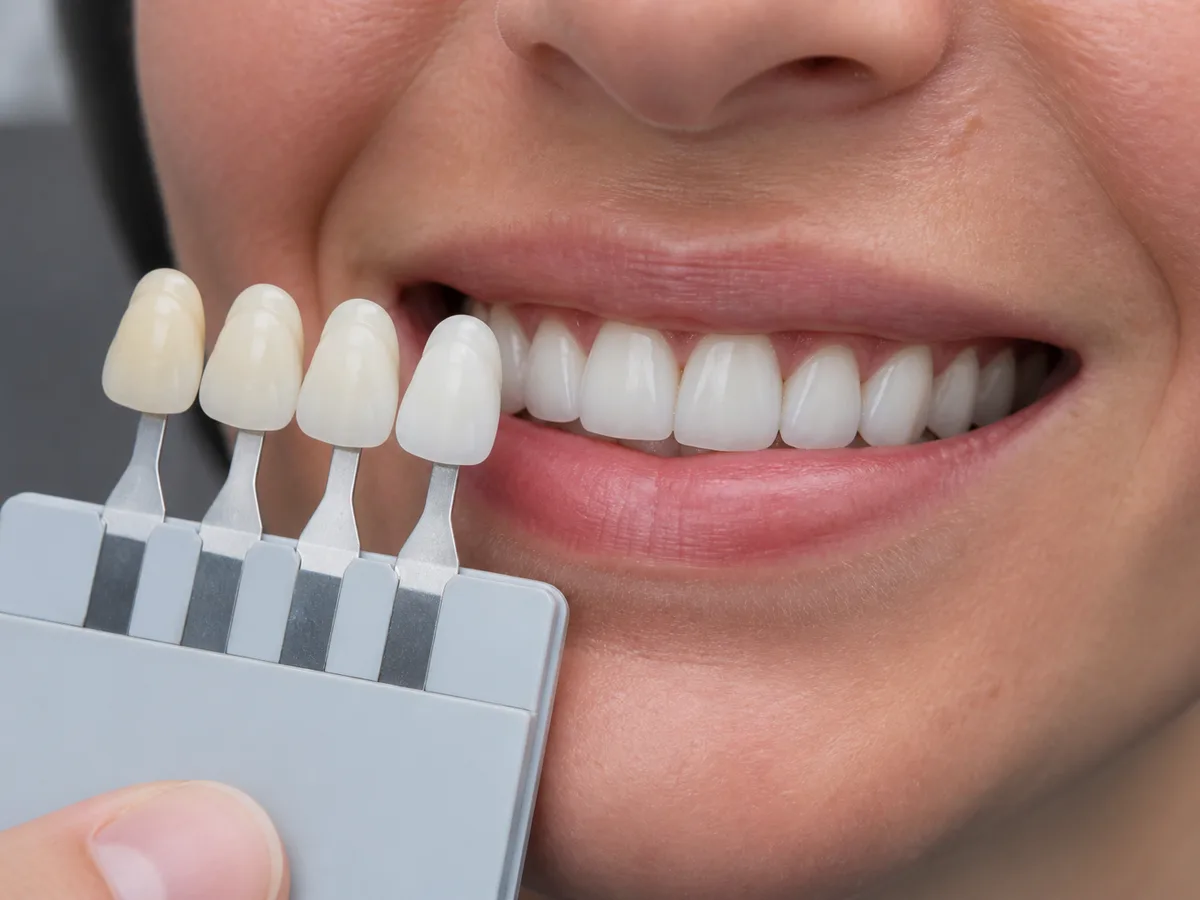 Shade selection works best after color stabilizes.
Whiten natural teeth before final shade
If you plan both whitening and veneers, sequence matters. Natural teeth should usually be whitened first, then allowed to stabilize before the final veneer shade is chosen. Otherwise, new veneers may match today's teeth and look mismatched after later whitening.
What Can Be Improved Without Replacement
- Surface stain: professional cleaning may remove buildup around veneer edges.
- Composite dullness: polishing can sometimes restore shine and reduce superficial stain.
- Natural tooth mismatch: whitening surrounding teeth may help if veneers are still the desired shade.
- Dark margins: the dentist must check for leakage, gum recession, or decay before polishing.
Do not use abrasive powders, harsh whitening pastes, or at-home scraping to chase a lighter veneer shade. Scratching composite or roughening cement can make stain collect faster. If veneers look yellow, first identify whether the color is on the restoration, at the edge, under the veneer, or on the natural teeth around it. Do Veneers Stain? explains those locations in more detail.
Replacement may be appropriate when old veneers no longer match, the material has aged, gum recession exposed margins, or the original shade choice was too dark. That decision should include cost, tooth condition, and whether the new shade will look natural with skin tone and neighboring teeth. For budget context, see How Much Do Veneers Cost?.
Timing matters if you have both veneers and natural teeth. Whitening natural teeth immediately before an important event can reveal mismatches you did not notice before. A better plan is to evaluate restorations, whiten under supervision if appropriate, wait for color to settle, then decide whether polishing, repair, or replacement is needed.
Over-the-counter strips can also irritate gums around restorations if they are used repeatedly to chase a shade change that cannot happen. If sensitivity appears or the gumline burns, stop and ask the dentist what is safe around your veneers.
Take photos in natural light before making a shade decision, because bathroom lighting can exaggerate small differences.
 The material and age of the veneer guide the options.
Replacement is sometimes the shade change
When the restoration itself is the wrong color, a new veneer may be the cleanest answer. Ask whether whitening natural teeth first would change the target shade. To find a dentist for a shade evaluation, use find a dentist and mention whether the veneers are porcelain or composite.
A Safe Whitening Plan With Veneers
Get the veneers examined before whitening around them. The dentist can check margins, identify the material, polish what is polishable, and explain whether whitening will improve the overall smile or create more contrast. If you are planning new veneers, whiten first, choose the shade second, and maintain the result with the habits in How Do You Care For Veneers?.
Related articles
Keep exploring related topics from Dental Country.
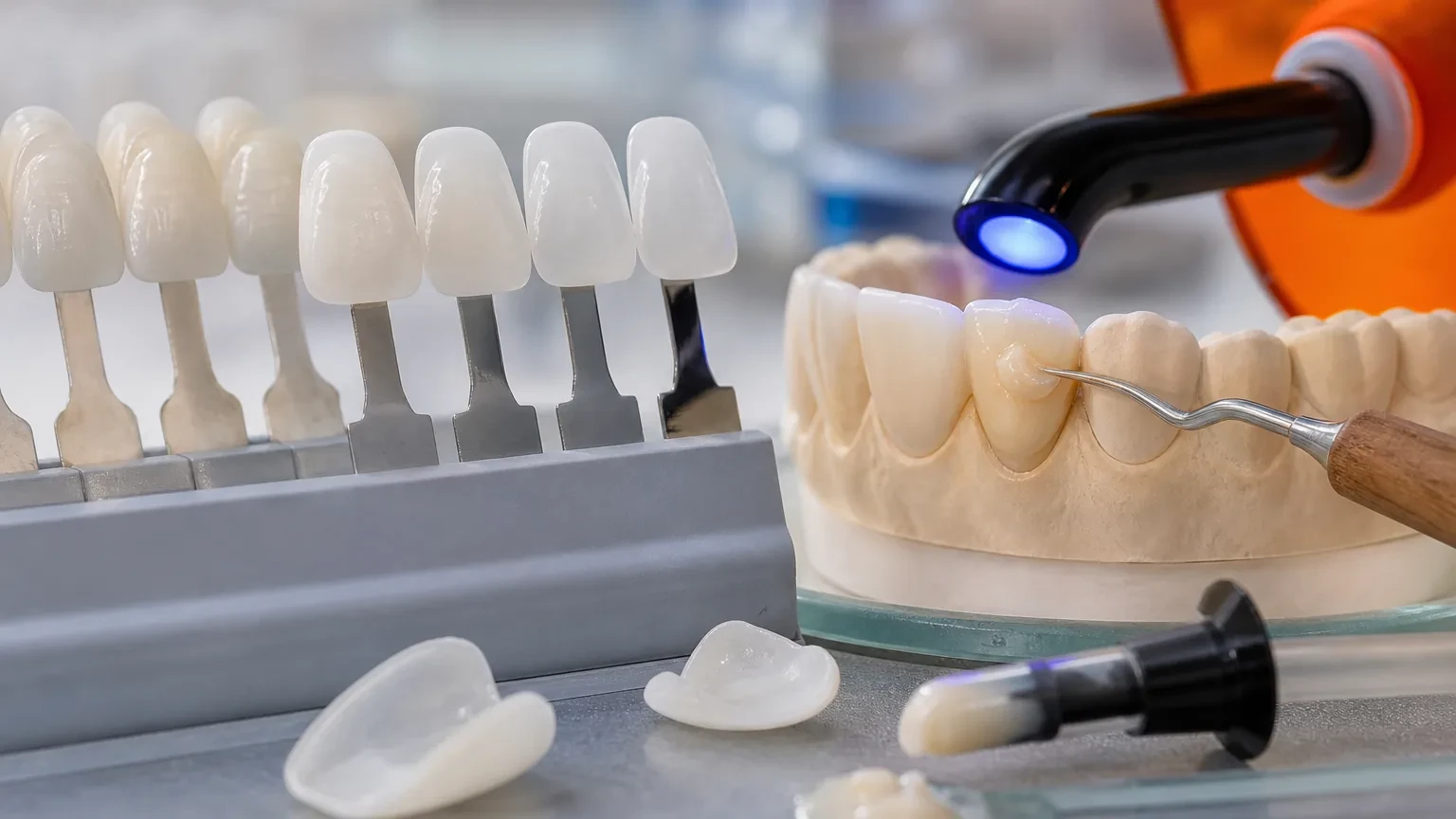
Porcelain Vs Composite Veneers: What’s The Difference?
Porcelain and composite veneers can change tooth shape and color, but they age, stain, repair, and cost differently.
Read article
How Long Do Veneers Last?
Veneer lifespan is not just a number on a brochure. The material, bite, enamel, and daily habits decide how long the result stays useful.
Read article
Do Veneers Ruin Your Teeth?
Veneers do not automatically ruin teeth, but they are not consequence-free. The safety question is preparation, bonding, hygiene, and case selection.
Read article
How Much Do Veneers Cost?
A veneer quote is more than a per-tooth price. Material, design, preparation, temporaries, and future maintenance all shape the real cost.
Read article