
Can Gum Disease Cause Tooth Loss?
Untreated periodontitis can damage bone and ligament support until teeth loosen or are lost. Learn warning signs, risk factors, and next steps.

Reviewed by Dr. Sean Myran, DMDDoctor of Dental Medicine, University of Pennsylvania
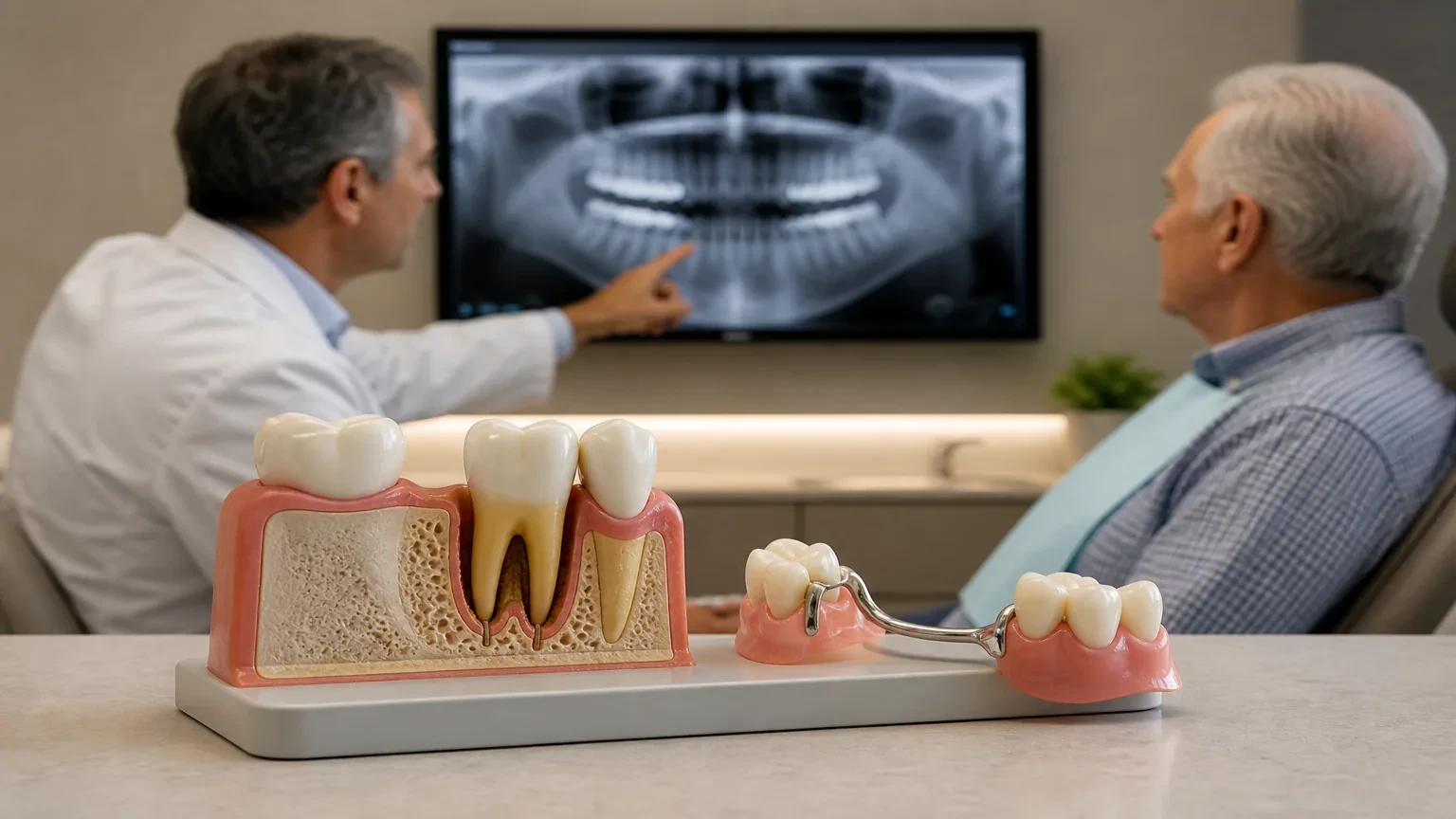
Yes, gum disease can cause tooth loss. Periodontitis damages the ligament and bone that hold teeth in place. A tooth can have no cavity and still become loose if the surrounding support breaks down. Tooth loss usually happens after a long period of inflammation, deeper pockets, bone loss, infection, and biting stress, but the process can be quiet. CDC notes that periodontal disease can cause teeth to loosen or be lost.
How The Risk Builds
- Plaque stays at the gumline: bacteria trigger inflammation and bleeding.
- Pockets deepen: tartar and bacteria become harder to remove at home.
- Bone support shrinks: X-rays begin to show less support around roots.
- Teeth move: spaces, bite changes, looseness, or drifting can appear.
- Saving options narrow: severe mobility or infection may lead to extraction.
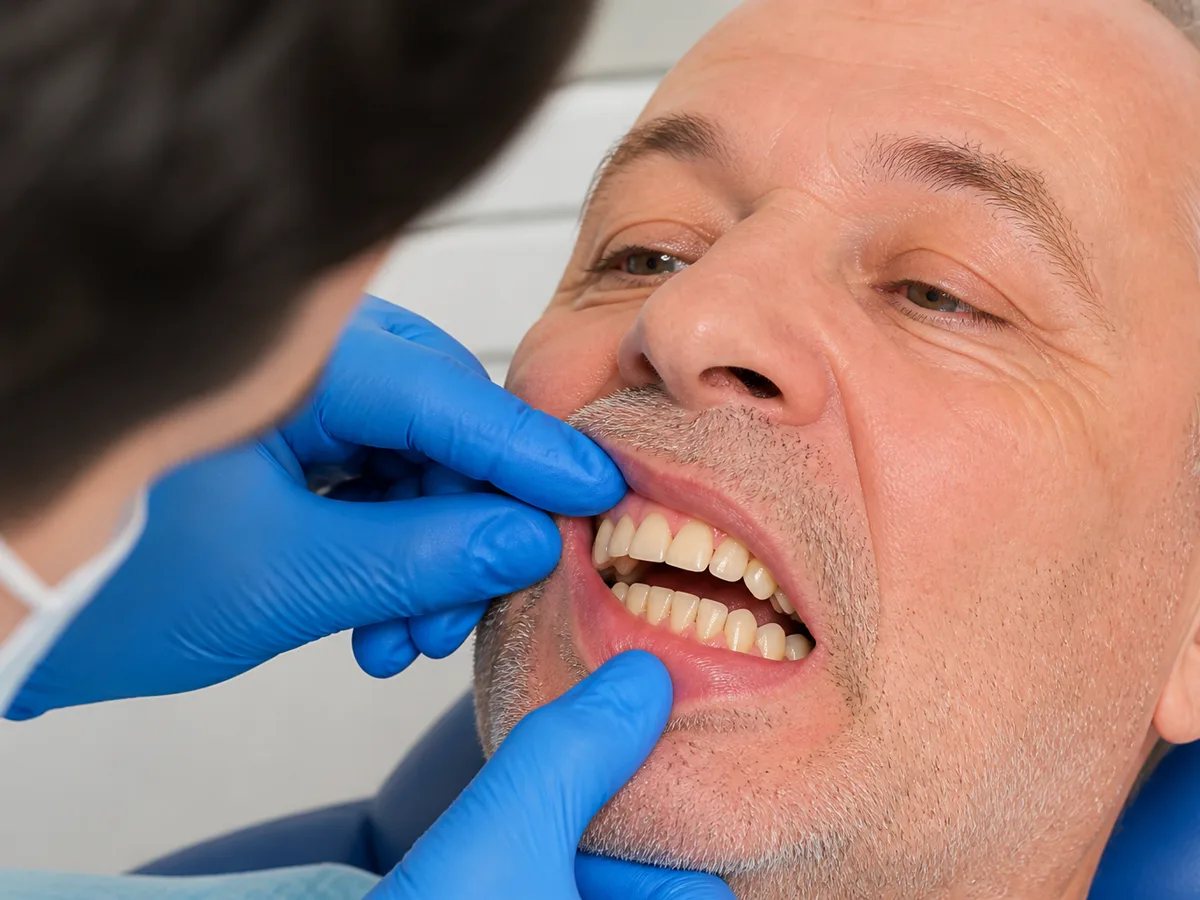 Support loss can stay hidden.
The tooth may not be the weak part
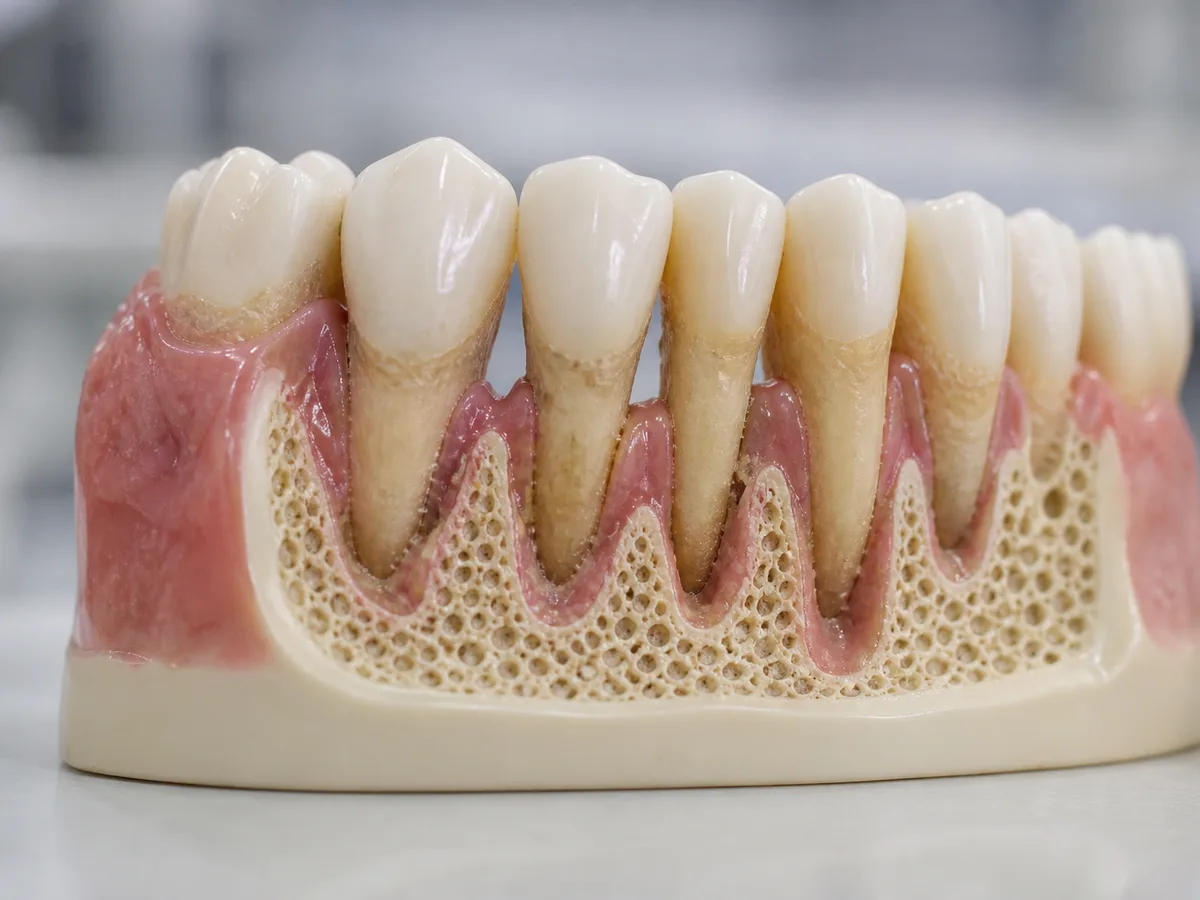
Periodontal tooth loss is about the foundation. The crown of the tooth may look intact while the root support has changed under the gums. That is why X-rays and pocket measurements are more useful than mirror checks.
Signs That Support May Be Changing
Warning signs include loose teeth, new gaps, a bite that feels different, pus near the gum, gum recession, persistent bad breath, bleeding that does not settle, or dentures and partials fitting differently. Pain may appear late or only during chewing. If your signs are milder, What Are Early Signs Of Gum Disease? can help you decide what to report early.
Risk is higher with smoking, uncontrolled diabetes, dry mouth, heavy tartar, a family history of periodontitis, inconsistent dental care, and teeth that are overloaded by grinding or an uneven bite. Smoking deserves special attention because it can reduce visible bleeding while the disease continues underneath. For that angle, see Does Smoking Cause Gum Disease?.
Treatment can often reduce the risk even when bone loss is present. Scaling and root planing, periodontal maintenance, home care coaching, bite adjustment, antibiotics in select cases, surgery, or referral to a periodontist may be part of the plan. The goal is to keep maintainable teeth stable and identify teeth with a poor prognosis before emergency swelling or sudden looseness forces a rushed decision.
 Specific prognosis guides choices.
Ask which teeth are at risk
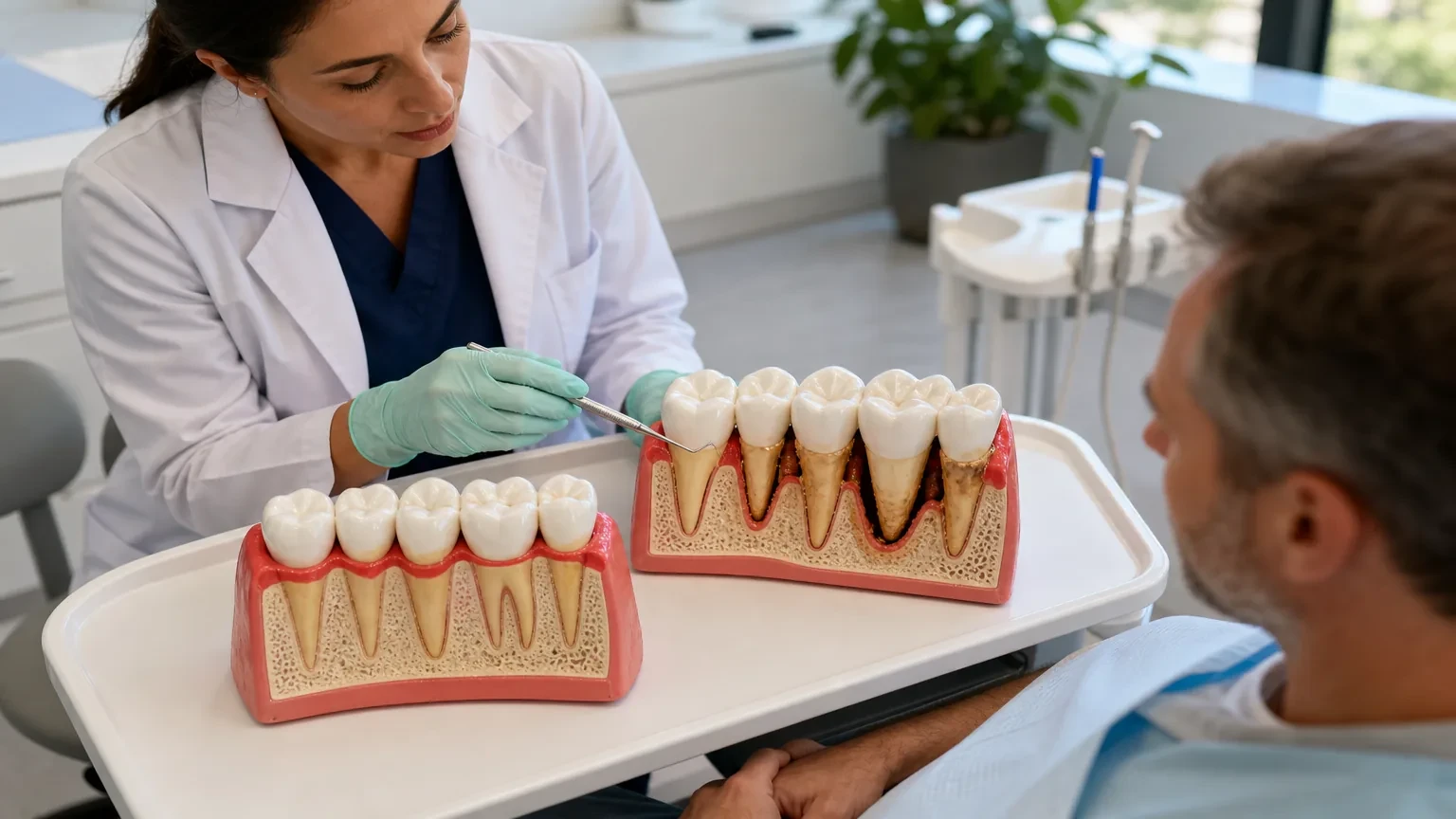
A useful periodontal plan names the teeth that are stable, guarded, or poor prognosis. If you need an exam for looseness or bone loss, use find a dentist and ask about periodontal charting or a periodontist referral.
If A Tooth Is Already Loose
Do not wiggle it to test the problem. Avoid chewing hard foods on that tooth and schedule care promptly. A loose tooth might be stabilized if inflammation, bite forces, and pocketing can be controlled, but some teeth cannot be saved safely. If replacement is being discussed, Can You Get Implants With Gum Disease? explains why periodontal control matters before implants.
The main message is not panic; it is timing. Gum disease causes tooth loss by gradually changing support, and measured treatment is most powerful before teeth are severely mobile.
The risk is rarely identical around every tooth. Molars with furcation involvement, teeth with heavy bite pressure, and areas with deep vertical bone defects may need closer attention than front teeth with shallow pockets. Ask the dentist or periodontist to mark the highest-risk teeth on the chart and explain what would improve their outlook. Sometimes the answer is better cleaning access. Sometimes it is bite adjustment, splinting, surgery, or extraction planning. A tooth-loss conversation is easier when each tooth has a prognosis instead of the whole mouth being described with one alarming label.
Saving teeth starts with knowing which supports are weakening. Early risk conversations are much easier than emergency decisions after a tooth becomes painful.
Related articles
Keep exploring related topics from Dental Country.
What Is The Difference Between Gingivitis And Periodontitis?
Gingivitis and periodontitis can both bleed quietly, but the real difference is whether deeper tooth support has started to break down.
Read article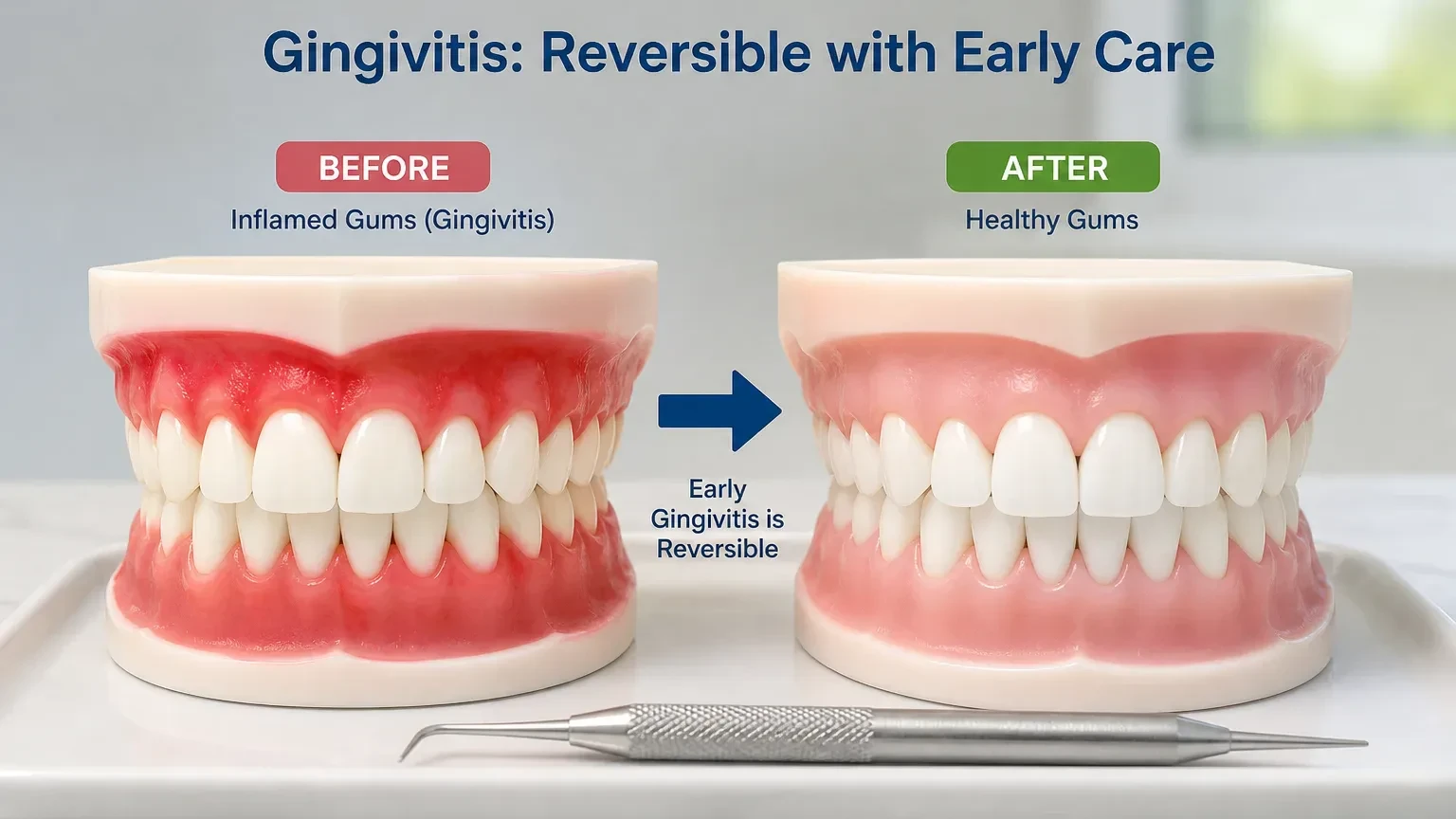
Is Gum Disease Reversible?
Gum disease reversibility depends on the stage. Inflamed gums can recover; lost bone support usually needs control, not a quick reset.
Read article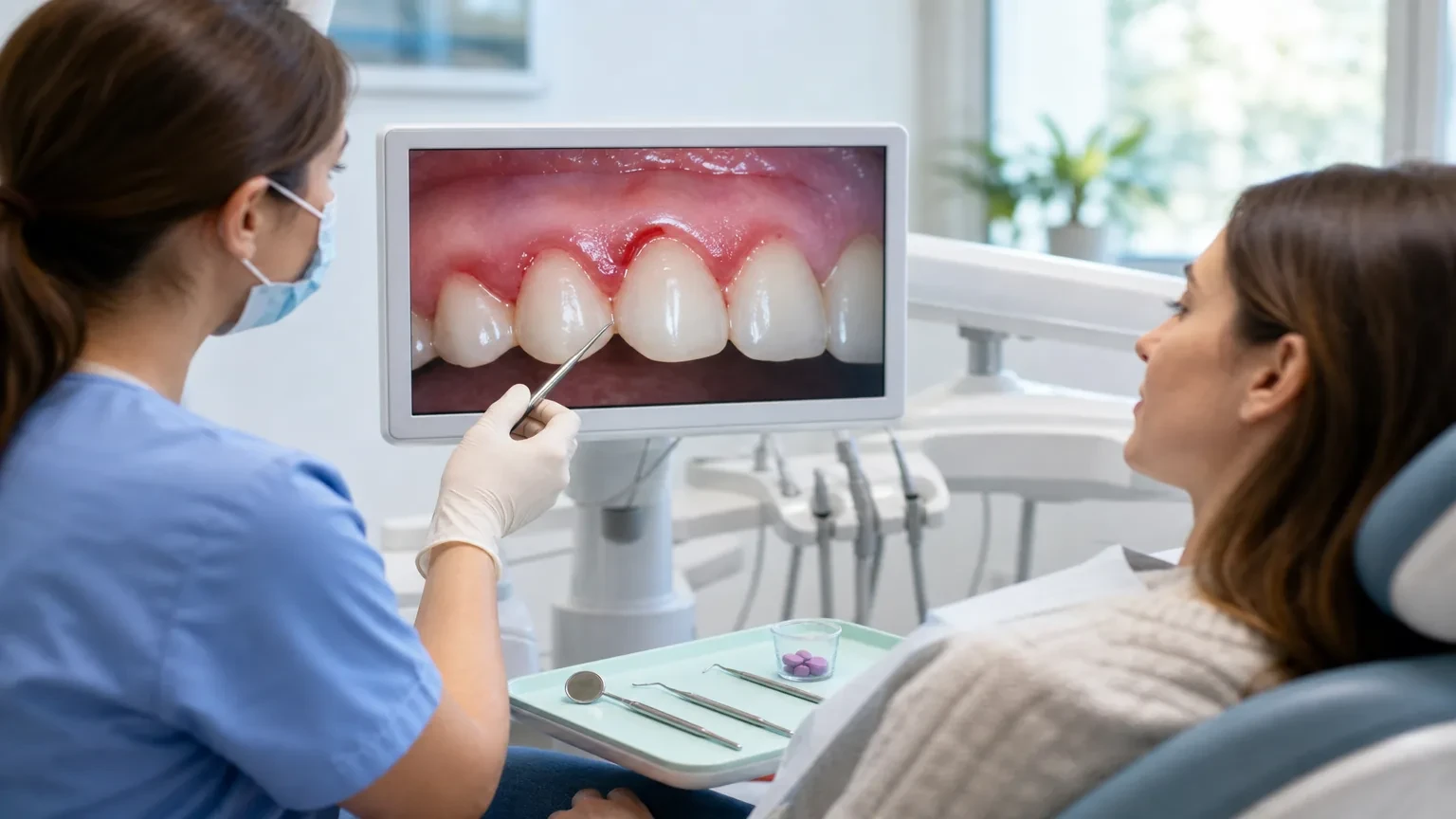
What Are Early Signs Of Gum Disease?
Early gum disease rarely announces itself with dramatic pain. Small bleeding, puffiness, and bad breath patterns are the clues to notice.
Read article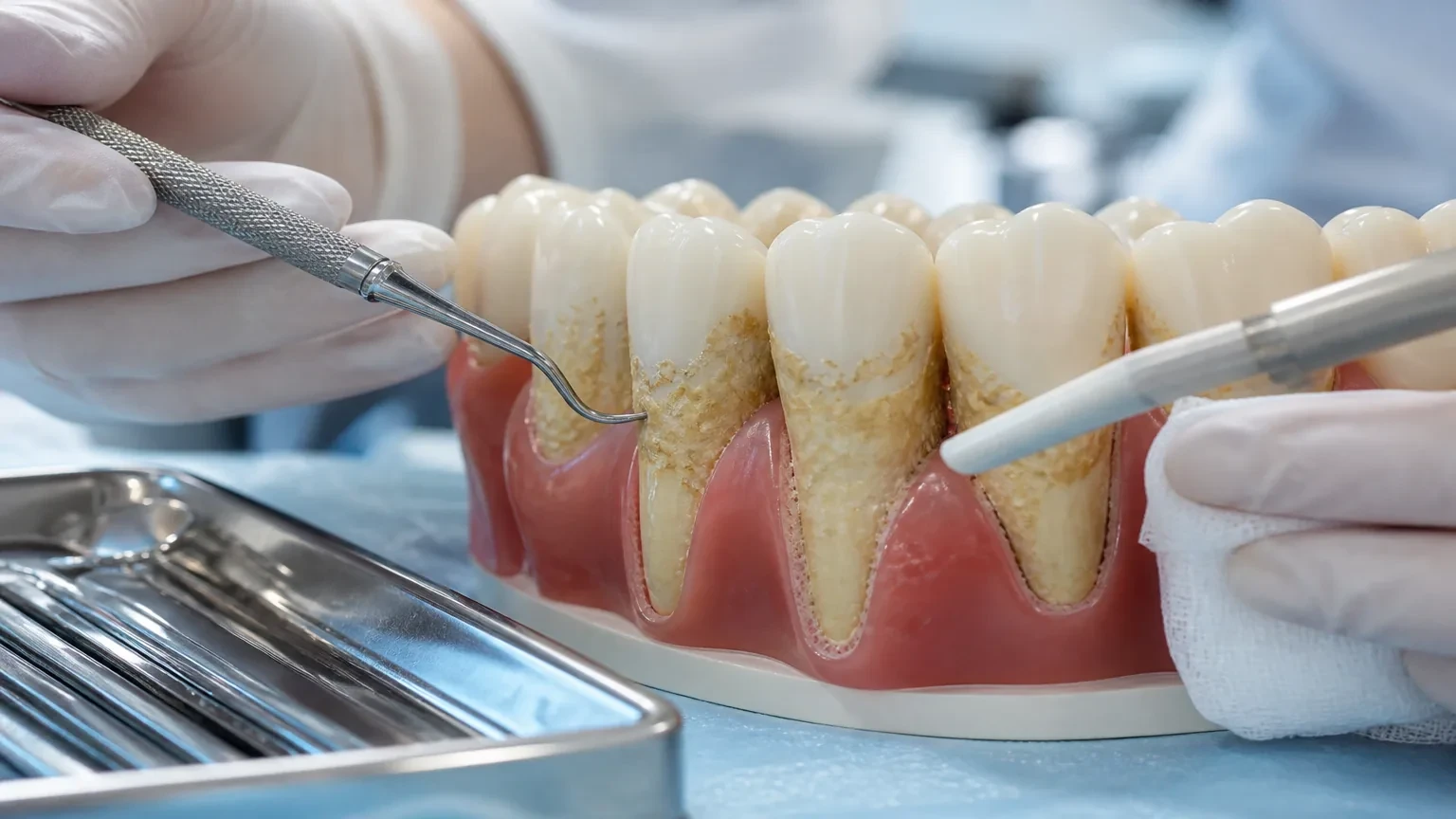
What Is Scaling And Root Planing?
Scaling and root planing is not a bigger version of polishing. It targets bacteria and tartar below the gumline where pockets stay inflamed.
Read article