
What Is Nitrous Oxide At The Dentist?
Nitrous oxide is an inhaled sedative mixed with oxygen that helps you relax while staying awake. See how it works, who may use it, and recovery tips.

Reviewed by Dr. Sean Myran, DMDDoctor of Dental Medicine, University of Pennsylvania
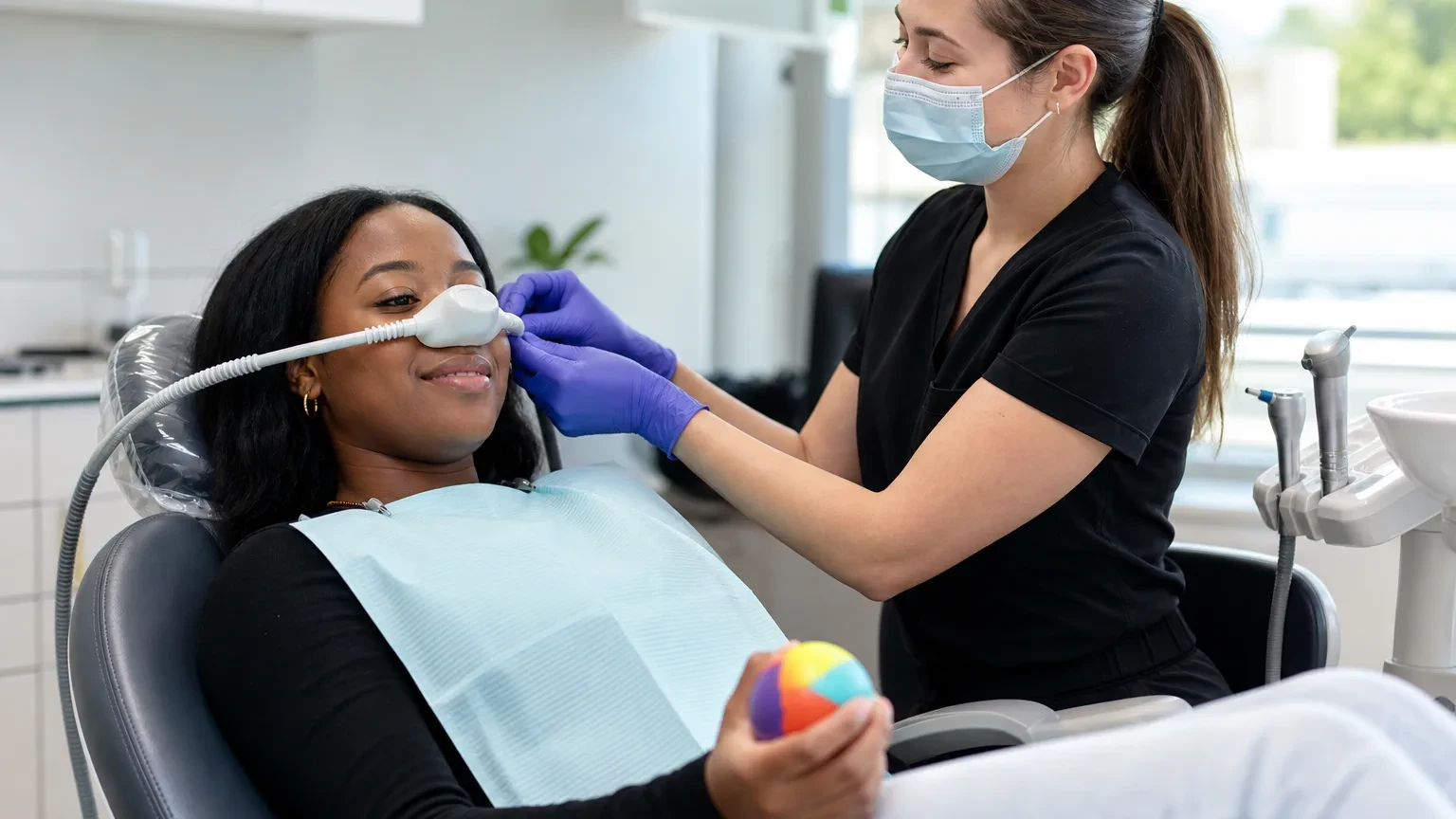
Nitrous oxide at the dentist is a colorless gas mixed with oxygen and breathed through a small nose mask to help you feel calmer during care. It is intended to relax you, not put you to sleep; you should still hear and respond to the dentist. MouthHealthy describes nitrous oxide as a safe and effective sedative agent mixed with oxygen, noting that effects wear off soon after the mask is removed. Understanding the mechanism and candidacy notes keeps expectations realistic.
How it works: you breathe normally through your nose; within minutes many people feel light-headed, tingly, or pleasantly heavy in the limbs, then settle into a calmer state. Oxygen is delivered with the nitrous, and the team can adjust the mix. When treatment ends, breathing oxygen alone helps clear residual effects for most patients. Compare depth with other sedation types and conscious sedation generally.
How A Typical Nitrous Visit Unfolds
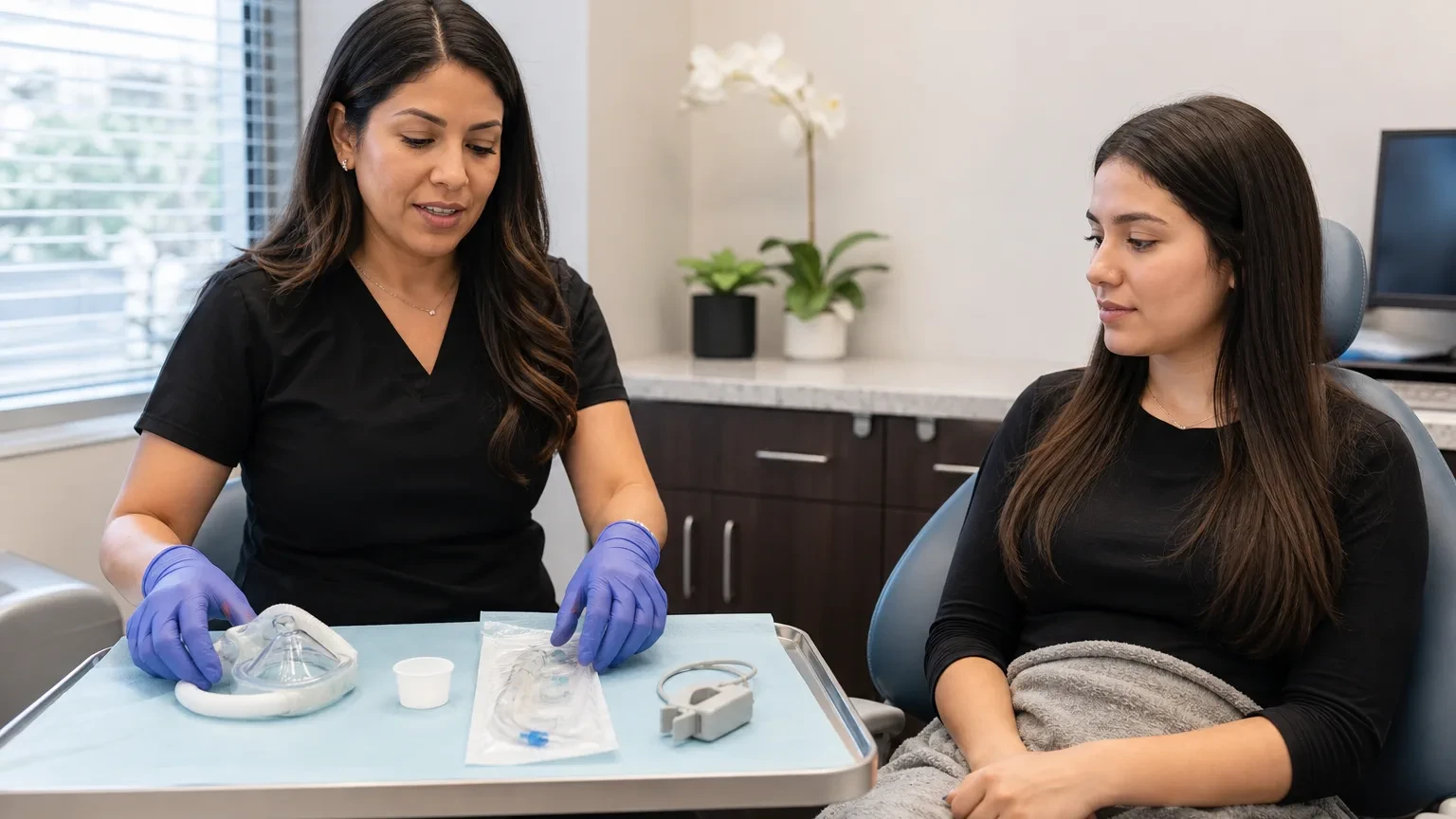
- Review: health history, congestion, pregnancy status, and prior reactions.
- Mask fit: a soft nasal hood; mouth breathing can reduce effect during some procedures.
- Titration: gradual increase until you feel comfortable but still communicative.
- Treatment: local anesthetic and dental work while you remain responsive.
- Recovery: oxygen flush; most people feel close to baseline quickly.
MouthHealthy notes that sedation may involve inhaled gases, pills, or injected medicine depending on the case. Nitrous sits on the lighter end of that spectrum and is often used for mild-to-moderate anxiety or shorter procedures.
Candidacy notes: active nasal congestion, some respiratory issues, first-trimester pregnancy concerns, vitamin B12 deficiency history, or inability to breathe through the nose can limit usefulness—your dentist decides case by case. Chronic opioid or sedative use may change how calm you feel. Children may receive nitrous in appropriately equipped offices with pediatric-focused protocols; parents should still ask about monitoring and fasting rules when other sedatives are combined.
Side effects are usually mild—nausea if you eat a heavy meal right before, temporary dreaminess, or shivering. Tell the team immediately if you feel panicked or too heavy; the mix can be lightened. Nitrous does not replace local anesthetic for painful procedures; you should still expect numbness for fillings, extractions, or surgery.
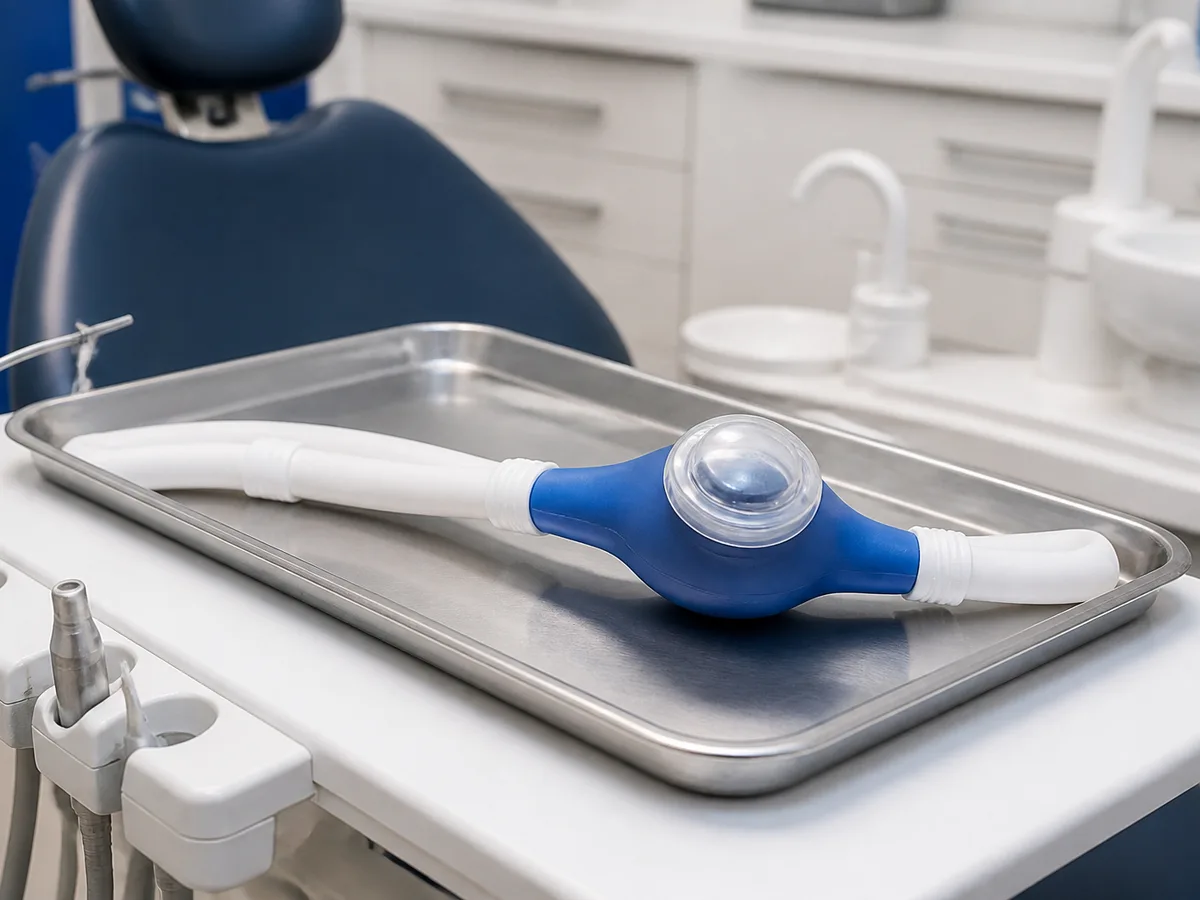 Feedback helps the team titrate.
Awake, responsive, and calmer
Success with nitrous depends on nose breathing and telling the team how you feel. If the hood leaks or you switch to mouth breathing during numbing, say so. Ask whether you can drive afterward for a nitrous-only visit—many people can once they feel normal, but your office’s instructions control that call, especially if other medicines were used. Keep expectations modest: nitrous softens anxiety; it does not erase every sensation of pressure or sound in the room.
Candidacy Notes In Plain Language
- Often helpful for mild-to-moderate dental anxiety and shorter visits.
- Less ideal when you cannot inhale through the nose effectively.
- Not a substitute for IV sedation or general anesthesia when deeper control is required.
- Still requires honest health disclosure—see sedation caution lists.
 Light tools still need clear plans.
Lightest effective dose is the goal
Ask what percentage ranges they commonly use and how they decide you are ready to leave. If anxiety is severe or the surgery is long, nitrous alone may not be enough—and that is useful information, not a personal failure. For a dentist who offers nitrous with clear instructions, use Find a Dentist and mention dental anxiety and interest in nitrous oxide when you schedule. Knowing the mechanism helps you partner in a calm, awake visit.
Nitrous oxide is a mild, inhaled dental sedative that keeps you awake and usually wears off quickly. Use it when candidacy fits, combine it with good local anesthesia, and escalate to other options only when your clinician agrees you need more support.
Related articles
Keep exploring related topics from Dental Country.
What Types Of Dental Sedation Are There?
Dentists match sedation to the procedure and your health—from light nitrous oxide to deeper IV or general anesthesia—so “sedation” is a spectrum, not one drug.
Read article
Is IV Sedation Safe For Dental Work?
IV sedation is often used safely for dental and oral surgery when patients are screened, monitored, and matched to an appropriately trained team—but it is not risk-free for every health profile.
Read article
Can You Drive After Dental Sedation?
Plan on not driving after oral or IV dental sedation—judgment and reflexes can stay impaired even if you feel “fine”—while nitrous-only visits sometimes allow driving once you are fully clear per office rules.
Read article
What Is Oral Surgery In Dentistry?
Oral surgery in dentistry means procedures on the teeth, gums, jaws, and related tissues—from extractions and implants to biopsies—done by general dentists or oral surgeons depending on complexity.
Read article